AccaMate logo
FIFA World Cup 2026 logo

FIFA World Cup

2026 — The Tournament Of A Lifetime

11 June – 19 July 2026

Host nations

Canada flagCanada
Mexico flagMexico
USA flagUSA

Countdown to World Cup

--Days
:
--Hrs
:
--Mins
:
--Secs

World Cup News

The latest stories, squad announcements, build-up coverage and tournament analysis — direct from FIFA.

Merino pounces on Lammens' mistake to score late winner for Spain

World Cup News

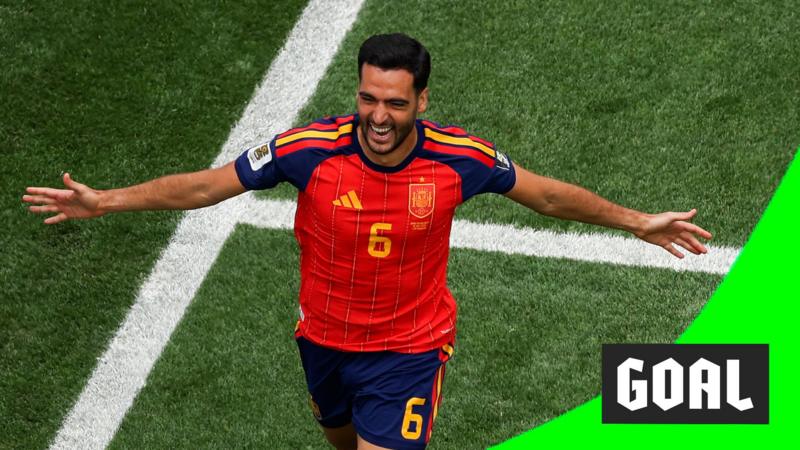
Merino pounces on Lammens' mistake to score late winner for Spain

Close34Mikel Merino pounces on a mistake by substitute goalkeeper Senne Lammens to score an 88th-minute winning goal for Spain in their World Cup quarter final win over Belgium. Shareclose panelShare pageCopy linkAbout sharingRelated topicsFIFA World Cup 2026Follow FIFA World Cup 2026 close panelYou are now following FIFA World Cup 2026Updates from your Sport topics will appear in My Sport and in a collection on the Sport homepage.BelgiumFollow Belgium close panelYou are now following BelgiumUpdates from your Sport topics will appear in My Sport and in a collection on the Sport homepage.SpainFollow Spain

FIFA.com10 Jul 2026
USMNT’s World Cup exit was most-watched American telecast since Super Bowl

World Cup News

USMNT’s World Cup exit was most-watched American telecast since Super Bowl

4-1 defeat to Belgium averaged 33 million viewers on Fox Mexico v England neared 45 million across platforms The US men’s national team officially broke the record for ⁠most-watched soccer telecast in US history twice in a row. As disappointing as ⁠Monday’s 4-1 last-16 loss to Belgium was for fans, the pregame excitement helped attract 33.086 million ⁠viewers, according to Nielsen Media research. The audience peaked at 41.033 million during the ⁠9.15-9.30pm eastern time window. According to Fox, the World Cup ​English-language rightsholder in the US, ‌it was the ‌most-watched domestic telecast of any kind, on any network, ‌since Super Bowl LX brought in 125.6 million in February. Fox also said it was the most-watched non-NFL telecast on any network since Game 7 of baseball’s 2016 World Series. The USMNT had previously set a new mark in their last-32 win over Bosnia and Herzegovina, whose final English-language TV audience tally came to ‌26.4 million. Americans are tuning in to see more than just the home team. Nielsen Media ​research also confirmed this week that 21.742 million viewers watched the Mexico v England last-16 match Sunday on Fox. That was the most-watched non-USMNT World Cup ⁠telecast in English-language US history. Adding the audiences from ​Telemundo ​and Peacock, the match ​averaged a whopping 44.84 million. Those final ​numbers blew ‌away the ​New York ​Knicks’ title-clinching Game 5 win of the NBA Finals (24.5 million) and rivaled the AFC and NFC championship games, which had 48.6 million and 46.1 million on average, respectively.

FIFA.com10 Jul 2026
A-Z World Cup quiz: Name the best performing team for every letter

World Cup News

A-Z World Cup quiz: Name the best performing team for every letter

When it comes to the World Cup it's not all about the numbers - the letters are important too! With the semi-finals on the horizon we think it's the perfect time for our A-Z quiz. Can you name the best performing nation at World Cups for each letter of the alphabet? And remember, we're after the name of the country that was being used at the time, which might be different to the present day. After more quizzes? Go to our dedicated Football Quizzes and Sports Quizzes pages and sign up for notifications to get the latest quizzes sent straight to your device. What information do we collect from this quiz?Related topicsFootballFIFA World Cup 2026Play more quizzesQuiz: Name every nation at the 2026 World Cup Which World Cup team are you? Take our quiz World Cup quiz: Name every player in England's squad World Cup quiz: Name every player in Scotland's squad

FIFA.com10 Jul 2026
France into semi-finals after comfortable win over Morocco

World Cup News

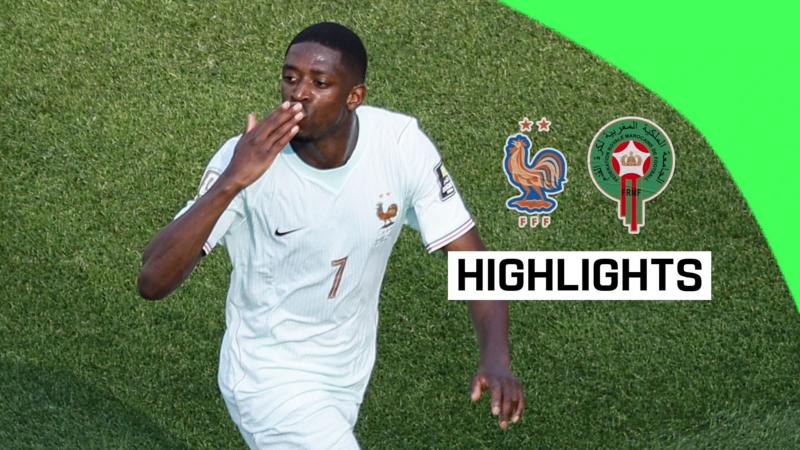
France into semi-finals after comfortable win over Morocco

Close30Kylian Mbappe scores his eighth goal of this World Cup to make up for an earlier penalty miss with Ousmane Dembele adding a second as France prove too good for Morocco and move into the semi-finals. Shareclose panelShare pageCopy linkAbout sharingRelated topicsFootballFollow Football close panelYou are now following FootballUpdates from your Sport topics will appear in My Sport and in a collection on the Sport homepage.FIFA World Cup 2026Follow FIFA World Cup 2026 close panelYou are now following FIFA World Cup 2026Updates from your Sport topics will appear in My Sport and in a collection on the Sport homepage.FranceFollow France close panelYou are now following FranceUpdates from your Sport topics will appear in My Sport and in a collection on the Sport homepage.MoroccoFollow Morocco

FIFA.com09 Jul 2026
'Absolute perfection!' Mbappe fires France ahead against Morocco

World Cup News

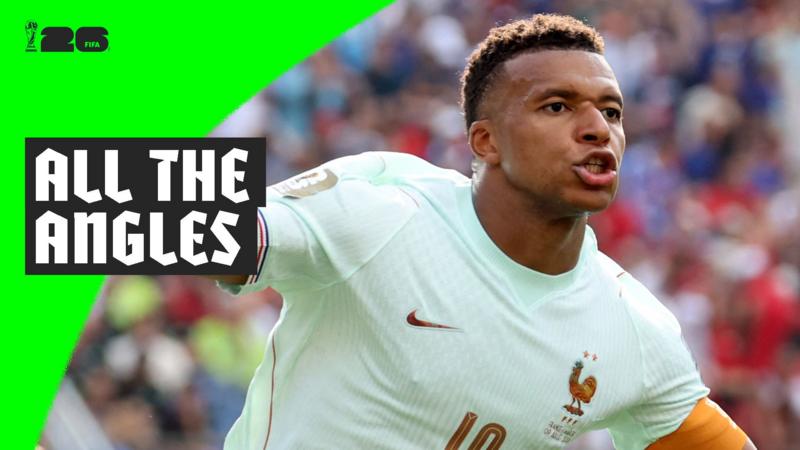
'Absolute perfection!' Mbappe fires France ahead against Morocco

Close160All the angles of Kylian Mbappe's opener for France against Morocco in the 2026 World Cup. Shareclose panelShare pageCopy linkAbout sharingRelated topicsFootballFollow Football close panelYou are now following FootballUpdates from your Sport topics will appear in My Sport and in a collection on the Sport homepage.FIFA World Cup 2026Follow FIFA World Cup 2026 close panelYou are now following FIFA World Cup 2026Updates from your Sport topics will appear in My Sport and in a collection on the Sport homepage.FranceFollow France close panelYou are now following FranceUpdates from your Sport topics will appear in My Sport and in a collection on the Sport homepage.MoroccoFollow Morocco

FIFA.com09 Jul 2026
Mbappe penalty saved by Bono after long wait

World Cup News

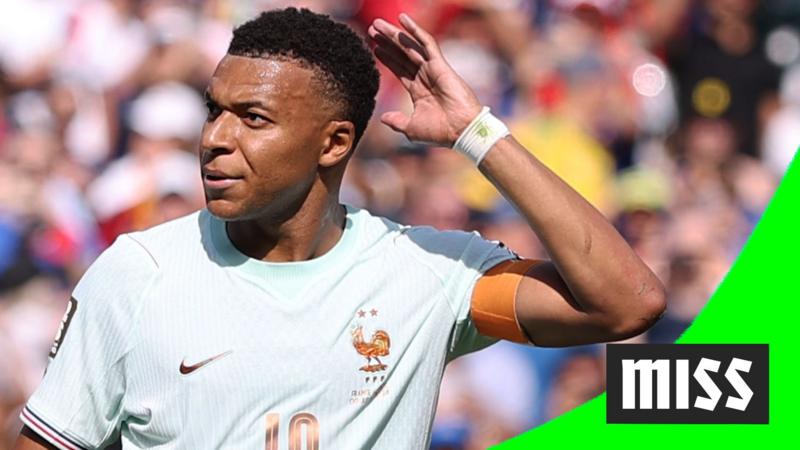
Mbappe penalty saved by Bono after long wait

Close10France forward Kylian Mbappe sees his penalty saved by Morocco's Bono after having to wait over three minutes to take the kick in their World Cup quarter final in Boston. Shareclose panelShare pageCopy linkAbout sharingRelated topicsFootballFollow Football close panelYou are now following FootballUpdates from your Sport topics will appear in My Sport and in a collection on the Sport homepage.FIFA World Cup 2026Follow FIFA World Cup 2026 close panelYou are now following FIFA World Cup 2026Updates from your Sport topics will appear in My Sport and in a collection on the Sport homepage.MoroccoFollow Morocco close panelYou are now following MoroccoUpdates from your Sport topics will appear in My Sport and in a collection on the Sport homepage.FranceFollow France

FIFA.com09 Jul 2026
Erling Haaland claims pressure is all on England in quarter-final with Norway

World Cup News

Erling Haaland claims pressure is all on England in quarter-final with Norway

Striker says England one of the ‘clear favourites’ to win World Cup Also makes knowing reference to famous ‘Stay humble’ remark Erling Haaland has ramped up the World Cup mind games by saying England are the team under pressure when they face Norway in their quarter-final tie on Saturday. Haaland has enjoyed a sensational tournament, scoring seven times in four games, including twice in Sunday’s last-16 win over Brazil. Norway are flying in their first appearance on this stage since 1998 but, in characteristically mischievous fashion, Haaland insisted expectations should only be directed one way. Asked whether all the pressure is on England, Haaland replied: “Yeah”. Pushed on whether Norway could take advantage of that, the strikerreplied: “Yeah, definitely.” Last year Haaland gave Norway a 0.5% chance of winning the World Cup and, despite the evidence of recent weeks, he suggested the prospects are not much greater. “Really low still,” he said. “I think there are some clear favourites out there. England are one of them, so I think all of you should put every single pressure on the English lads.” This last was said with a smile. So was Haaland’s response to whether England supporters should “stay humble” before the match, a reference to his famous remark to Mikel Arteta following a draw between Manchester City and Arsenal in September 2024,. “I think everyone should stay humble but they should be confident of progressing, definitely,” he said. Haaland was similarly lighthearted form Norway’s training session in Fort Lauderdale on Thursday, expanding on his liking for Americans by calling them “kind of hilarious”. But there is serious business ahead and he admitted this summer’s personal and collective success has come as a surprise. “I didn’t expect this at all,” said the 25-year-old. “Even before the first game I didn’t expect it, and now I didn’t expect it. To be honest, to be in the quarter-finals with Norway in the World Cup, it’s quite surprising even for me. “Playing against Brazil was kind of crazy for us Norwegians and to win against Brazil, then go and play England in a quarter-final in the USA, is quite special. And I think if you watch the scenes back in Norway, this is not normal for Norway to be here.” Haaland, who was born in Leeds during his father Alf-Inge Haaland’s time at Elland Road, outlined the match’s personal significance. “It’s a special game, definitely,” he said. “I think for me, it’s super special because I play in England and I’m born in England, and you also play against teammates and everything. So it’s a bit … not weird, but it’s a funny game and it’s going to be nice.” Norway are on the verge of making more history and, while providing Norway’s ruthless spearhead, Haaland is determined to see the occasion’s fun side. “It’s a key for my daily life to train well, focus well and prepare well, but you also need to enjoy the moment and that’s what we’ve been doing now,” he said. “And as we play in the World Cup we just have to enjoy it because nothing lasts forever, and we have to just enjoy while we’re here.” Haaland and his teammates continue to enjoy a clean bill of health before facing England, with reports about a sickness bug in the camp earlier in the week having been exaggerated.

FIFA.com09 Jul 2026
US in talks with Fifa over capitalising on World Cup success with 2029 Club World Cup

World Cup News

US in talks with Fifa over capitalising on World Cup success with 2029 Club World Cup

US officials have held talks with Fifa over tournament Unclear whether White House has been involved The United States has expressed interest in hosting the 2029 Club World Cup as it seeks to capitalise on the commercial and sporting success of staging the World Cup. It is unclear whether there has been any involvement in the discussions from the White House or Donald Trump’s World Cup taskforce, chaired by Andrew Giuliani, who on Wednesday hailed the success of this summer’s tournament. “Soccer is no longer a future American story,” Giuliani said. “It’s happening right now. There’s just so much demand to come to the United States to watch the World Cup.” An unopposed joint bid from the US, Mexico, Costa Rica and Jamaica to host the 2031 Women’s World Cup is due to be ratified by Fifa this year. Fifa’s close relationship with the US government was illustrated this week by the Folarin Balogun affair, with Trump revealing he had asked its president, Gianni Infantino, to review the striker’s sending-off in the USA’s last-32 victory over Bosnia and Herzegovina. In an unprecedented ruling during a major tournament Fifa’s disciplinary committee suspended the 25-year-old’s one-match ban, enabling him to play in Monday’s last-16 defeat to Belgium. Trump is due to leave office in January 2029, months before the Club World Cup, but to be in post when the decision is made. Fifa has not made an announcement over the timing or process for selecting the 2029 hosts, although a decision is expected next year, most likely after the Fifa presidential election is held in April. The USA was appointed to host the expanded 2025 Club World Cup without a bidding process, with the decision made unanimously by the Fifa Council in June 2023. It had been widely expected that the 2029 tournament would be awarded to two of the 2030 World Cup hosts – most likely Spain and Morocco – but there has been no shortage of interest from elsewhere. The Brazilian Football Confederation has stated it would like to host, and the Guardian has reported interest from Qatar. Fifa’s desire to expand the Club World Cup to 48 teams in 2029, supported by the major European clubs, is a potentially complicating factor and could strengthen any US bid. Another North American tournament would also be the most lucrative option for Fifa, which has been vindicated in its aggressive pricing strategy for this World Cup, with most matches selling out.

FIFA.com09 Jul 2026
‘Maggie Thatcher, can you hear me?’ The story behind the iconic Norway v England commentary

World Cup News

‘Maggie Thatcher, can you hear me?’ The story behind the iconic Norway v England commentary

Bjørge Lillelien’s famous rant after 1981 clash stemmed from Norwegian obsession with English football What do Lord Nelson, Lord Beaverbrook, Sir Winston Churchill, Sir Anthony Eden, Clement Attlee, Henry Cooper and Lady Diana have in common? On 9 September 1981 they were all beaten by Norway. At least that is according to the iconic Norwegian radio commentator Bjørge Lillelien. His triumphant, giddy and slightly unhinged rant after Norway beat England 2-1 in a World Cup qualifier has gone down in Norwegian folklore. It has also attained something of a cult status abroad, with the Observer declaring it in 2002 the greatest bit of commentary ever. “We have beaten England! England, the birthplace of giants!” Lillelien enthused, before listing some of said giants. Henry Cooper may seem an odd man out among the various statesmen and Lady Di, but then Lillelien was a notable boxing aficionado. “Maggie Thatcher, can you hear me? I have a message for you, in the middle of your election campaign. I have a message for you … As they say in the boxing bars around Madison Square Garden in New York: your boys took a hell of a beating! Your boys took a hell of a beating!” For those last two sentences Lillelien switched to English, just in case Maggie Thatcher could in fact hear him. At the time, Lillelien’s elation may have seemed a little excessive to some English observers. Norway were, after all, not the only team that beat England in 1981. Earlier that year they had lost to Switzerland, Scotland, Spain and Brazil, as well as drawn against Wales and Romania. The year before they had lost to Romania, Italy and Wales. They were hardly an unstoppable force. But in 1981 England had a special place in Norwegian footballing hearts that no poor run of form could diminish. Since November 1969 the Norwegian public broadcaster NRK had been showing live matches from the English first division during the winter, when Norwegian football was on a weather-enforced hiatus. With Norway having one television channel at the time, that meant every person who wanted to watch TV on a Saturday afternoon during those months would be watching English football. And the games enthralled the nation. “We would learn on Wednesday what game was going to be shown on NRK at the weekend, and there was a lot of excitement around that,” says Øyvind Alsaker, who will be commentating on Saturday’s World Cup quarter-final against England for the Norwegian broadcaster TV2. “Would your team be shown?” Alsaker, born in 1969, was part of the first generation that grew up with these televised games. “You would run outside and pretend to be Keegan and Toshack and all of these heroes,” he says. But it wasn’t always the big teams shown. On 14 January 1978, for instance, NRK somehow ended up showing Mansfield taking on Southampton in the second division – which, with all due respect to the Stags, must have seemed slightly baffling to the Norwegians. But this did lead to people in Norway forming emotional attachments to unlikely clubs. Gabriel Høyland, Erling Haaland’s great uncle who earned 23 caps for Norway, is a committed Burnley supporter. Kasper Wikestad, who commentated on Norway’s win against Brazil for NRK this week, is a Norwich fan. He was one of many Norwegians who grew up with England as his footballing nirvana. “It was the sound, the smell, the stars; it was the atmosphere, it was the chants from the stands,” he says. “It was our promised land. It felt so close, but at the same time so far away.” If England were going through a tough spell in 1981, Norway were just not very good. “It was a Norwegian national team that hadn’t been to a tournament in any kind of way since the 1938 Olympics,” Wikestad says. “England were our idols and our reference point. For Norwegians at that time, England and English football was like a dream. How good England were, how big the stars were, everything to do with England was huge. The idea that we could beat England at football in a qualifying match, it was a totally unrealistic dream.” Lillelien had always been something of an entertainer. “He was a man who made boring games fun,” Alsaker says. “We would turn on the sound from the radio, and watch the game on with the TV on mute.” With Norway taking a 2-1 lead and holding on for a historic win against England, Lillelien was already fraying at the edges. As Phil Neal hacked down the local hero Tom Lund from behind Lillelien erupted, calling Neal “a pig”. “The thug Phil Neal kicks Tommy from behind! Phil ‘pig’ Neal! Start retaliating! The English have thugs both in the stands and on the pitch!” As the seconds ticked away into added time, Lillelien felt the Polish referee, Jerzy Kacprzak, was too slow to blow the final whistle. “The referee keeps adding and adding and adding, he is on track for an English citizenship!” But just as this aspersion was cast, Kacprzak blew and Lillelien erupted again. “Norway have beaten England 2-1 at football! We are the best in the world!” And you know the rest. Today, Norwegians are still obsessed with English football. Norwegian kids grow up dreaming of playing in England, more so than at Barcelona or Real Madrid or anywhere else. “We now have three generations of Norwegians who have received English football intravenously,” Alsaker says. On Saturday it will be his job to convey the emotion of the occasion back to the Norwegian public. “It feels unreal. When I look at what I’ve experienced with the Norwegian national team over the last 25 years, it feels unreal that this is happening. I was thinking that reaching the round of 16 was just fantastic. And now we are playing for being one of the top four teams at a World Cup. It’s wild. It is a task I approach with great humility and a feeling of responsibility. So many Norwegians will be following this, I hope I will succeed in doing a good job. “Norway-England, of all things. A week ago, we thought that it couldn’t get bigger than Norway-Brazil, but there you go.” For Norwegians, no opponent we face on a football pitch could ever mean more than England.

FIFA.com09 Jul 2026
Egypt’s World Cup ended in heartbreak but they gave the country reason to smile | Karim Zidan

World Cup News

Egypt’s World Cup ended in heartbreak but they gave the country reason to smile | Karim Zidan

For Egypt this World Cup was about more than football – it was the first glimpse of collective joy that Egyptians have enjoyed in 15 years For nearly 15 minutes on Tuesday it seemed Egypt were about to complete one of the great World Cup upsets. The Pharaohs were up 2-0 against Argentina, the world champions. The goalkeeper, Mostafa Shobeir, had earlier saved a penalty to deny Lionel Messi an equaliser. Then, late in the second half, Argentina staged a remarkable comeback. Inspired by their talisman, they scored three goals in 13 minutes to book a spot in the quarter-finals, ending Egypt’s magical run. The dramatic match transformed Egyptians’ triumph into heartbreak, and then into anger over what many regarded as a refereeing decisions that favoured Argentina. Yet amid the frustration, there was also a kindling sense of pride. When the Egypt team returned to their hotel in Atlanta, they were greeted by legions of fans who gathered to show their appreciation. It was an emotional reception, the players standing and applauding in a shared moment of gratitude – a reminder that, despite the heart-wrenching end, this team had given Egyptians their first glimpse of collective joy in 15 years, dating back to the 2011 Egyptian revolution. Over the past several years, Egypt has been gripped by one of the worst economic crises in its modern history. A mounting debt burden, fuelled by the government’s lavish spending on mega-projects, unleashed a cascade of economic consequences including runaway inflation, persistent shortages of foreign currency and a currency that continues to lose value against the dollar. For ordinary Egyptians, the consequences have been stark. As wages have failed to keep pace with rising prices, the cost of everyday essentials has become increasingly unaffordable, squeezing household budgets. More than 70% of Egypt’s 118 million population rely on the government’s bread subsidy programme, making it the largest food subsidy program in the Middle East and north Africa. With no prospects and little hope, Egyptians such as myself have traditionally turned to football for our fleeting moments of joy. Egypt has a storied footballing history. They were one of the founding members of the Africa Cup of Nations (Afcon) and won the inaugural title in 1957. The country had just emerged from the Suez crisis and Egypt – newly free and independent – lifting that trophy became a powerful symbol for a burgeoning Africa. Egypt have won the event a record seven times but not since the Arab spring, which was the year that Mohamed Salah first appeared on the national team. In February 2012 riots occurred after an Egyptian Premier League match between Cairo’s Al Ahly, the most successful club in Africa, and Al Masry in Port Said. Seventy-four people were killed and more than 500 wounded. Some were beaten to death with clubs and sticks; some were stabbed; others were trampled. Officials refused to open the stadium gates, trapping fans inside and causing a stampede. A parliamentary inquiry blamed fans and police inaction. In response to the worst tragedy in Egyptian football history, the government shuttered the league for two years. This had a miserable effect on the national team. Since the revolution, Egypt have reached the Afcon final twice, in 2017 and 2021. The country hosted the tournament in 2019, only to experience a shock last-16 defeat by South Africa in a campaign overshadowed by controversy, including allegations of sexual harassment against the forward Amr Warda. Two years later, the Pharaohs, captained by Salah, lost the final to Sadio Mané’s Senegal in a shootout. Egypt’s World Cup resume was also a sore point for fans. Despite participating as far back as 1934, the team had never won a World Cup match until last month, when they defeated New Zealand. That is what makes this Egypt team so remarkable. They navigated the group stage unbeaten and reached the last 16 for the first time. Yet their greatest accomplishment was giving the nation a rare reason to celebrate together. They did so with an infectious exuberance, dancing with supporters in the streets after matches, Salah belting out songs with a boombox in hand, and reminding everyone that, for Egypt, this was never just about football. As one of only two teams – with Morocco – to reach the last 16 from outside Europe and South or North America, Egypt also carried the hopes and dreams of a wide range of peoples, whether across the African continent or the Arab world. In Libya, hundreds gathered at Martyr’s Square in the capital Tripoli, where they sang Egyptian songs and waved the country’s flag after Egypt’s victory on penalties against Australia. In Lebanon, celebrations spilled into the streets, with Lebanese and Egyptian flags raised as people danced and partied in various cities. The Egyptian Committee for the Reconstruction of Gaza organised public watch parties for displaced Palestinians families to watch Egypt’s games. The committee provided screens, seating and electricity in places such as Gaza City to allow a rare moment of distraction. Children draped themselves in Egyptian flags while others gathered in crowds to cheer on Salah and the Egyptian squad. In their eyes, Egypt’s victories were their victories. (The director of the committee, Mohammed Fawaz al-Wahidi, was killed in an IDF strike hours after Egypt played Argentina.) Egypt’s coach, Hossam Hassan, held the Palestinian flag at Dallas Stadium after Egypt’s win against Australia. “I’m dedicating this victory to the Egyptian people and Palestinian people, those kind and honourable people,” he said. The performance days later against Argentina cemented Egypt’s transformation from a team trapped in football purgatory to a talented side who inspire their countrymen and can stand toe-to-toe with some of the best. After Egypt’s loss, the country’s football federation (EFA) released a statement thanking the Egyptian people for their “unwavering support, loyalty and belief” throughout the tournament, which it said had been “a source of immense pride and motivation”. The performances, it said, “had reflected the spirit and character of our nation”. The EFA also said it would not “remain silent regarding the refereeing decisions witnessed during the match”. Egypt’s success does not erase or conceal the country’s political or socioeconomic challenges but the unity and collective joy that have swept across the streets have been extraordinary to witness. For a moment, millions of Egyptians found common ground in hope, celebration, and national identity. For a time, Egypt had finally broken the curse of the Pharaohs.

FIFA.com09 Jul 2026

The US delivered their best modern World Cup performance – and also let themselves down

World Cup News

The US delivered their best modern World Cup performance – and also let themselves down

Mauricio Pochettino’s team delivered several thrilling performances on home soil. The way it ended was somewhat less exhilarating So now what? How are we supposed to think about this supposedly golden generation of the United States men’s national team who have fallen short of expectations at this World Cup on home soil? How do we come to terms with the sense that this team beat Paraguay 4-1 in their opener – the most impressive performance in the program’s history – but also lost dismally against Belgium by the same scoreline in the last 16? And what of Christian Pulisic? The golden boy who was largely absent – either physically or in terms of his influence on the proceedings – but for 45 manic minutes to start off this tournament? If he didn’t lead the team on the field, he was certainly its face off it, appearing in endless commercials – outnumbered only by the omnipresent David Beckham, who last kicked a ball on American soil 14 years ago. Pulisic hardly dislodged the legends forged at the last World Cup in the US, who were decades overdue for their displacement. Neither did his feted teammates, some of them the stars of their own advertising blitzes. On Monday, so many of Pulisic’s peers were well below their personal par of the last few weeks as well– Weston McKennie and Tim Ream and Sergiño Dest and plenty of others. How are we to process that this group both proved that it is undoubtedly the most talented and pedigreed generation this program has ever produced, and also utterly imploded in the face of its first serious test in the knockout stages? The core of this team is unlikely to get better by the next World Cup in 2030, when Antonee Robinson will be 32; Tyler Adams, Pulisic and McKennie will be 31; and Dest 29. These are not the ages at which the modern soccer player tends to improve. The window on this generation hasn’t closed quite yet. But the opportunity to leverage this moment to make that long-awaited breakthrough into the American mainstream very much has. This summer, the USMNT had a chance to finally be embraced by the nation in a permanent way – and they faceplanted. It hardly helped when Donald Trump interfered to undo Balogun’s suspension for the Belgium game – or at least claims he did, an assertion delicately disputed by Fifa – and ruined the excellent vibes with his drenching loser stink. Until then, you could almost physically feel a country falling in love with this group. The USMNT claimed the whole Balogun brouhaha had no effect, and that may well be true – we’ll never really know. The Belgians and the rest of the world nevertheless dunked on the US when given the chance to equate the loss of a team to a personal defeat for Trump. That, too, will be the lingering recollection. First, that this edition of the USMNT badly let down the nation when the country was dialed in – to the tune of 42 million TV viewers, more than any college football or NBA finals game ever, and more than any baseball game this century – and prepared to tag along on a deep run in this tournament. And at the same time, they delivered the best World Cup performances in their modern history, winning a single knockout game – just as the US did in 2002, when it was a 32-team tournament and they reached the quarter-finals of the World Cup. That’s the central awkwardness here. The commanding wins over Paraguay and Australia, in which the US controlled the games and asserted themselves and fashioned the better of the chances, really were unprecedented. Time has sanded down the memory of 2002, when the Americans were fortunate to cling on to their upset over Portugal in their opener, were equally lucky to draw with the hosts South Korea, and were fairly rinsed by an already-eliminated Poland. Then came the 2-0 win over Mexico, a result that was perhaps a tad flattering. In 1994 and 2010 and 2014 and 2022, the US hardly marched through the group stage – let alone win it with a game to spare, as they did for the first time in 2026 – and then went out right away. Usually in losses that were lopsided in all but the score. Real growth was demonstrated in this tournament. For a few weeks, we saw the future we had long been promised, the answer to the age-old question of when we would finally be good at men’s soccer. We witnessed a USMNT that, on the sport’s biggest stage, bullied teams with less talent (Paraguay, Australia, Bosnia and Herzegovina), and that matched up well with a team of roughly their own level (Turkey) with a bunch of reserves. And then it all disintegrated when we most needed it to hold together. That’s the legacy of the 2026 US World Cup team. They soared as high as we always hoped they might, and to an altitude far above any predecessors. And then stalled in mid-air, smashing a deep crater into how we will remember this campaign. Leander Schaerlaeckens is the author of The Long Game: U.S. Men’s Soccer and Its Savage, Four-Decade Journey to the Top, or Thereabouts , which is out now. He teaches at Marist University.

FIFA.com09 Jul 2026
Refereeing at this World Cup has been fine, we don’t need input of Tuchel and Trump | Chris Foy

World Cup News

Refereeing at this World Cup has been fine, we don’t need input of Tuchel and Trump | Chris Foy

Give or take the odd error, officials have got it right on most occasions, while VAR has helped them when they haven’t Thomas Tuchel was critical of the refereeing at the World Cup after England’s win against Mexico, describing it as unreliable, erratic and not good enough. His comments struck me as reverse psychology – the referees have generally been OK, with some positive decisions made, but there have also been occasions when they have not got things right. Like everyone, referees cannot be perfect. Egypt claimed they were victims of an injustice against Argentina on Tuesday but the decisions to disallow an Egypt goal and let Argentina’s winner stand were correct. On the first one there was a foul by Marwan Attia on Lisandro Martínez in the attacking possession phase – a shirt pull and studs on Martínez’s right foot – and there is no time limit or ceiling on the number of passes to be taken into account. One important factor is the ball kept moving forward, with no lateral or backwards passes, until the ball was in the net. It could have been one of the goals of the tournament but the simple fact is it was right to disallow it. For Argentina’s late third goal Egypt felt there was a foul by Julián Alvarez on Mohamed Salah. People are drawing comparisons between that and the earlier incident because there is boot-on-boot contact, but it is a different situation. Alvarez plays the ball and there is then slight contact which does not meet the threshold for a foul or video assistant referee intervention. The VAR did make an important intervention in the Mexico-England match – Jarell Quansah’s tackle on Jesús Gallardo was a red-card offence and I was surprised this was not picked up on-field by the referee, Alireza Faghani. After the VAR rightly recommended a review we got the correct outcome. Tuchel was upset at a number of decisions that night. It was never going to be an easy assignment for the referee, what with the hype, weather conditions and the game being at the Azteca Stadium. But some of the players did not help by taking very little responsibility. They were feigning injury, showing dissent and questioning nigh-on every decision – and when the Quansah challenge happened the whole Mexico bench emptied out angrily. England reacted, and that got messy. To hear England are considering an appeal against Quansah’s red card is surprising, but the Folarin Balogun situation has completely changed things. Historically there has been no scope for an appeal against a red card at a tournament, with a one-match ban automatically applied. I had never heard of Article 27 of the Fifa disciplinary code, which Fifa says it used to suspend the USA striker’s sanction. Balogun’s sending-off was certainly supportable with the help of the video assistant. When I saw his challenge on Tarik Muharemovic of Bosnia and Herzegovina in real time I wasn’t sure whether it was a red-card offence, but it was for me on a replay, even if there was no malice. The clue was where the ball was, because it was not at a playable distance. When you consider a possible red-card offence for a challenge, there are two key elements to think about: excessive force and endangering the safety of an opponent. With Balogun’s challenge the point of contact was on the calf, continued down the calf on to the achilles and caused an ankle roll. That could have caused serious injury. The intervention of Donald Trump and Tuchel’s comments mean there is heightened noise around refereeing. As a referee you have to ignore that, and in elite officiating sports psychologists are there to help. I was never the best at getting rid of a bad decision – it would stay in my system for three to four days – but that’s different from letting it affect your performance. You have to be boring, and focus on the here and now. There have been 13 red cards at this World Cup, after four at each of the previous two, but I don’t think there can be too many complaints. Player safety is paramount and Quansah and Balogun are a good example of where to draw the line. VAR has been used correctly for red cards not given on the field. That is not to say that VAR interventions have been perfect – far from it. Vinícius Júnior’s disallowed goal for Brazil against Scotland, for example, was one where I felt the on-field decision of goal was right. It was minimal contact and not all contact is a foul, because contact is a normal part of football. This was not a clear and obvious error by the referee. In those circumstances a “check complete” would be appropriate and you don’t need to re-referee. I thought Harry Kane should have had a penalty against the Democratic Republic of the Congo because contact was made on the England captain by the goalkeeper, Lionel Mpasi. But because it wasn’t a clear and obvious error I also felt it was the right decision by the video assistant to stick with the on-field verdict. Where VAR was right to intervene on a penalty decision was to give France a spot-kick after Désiré Doué was fouled by Paraguay’s Diego Gómez. I was surprised that the referee, Ilgiz Tantashev, didn’t give that one on the field. That game was another tough assignment, but the referee needed to be a lot stronger throughout. I was shocked that no Paraguay players were cautioned. Referees go out to manage a game but sometimes you have to draw a line and get the cards out. There were a number of incidents where Tantashev should have shown a yellow card, and because he didn’t Paraguay gained confidence. At one point his control of the match was put in jeopardy. Pavlovic’s boot was higher than Declan Rice’s when the England midfielder was booked early in the Mexico game. All I can think is that the video assistant and the referee both felt that it was six and two-threes; that Vite had put his head down and that Pavlovic had put his boot up – and that therefore it didn’t meet the threshold. Chris Foy is a former Premier League referee.

FIFA.com08 Jul 2026