AccaMate logo
FIFA World Cup 2026 logo

FIFA World Cup

2026 — The Tournament Of A Lifetime

11 June – 19 July 2026

Host nations

Canada flagCanada
Mexico flagMexico
USA flagUSA

Countdown to World Cup

--Days
:
--Hrs
:
--Mins
:
--Secs

World Cup News

The latest stories, squad announcements, build-up coverage and tournament analysis — direct from FIFA.

Shakira to perform at World Cup opening ceremony

World Cup News

Shakira to perform at World Cup opening ceremony

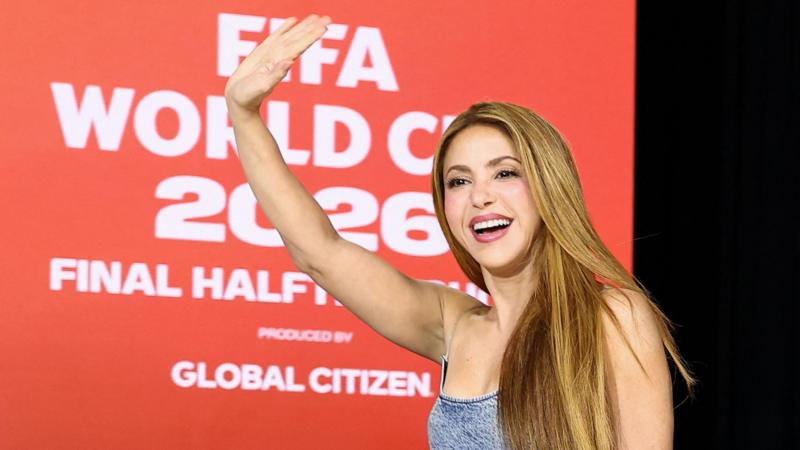
Colombian pop star Shakira will perform her official song for the 2026 World Cup at the competition's opening ceremony in Mexico. Shakira will perform Dai Dai, along with Burna Boy, on Thursday, 11 June at Estadio Azteca in Mexico City, before Mexico and South Africa play the first of the tournament's 104 games (20:00 BST). Dai Dai - an Italian phrase meaning "let's go" or "come on". Colombian reggaeton star J Balvin and South African singer-songwriter Tyla will also perform at the show in Mexico. Opening ceremonies will precede each of the first matches played in the host nations of USA, Canada and Mexico. Canadian singer-songwriters Michael Buble and Alanis Morissette will headline the opening ceremony at BMO Field in Toronto before Canada take on Bosnia and Herzegovina on Friday, 12 June (20:00 BST). In the USA, pop star Katy Perry and rapper Future will perform before the USA take on Paraguay at SoFi Stadium in Los Angeles on Friday, 12 June (Saturday, 02:00 BST). Shakira, along with Madonna and K-pop boyband BTS, will also co-headline the Super Bowl-style half-time show at this summer's World Cup final on 19 July. Shakira unveils official World Cup 2026 song Madonna, Shakira & BTS to headline World Cup show Everything you need to know about the World Cup

FIFA.com04 Jun 2026
Doski stunner earns Iraq draw against understrength Spain in World Cup warm-up

World Cup News

Doski stunner earns Iraq draw against understrength Spain in World Cup warm-up

Spain will depart from Santiago de Compostela at 10am on Friday morning bound for Chattanooga, via Nashville, but seven of the eight men who made their debuts in the final preparation game before the World Cup will not be on board with them. Nor will the seleccion be flying west with a victory after they bid adios with a 1-1 draw against Iraq at Estadio Riazor. Which may not sound very good – and it really was not very good either, a 22-minute cameo from Mikel Merino about the best thing about it – but is no cause for alarm. Luis de la Fuente’s side will still be among the favourites in the US, Canada and Mexico and rightly so; this was not really his side, at least not recognisably so. If anyone came for clues as to what Spain will be like at the World Cup, they did not find them in La Coruña. How could they when it played out like this? When the fifth and final group of players to report for duty at their Las Rozas HQ, 25km northwest of Madrid, had only arrived at quarter to nine on Wednesday night, 24 hours and 15 minutes before kick-off? When there were 11 substitutions made? When of the coach’s preferred XI, it’s plausible that only two or perhaps three started here? And when the players who probably most enjoyed this, for whom it most mattered, aren’t going to the US at all? Ten of the men who did travel to the US, were not included. It was not just those that had played the Champions League final – Fabián Ruiz, David Raya and Martín Zubimendi – who were left out. De la Fuente took care of Nico Williams, who had played just six of the past 15 club games, and Lamine Yamal, who has not made an appearance since 22 April because of a torn hamstring, was also left out. Lamine Yamal remains the big question for everyone. Rodri, Pedri, Mikel Oyarzabal, Marc Cucurella and Víctor Muñoz sat in the stands too. Down on the pitch, only Pedro Porro, Aymeric Laporte and perhaps Dani Olmo are natural starters. Two of those that began the match – Marc Bernal and Jon Martín – are not going to the World Cup, and seven of those who sat on the subs’ bench at kick-off are not either, with De la Fuente giving an opportunity to the support squad, invited to join Spain in training over the past week. Every one of them was given a game. Along with Marc Pubill, that made eight debutants in a single night, which will be a good quiz question one day. Spain have a settled squad and a settled side, with few positions still to be fought for, so this felt a little superfluous. If this was an opportunity for Joan García to make a claim on the goalkeeping spot, a national debate right now, Iraq’s goal did not strengthen his case. If it was an opportunity for Gavi, after a season of injury, it did not do the Barcelona midfielder any harm. He was his usual busy presence and it was no surprise when he was booked. The structure of the side looked a little different too, the 4-2-3-1 a bit more defined than it might be in the US, where it’s likely to look like 4-3-3. In the absence of Lamine Yamal, Williams and Muñoz, the wingers were Álex Baena and Ferran Torres, men with a tendency to come inside, lacking the directness De la Fuente embraced to such effect at the Euros, so that too offered little insight. One thing that will have pleased the head coach was the ease with which Laporte took responsibility for bringing the ball out. He was the one intercepting and stepping out to start the move that gave Spain the lead on 15 minutes. An incisive forward pass divided Iraq, breaking through the first line of pressure, and found Olmo who, just as swiftly, moved it on another line. Borja Iglesias let it run through his legs and Torres took it on, dashing through from the right, too fast for Zaid Tahseen, and scoring with a low finish. This, perhaps predictably, was a Spanish monologue and was soon accompanied by olés and Mexican waves but more goals did not follow and nor did much football. Iraq equalised through Merchas Doski. If he meant it, it was outrageous. The position, out on the left wing, suggested a cross; the swing and the contact with the ball did not. García got a bit of his right hand on it but could not keep it out. At the other end Torres hit the bar and Olmo volleyed over but there were no more goals before half-time when Spain made five changes. Jesus Rodríguez had been on just 18 seconds when he dashed through and shot wide. Three more changes were made on 59 minutes, all of them debutants: Atlético Madrid centre-back Pubill, who is going to the US, and Beñat Turrientes and Javi Guerra who are not. Seven minutes after that came a more significant introduction: Merino, whose 28 minutes on the final day of the Premier League season were the only time he had played since January, was introduced to take another step towards full rehabilitation, wearing the captain’s armband. He was then followed by Leo Román and Rodríguez but no goals. They won’t be on the flight to Nashville but 26 men will and they will land in the US with a week still to prepare and as favourites.

FIFA.com04 Jun 2026
Belgium World Cup 2026 team guide

World Cup News

Belgium World Cup 2026 team guide

Belgium fans will hope their veteran stars can lift themselves for one last tournament. Photograph: Crystal Pix/MB Media/Getty ImagesNot much of the fabled golden generation remains, but the Red Devils have a winnable group and possess genuine quality in De Bruyne and Doku This article is part of the Guardian’s 2026 World Cup Experts’ Network, a cooperation between some of the best media organisations from the 48 countries who qualified. theguardian.com is running previews from three countries each day in the run-up to the tournament kicking off on 11 June. The head coach, Rudi Garcia, is well aware that the Red Devils’ strength lies in attack. Kevin De Bruyne, Jérémy Doku and Romelu Lukaku can each make a difference in their own way. The defence is, except for goalkeeper Thibaut Courtois, the weak point after the golden generation of Toby Alderweireld, Vincent Kompany, Thomas Vermaelen and Jan Vertonghen gradually retired. “That is why I will always choose four defenders and not five,” Garcia explains. “With five defenders I have to sacrifice an attacking player and that would be a shame.” Garcia usually opts for a medium block to support the attack and not put too much pressure on the defenders. His reasoning could be described as flawed because there is a problem with Lukaku. He played only 64 minutes for Napoli this season and none for the national team because of injuries until coming off the bench in Tuesday night’s 2-0 win against Croatia, scoring the second goal in added time. He was also deeply affected by the death of his father. Belgium’s all time top scorer – 90 goals – will therefore start the World Cup without any kind of match rhythm. Qualifying went smoothly against Wales, North Macedonia, Kazakhstan and Liechtenstein. Despite going undefeated, the level of play was not high and there were three draws, two against North Macedonia and one in Kazakhstan. With 29 goals in eight games, Belgium underlined where their strengths lay. It’s clear there will be plenty of attention on Doku in attack and Courtois to prevent goals at the other end. Garcia has been in charge since January 2025 and said at his unveiling: “I am ready to take on the challenge. It will take time to learn, even though we don’t have much of it. It’s not about trying, it’s about doing, that’s my motto.” Hard work is key, according to the Frenchman. “We must focus on the mindset. We must wear the jersey with pride, and give everything for the national team.” Rudi Garcia is a national coach for the first time in his career and so will be making his World Cup debut in North America. The 62-year-old succeeded Domenico Tedesco in January 2025 and has plenty of experience, having been in charge at Lille, Roma, Marseille, Lyon, Al Nassr and Napoli among others. The Frenchman is old school, rejecting data-led analysis, and has restored a positive atmosphere to the national squad. “What matters to me is that there is a team on the field,” he says. “My experience shows that you get the furthest that way.” Jérémy Doku is the most popular player in the squad. The 24-year-old Manchester City attacker is still making giant steps in his development. Having relied solely on his impressive speed, he has developed his crossing ability of late and scored some important goals in the closing stages of the Premier League season. “I know my qualities and know that I have to work on my statistics,” he said. “But I’m not there yet.” Matias Fernandez-Pardo was not in Garcia’s plans until early May. The 21-year-old Lille striker, who holds Spanish and Belgian passports, had declared he would choose Spain. When the Belgian FA sounded him out again due to the doubts surrounding Lukaku and the decline of Loïs Openda at Juventus, he changed his mind. His speed, dribbling skills and opportunism have earned him a slot in the World Cup squad. Fernandez-Pardo left Gent in August 2024 as a winger, but the Lille coach Bruno Génésio has deployed him as a striker, leading to eight goals and five assists in 29 league games in 2025-26. Maxim De Cuyper the 25-year-old Brighton left-back, is of great value to the Red Devils with his attacking contributions and, in the absence of Lukaku, has developed into a regular goalscorer for the national team. Under Garcia, he has started every match when fit. He will likely retain that status during the World Cup despite his status as a substitute all too often at Brighton. Belgian fans love having fun and a few beers before entering the stadium. However, there are not many chants because Dutch, French and a little German are spoken in Belgium, the linguistic mix making it difficult to coordinate the songs. As a compromise, they simply sing in English, if there is any singing at all. Just as in most other EU countries, there is scepticism about Donald Trump, and certainly about his manner of expression. He once called Molenbeek, a suburb of Brussels, a “hellhole,” and that did not go down well. The Belgian FA is unlikely to say anything publicly and while fans have complained about high prices there has not been any talk of a boycott. Written by Ludo Vandewalle for Het Nieuwsblad

FIFA.com03 Jun 2026
Sweden World Cup 2026 team guide

World Cup News

Sweden World Cup 2026 team guide

Lucas Bergvall celebrates with the fans after winning their playoff with Poland. Photograph: Jonathan Nackstrand/AFP/Getty ImagesWith Graham Potter at the helm and Viktor Gyökeres finding form, hopes are high after playoff success This article is part of the Guardian’s 2026 World Cup Experts’ Network, a cooperation between some of the best media organisations from the 48 countries who qualified. theguardian.com is running previews from three countries each day in the run-up to the tournament kicking off on 11 June. Sweden’s attempts to qualify for the World Cup could hardly have gone worse, picking up just one point from the first four games under Jon Dahl Tomasson before, in October 2025, the Dane was sacked after a 1-0 defeat against Kosovo. In came Graham Potter, who had his breakthrough in coaching at Swedish side Östersund between 2011 and 2017, taking them from the fourth tier to the Allsvenskan, winning the cup and beating Arsenal in the Europa League. Under Potter’s leadership the focus shifted to more traditional values associated with the Swedish national team with a stubborn defence coupled with effective counterattacks. Having initially said he prefers a back four he set up with a 5-3-2 in the playoffs, with a focus on keeping things quiet at the back. With the Nations League having offered Sweden a route back into the World Cup qualifying process, they put in an impressive performance against Ukraine in Spain in the semi-finals, winning 3-1 after a Viktor Gyökeres hat-trick. The final, against Poland, was much tougher to watch with the visitors better for much of the game but Gyökeres again stepped up, scoring an 88th-minute winner in a 3-2 thriller. “It’s hard to explain, hard to describe,” said a delighted Potter. “Just an incredible evening, just so proud to be part of that and obviously proud to experience it. It was just the best night I’ve had in football. Incredible, like I was having some sort of out-of-body experience. I’m looking at the goal and suddenly all our bench is running and you’re thinking: ‘Am I here?’ I’m just grateful to be part of that.” So Sweden made it to the World Cup despite collecting two points from six games in their qualifying group. They now face Tunisia, Netherlands and Japan with hope of getting into the knockout stages – that’s the Potter effect for you. Injury wise they are without captain Dejan Kulusevski, whose influence on this team cannot be overstated. They will miss him in North America. There are also huge question marks over Alexander Isak’s form and fitness, although he did score in a worryingly one-sided 3-1 defeat against Norway on 1 June after coming on as a substitute. In October 2025 Graham Potter gave an interview to Fotbollskanalen that was not so much expressing an interest in becoming Sweden coach, but more of a come-and-get-me plea. “I have feelings for Sweden,” he said. “I love the country and I love Swedish football. Coaching the national team would be an incredible opportunity for me, absolutely.” A few days later he was in the job and, despite not winning either of his first two games, the Swedish FA was so smitten by him that they offered him a contract extension to 2030 in March. Potter speaks very good Swedish and for him it was the perfect job after difficult spells with Chelsea and West Ham. Alexander Isak became the most expensive transfer in Premier League history last year when he moved from Newcastle to Liverpool for £125 but after a tough first season at Anfield there is no question about who the talisman is for the national team: Viktor Gyökeres . The Arsenal forward also struggled initially at his new club but has hit form recently and scored four of Sweden’s six goals in the two playoff ties. His popularity took another upturn after the late goal against Poland with people from all over the country posting their own versions of his goal celebration, which is taken from Bane, the character played by Tom Hardy in The Dark Knight Rises film. Celtic’s Benjamin Nygren aside, one player that might play a bigger role than expected for Sweden in North America is Gustaf Lagerbielke . The Braga defender put in a crucial performance in the playoff final against Poland, scoring with a thunderous header and keeping Robert Lewandowski quiet at the back. The fact that the former Celtic defender is a baron only adds to the intrigue. There are talks of a move to a big-five league this summer and a good showing at the World Cup will only increase his chances. If Sweden are to succeed this summer, they will have to win battles against a very technical side in the Netherlands and a very tenacious and technical Japan side. Jesper Karlström will have to play a big part. Captain of Serie A side Udinese, Karlström is a late bloomer who took time to establish himself at Djurgården before a move to Polish side Lech Poznan. He has talked about how he struggled with a gambling addiction at Djurgården but that the club and his family helped him beat it. Karlström possesses all the classical traits of a deep-lying midfielder, being solid in the tackle and capable of dictating play. The 30-year-old’s calming presence will be key in North America as he is surrounded by youngsters such as Yasin Ayari and Lucas Bergvall in midfield. Swedish supporters have a reputation of coming in large numbers for tournaments and making themselves heard. Fans of Blågult (blue and yellow) tend to be friendly and full of banter, interacting with opposition fans. The go-to song of the supporters is “Kanna på”, a song referencing beer pitchers that keep on arriving. Yes, the Swedes like a beer or six. The song also states: “We are coming with 100,000 men” and, while there might not be another Viking invasion expected in America, there will be a large yellow-and-blue delegation at the World Cup. “Look what happened in Sweden last night.” Those were the words of president Trump in 2017, when talking about problems with large scales of immigration and subsequent terrorist attacks. The only problem was that nothing of any dramatic nature had happened in Sweden the night before. Trump said later he had been referring to a TV report on Fox News, which did not clarify things greatly. Swedish paper Aftonbladet then summed up what had happened in the country on the day Trump was referring to: Famous singer Owe Thörnqvist suffered technical problems in rehearsals A man set himself on fire at a plaza in central Stockholm There were road closures in northern Sweden due to “harsh weather” Written by Samuel Parts for fotbollskanalen.se.

FIFA.com03 Jun 2026
Jude Bellingham handed World Cup boost for England after being given No 10 shirt

World Cup News

Jude Bellingham handed World Cup boost for England after being given No 10 shirt

Bellingham takes coveted shirt with Anderson given No 8 England train for first time in Florida ahead of World Cup Jude Bellingham has received a boost from Thomas Tuchel after being handed the coveted No 10 shirt for England’s World Cup campaign. Preparations began at a training camp in Florida on Tuesday and the midfielder Kobbie Mainoo said the squad believed “100%” that they can win the tournament. With two weeks to go until England’s opening World Cup fixture, 21 of Tuchel’s 26-man squad are in West Palm Beach for a week-long camp and the squad numbers were confirmed on Tuesday. Bellingham, the Real Madrid midfielder, takes the No 10 shirt ahead of his rivals Morgan Rogers and Eberechi Eze. Elliot Anderson, who made his England debut less than a year ago, secured No 8. After training in temperatures that reached 33C, England players addressed the media and Mainoo was asked whether the squad believed they could win the 48-team tournament which begins next Thursday and runs until July 19. “One hundred per cent,” the Manchester United midfielder said. “I feel like everyone in the squad and the staff believes we can win it but it doesn’t come easy and the first game, the second game, we have to build and build.” Jordan Henderson, who at 35 is at his fourth World Cup, talked through the standards the squad hope to hit by the time they open against Croatia on 17 June. “It’s about bringing the best version of ourselves, individually and collectively, and working every day to achieve our dreams,” he said. “We all know the talent this squad has and how we can hurt teams. But we know we have to be ready to do all the invisible work too.” On the weather conditions, Henderson said: “It’s hard to really adapt but this week is about building capacity. We’ve got an amazing team behind the team working on how we cool down and recover. Hopefully that can give us an edge.” Earlier the Football Assocation’s CEO, Mark Bullingham, said it was “going to be hard” for England to bring home the trophy. “It’s only twice in history that a European team has won a World Cup outside Europe,” he told the Performance People podcast. “There’s a reason for that. It’s very hard to win in heat, altitude, humidity and so on. Other countries are better at dealing with that because they’ve grown up with it. So it is going to be hard, but we’ll be doing everything we can to go as far as possible.” Arsenal’s Declan Rice, Noni Madueke, Eze and Bukayo Saka, and the Crystal Palace goalkeeper Dean Henderson will join the group late after taking part in European finals last week. In the meantime, Tuchel has supplemented his numbers by including Liverpool’s Rio Ngumoha, Fulham’s Josh King, Arsenal’s Ethan Nwaneri and Alex Scott of Bournemouth as part of the Florida group.

FIFA.com02 Jun 2026
Japan World Cup 2026 team guide

World Cup News

Japan World Cup 2026 team guide

Supporters of Japan in Osaka. Photograph: Masashi Hara/Getty ImagesImpressive results have fuelled belief that Hajime Moriyasu’s side can not just survive against the best but beat them too This article is part of the Guardian’s 2026 World Cup Experts’ Network, a cooperation between some of the best media organisations from the 48 countries who qualified. theguardian.com is running previews from three countries each day in the run-up to the tournament kicking off on 11 June. Japan are no longer at a stage where speaking openly about “winning the World Cup” invites ridicule. Their historic victories over Germany and Spain in 2022 proved that they are capable of producing much more than just a one-off upset. Over nearly eight years in charge the head coach, Hajime Moriyasu, has built a side capable not merely of surviving against the world’s elite, but of defeating them too. This was backed up by wins against Brazil in October and England – at Wembley – in March. The expected system is a 3-4-2-1, though Japan also experimented with a 3-1-4-2 against England, suggesting tactical flexibility depending on the oppostion. Pressing aggressively from the top is important, with players such as Takefusa Kubo, Ritsu Doan, Keito Nakamura and Junya Ito all excellent at putting pressure on opponents. Leading the line is Feyenoord’s Ayase Ueda, who won the Eredivisie Golden Boot in 2025-26, scoring an impressive 25 goals in 31 appearances. The spine is strong with Parma’s Zion Suzuki in goal and Hiroki Ito, Shogo Taniguchi and Tsuyoshi Watanabe as key defenders. Kaishu Sano is set to anchor the midfield and the fact that a player such as Takehiro Tomiyasu has to settle for a place on the bench at times is evidence that Japan’s squad depth has never been stronger. Injuries to Takumi Minamino, Wataru Endo and Kaoru Mitoma are very unfortunate but, again, this team are not so fragile as to collapse because of the absence of one or two missing star players. Crystal Palace’s Daichi Kamada will play an important role. Still, Group F will be tough with the two European sides, the Netherlands and Sweden, having strong squads while Tunisia may in fact turn out to be the most difficult stylistic matchup of the three. Hopes are high back home, though, and the former Japan coach Akira Nishino, who led the side at the 2018 World Cup in Russia, says of the current squad: “It’s not about individuals acting like egoists. This group of players fight together and within that unity, individuality emerges. There is a strength in these ‘Japanised’ individuals.” This team genuinely believe they can win the World Cup. As a player, Hajime Moriyasu played as a defensive midfielder for Sanfrecce Hiroshima and the Japan national team. Since taking charge of Japan after the 2018 World Cup, he has built the squad step by step. He has respected experienced players while gradually integrating a new generation that now forms the core of the team. His methods – focused on harmony, discipline and continuity rather than radical change – can at times appear conservative, but there is no denying his ability to create a stable and highly competitive environment. With the World Cup in sight, Moriyasu continues to shape his blueprint for success. “By making use of Japan’s ability to steadily build and the qualities of Japanese people, I want football to change the belief that Japan cannot become the best in the world in a contact sport,” he says. The player who brings the greatest spark to Japan’s attack is Takefusa Kubo . Receiving the ball on the right flank, he draws defenders in with delicate touches and his unique sense of timing, exploiting even the smallest openings to create chances. Having been labelled the “Japanese Messi” early on in his career, he signed for Real Madrid at the age of 18 in 2019. Several loan spells followed before he joined Real Sociedad in 2022. There he has become the focal point of the attack and he continues to play a decisive role for the national team as well. Against Bahrain, he provided the assist for the opening goal before scoring another that in effect sealed Japan’s qualification for the World Cup. The man entrusted with keeping Japan’s goal safe is Zion Suzuki . Blessed with outstanding physical attributes, he also possesses every essential quality expected of a top-class goalkeeper. At the Asian Cup two years ago, his inconsistency drew criticism, exposing him to the harsh realities of being Japan’s No 1. Then, last November, he fractured his left hand, with his grip strength suffering as a result. Even so, he continued to gain experience at club level before returning to the national team’s goal. His potential is immense and he could be the face of Japan’s goalkeeping position for a decade. Standing at 1.88m (6ft 2in), left-footed and capable of playing centre-back and left-back, Hiroki Ito offers a rare combination of size, versatility and technical quality. Injuries have disrupted his progress at club level, but the very fact that a Japanese defender now plays for Bayern Munich speaks volumes about how much the landscape of the country’s football has changed. “In Germany I have had to learn how to defend smartly,” says the 27-year-old, who played a lot of futsal and spent some time with Santos in Brazil as a youngster. Japan’s supporters are widely regarded as one of the most disciplined fan groups in world football. The stands are filled with the national team’s signature blue, while chants of “Nippon” echo in rhythm with the drums. Unlike the overwhelming intensity or flamboyance often associated with European or South American crowds, Japanese supporters are defined by their organisation, discipline and respect for opponents. Their habit of cleaning up trash in the stands after matches drew international attention at both the 2018 and 2022 World Cups, offering a glimpse into the sense of courtesy and responsibility often associated with Japanese culture. At this tournament, with more locally based fans expected to join them, the sea of blue inside stadiums will likely be even more visible than at the last World Cup. It is unlikely that the national team or the Japan Football Association will make any political statements regarding the United States or Donald Trump. Part of that stems from the longstanding relationship between Japan and the US, but it also reflects a broader Japanese tendency to avoid unnecessary controversy while showing respect toward the host nation. The feeling is mutual, with the US secretary of state, Marco Rubio, recently saying: “Under President Trump, we have ushered in a new golden age for US-Japan relations that upholds a free and open Indo-Pacific and brings peace and prosperity to the region.” Written by Takashi Ogami for Shukyu Magazine.

FIFA.com02 Jun 2026
Guler, Soyuncu and Calhanoglu in Turkey World Cup squad

World Cup News

Guler, Soyuncu and Calhanoglu in Turkey World Cup squad

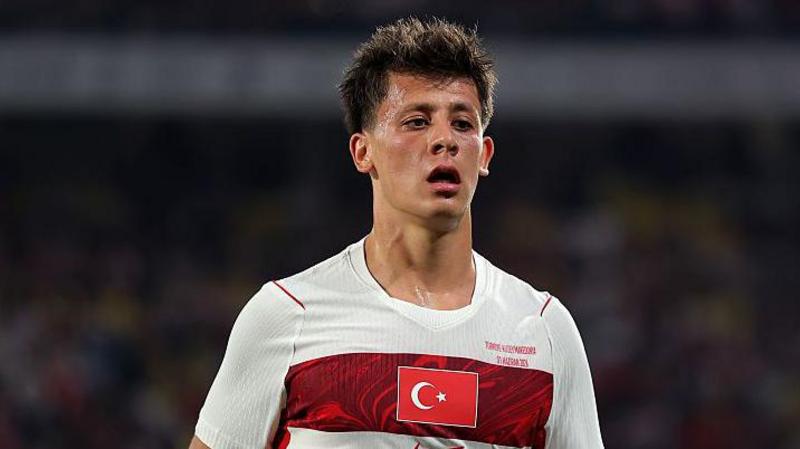
1 Comments Real Madrid midfielder Arda Guler has been named in Turkey's 26-man World Cup squad. Guler, 21, picked up the Champions League Revelation of the Season award, which recognises a young player's achievement in the competition, following his four assists and two goals as Real reached the quarter-finals. Manchester United goalkeeper Altay Bayindir and Brighton defender Ferdi Kadioglu have also been included in head coach Vincenzo Montella's final squad. Turkey open their Group D campaign against Australia on 14 June, followed by Paraguay on 20 June and the United States on 26 June. The World Cup, co-hosted by the US, Canada and Mexico, begins on 11 June. World Cup: Every squad as they are announced Defenders: Abdulkerim Bardakci (Galatasaray), Caglar Soyuncu (Fenerbahce), Eren Elmali (Galatasaray), Ferdi Kadioglu (Brighton), Merih Demiral (Al-Ahli Saudi), Mert Muldur (Fenerbahce), Ozan Kabak (Hoffenheim), Samet Akaydin (Caykur Rizespor), Zeki Celik (AS Roma). Midfielders: Hakan Calhanoglu (Inter Milan), Ismail Yuksek (Fenerbahce), Kaan Ayhan (Galatasaray), Orkun Kokcu (Besiktas), Salih Ozcan (Borussia Dortmund). Forwards: Arda Guler (Real Madrid), Baris Alper Yilmaz (Galatasaray), Can Uzun (Eintracht Frankfurt), Deniz Gul (Porto), Irfan Can Kahveci (Kasimpasa), Kenan Yildiz (Juventus), Kerem Akturkoglu (Fenerbahce), Oguz Aydin (Fenerbahce), Yunus Akgun (Galatasaray). Everything you need to know about the World Cup

FIFA.com02 Jun 2026
Quiz: Name every city hosting a World Cup 2026 match

World Cup News

Quiz: Name every city hosting a World Cup 2026 match

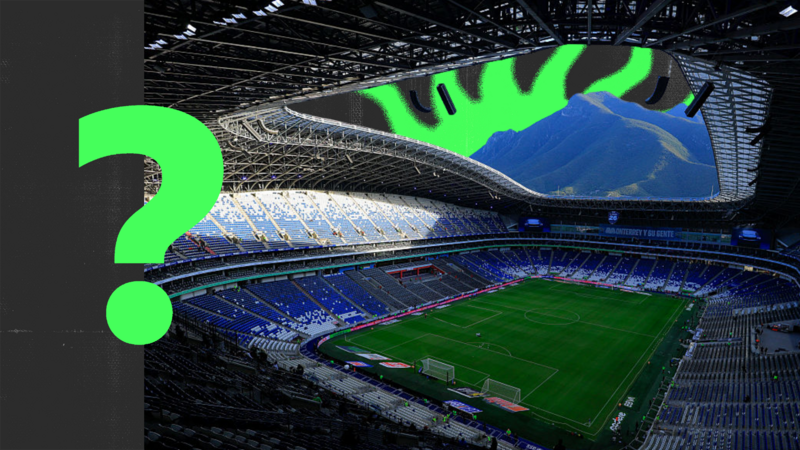
Sixteen cities were chosen to host matches at this summer's World Cup - which is only nine days away. Be aware, some stadiums are in a different city to their official Fifa one. But, lucky for you, naming either city will get you the points in our quiz! After more quizzes? Go to our dedicated Football Quizzes and Sports Quizzes pages and sign up for notifications to get the latest quizzes sent straight to your device. What information do we collect from this quiz?Related topicsFootballFIFA World Cup 2026Play more quizzesQuiz: Name every nation at the 2026 World Cup Which World Cup team are you? Take our quiz World Cup quiz: Name every player in England's squad World Cup quiz: Name every player in Scotland's squad

FIFA.com02 Jun 2026
Germany World Cup 2026 team guide

World Cup News

Germany World Cup 2026 team guide

Germany’s fans have been trying to improve the atmosphere at games of late. Photograph: Alex Grimm/Getty ImagesJulian Nagelsmann will rely on a Bayern-based core, but individual class is in worryingly short supply This article is part of the Guardian’s 2026 World Cup Experts’ Network, a cooperation between some of the best media organisations from the 48 countries who qualified. theguardian.com is running previews from three countries each day in the run-up to the tournament kicking off on 11 June. Predicting Germany’s tactics is not entirely straightforward because Julian Nagelsmann likes to change his lineup and system. The result was five mediocre to poor performances in the qualifiers, including a 2-0 defeat in Slovakia that could easily have been heavier. But they were convincing in the return fixture, sweeping their opponents aside 6-0, and won their group convincingly. Nagelsmann will probably base his team from that match in Leipzig and will demand passion from his players. “We have to play with emotion,” says Nagelsmann, who is regarded as a tactical obsessive and is often seen shouting and raging in the technical area. The team’s traditional recipe for success has been to adopt the things that work well at Bayern Munich and in 1974 and 2014 that led to World Cup triumphs. The chances of a repeat initially appear favourable: this season has gone exceptionally well for Germany’s only world-class club. Nagelsmann is therefore likely to rely on a Bayern core of Jonathan Tah, Aleksandar Pavlovic, Joshua Kimmich, Leon Goretzka and Jamal Musiala (with Lennart Karl and Serge Gnabry out through injury) as well as Manuel Neuer, who ended his international retirement in May to play in his fifth World Cup. But can the Munich axis be relied upon? Musiala is out of form and in recent months was not much more influential for Bayern than Goretzka, who sat on the bench in all the important matches in the second half of the season yet still seems certain to start under Nagelsmann. And Kimmich will play in a different position for Germany than he does for Bayern: at right-back rather than in central midfield. It is a solution with risks. Kimmich embodies a problem in German football: there is a lack of individual class. He is certainly a master of the traditional virtues, but as captain, because of his shortcomings in tackles and one-on-ones, he does not measure up to predecessors such as Lothar Matthäus, Michael Ballack or Philipp Lahm. Germany also used to pride themselves on their goalkeepers and defenders. That, too, is lacking, despite the return of the 40-year-old Neuer. Nor are there any midfield strategists in the mould of Toni Kroos or Mesut Özil. The hope lies up front. In the No 10 role, Nagelsmann has a wide range of options in Florian Wirtz, Musiala and Kai Havertz, all of whom possess outstanding skills. He will probably use Havertz as a deep-lying centre-forward as there was never any doubt about the Arsenal forward’s technical ability, only about his efficiency. Will he be more clinical than he was at Euro 2024? He will need to be because, with Niclas Füllkrug and Nick Woltemade still not established, this is a team without a classic goalscorer. Florian Wirtz combines the qualities of a playmaker with those of a tireless team player in a way that is exceedingly rare. “He is extremely hard-working and not a classic No 10 who only wants the ball, but someone who also puts in a lot of work,” said Nagelsmann, who defended Wirtz when he came in for criticism in the months after he moved to England. Wirtz did not have a terrible season at Liverpool, but measured against his class and his transfer fee it has not been a particularly good one. The same applies, to some extent, to the national team. Against non-elite opponents, as in the 4-3 win in Switzerland in March, Wirtz can blow everyone away with his technique and interplay with Havertz or Musiala. But if Germany are to be successful the 23-year-old will have to perform against major sides. After a pre-tournament injury to Lennart Karl, Denis Undav could be in line for more game time than he expected this summer, for he and Julian Nagelsmann have not always seen eye to eye. The former Brighton forward was by far the most clinical German striker this season but, for some reason, Nagelsmann does not seem to rate him. He scored the winning goal in the March friendly against Ghana but afterwards the coach offered no praise, rather a critical backhand. “He wasn’t very involved in the game, had no actions before [the goal],” Nagelsmann said. “I didn’t think his performance was good.” The coach’s comments may have stemmed from Undav saying before the game that he felt he should start rather than just be a substitute. Nagelsmann was not entirely wrong, but saying it publicly was unusual. He may find it hard to resist the clamour from supporters for the natural finisher. Nico Schlotterbeck and Antonio Rüdiger attract more attention, but Germany’s best defender is Jonathan Tah . His strength in the tackle and his composure on the ball will be crucial. Tah is not a man of many words and comes across as quiet off the pitch. On it, however, he seems to have found his role, and in the United States he will play his first World Cup match at the age of 30. “It was never pleasant playing against me, because I have a certain physicality,” he told Zeit two years ago. “But now I’m even more unpleasant, because I always keep my opponent in view and stay right on him.” “Olé, super Deutschland, olé!” “Deutschlaand, Deutschlaaand, Deutschlaaaand!” German terrace chants cannot quite keep up with the creativity of Musiala’s dribbling and during the home Euros two years agoNagelsmann complained that Germany’s fans were too quiet. Being typically German, the DFB set up a working group in 2024 to improve the atmosphere: the AG Stimmung. “People want to sing, they just need someone to tell them what to sing,” said lead chanter Bengt Kunkel. However, Kunkel will not be travelling to the United States. He feels the same as many fans, for whom this World Cup is simply too big and too expensive. Even so, there will probably be a few more supporters in the US, Mexico and Canada than there were in Qatar. Much like German football, it has seen better days. At the end of April, Friedrich Merz criticised Donald Trump in front of school pupils, saying he had gone to war with Iran without any strategy whatsoever. Trump’s response was that Merz had no idea what he was talking about and was doing a terrible job. That it may not always be wise to say every thought out loud is something the chancellor and the national coach still have to learn, the latter having had to row back on several occasions in his career. No one should expect any sign of rebellion from the DFB in the United States. There was some discussion in Germany about boycotting the World Cup because of the Greenland crisis, but only briefly. The DFB still seems traumatised by the One Love armband affair at the World Cup in Qatar. “I’m no longer taking part in the political discussion,” said the captain, Joshua Kimmich. “We’ve seen that it’s not really productive when we players speak out politically.” Written by Nico Horn and Oliver Fritsch for Die Zeit.

FIFA.com02 Jun 2026

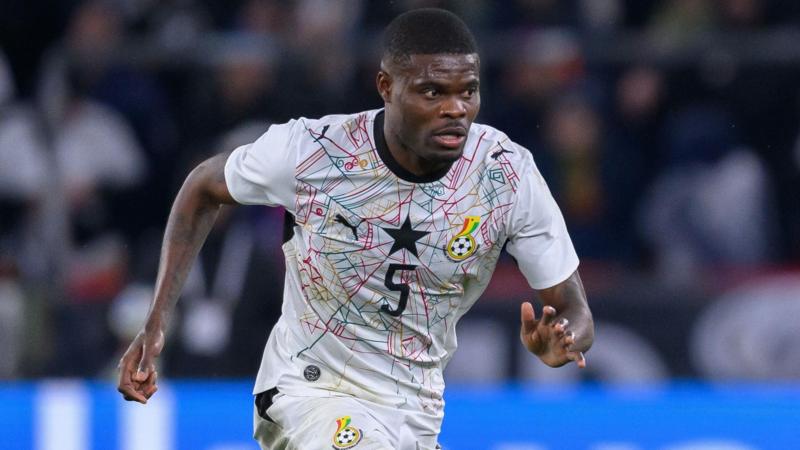
Partey named in Ghana squad for World Cup

World Cup News

Partey named in Ghana squad for World Cup

Former Arsenal midfielder Thomas Partey has been named in Ghana's squad for the World Cup. Partey has pleaded not guilty to seven charges of rape and one count of sexual assault relating to allegations by four different women between 2020 and 2022. The 32-year-old, who now plays for La Liga side Villarreal, is due to stand trial next year. Partey made 167 appearances in all competitions for Arsenal between 2020 and 2025 but left the Gunners last summer after his contract expired. "Thomas is our vice-captain. He is one of the top midfielders in the world and we stand by him shoulder to shoulder," Ghana FA president Kurt Okraku told BBC Sport. Ghana boss Carlos Queiroz named Partey in a preliminary 28-man squad for a pre-World Cup training camp and friendly against Wales in Cardiff on 2 June (19:45 BST). Partey remained in the squad as Queiroz left out goalkeepers Solomon Agbasi and Paul Reverson to reach his final 26-man selection. Centre-back Alexander Djiku has been ruled out after suffering a hamstring injury as his Spartak Moscow team won the Russian Cup final on 24 May so has been replaced by Netherlands-born defender Derrick Luckassen, who made his Ghana debut in March. Manchester City forward Antoine Semenyo and Coventry striker Brandon Thomas-Asante are also included, along with Leicester duo Jordan Ayew and Abdul Fatawu. Joseph Anang, who plays for League of Ireland Premier Division club St Patrick's Athletic, is one of three goalkeepers in the squad. Tottenham winger Mohammed Kudus missed out with the quad injury which has kept him out of action since January. Ghana begin their World Cup Group L campaign against Panama in Toronto on 17 June before they face England and Croatia in Boston and Philadelphia, respectively. Ghana boss Queiroz no qualms over Partey selection Defenders: Baba Abdul Rahman (PAOK), Gideon Mensah (Auxerre), Marvin Senaya (Auxerre), Alidu Seidu (Rennes), Abdul Mumin (Rayo Vallecano), Jerome Opoku (Istanbul Basaksehir), Jonas Adjetey (Wolfsburg), Kojo Oppong Peprah (Nice), Elisha Owusu (Auxerre), Derrick Luckassen (Pafos). Midfielders: Thomas Partey (Villarreal), Kwasi Sibo (Real Oviedo), Augustine Boakye (Saint-Etienne), Caleb Yirenkyi (Nordsjaelland), Abdul Fatawu Issahaku (Leicester City). Forwards: Kamaldeen Sulemana (Atalanta), Christopher Bonsu Baah (Al Qadsiah), Ernest Nuamah (Lyon), Antoine Semenyo (Manchester City), Brandon Thomas-Asante (Coventry City), Prince Kwabena Adu (Viktoria Plzen), Inaki Williams (Athletic Bilbao), Jordan Ayew (Leicester City). Everything you need to know about the World Cup

FIFA.com02 Jun 2026
England super-fan, six, to be pre-World Cup mascot

World Cup News

England super-fan, six, to be pre-World Cup mascot

ShareSaveAdd as preferred on GoogleJonny HumphriesNorth WestA six-year-old schoolboy who has supported England "my full life" has shared his joy at being selected to travel to the United States as a mascot before the World Cup. CJ, from Blackburn in Lancashire, will travel to Orlando with his grandad Paul Clegg, who has long followed the Three Lions around the world. Young fan CJ will join the players on the pitch before England take on Costa Rica in a warm-up game on 10 June ahead of the tournament. "I just hope that he follows my path because I've been to some amazing places around the world... I've been to so many different places following England," said his proud grandfather. "It's not just the football - it's the whole culture that surrounds it." Paul told the BBC the family believed CJ, who has been attending England games since he was two, had missed out because they had not heard anything by a supposed deadline on Wednesday. However an email arrived the following day, inviting CJ to Orlando where he will meet his favourite players - Bayern Munich striker Harry Kane and Everton goalkeeper Jordan Pickford. Paul, who has been going to England matches since the 1990s, said the culture had changed since the days when fans were dogged with a reputation for hooliganism. "In 1998 - the first game that I attended in Marseille - it was like three days of proper civil war. It was horrendous," he explained. "But things have changed since - England fans are welcomed around the world. "There's a different atmosphere around the England fans." He added that having his grandson with him in Orlando would be "extra special". Listen to the best of BBC Radio Lancashire on Sounds and follow BBC Lancashire on Facebook , X and Instagram . You can also send story ideas via Whatsapp to 0808 100 2230.

FIFA.com02 Jun 2026
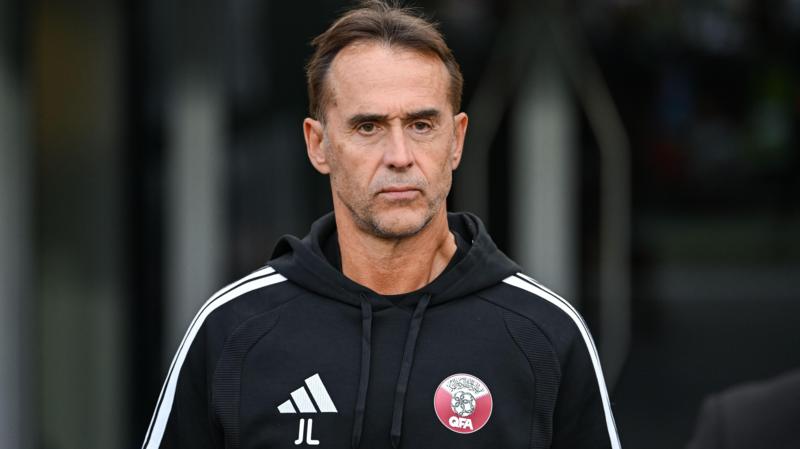
Lopetegui picks Ali in Qatar World Cup squad

World Cup News

Lopetegui picks Ali in Qatar World Cup squad

Qatar coach Julen Lopetegui has included the country's all-time leading scorer Almoez Ali in his squad for the World Cup. Ali, who has netted 60 goals in 126 appearances for the gulf state, is one of nine forwards named in the 26-man party by ex-Spain, Real Madrid, Wolves and West Ham boss Lopetegui. Two-time Asian Player of the Year Akram Afif has also been selected as Qatar bid to improve on their efforts in 2022 when they became the first host nation to lose all three group matches. Lopetegui, who was appointed in May 2025, declined to include former Doncaster and Peterborough defender Niall Mason, born in Brighton, who was named in the preliminary squad. Veteran 42-year-old striker Sebastian Soria, who has scored 39 goals in 124 appearances for Qatar, also misses out. Qatar face Switzerland in Santa Clara on 13 June before games against co-hosts Canada in Vancouver and Bosnia-Herzegovina in Seattle. Goalkeepers: Salah Zakaria (Al-Duhail), Mahmoud Abunada (Al Rayyan), Meshaal Barsham (Al-Sadd) Defenders: Hashmi Hussein (Al Arabi), Ayoub Alawi (Al Gharafa), Boualem Khoukhi (Al-Sadd), Pedro Miguel (Al-Sadd), Issa Laaye (Al Arabi), Lucas Mendes (Al-Wakrah), Sultan Al-Brake (Al-Duhail), Homam Al-Amin (Cultural Leonesa) Midfielders: Mohammed Al-Manai (Al Shamal), Jassem Jaber (Al Arabi), Karim Boudiaf (Al-Duhail), Ahmed Fathi (Al Arabi), Abdulaziz Hatem (Al Rayyan), Assim Madibo (Al-Wakrah) Forwards: Tahseen Mohammed (Al-Duhail), Edmilson Junior (Al-Duhail), Almoez Ali (Al-Duhail), Akram Afif (Al-Sadd), Mohammed Muntari (Al Gharafa), Youssef Abdulrazzaq (Al-Wakrah), Ahmed Alaa (Al Rayyan), Hassan Al-Haydos (Al-Sadd), Ahmed Al-Janahi (Al Gharafa) Everything you need to know about the World Cup

FIFA.com01 Jun 2026