AccaMate logo
FIFA World Cup 2026 logo

FIFA World Cup

2026 — The Tournament Of A Lifetime

11 June – 19 July 2026

Host nations

Canada flagCanada
Mexico flagMexico
USA flagUSA

Countdown to World Cup

--Days
:
--Hrs
:
--Mins
:
--Secs

World Cup News

The latest stories, squad announcements, build-up coverage and tournament analysis — direct from FIFA.

‘We’re going to be in an unreal, mad World Cup time zone’: Kelly Cates on presenting in Salford at 2am

World Cup News

‘We’re going to be in an unreal, mad World Cup time zone’: Kelly Cates on presenting in Salford at 2am

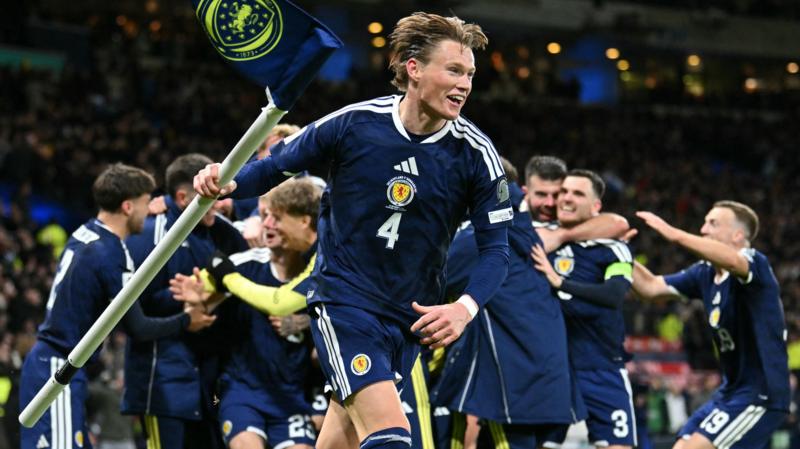
BBC TV and radio host on sportswashing, the brilliance of watching Argentina up close and why Donald Trump won’t be able to hijack the football glory “Before every tournament there are always concerns,” Kelly Cates says as she approaches her fifth World Cup as a television and radio presenter. “There’s always something everybody’s worried about. This time I worry about the humidity and the altitude for the players and there are political concerns, obviously. “But there are also concerns that it’s not going to feel like a World Cup. In the US, they probably see that as a good thing. They probably see it as: ‘We’re going to make it better.’ Whereas we’re looking at it from a more traditional point of view, thinking: ‘Why are you going to change something that’s so amazing in the first place?’” Cates, who will present World Cup games on BBC television and Radio 5 Live, worked in Russia in 2018 and Qatar four years later, and she does not try to sidestep that we are about to be immersed in a tournament that takes place mostly in Donald Trump’s America. It starts in Mexico City on Thursday, and features 13 games each in Mexico and Canada, but the bulk of it will be played in the US. There is widespread antipathy towards America in Mexico, Canada and Europe and the tournament will unfold against the US’s war in Iran as well as the absurd double act of Trump and Fifa’s grovelling president, Gianni Infantino, who has allowed obscene ticket and travel prices to soar. “We do try to talk about it all, especially in the buildup,” says Cates who, as always, combines natural warmth with a refreshing willingness to discuss difficult issues. “Once the football gets under way we have this great distraction and that’s the point, isn’t it? But there’s a difficult line between taking the World Cup to countries where it wouldn’t traditionally be, and that can be a genuine force for good, and taking it to countries where it can be hijacked for someone’s political promotion or personal gain. “But I’m not sure the idea of sportswashing works that well in a World Cup, because I don’t think people really pay too much attention to where it’s being staged. They watch the football and really don’t have that sense of place. I don’t think people watched the Qatar World Cup and thought: ‘I really want to go to Doha.’ I don’t think people watched the 2018 World Cup, even with England reaching the semi-final, and thought: ‘I really must book a flight to Russia.’” Cates smiles diplomatically when asked how she feels about a World Cup that won’t be able to escape Trump. “I assume, because of his PR nous and skill for self-promotion, he will want to be front and centre. But I’m not sure that has the knock-on effect he will hope for. It might domestically. But he’s the kind of person that anything he does just consolidates what people already think of him now. I don’t think anybody’s changing their minds about him.” The 50-year-old then laughs at herself. “But I’m giddy about the fact they’ve decided to put Madonna on at half-time [of the final on 19 July]. I’m very sniffy about half-time shows, but now that Madonna’s going to be there [along with Shakira and the K-pop stars BTS], it has made it a much better idea.” Cates soon becomes more serious. “But you don’t get the full World Cup experience unless the fans are there, unless you have fans being able to travel in the first place. Not everybody’s going to be able to, either financially or logistically or because of travel bans. So that’s another issue and I think they’re missing out on what makes a World Cup special. They’re hoping they will be able to put razzmatazz around it and bring the American showbiz factor that’s going to make up for [the missing fans]. But it won’t feel like a traditional World Cup.” Cates is a football fan as much as a media pro. “I’m really wary of saying all these caveats and concerns will spoil the World Cup because when it gets under way you feel the buzz, don’t you? Even for us working in it.” She draws hope from the way football sustained her in Qatar. “It was quite stressful going over there. We’d had lots of conversations and there was a lot of anxiety about how we would cover it. I was really worried about getting the tone right. I was also concerned with how sanitised the games were going to be. “There was a coldness at times, but I went to Argentina v Mexico and the stand directly across from us had a peak in the middle and so it felt incredibly high and incredibly far away. It was slightly fuzzy and looked a little bit like old footage of Argentina 1978. It had that vintage feel to it and their fans were incredible. “Bar the Saudi Arabia game, which I’m not too worried about having missed, I went to every Argentina game in Qatar, whether it was to work on or just to watch. I ended up getting so involved, I felt Argentinian by the end of it. There are all these links between Argentina and Scotland so I was like: ‘Right, these are my people.’ So when they won it I was beside myself. That final? What a genuine privilege. And what a privilege to see Messi at close quarters.” Cates shakes her head in wonder. “We talked about it on 5 Live with Tim Vickery [the South America football expert] and it was like watching an alligator. They sit below the surface and look like a rock and nobody notices them and then they snap. It was so incredible to watch this all-time great in action. Me and my friend, Simon, who was a producer on many of the games, saw a lot of Argentina together. Every now and again we still send each other a text that says: ‘Have you ever seen Messi win the World Cup?’” Enthusiasm pours out with her laughter and Cates sounds even more excited when we remember how some of the World Cup qualifying matches, especially as Scotland beat Denmark 4-2 in November, were the equal of almost anything else this season. “I was working for BBC Scotland at Hampden and it was incredible,” she says. “They did a commentary-cam, with a camera on all the pundits, and I ended up sitting in the middle of them. I don’t know how it slipped through the net on social media because what you can see, and a few of my friends noticed, is that when Scotland went ahead with that amazing Scott McTominay goal I’m in the middle going: ‘What a fucking goal.’ “My friends were texting me going: ‘How has that slipped through? We can all lip read.’ It was also so cold and I’ve got really big, heavy gloves on so I looked like someone who’d never clapped in their life. I was so overexcited. “I did a show with Pat Nevin on the radio last month about moments of the season. Pat said it might be the greatest feeling he’s had, watching or playing, in any game of football. Genuinely, it was so special. “We’ve had so many years of glorious failure so we all went in steeled for that. After the first goal that euphoria was quickly tempered by a feeling of: ‘Well, we scored too early.’ But there were three more sensational goals and my phone was beeping constantly till four in the morning because nobody could sleep. Everybody was wired.” Does Cates have some sadness the BBC decided she, her fellow presenters, Gabby Logan and Mark Chapman, and their pundits, will be working in a studio in Salford until the later stages of the tournament? “At first I was a little bit disappointed. But I’m now very much on the positive side and thinking: ‘Do you know what? It would be impossible to get to enough games to cover them.’” Cates says “we’ll still have a presence. For the Scotland matches, Eilidh Barbour’s going to be there and we’ll have people in the stadium. But when I think about the first Scotland game [against Haiti], I like the idea it’s going to be two in the morning. We won’t be in quite the same headspace as everybody who’s watching it in the pub, but we’re going to be in that slightly unreal, middle-of-the-night, mad World Cup kick-off time zone. “I’m going to get in Irn-Bru and Tunnocks Caramel Wafers and Teacakes and make it a bit of a party atmosphere in the studio so we’re in the same headspace as people watching at home. There’s something nice in being mentally and emotionally in the same place as the viewers.” She will do “a mix of TV and radio and then I’m heading out to the US for 5 Live for the semi-finals and final”. On television, Cates, Logan and Chapman will guide a panel of pundits including Alan Shearer, Wayne Rooney, Thomas Frank and Olivier Giroud, but will she keep a close eye on the BBC’s rivals at ITV? “Very much so and much more than in a normal tournament. I’m going to be able to watch everything and that’s nice because I know a lot of the ITV pundits. I’ve worked with them week in, week out. There’s a rivalry at a corporate level where they’re looking at numbers, but not for us. We just want to watch the games and watch our mates.” For Cates, “there is a sense of responsibility in having that many viewers trusting you to bring the coverage. You don’t want to let people down. World Cups are such a big part of people’s lives, and we’re covering it for kids who will have their first World Cup memories in this one and we’re also covering it for people for whom it’s a huge part of their lives every four years. “But, mostly, they remember the games. Then they’ll remember the pundits, but we presenters are way down the list. Nobody’s really going: ‘There was that amazing World Cup moment with a presenter.’ Unless it’s Des Lynam, of course.” Cates laughs again and, as always happens in the World Cup, the pre-tournament concerns fade. She will also host Scotland v Brazil in their final group game and Cates can’t stop smiling. “Just the thought of Scotland being in the World Cup is amazing. If your own country isn’t there, it’s not the same. I know we’ve been in it before in my lifetime, but this feels different. This feels more emotional.”

FIFA.com08 Jun 2026
Semi-automated offside is coming for the World Cup. Here’s how one referee uses it

World Cup News

Semi-automated offside is coming for the World Cup. Here’s how one referee uses it

Micheal Barwagen is part of an all-Canadian crew at this World Cup, and says the new offside system makes his job easier in some ways The 2026 World Cup will be the first edition of the tournament to feature semi-automated offside technology, utilizing a dozen cameras to track player movement at a rate of 50 stills per second. In theory, it sounds like an effective, if dizzying, way to cut down on delays and better aid the officials. One of those officials is Micheal Barwegan, who is part of the first all-Canadian officiating team in men’s World Cup history. He has worked with referee Drew Fischer and fellow assistant referee Lyes Arfa increasingly often over the past two years. The team worked in-tandem at the 2024 Olympics and last summer’s Club World Cup along with their more regular work in club soccer. This summer won’t be his first semi-automated rodeo. That came last summer, when he was stationed along the touchline during Botafogo’s famous win over Paris Saint-Germain at the Club World Cup. Barwegan said that while the tech certainly helps with his job, it does not turn the assistant referee into an autopilot-led role. “I’m gonna tell you, the semi-automated system is not perfect,” Barwegan said. “As such, our job stays exactly the same. It is really, really good – I like to say I’m a little bit better – but I think that’s purely just on a technical side with how it’s programmed. “It’s tracking every player, and it’s got points [on each of those players] that it’s tracking … so I’m going to say it is as perfect as an assistant referee, if not better, on your normal run-of-the-mill offside calls. Its accuracy is amazing at that.” All of those cameras tracking all of those limbs assess when an attacker is stationed to receive a pass beyond the second-to-last defender. If it’s absolutely certain, the system notifies assistant referees with an “offside, offside, offside” message in an automated voice through their earpiece. As of last summer’s Club World Cup, being “clearly offside” means the gap between defender and attacker is more than 10cm. Whenever it gets closer, the system will say “delay” in the assistant referee’s earpiece. If there isn’t a clear offside call to flag – either due to minimal gaps between the players involved or some off-ball movement that complicates assessing the scenario – there is no message. All the while, the assistant referees must do their usual work, allowing the match to progress so long as the play is inconclusive. Those automated messages are only received by assistant referees, who are also in constant contact with the referee for the full duration of a match. Barwegan and some of his peers have begun relaying what the semi-automated system tells them as an important part of their role. “The advantage to us on those plays is that the system doesn’t make a decision until the offside position player touches the ball,” Barwegan said. “When the ball gets played and a player’s running, I am quick to say [whether] he’s going to be offside or he’s good, and I will clear it to the referee in his earpiece before another decision has to be made. The computer has to think, and it’s super fast, but [on the field] it feels like forever.” Barwegan, a math teacher and a board game afficionado, first began officiating at age 12, hoping to earn “some pocket change.” Within five years, he found that he enjoyed calling games more than he liked playing them, though he’s quick to admit he “wasn’t that good” as a player. “Some people are like, ‘I need to go for a run’,” Barwegan said. “I clearly still need to do that, because I have to run [as a referee]. I like engaging my brain. I like reading rules, deciphering rules, and seeing how systems work together.” By 2012, he was calling professional games. His brother Brian also chose to take up officiating, eventually refereeing high school and college games for 17 years. When it came time for him to hang up his whistle in 2025, Brian had one request: For Micheal to be his AR. “I texted my manager with a weird request: can you [assign] me to Toronto?” Micheal recalled. “He’s like, ‘nobody wants to go to Toronto when it might be cold. What are you doing?” The reasoning was simple; Toronto was the only location close enough to Brian’s home in Alberta for Micheal to work a pro game on Saturday, with enough time to fly back and drive to Brian’s final game. After working Toronto FC’s 4-2 win over Orlando City, Micheal hopped on a flight and got to the University of Lethbridge in time for the Pronghorns’ clash against the University of Alberta Golden Bears. “I came screaming in, threw on a uniform and threw on my badge and went out there,” Barwegan said. “They still yelled at me non-stop. I was doing a game in MLS 14 hours ago, guys. I know what offside is, I promise.”

FIFA.com08 Jun 2026
Rowing boats & regrets - Scotland's undefeated 1974 World Cup campaign

World Cup News

Rowing boats & regrets - Scotland's undefeated 1974 World Cup campaign

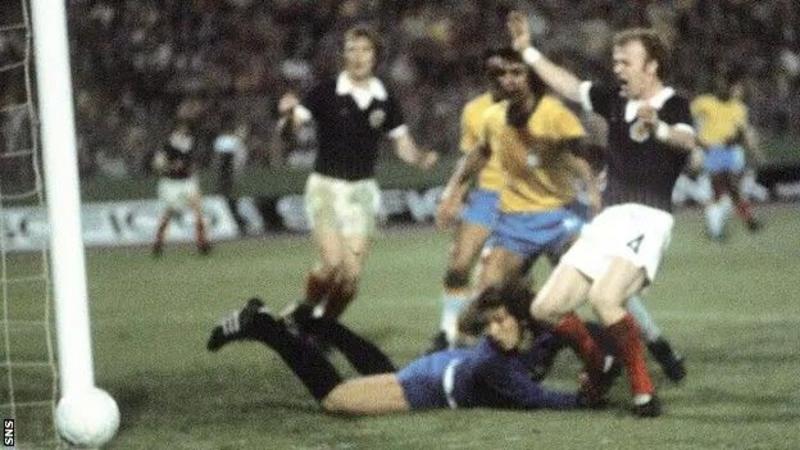
The 1974 World Cup in West Germany - what do you think of? Franz Beckenbauer, Johan Cruyff and the total football of the Dutch runners-up? Or maybe it's Scotland's first-round exit as the only unbeaten team at the finals. The sole nation from the British Isles to qualify, it was the first time the Scots had qualified since 1958. The official song was called Easy, Easy - but it wasn't conceit or hubris that was their downfall, it was goal difference. Joe Jordan and Davie Hay played in all three group matches and recall the campaign... Preparations were eye-opening, to say the least. After mixed results in the Home Internationals, Scotland had warm-up matches in Belgium and Norway. Then there was an infamous incident in Largs. Manager Willie Ormond allowed the players go for a night out in the coastal town and, in the early hours, winger Jimmy Johnstone decided to commandeer a rowing boat. Only problem was, he had no oars and began to drift out to sea. Hay and Eric Schaedler tried to rescue him, but the boat they purloined had a hole in it so they frantically rowed back to the shore. Johnstone had to be rescued by the coastguard, becoming front page news in the process. "We gave the perfect response the following Saturday by beating England 2-0," says Hay. "You couldn't say Jimmy beat England single-handedly but he helped destroy them. "I always say the perfect preparation should be going out for the evening, having a few drinks, and then a boating trip..." With world champions Brazil drawing 0-0 with Yugoslavia the previous day, Scotland's win over the inexperienced Africans - with goals from Jordan and Peter Lorimer - took them top of group two. "There was serious pressure on us because we were the favourites," Hay recalls. "I remember it was exceptionally warm and, being 2-0 up at half-time, I think we took the foot of the gas." Jordan adds: "In hindsight we should have tried to score more goals. Looking at the big picture, it was a mistake. There was a bit of naivety in it. If that game had been our second or third, the scoreline might have been a little different." Scotland had the best chance of the game when a Jordan header was saved by Leao but the rebound struck captain Billy Bremner's shin and squirmed inches past. "It wasn't like he could side-foot it in - it bounced off him," Jordan recalls. "It wasn't the result we wanted but we didn't feel it was an opportunity missed. We were in a position where we were going into the Yugoslavia game knowing a win would take us through." It was a sterling showing and remains the last time Brazil were denied victory by Scotland. "I watched the highlights recently and what impressed me was how balanced the team was," said Hay. "They didn't have Pele, but you are still playing against that magic yellow jersey. "In the first 10 minutes we were under the cosh a wee bit, but from then on we were slightly the better team." Meanwhile in Gelsenkirchen, Yugoslavia thrashed Zaire 9-0 amid claims the Africans had threatened to strike before the game over missing payments. Zaire head coach Miljan Miljanic had been a Yugoslavia international as a player. And, with his team 3-0 down after 21 minutes, he replaced his goalkeeper with a 5ft, 4in stand-in. Sixty seconds later it was four. "You often find that smaller nations are always up for the first game then fall away," Hay says. 22 June, Frankfurt. Scotland 1-1 Yugoslavia Victory would take Scotland into the last eight. Even a draw would have been good enough if Brazil failed to beat Zaire by three clear goals. But they did, winning 3-0. The Scots fell a goal behind with fewer than 10 minutes left, with Jordan's late equaliser not enough. Yugoslavia, Brazil and Scotland finished level on points, with the team who scored fewest against Zaire eliminated. "Over the three games, we only conceded one goal," Jordan says. "You go back to the Zaire game, there's a lot of disappointment - we should have done a lot more damage. "The only thing Ormond could have done differently was maybe bring Johnstone on against Brazil and Yugoslavia. He didn't play in a single game. "I don't know if that was for disciplinary reasons. On reflection, he probably would have made a difference." Brazil and Yugoslavia progressed to the last eight only to both go out in the second group stage. West Germany beat Netherlands 2-1 in the final, but lost to East Germany earlier in the tournament, leaving Scotland as the only unbeaten team in the finals. That's got to count for something, right? Goalkeepers: Allan (Dundee), Harvey (Leeds United), Stewart (Kilmarnock) Defenders: Blackley (Hibernian), Buchan (Manchester United), Donachie (Manchester City), Holton (Manchester United), Jardine (Rangers), McGrain (Celtic), McQueen (Leeds United), Schaedler (Hibernian) Midfielders: Bremner (Leeds United), Cormack (Liverpool), Hay (Celtic), Hutchison (Coventry City), Johnstone (Celtic) Forwards: Dalglish (Celtic), Jordan (Leeds United), Law (Manchester City), Lorimer (Leeds United), Morgan (Manchester United) Everything you need to know about the World Cup

FIFA.com08 Jun 2026
Why preparation isn’t everything at a World Cup | Jonathan Wilson

World Cup News

Why preparation isn’t everything at a World Cup | Jonathan Wilson

From high-altitude training to made to measure kits, teams have resorted to all manner of things to adapt to conditions at the tournament The heat and the altitude worried everybody. The 1970 World Cup in Mexico would not be a normal one. So the Bulgarian authorities sent their squad south of Sofia to get used to playing several thousand feet above sea level. Which seemed a great idea until somebody noticed that the temperature in the Pirin Mountains was not in the mid-20s celsius as it is in Mexico but somewhere near freezing. How then could they replicate the effect of playing in intense heat? By restricting water intake so that the players got used to performing while dehydrated. The plan was not a great success. Bulgaria lost their first two World Cup games in 1970 and had already been eliminated by the time they drew with Morocco. It’s safe to assume that preparations for this World Cup will be rather more sophisticated than they were 56 years ago. Most countries back then seemed to take the view that training at altitude was the logical way to prepare for games in Mexico City, Monterrey and Guadalajara. Israel went to Ethiopia and Colorado. Uruguay played in Quito and Bogotá. Mexico themselves held a five-month training camp that featured 13 friendly internationals in four months before a pair of games against the Scottish side Dundee United. England, the world champions, were paranoid about what they’d find in Mexico. Their team doctor, Neil Phillips, took a course on heat, altitude and tropical diseases, and recommended the players take salt tablets. He also brought in Dr Griffith Pugh, a physiologist who had been on Edmund Hillary’s mission that had climbed Everest. Other measures were less sensible. The manager Alf Ramsey, for all his gifts as a coach, was a xenophobe to the core. He had been a player in the England side that had lost to the USA in 1950, and remembered the greasy food served in Brazil with horror. A trip to Brazil in 1964 and a further tour of Latin America in 1969 had only heightened his distrust. England, he decided, would import their own bus, food and water. For the Mexicans, already irritated by a string of undiplomatic statements from Ramsey, this was the final straw. The authorities decided that the United Kingdom was beset by foot and mouth, so they impounded all the frozen meat at the docks then burned it, leaving England to subsist on Findus fishfingers and ready meals. Pre-tournament preparations began with three weeks in Mexico City, where life was so regimented that Ramsey would sit by the pool as players sunbathed, timing 20 minutes with a stopwatch, then blowing a whistle so the players could turn over. England then left for friendlies at altitude in Bogotá and Quito. It was when they stopped on the way back to change planes in Colombia that their captain, Bobby Moore, was arrested, accused of stealing a bracelet from a jewellery shop in the hotel foyer. He was held under house arrest for several days at the home of Alfonso Senior, a senior director of the Colombian football federation. After fevered diplomatic efforts, Moore made it to Mexico in time to play in England’s first game, a 1-0 win over Romania, and was eventually exonerated. The team that prepared most thoroughly, though, was Brazil. Late in 1969, the coach who led them through qualifying, João Saldanha, met two army officers, Cláudio Coutinho and Lamartine Da Costa, at a churrascaria at the bottom of Sugarloaf Mountain to discuss the best way to get the players ready for the physical challenge ahead. Coutinho would later become coach of Brazil and the LA Aztecs, where he had just finished working when he was killed in a diving accident in 1981. Da Costa was a specialist in biometeorology who taught at the Pontificia Universidade Católica do Rio de Janeiro. Both had attended the 1968 Mexico Olympics, both had made their observations and were keen to employ science to help. The samba stereotype of Brazilian football, the idea of instinctive footballers wandering off the beach to win tournaments had always been nonsense. The Brazilian golden age, when they won three Worlds Cups out of four between 1958 and 1970 was always based on meticulous preparation. Before the 1970 tournament, the players spent 100 days at army facilities. Everything was monitored in fanatical detail: players’ kit was made to measure and the collars designed so they would not accumulate sweat. There was a lot of talk about using a Nasa training course, although that seems to have amounted to little more than using the Cooper test, a means of monitoring fitness by measuring how far the players could run in 12 minutes. They arrived in Mexico City 32 days before their opening game against Czechoslovakia. And it worked: 12 of the 19 goals scored by Brazil in the 1970 World Cup came in the second half. They outlasted opponents as well as outplaying them. And there is perhaps a lesson there for 2026. Preparation isn’t everything (as we will see below), and the demands of the domestic calendar mean no contender will have spent four months locked away in isolation to train, but being ready for the conditions and having a gameplan that accounts for it will be a major benefit. There is a lot of randomness in football, much that is settled only on the day, but the higher the starting point the more chance a side has. Subsisting on Findus ready meals has never been a successful basis for winning a World Cup. Cameroon’s preparations for the 1990 World Cup in Italy had been shambolic. Their coach was the Russian Valery Nepomnyashchy, who had turned up two years earlier to run youth development in the country only to be appointed to the senior job. He spoke little French and the players didn’t much like him. They went out of the 1990 Cup of Nations in the group stage. When they moved from Bordeaux to Yugoslavia for a pre-tournament training camp, the balls and kit didn’t turn up. The attacking midfielder Grégoire M’Bida was sent home for missing the bus, then the veteran forward Roger Milla, who had gone into semi-retirement, turned up at the request of the country’s president, Paul Biya. Before the opening game, against Argentina, played on 8 June 1990, the goalkeeper Joseph-Antoine Bell gave an interview in which he said a 3-0 defeat to the reigning world champions would be a good result. He was dropped and Thomas N’Kono drafted in – so late that his wife missed the game because she’d gone shopping in Milan, believing her husband would be on the bench. Cameroon had two men sent off – and still won 1-0. No sub-Saharan African team had ever previously won a game at the World Cup; Cameroon went on to reach the quarter-final that year. This is an extract from Soccer Desk: World Cup edition, a newsletter from the Guardian US that will run regularly during the tournament. Subscribe for free here.

FIFA.com08 Jun 2026
Ofcom warns social media firms over online abuse during World Cup

World Cup News

Ofcom warns social media firms over online abuse during World Cup

Regulator will monitor measures taken by companies ‘Spikes have often targeted Black and minority ethnic players’ Ofcom has written to social media companies to remind them of their responsibilities regarding online abuse and said it will monitor measures taken against “illegal hate content” during the World Cup. After the experience of England players during the men’s 2021 European Championship and the women’s Euros last year, Ofcom has urged online platforms to make sure they have effective mitigations against abuse in place and that they are “adequately prepared for increased occurrence during the World Cup”. The risk of online harms related to major sporting events is “an area of significant concern” for the regulator, Ofcom says, citing its own research that shows the effect abuse has on players and others. “In previous tournaments, players, officials and coaching staff representing the home nations have experienced online hate, threats, abuse and harassment”, Ofcom’s letter reads. “Spikes in the circulation of this content have often targeted Black and minority ethnic players, as well as being on the basis of perceived sexual orientation or disability status.” Ofcom’s research “highlighted the scale, severity and normalisation of abuse online, including racist and threatening content directed at sportspeople, commentators and others in the public eye. Participants reported that such abuse is often relentless, highly visible and difficult to control. It can result in fear for personal and family safety or withdrawal from public life, as well as affecting health and wellbeing.” The letter notes that Fifa research found the quarter-final between France and England caused the largest spike in abuse against players during the 2022 men’s World Cup. This followed the abuse directed at Marcus Rashford, Bukayo Saka and Jadon Sancho after England’s penalty shootout defeat by Italy in 2021. In March, a man was given a suspended jail sentence after he was found guilty of directing “malicious communications” towards Jess Carter during the women’s Euros in 2025. Ofcom says it will monitor the way companies deal with abuse on their platforms using a “live compliance programme” and will share information with other key stakeholders, including the Football Association and the UK Football Policing Unit. The Online Safety Act requires social media companies ensure numerous measures are in place to keep their users safe. A central demand is that all social media platforms should have an “adequately resourced” content management team capable of removing illegal content. They are also required to have an “easy and accessible” complaints system, tools that enable users to disable comments and a named individual responsible for the ultimate compliance with the rules. Ofcom is the independent regulator of online safety after the introduction of the Online Safety Act, which came into effect in 2023. Under the act, it has the ability to fine a company £18m, or up to 10% of worldwide revenue, if it fails to take action against illegal content.

FIFA.com08 Jun 2026
Norway boss brands Scotland's Clarke 'unprofessional'

World Cup News

Norway boss brands Scotland's Clarke 'unprofessional'

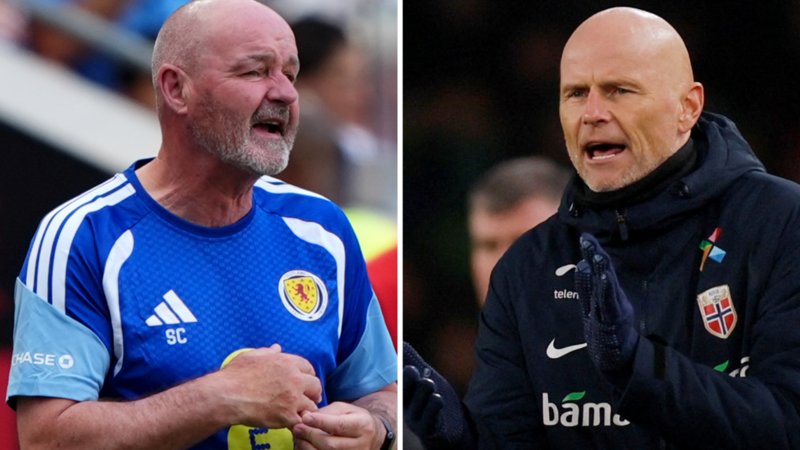
Steve Clarke has been branded "unprofessional" by Norway counterpart Stale Solbakken after the Scotland head coach cancelled a training-ground friendly as both sides prepare for the start of the World Cup. With both squads based in North Carolina, the game was planned for Monday, but the Norwegian Football Federation announced on Sunday it had been called off because of injuries in the Scotland camp. Clarke later confirmed to BBC Scotland: "It was just going to be a training game for an hour at our training ground. We picked up one or two niggles last week and decided it wasn't worth the risk." But, after Norway's 1-1 draw with Scotland's Group C opponents Morocco in Sunday's public friendly, Solbakken described it as "surprising" when talking to Norwegian broadcaster NRK. "It is unprofessional of Scotland," he said. "It is unprofessional that the coach has not called me, that they use the team manager and call and say it after we have finished training. Inside the fairytale journey of Scotland captain Robertson "But we have to live with that. That's why we adjusted a bit in the game." Norway kick-off their Group I campaign against Iraq next Tuesday, three days after Scotland face Haiti in Group C. The Scots played their final public preparation game on Saturday, when they defeated Bolivia 4-0, with Clarke utilising most of his squad. However, Norway's team manager, former Fulham defender Brede Hangeland, said they had based their World Cup preparations on the closed-doors friendly "for many months" before arriving at their base a Greensboro, about 90 miles from Scotland's training camp in Charlotte. "It is embarrassing to cancel it a couple of days before," he added. "We can't do anything about it. "We just have to forget about it and make the best of it. But there has been a lot of organisation, agreements and gentlemen's agreements and then suddenly they don't want to. "I think that was weak, so to speak." Everything you need to know about the World Cup

FIFA.com08 Jun 2026
Inside the fairytale journey of Scotland captain Robertson

World Cup News

Inside the fairytale journey of Scotland captain Robertson

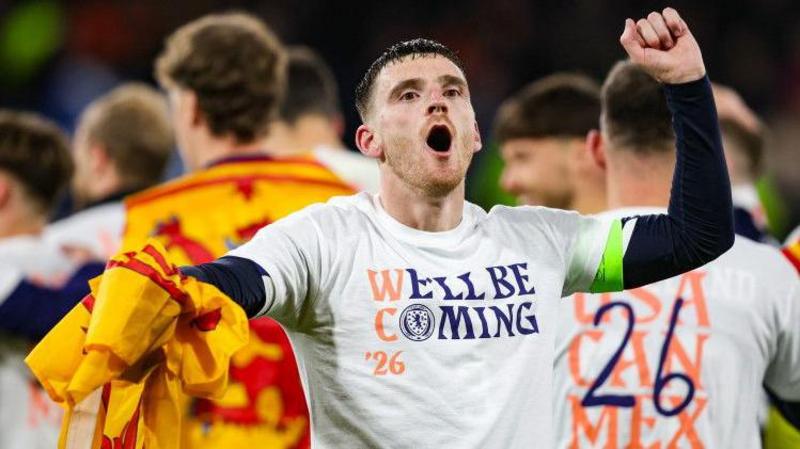
Inside the fairytale journey of Scotland captain Robertson At Scotland's training camp in Turkey before their crucial World Cup qualifiers against Greece and Denmark in November, Andy Robertson turned into Claudia Winkleman. The captain had devised a 'Traitors' game for the squad to play, complete with blackboards and mini shields. The chosen ones had to report to his room each night to elect who they were going to 'kill'. A week-long quest to find the Traitors ensued, as the players got involved in challenges and capers in the build-up to two of the biggest games of their lives. It was Robertson's way of bringing the team together and injecting some fun amid the pressure. It is a small but significant example of the 32-year-old's influence. As a player, team-mate and captain, 'Robbo' has made an indelible mark with this group of Scotland players. And his journey from working at the Hampden ticket office to captaining Scotland to their first men's World Cup in 28 years makes him a national icon. Robertson's value to Liverpool has been lauded over the last fortnight as he said goodbye to Anfield at the end of his nine-year spell. From a raw attacking full-back who - in Jurgen Klopp's view - could not defend when he arrived from Hull City in 2017, Robertson became one of the world's best. Alongside Trent Alexander-Arnold, Robertson set new assist records in the Premier League as part of Klopp's ferocious team and ended his time at Liverpool with two Premier League titles and one Champions League. Some have labelled him as the club's greatest-ever left-back, which at a club like Liverpool tells its own story. For Scotland, Robertson's tale is different. His status at Anfield brought pressure on national team duty. A nation so starved of major tournaments was desperate for a star. Except left-backs are rarely the star. Just as Robertson famously wrote when sending a Liverpool fan a shirt of Roberto Firmino's after the youngster donated to a foodbank. "Because nobody wants the left-back's shirt," was his quip. Robertson at times had to withstand debate about his own position, with Kieran Tierney rivalling him for the left-back berth. At Hampden, the most common songs are odes to the goalscoring exploits of Scott McTominay and John McGinn. His Scotland career has not been about individual moments but sheer consistency of standards and presence, almost from the moment Gordon Strachan plucked him from the under-21s and gave him his debut in March 2014. In his 12-year international career, he has barely missed a game and rarely even comes off. Over his 93 caps - only Kenny Dalglish has more for Scotland - Robertson has averaged 84 minutes per game. His relentless runs, crossing and full-blooded tackling have been a staple. His ability speaks for itself, but his team-mates all speak of how much more he brings. "I've always just tried to give 100% and also tried to enjoy it," Robertson told Kelly Cates in a BBC Sport interview last month. "We know we're very lucky to do the best job in the world, in my opinion. So many little boys and girls have dreams of becoming footballers when they're younger. And 99% of them don't make it. "We're in the small percentage that are very lucky to go and achieve their dreams. And I think I've always carried that with me." Alex McLeish named Robertson as Scotland captain in September 2018 after the retirement of Celtic midfielder Scott Brown. At the time, he had earned just 22 caps but had established himself as Liverpool's left-back as they reached the Champions League final. It said a lot that he was the obvious choice at just 24. Now he has captained Scotland more than any other player. "He's just a very humble guy," James McFadden, an assistant coach with the national team at the time, said. "You would never know he plays for Liverpool, top of the league and in the Champions League final. He's a leader." Robertson's infectious personality and ability to relate to people is one of his defining traits. Scotland head coach Steve Clarke says he can be both "demanding" and "understanding" when the time is right. Napoli and Scotland midfielder McTominay agrees. "Top boy, Robbo," he told the Scottish FA in a recent documentary, external. "He's such a great captain and he's got that good balance between being one of the senior players and saying you need to wake up if you're not playing well. "Then he's also got the personable side, organising things with the manager, helping young players and stuff. He's brilliant with that, brilliant." There are examples everywhere of Robertson doing just that. He and other senior players decided the squad were not marking each other's successes enough. Now, players are presented with a personalised Scotland shirt on their first cap and other milestones. There are endless clips of him laughing and joking with team-mates. Klopp described him as a "mood-lifter" and "energy-giver" at Liverpool. The scale of the tributes before his final game for Liverpool spoke volumes. Robertson describes the environment with the national team as "special" and, though he would credit Clarke with fostering that, his team-mates are happy to pay tribute to his own impact. That closeness has not just been a nice-to-have for this Scotland squad, it is a fundamental part of qualifying for three major tournaments. For Robertson, it is everything. "We've all grown up together and I played against all these lads when I was 10, 11," he said. "I've played against [John] McGinn my whole life. Kenny [McLean] and Ryan Christie and people like that. And now to be going to the World Cup with these, that I consider my best mates. It's just an absolutely incredible feeling." There is always a social media post, it seems. For Robertson, it is the one he sent out into the world as an 18-year-old about being broke and needing a job. At the time, he was playing for Queen's Park in Scottish League Two and earning £18 per week. It has been brought back up at various points over the years, as a reference to his journey after being released by Celtic as a 15-year-old. While at Queen's Park - in those days an amateur club - he worked in the ticket office at Hampden and in the bootroom to try to earn some extra money. Less than a year later, Robertson was playing regularly for Dundee United and another year on was in the Premier League with Hull City and a full Scotland international. "He doesn't like talking about his story," John McGinn told the Scottish FA. "He'll no like hearing it - but that'll never happen again. Part-time football to go so quickly to Hull, Liverpool, Champions League winner, Premier League winner, captaining your country at a World Cup. That's fairytale stuff. "It's a documentary I can't wait to sit back and watch, the Andy Robertson documentary." His manager at Hull, Steve Bruce, cited Robertson's ability to grow and meet bigger challenges as they came along. Strachan said his intelligence meant he learned extremely quickly. Robertson mainly ascribes his ascent to "luck" in having coaches and managers who were willing to give him a chance, as well as his work ethic. "What I could control is I went into football with: 'I will give this 100% and, if I don't make it, at least I can look back and go, you know what, I gave that absolutely everything and wasn't for me." Robertson is on his way to surpassing the great Dalglish's record of 102 caps for Scotland and already has the most appearances as captain. The McTominay mural marking the midfielder's overhead kick in the defining game against Denmark adorns a tenement next to Hampden, only a few miles from where Robertson grew up. It may need some company. Robertson is the boy who went from posting about being broke to ruffling Lionel Messi's hair on his way to winning the Champions League. From answering the Hampden phones to ending Scotland's World Cup hurt in the same place, 14 years on. He might not like to hear it, but it is a story that should inspire young Scots for generations. Everything you need to know about the World Cup

FIFA.com08 Jun 2026
Argentina World Cup 2026 team guide

World Cup News

Argentina World Cup 2026 team guide

Argentina's Lionel Messi on the ball with teammates during training. Photograph: Maria Lysaker/Imagn Images/ReutersLionel Scaloni’s strong, confident squad are no longer reliant on Messi as they target back-to-back World Cup titles This article is part of the Guardian’s 2026 World Cup Experts’ Network, a cooperation between some of the best media organisations from the 48 countries who qualified. theguardian.com is running previews from three countries each day in the run-up to the tournament kicking off on 11 June. The holders arrive at the World Cup with a squad that knows each other almost by heart but perhaps not with its players in peak physical condition – several had injury set-backs at the end of a very demanding season with their clubs. If everyone is fit, the coach will field many of the same players who were crowned champions in Qatar, with the exception of Ángel Di María, who no longer plays for the national team. Lionel Scaloni’s plan is to keep the 4-3-3 formation, with a solid defence featuring two centre-backs and two attacking full-backs, plus dynamic midfielders with excellent passing. Lionel Messi leads the charge once more, supported by the formidable Julián Alvarez and Thiago Almada, who could be the breakout star. Almost two thirds of the 2022 squad remains, but it now also includes some promising young players such as Nico Paz, who has been in excellent form at Como. They will also have established stars like Lautaro Martínez, who aims to be in top condition for this World Cup: something he couldn’t achieve in Qatar. “It will be a very complex and difficult World Cup. We have to prepare the players because what’s coming is going to be tough; you can’t always win,” said Scaloni, who has a lot of confidence in the group but also knows the difficulty of trying to replicate the success of his brilliant eight-year cycle (which has already yielded three major trophies) and could be extended after the World Cup. “This shirt is demanding. The fans want to see a team that plays good football on the pitch. From there, we know that the best team doesn’t always win,” said the coach who led Argentina to their third star. Qualifying was a breeze, Argentina finishing top of the Conmebol section, nine points clear of second-placed Ecuador. It also included a first World Cup qualifying win in Brazil. Lionel Scaloni became world champion in 2022 and has also won two Copa América titles. Despite lacking the prestige of coaches such as César Luis Menotti or Carlos Bilardo, he quickly became the most successful coach in Argentina’s history and a beloved figure thanks to his humble personality and close relationship with the players. After serving as Jorge Sampaoli’s assistant during the 2018 World Cup, the president of the Argentinian federation, Claudio Tapia, gave him the chance to coach friendly matches and later confirmed him as head coach, even without previous experience. Scaloni built a strong team, earned Messi’s trust, and now leads a transition. His family lives in Mallorca, and he often visits his home town of Pujato in Santa Fe. Without a doubt, the best player in the world and the team’s star is Lionel Messi . Even though he is playing in a league that is not considered elite, the No 10 and captain remains the man everyone looks to. The difference now is that the team has the confidence to perform well even without him. Messi is the symbol of the squad: everyone plays for him and sees him as an idol, from players such as Rodrigo De Paul and Cristian Romero to younger talents like Paz. This is a record sixth consecutive World Cup for Messi, who will celebrate his 39th birthday during the competition. Como’s Nico Paz , highly praised by his club manager, Cesc Fàbregas, is one of the most talented youngsters on show. He is one of the prospects that the federation followed carefully despite being born in Tenerife, eventually convincing him to represent Argentina. After developing in the Real Madrid academy, the son of the former centre-back Pablo Paz won his first cap in 2024. “I was born in Spain. I love both countries, but in the end I chose Argentina, the country that represents me the most, because of its people and the way football is lived there,” the midfielder said. Thiago Almada is already a world champion, but his participation in Qatar was almost symbolic: just a handful of minutes. Now, the 25-year-old born in the same Buenos Aires neighbourhood as Carlos Tevez (Fuerte Apache) will have a leading role and will surely be one of Argentina’s standout players. Despite his inconsistent recent form at Atlético Madrid, the Vélez Sarsfield graduate could be the big surprise for Argentinian supporters. Skilful, excellent in one-on-one situations, and with a powerful shot, he will probably take Di María’s place. Argentina fans stood out in Qatar and will do so again in 2026, first in Dallas and Kansas City, and most likely later in Miami. There is a strong connection with the team, especially after winning the World Cup. With Argentina, there will always be a great atmosphere, entertainment, and full stadiums. Although some organised fan groups may travel, violence is unlikely because they know the US is very strict about security. After Messi appeared at the White House when Donald Trump invited Inter Miami as MLS champions in March, you could say Argentina have Trump’s support. This is even more relevant considering Argentina’s president, Javier Milei, a frequent critic of the football federation, is one of Trump’s closest allies. “We must create the century of the Americas: Make Americas Great Again, from Alaska to Tierra del Fuego,” Milei said in February. Argentina players usually avoid getting involved in political matters. Written by Gastón Pestarino, Hernán Claus and Joaquín Zabala for Olé.

FIFA.com08 Jun 2026
Scotland's last World Cup adventure changed my life

World Cup News

Scotland's last World Cup adventure changed my life

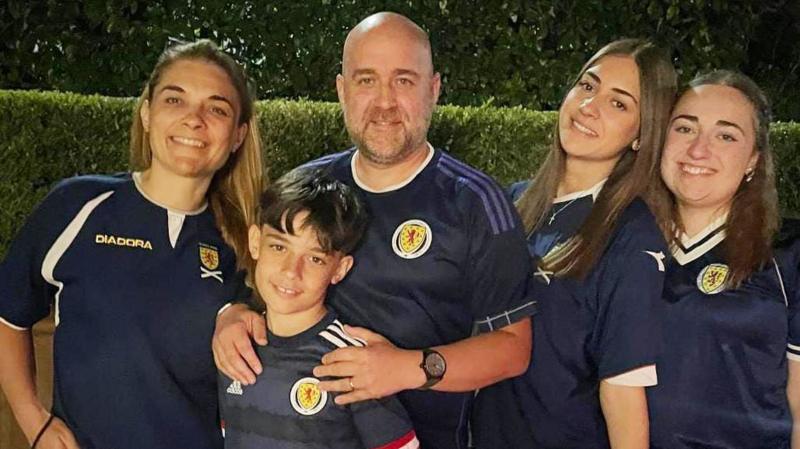
ShareSaveAdd as preferred on GoogleDonald PollockBBC NaidheachdanJoining the Tartan Army for Scotland's last group game at France '98 was a dream come true for a then 21-year-old Alan Weir. It felt unbelievable to be part of the pre-match scenes and the fans' march to the Stade Geoffroy-Guichard in Saint-Étienne. Even the result - a 3-0 defeat to Morocco that sent Scotland crashing out of the competition - could not dull his emotions. The experience would inspire Alan to make some major life choices - including quitting his job to see the world. France '98 was the last time Scotland men's team competed at a World Cup. Travelling to Saint-Étienne 28 years ago, Edinburgh-born Alan was immediately caught up in the build-up to Scotland's final group showdown. "The feel-good factor was unbelievable," he recalled. "There were people hanging out of windows waving Scotland flags, it felt like the whole city was behind us. "The euphoria of being there was like nothing I'd ever experienced in my life". Life as a Scotland fan can go from ecstasy to misery pretty quickly. The defeat sent Alan and the rest of the Tartan Army home before the postcards, once again. But the trip had sparked something in Alan. He wanted to see more of the world, and in 2000 took a youth group from his home area of Muirhouse on a trip to Germany. In the same year he left his job as a youth worker to travel more. "I wanted a change," said Alan. "The World Cup was the biggest thing in my life from when I was a kid and I think I learned about so many countries through the World Cup - I wanted to go abroad." He initially planned to spend time in Germany, but while there his path crossed an Italian, Piera, and he was soon on the move again. He visited her home near Naples, and took in a clash between Napoli and Juventus. The couple quickly became an item, and Alan fell "madly in love" with Naples and the city's football. Images of Argentina and Napoli legend Maradona were everywhere - and years later they would be joined by those of a new Napoli icon - Scotland's Scott McTominay. Alan's passion for Scotland had not diminished and he was on the road again to take in Scotland matches in San Marino and Zagreb in an ultimately unsuccessful 2002 World Cup qualifying campaign, before returning to the south of Italy. He said: "I wanted to go back for two reasons – I wanted to be with Piera and the other reason was that I missed Naples. "It opened my eyes to the world. When I came here it was love at first sight. "Naples reminded me of Leith when I was a kid – big characters – and I just felt really at home." With help from Piera and her family, Alan learned Italian and began to fit in with the local culture rather than stick out. "Now they call me "O' Scozzese Napolitano [The Scottish Neapolitan]," said Alan, who works as a learning and assessment consultant for a UK publisher. Alan and Piera now have their own family - three children - who share their love of Scotland and football. There has been much excitement in the household since Scottish internationals Scott McTominay and Billy Gilmour signed for Napoli in the summer of 2024. Alan was on the city's streets resplendent in a kilt and Napoli shirt last year when the pair helped inspire the team to the Serie A title, with McTominay scoring an acrobatic opener. "Having two Scottish players on the pitch for Napoli when they won the league – in a footballing sense it was the proudest day," said Alan. "That goal, I can't describe the feeling, but then he did it again for Scotland against Denmark. "I think McTominay feels a love here. They absolutely adore him." Looking back on France '98, Alan said his life had changed a lot. "I've got married and had a family, met a lot of amazing people, been to a lot of beautiful places and fallen more and more in love with the south of Italy," he said. Alan, who will be watching this year's World Cup from his home in Italy, added: "I'm very grateful for what I've got. "Family comes first and football a close second."

FIFA.com08 Jun 2026
'A World Cup for them not us': Fans' anger at US travel bans and visa restrictions

World Cup News

'A World Cup for them not us': Fans' anger at US travel bans and visa restrictions

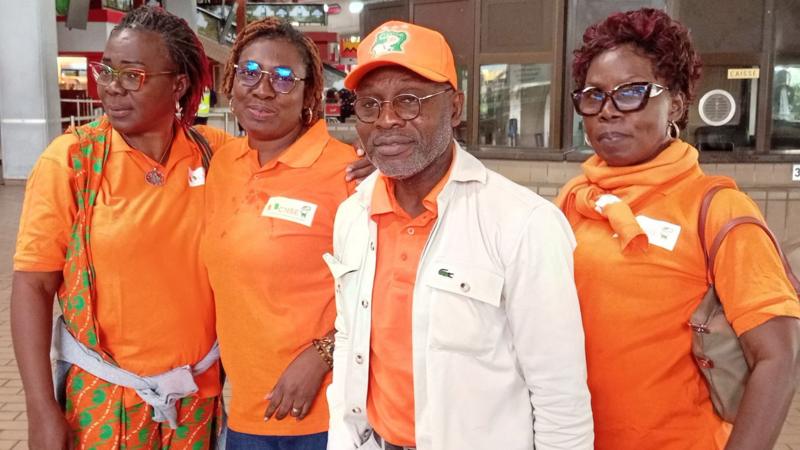
ShareSaveAdd as preferred on GoogleNadia HuraimiBBC News ArabicWhen Iraq's football team qualified for the World Cup at the end of March, Abdulla Adnan bought tickets for his country's matches against Norway and France, which will be played in the US cities of Boston and Philadelphia this month. "To go to a match, a stadium, a crowd, cheering, and see my team - that is worth the world to me," he says. "It's a feeling that no other feeling can compare to." This is only the second time Iraq has qualified for the World Cup - the first was in 1986. And Adnan is not alone. Fans from more than a quarter of the countries taking part in the World Cup are facing travel bans, tighter restrictions or high visa rejection rates, analysis of travel data by the BBC World Service shows. However, Iraq is not on Trump's travel ban list, so in Adnan's case, the obstacle was an unexpected one. After the start of the US-Israel war with Iran, the US suspended routine consular services in Iraq due to concerns about security in the region. This means there is nowhere in the country where Adnan and other Iraqi fans can get visas, as they have to attend an in-person interview. So Adnan travelled to neighbouring Jordan to try to get a visa at the US embassy there. But when he arrived for his appointment, staff told him that because he wasn't a Jordanian citizen, that embassy could not give him a visa. The tickets for the match and the trip to Jordan cost him about $1,800 (£1,300). Adnan considered applying for visa in Turkey, but the process could take up to two weeks, he decided that he couldn't spend that much time away from home. He has given up on trying to get a visa. Fans from several countries have told the BBC World Service that other obstacles are also causing widespread anger and upset. One of the barriers is President Trump's list with bans and greater restrictions on visas for certain countries, including four competing at the World Cup - Haiti, Iran, Senegal and Ivory Coast. This means their citizens are barred from receiving the type of visitor visa that US authorities recommend for fans. Strict immigration policies and a clampdown on undocumented migrants were a key part of Trump's re-election campaign in 2024. US authorities say their system needs to be rigorous due to the challenges they face in managing the huge flow of people that cross the country's borders. Julien Kouadio Adonis from the Ivory Coast's fan association, the National Committee for the Support of the Elephants says: "It's a form of segregation that doesn't dare speak its name, but the proof is there. "No European country has faced this kind of restriction. Why Africa?" His association normally sends a group of fans to the World Cup but decided not to bother even trying to go to the US because of the regulations. Although he is relieved they will avoid what he called "exorbitant" ticket prices, Adonis believes a country that doesn't want to welcome supporters from qualifying teams shouldn't be allowed to host the World Cup. "Football is a spectacle and a spectacle needs people watching," he says. Forty-two generally wealthier countries benefit from a visa waiver programme, where applications are made online through the US's Electronic System for Travel Authorization (Esta). This costs about $40 (£30). There are no African countries on this list. The visa that the US recommends for World Cup fans who need one costs $185 (£137) and applicants must attend an in-person interview. The State Department says they must demonstrate "your intent to depart the United States after your trip, and/ or your ability to pay all costs of the trip". However, in May the US announced it would drop the requirement for deposits of up to $15,000 (£11,000) for people from World Cup qualifying countries Algeria, Cape Verde, Ivory Coast, Senegal and Tunisia, provided they have valid World Cup tickets. Supporters from Senegal and Ivory Coast had to secure visas before December, after which the restrictions began. Seneglese fan Aliou Ngom has been to the last two World Cups in Qatar and Russia. For him, one of the highlights of the tournament is seeing "cultures coming together from all over the world". A training camp in the US for Senegal's women's basketball team was cancelled last year when several players were denied a visa, and like Adonis, Ngom thought there was little point him applying for a visa as fan. BBC analysis of US State Department data found that the visa rejection rate for citizens of 11 of the 48 countries that have qualified for the World Cup was higher than 40%. This includes applicants of all kinds, not just World Cup hopefuls. That compares to an average rejection rate for B1 business and B2 tourist visa applications – the type recommended for fans going to the tournament - from all countries of 34%. The data covers the year from October 2024 to the end of September 2025, so does not take in football fans who applied in the last eight months. The 11 countries are Ecuador, Egypt, Haiti, Algeria, Uzbekistan, Cape Verde, Jordan, Iran, Democratic Republic of the Congo, Ghana and Senegal. With a high rejection rate, it is hard for fans from these countries to know whether to risk spending a lot of money on match tickets before applying for a visa, which they might not get. If they do buy tickets directly from Fifa, they can resell them on the Fifa website for a fee if they need and can use the Fifa Pass system to speed up the visa application process. "Fifa Pass is a positive step because it tries to move ticket holders into priority visa interview appointments," says Celine Atallah, who runs an immigration law firm based near Boston in Massachusetts. But she adds that while it makes the process faster, it doesn't make it any more likely a visa will be approved. "The visa system is the invisible gatekeeper of the World Cup," Atallah says. "Fifa can sell a ticket, but the US government decides who gets a visa, and CBP [Customs and Border Protection] decides who actually enters." Even with a visa, anyone travelling to the US is not guaranteed entry on arrival, as border officials can still turn people away. Abu Kass is the head of the football fan association for Jordan, a country where 57% of visa applications for the US were refused in the year to the end of September 2025. "They've been rejecting people over the past three to four months," he says, adding that he doesn't know of a single supporter who has received a visa. The Jordanian supporters association in the US told the BBC it only knew of one Jordanian fan who had received a visa. Kass says he took more than 42 documents with him to his visa appointment in the Jordanian capital Amman, where his application was rejected. The US does not give a reason when it refuses a visa. "This World Cup is not ours," says Kass. "It's not for Arabs this World Cup, it's for them. If the head of the fan association was refused, who will be accepted?" A State Department spokesman told the BBC that the administration was "prepared to welcome visitors from around the globe for the largest and greatest Fifa World Cup in history" and that "most overseas fans did not need to use Fifa Pass because they are nationals of Canada or one of the 42 countries that qualify for visa-free travel" or already held a visa. It said that in every case "we will take the time necessary to ensure an applicant does not pose a risk to the safety and security of the United States" and that "we adjudicate each visa application on a case-by-case basis after rigorous review and thorough vetting to determine whether the individual is eligible under US law". The Department of Homeland Security is concerned about people remaining in the country after visas have expired and says there were more than 538,000 "overstay events" between October 2023 and September 2024. The Pew Research Center estimates that in 2023, before President Trump's crackdown on undocumented migrants, there were 14 million immigrants living illegally in the US. Countries that hosted the last four World Cups set up special visa systems for fans, although approval for travel documents was still not guaranteed. Canada and Mexico are joint hosts of the tournament, but 78 of the 104 matches, including the final, will be played in cities across the US. Canada and Mexico's own immigration and visa schemes differ from those in the US. Neither have issued travel bans for specific countries, although Canada, like the US, has recently put entry restrictions on countries affected by the recent Ebola outbreak in Africa, which includes World Cup qualifiers Democratic Republic of the Congo. Canada requires people to submit biometric data for visa applications and there are two countries that qualified for the World Cup, Iran and Cape Verde, where Canada does not have any facilities where people can be scanned. Canada does not break down visa refusal rates by visa type or country but it's overall rate for 2025 was 54%. Mexico does not publish visa refusal data. It requires applicants to apply in-person at an embassy or consulate. Of the countries that qualified for the World Cup there are eight - Cape Verde, Democratic Republic of the Congo, Ivory Coast, Senegal, Uzbekistan, Bosnia and Herzegovina, Tunisia and Iraq - where Mexico does not have a diplomatic presence for people to go to.

FIFA.com07 Jun 2026
Declan Rice named as England vice-captain by Tuchel for World Cup bid

World Cup News

Declan Rice named as England vice-captain by Tuchel for World Cup bid

Bellingham wore armband in second half v New Zealand Tuchel unsure if Arsenal quartet play against Costa Rica Declan Rice has been named England’s vice-captain by Thomas Tuchel, who has played down the significance of Jude Bellingham wearing the armband during the second half of the 1-0 victory against New Zealand. Although Bellingham captained the side after coming off the bench in Saturday’s World Cup warm-up in Tampa, Tuchel said that was simply because the midfielder was the player on the pitch with the most ­international appearances. The head coach was clear that the situation would have been different if Rice, who is a key member of England’s leadership group, had been part of the matchday squad at the Raymond James Stadium. The midfielder, who was one of four Arsenal players given time off by Tuchel after the Champions League final, captained England when Harry Kane was unavailable against Wales last October. “I would say Declan is my vice-captain,” Tuchel said after being asked if anyone has been appointed to the role. “I was just thinking about it – whether it is an official thing or not. But I think we had this talk when Harry was not in camp with us. Was it against Wales? Did Harry miss a game against Wales? We started with Ollie [Watkins] and I think Declan was captain. That was where I told him.” England are using their time in Florida to acclimatise to the heat and the New Zealand game was essentially a training exercise. Tuchel played different XIs in each half, with Kane coming off after scoring the winner late in the first half. Bellingham was introduced at half-time but Tuchel smiled and urged reporters not to read too much into the 22-year-old taking the armband in Kane’s absence. “He had just the most caps,” the German said. “You can check it out.” Tuchel, who refused to reveal whether Bellingham is part of the leadership group, will adopt a different approach to selection when England head to Orlando to face Costa Rica in their final warm-up before opening their tournament against Croatia in Group L on 17 June. He said some players will play for over an hour against Costa Rica but is unsure if he will send out his preferred starting XI for the World Cup. The big question is whether Tuchel sees Bellingham starting as the No 10 in his best side. Morgan Rogers has credit in the bank after impressing during England’s qualifying campaign. The Aston Villa attacker played the first half against New Zealand. Bellingham caught the eye after coming on but Tuchel stressed that the Real Madrid man is fighting for his place. “He is,” said the former Chelsea manager. “He’s one of the starters, he knows that, he’s one of the starters but there are 14, 15 potential starters. Then there’s a special group and then there is a leadership group. Then there’s guys who finish matches for us and get the energy right and have more the role of setting the standards and accepting their roles for challenging. And these roles can always change but in my head there are 15, 14 proper starters and Jude is one of them.” The Arsenal contingent arrived at England’s pre-tournament base in West Palm Beach on Saturday but Tuchel is unsure if Rice, Eberechi Eze, Noni Madueke and Bukayo Saka will be involved against Costa Rica. “Let’s see how they come back,” he said. “Three training days and let’s see. We have one more match behind closed doors to manage all the minutes. If someone plays 70 minutes against Costa Rica and someone else only plays 20, that is also not enough. There will be players who only had 20 or 30 minutes and will play the next day again.” One complicating factor against New Zealand was a questionable pitch. “We wanted to be here because of the heat first and foremost, which I thought we dealt with pretty well,” Kane said. “The pitch wasn’t great, so we’re having to deal with that. That’s going to happen in the tournament. We like to play quick, we like to play sharp and that wasn’t always possible on that pitch. It was a bit sticky and dry. It is the first week and the match was another step in our preparation. “The drinks breaks help. A lot of people talk about the heat but I don’t think it will be as big a factor as people say. Myself and a few of the boys felt fine in the first game. We’ve been training in it and it’s not been too bad. I think it’s easy just to say it’s going to be really tough as it’s different to what we are used to. But we are all athletes, we are professionals and have all played in warm-weather conditions before.”

FIFA.com07 Jun 2026
How Scotland reached the World Cup - told by those who made it happen

World Cup News

How Scotland reached the World Cup - told by those who made it happen

How Scotland reached the World Cup - told by those who made it happen BBC Scotland's chief sports writer In the two minutes between 21:48 and 21:50 GMT on Tuesday, 18 November last year, the Glasgow Geothermal Observatory, stationed in Dalmarnock in the east of the city, picked up some seismic activity just over a mile away at Hampden Park. The noise, they noted, was akin to an extremely small earthquake - because between 21:48 and 21:50 on that Tuesday, Kenny McLean launched a shot 50 yards through the night sky and into the back of Kasper Schmeichel's net to seal Scotland's place at the men's World Cup this summer, their first since France 1998. After a wait of nearly 30 years, McLean's dig for the ages took 3.38 seconds from boot to net. It was the final kick of the most extraordinary evening. Goals that will go down in legend. Drama that will surely never be surpassed. Emotion that didn't just reverberate around Scotland, but the world. In the aftermath, head coach Steve Clarke said he could "smell magic" at Hampden and he was right. There was something celestial about what went on, something pre-ordained, perhaps. A higher football power, higher even than Scott McTominay's boot when scoring the opener in the most gobsmacking way. "So much optimism after a loss. It was like nothing made sense any more." This wasn't just a story that began and ended on that Tuesday night. It had been unfolding for months and had the most brilliant endgame. In the last days of Scotland's epic bid for automatic World Cup qualification things seemed to take a potentially fatal twist in Piraeus, the main seaport of Athens. With Denmark hosting group whipping boys Belarus in Copenhagen, Scotland had to avoid defeat that Saturday night in order to set up a winner-takes-all game at Hampden a few days later. That's what we thought. Ryan Christie remembers it like the weirdest dream of his life. "It was such a bizarre feeling," says the Scotland midfielder. "You go into it thinking it's win or draw or bust, basically. Then you find yourself 3-0 down. You're thinking 'we've really messed up the chance, haven't we?'" At 3-0, in the dugout, Clarke's assistant Steven Naismith was having certain thoughts. "My mind started flipping to 'Right, we're going to be in the play-offs. The automatic thing is done'. "I started thinking about the bookings situation. It might be better if somebody gets booked to miss the Denmark game. Then the word comes from Copenhagen. Belarus are winning, then drawing, then winning, then drawing. "Those plans about the bookings are out the window because we're still in this. It could have been the end - and it wasn't." The game had ended in Greece - a 3-2 home win - but there were still anxious moments left in Copenhagen. "When I came off, the kitman nudged me and said it's 2-2 in the other game," said Christie. "I thought 'oh my god'." Denmark needed one goal to guarantee automatic qualification and send Scotland to the purgatory of the play-offs - and they were pummelling Belarus in pursuit of it. The Danes had 35 attempts on goal in the 90 minutes. They beat Belarus 6-0 the previous month, but couldn't find a winner. Midfielder Lewis Ferguson says it was the strangest feeling. "So much optimism after a loss. It was like nothing made sense any more. We got out of jail." "You feel like you've done your job even though you haven't," adds Christie. "We got away with it," says defender Grant Hanley. "It's hard to put into words how we were feeling, but we were still alive. We were happy. "We were going back to Hampden to play Denmark in front of our fans for a place at the World Cup." "I spent about three hours that Tuesday afternoon just rolling around my bed, just staring at the ceiling. I didn't get much sleep." Andy Robertson has spoken powerfully about what he was thinking in the early afternoon of the Denmark game in Glasgow. Thoughts of his Liverpool team-mate and friend, Diogo Jota, filled his head, the striker having died in a car crash in July at the age of 28. The players had a few hours of their own - to sleep, to dream, to shut down all thoughts of what was to come or to think of how they got to this point. Christie was one of those. He hoped to get some rest but it never came. "When I was first capped in 2017, you'd arrive on night one of a camp and think 'oh my god, there's nine more nights of this'. But now it's how quickly can I get up the road to see all the boys," he says. "On matchday, nerves definitely hit me a lot earlier than usual. I spent about three hours just rolling around my bed, staring at the ceiling. I didn't get much sleep. But a few of the other boys said the same, which made me feel better." As the clock started to tick towards departure time for Hampden, Clarke did his run-throughs at the team meeting. Having dealt with the minutiae of the tactical approach he switched and started to deal with the emotion of the day. "It was just a clear timeline of where we were, how we've got here and the bad feelings you've had, but also the elation you've had," recalls Christie. "He turned off the screen, took out a flip chart and talked us through the journey this set of players had been on from the night in Serbia when we qualified for the Euros, to Hampden when we lost to Ukraine in the World Cup play-offs. "Basically, this was the last piece of the puzzle. When he was finished, a lot of boys jumped off their seats and were ready to go to war." The team had been named the night before. Lawrence Shankland wasn't in it, but he was ready. "Everybody left the room with a real feeling that we could do it. I just had a feeling I'd get a goal. I had a sense I'd have a part to play. "After the loss against Greece it was as if we'd got a wee bit of a second chance. I felt a wee bit of freedom among the boys. And it was a good feeling." "The self-doubt and the knocks to your confidence, those were the hardest things I've had to go through in my career." In the warm-up at Hampden, John Souttar succumbed to injury. Having started against Greece but been named as a substitute for Denmark, Hanley was back in. Hanley has had a tempestuous international career, parts of it playing out against a negative backdrop from the Tartan Army. The Hibs centre-back is a Clarke favourite, though. The manager admires his resilience and his simple love of defending. Things had been tough for Hanley. Only when he opens up do you realise how tough. "I had an injury that, at certain stages, I wasn't sure I was going to get back from," he says. "Then coming back and being nowhere near the level I wanted to be, you're asking yourself questions about the future. "Getting up first thing in the morning and going running on your own, you're thinking to yourself 'Is this all going to be worth it?' The self-doubt and the knocks to your confidence, those were the hardest things I've had to go through. "Going through rehab, then trying to get back in the Norwich team, and then going to Birmingham and not really playing much. All that time, the manager kept giving me opportunities and I'll be forever grateful." Emotion is a tricky thing. On the night, the players needed some, but not too much. "I'm so bad for getting emotional," says Christie. "If I was to catch eyes with my mum in the stand I'd be a mess, so I just stared into space. "A funny thing. I played with Phil Billing at Bournemouth and he was on the bench for Denmark. I didn't get a chance to speak to him before but I wanted to say to him, 'Listen, get ready for this anthem [Flower of Scotland] because it'll be like nothing you've ever heard before'. "I managed to look at him while the anthem was going and his jaw was on the floor. That's a funny memory that sticks with me." "It's Gannon-Doak picking it up on the right-hand side of the box. Little step-over. In it comes. McTominay! Scott McTominay with the most outrageous overhead kick you will ever see!" Alasdair Lamont, commentating on BBC Radio Scotland, third minute When he kickstarted the bedlam with a goal of balletic brilliance, McTominay entered the history books. At peak height, the golden boot of Italy's player of the year was 2.53m off the ground - a new record, beating Paul Onuachu of Genk (2.41m) against Antwerp in 2020 and Cristiano Ronaldo (2.38m) for Real Madrid against Juventus in 2018. Hang it in the Louvre, they said. Not quite. But the image of McTominay, mid-air and glorious, did hang in the Great Hall of the National Portrait Gallery in Edinburgh until early January and has since been painted on the gable end of a building next to Hampden. "As soon as I saw Scotty starting to jump, I was thinking 'don't be so ridiculous'," says Christie. "It was outrageous," says Ferguson. "I don't think people realise how difficult it is for such a big guy to get up that high and still manage to have the technique and the quality to guide it. It's just sensational." Nine days earlier, Ferguson's Bologna had hosted McTominay's Napoli in Serie A, Bologna winning 2-0. They travelled together to Milan that evening, then caught a connecting flight to Antalya in Turkey where Scotland were having a training camp. Like giddy schoolboys, they couldn't wait to get there, says Ferguson. And when they did, McTominay was his usual brilliant self in camp. "The way he can cover the ground is elite. He can just glide across the pitch with elegance," says Naismith. "It's like in Super Mario where you get a mushroom and you're bigger, if that makes sense. And he's become a brilliant leader. "He's a brilliant guy. He'll hang about with the youngest players in the squad at dinner and chat away to them. I don't actually think he knows the value that gives to the younger players because he treats them all just the exact same. "Then the next day he could be sitting with McGinn and Robbo and Kenny McLean and Grant and being part of that. And then he might just be by himself for a bit. He's a social butterfly. He's different. He's just different." Patient, precise, clinical - are Scotland ready to make World Cup mark? Liam McLeod, commentating on BBC television, 57th minute "When Andy made the tackle I thought 'I don't think he got much of the ball there' but I hoped we'd just get away with it," says Christie. "I thought it was maybe outside the box, then it goes to VAR. "When you're on the pitch you can look over to your bench, who've got an iPad to replay it, but nobody was giving us anything positive, so I thought that's a bad sign." Christie's view is Denmark deserved a goal at that stage and Ferguson agrees. "We knew there were going to be periods where they would dominate. But they weren't cutting through us. We weren't massively concerned." Not everyone was as chilled. Hanley, for one. "Maybe it's a defender's mentality, but you're sort of always fearing the worst at all times," says Hanley. "I was up against Hojlund and I couldn't believe the size of him. Honestly, he's a monster. We had to stay really focused to deal with him." "Can Ferguson be on point here? Comes all the way…Shankland! And that could be the moment of history for this group of players. Lawrence Shankland off the bench!" Liam McLeod, commentating on BBC television, 78th minute Not only were Scotland ahead again, they were now playing against 10 men, Rasmus Kristensen having been shown a second yellow - somewhat harshly - 16 minutes before Shankland's goal. "Shanks actually said to me that it was going in from the corner," says Ferguson of his delivery. "We worked on it the day before - that low cross to the front post. I was aiming to hit the goalkeeper. Shanks probably had the easiest goal of his life." And so the striker's hunch proved correct - he did have a role to play. "My position for the corner was to be around the goalkeeper, but I was quite surprised at how unmarked I was. I did say to Fergie that it was probably going in, but it's not my job to take risks. I need to make sure. It was pretty surreal." Jubilation was quickly followed by concern. Naismith wasn't liking what he was seeing in the immediate aftermath of Scotland going 2-1 ahead. "We've got one foot in the World Cup, but we were terrible in possession," he recalls. "We didn't play with that freedom of having an extra man. "Everything is happening so fast that nobody could get that corrected. And for a good couple of minutes, Denmark just kept the ball. "We were not getting near them. You can just see that they're turning the dial a wee bit. We were killing ourselves." "Still not clear…Dorgu! Goal! Oh my goodness me. Denmark are level again!" Alasdair Lamont, commentating on BBC Radio Scotland, 81st minute When Shankland scored, that defender's mindset took hold of Hanley again. He was thrilled, of course, but he also had a nagging worry Scotland had scored too soon. Twelve minutes of normal time left - too soon? "Aye, you can ask the boys," he says. "But I also remember standing ready to take kick-off at 2-2 and honestly believing that we'd score again." When Patrick Dorgu levelled there was a scene of devastation in the Scotland box. Ferguson said he felt the energy being sucked out of him. Shankland felt sick. "You just feel like 'oh my god, this is not going to be our day'," says Ferguson. "You feel like that for maybe five, 10 seconds, and then you switch on again. "A lot of teams, a lot of players, when they get hit with that sort of sucker punch, might crumble. But there's something special about this team, so after those few seconds you're like 'there's time left, we've got good players, we'll create chances'." Shankland got over his sickness in double-quick time. "I just felt we were going to get another one. Denmark played really well but being down to 10, I thought they were going to try and protect the draw and that would suit us." "McLean - in it comes. Ferguson's header, given away, but it breaks to… Tierney! History! History for Scotland and Kieran Tierney is the hero with an absolute piledriver. Surely that's it done now!" Liam McLeod, commentating on BBC television, 93rd minute A few moments before the Celtic left-back - playing on the right since his introduction in the 72nd minute - scored the second wonder goal of the night, Hanley was feeling sheepish. "People might not remember it, but just before KT's goal, I'm in their box and John McGinn hits one sweet and I'm trying to get out of the way but it hits me on the arse. It's one of my clearest memories - that ball was flying in the top corner." Ferguson says there was an unspoken feeling among the Scotland players that something was going to happen. "I was trying to get in the box for anything dropping," he recalls. "Then the ball just bounces out and comes off my head, the Danish player tries to clear it, and it just fell to KT. "I felt like time stopped when the ball was rolling towards him. It felt like the whole place went silent. He just struck it magnificently. As soon as it hit the back of the net - the noise!" For it to be Tierney to make it 3-2 just added another chapter to the fairytale. He was in the foothills of another recovery from yet another injury, the story of his life in recent years. "He's had it tough," says Naismith. "He's suffered. You're feeling terrible at times and then that brings an insecurity. He's had to work through that whole thing. "Watching him in training at the start of qualification, I'm thinking 'he's not the normal KT'. And I actually had a couple of conversations where I'm saying 'there's no quick fix here, you just need to grind it out'. "The biggest memory I have of Kieran at the start of his international career is of him running on to the training pitch and blasting balls into the net, pure smashing it - and that's exactly what he did against Denmark." Shankland says he had the perfect view. "I could tell right away that Schmeichel wasn't getting there. What a feeling. It felt better than my goal, to be honest. I was more excited for KT than I was for myself." Now it's all about the full-time whistle. "The ref blows and we're there, but he doesn't blow the whistle," says Naismith. "He doesn't blow the whistle! Why is he not blowing the whistle?! "I'm concentrating on the ref and the fourth official and not really caring what Kenny's doing with the ball." "It's McLean, looking to go for goal! From the halfway line! Goooallll! Glorious! Glorious! Kenny McLean from the halfway line!" Alasdair Lamont, commentating on BBC Radio Scotland, 98th minute The last act of possibly the most exhilarating night in the history of the national team fell to McLean. When the ball came to him in his own half he took it for a little spin, unsure of what to do with it. "I didn't initially think about the shot," he says. "I take a few touches and see support arriving either side and I'm aware the game's going to finish, whether I pass it or not. "I was looking around to see if I had any pressure on me, to see if I had time. And I heard some noise from the crowd that sounded like 'shoot!'. It was the crowd that first put the idea in my head. And, obviously, I took them up on the offer. "I hit it and it felt like slow motion after that. It felt like everybody went quiet. The ball started half a yard outside the post, but then it started turning. The goalie was in a bit of trouble. It cleared him and it was inside the post. It bounced and went in and that's when I started running. "It was bedlam after that. Absolute chaos. I still get goosebumps thinking about it." Ferguson recalls the moment the ball found the target. "The relief and euphoria that goes through you - the place erupted, I've never seen anything like it in my life. I had nothing left in the tank but then we all just sprinted about 100 yards into the corner chasing after Kenny. Pure adrenaline. It was like a dream." The party carried on and on, everybody with a story to tell, everybody euphoric that the older members of the squad would now have their crowning glory of playing in a World Cup. Craig Gordon, at 43, will become the second-oldest player in history to appear on the biggest stage should he make an appearance in this summer's showpiece. He's been on the road as a Scotland player for a staggering 22 years. Hanley won his first cap 15 years ago. Robertson made his debut a dozen years ago. For McGinn and McLean, it's been a decade. For Clarke, it's been a whole lot longer. He's never made any secret of his dream of leading Scotland to a World Cup and with this group of players he's now done it. As the celebrations roared on, Naismith had cause to remember how it was in his day as a Scotland player - 51 caps over 12 years. He speaks about the bond between the current squad and how times have changed. "The boys now can't wait to meet up," he says. "We lacked that in my career, that togetherness. There was a bit of self-interest, I think. If a player didn't start the first game in a campaign and you were going away to, say, Macedonia in the midweek - 'oh, I'm injured, I'm not going'. There was too much of that. Not now." The final words to McLean, mayor of Norwich and now king of Scotland. "Every player says it - and a lot of the time it's said for the sake of it - but we really are like a club side, we're like a family. Honestly, the connection between these boys is like nothing I've ever been involved in. No cliques. Everybody as one. "If you can be a good team-mate then it goes a long way. That's what I'd always want people to say about me and I'd say it about all of those boys. They have fantastic ability but above all they're brilliant team-mates and brilliant people."

FIFA.com07 Jun 2026