AccaMate logo

Football News

Latest Sports Stories

Filtered by tag:LiverpoolClear filter
Liverpool owner in talks to sell stake to QPR co-owner Amit Bhatia

Football News

Liverpool owner in talks to sell stake to QPR co-owner Amit Bhatia

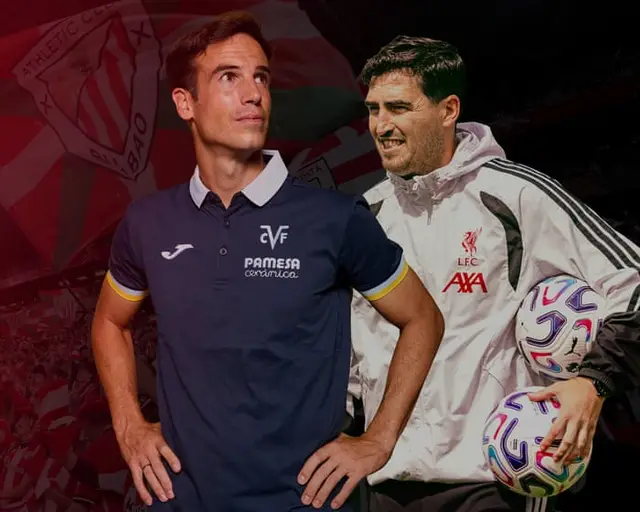
Bhatia backed by father-in-law Lakshmi MittalMinority stake deal values the club at £4.5bnLiverpool’s owner is in talks over selling a significant minority stake to a consortium led by the Queens Park Rangers co-owner Amit Bhatia and backed by his father-in-law Lakshmi Mittal, the billionaire Indian steel magnate.Fenway Sports Group confirmed in a statement to the Financial Times that it had begun negotiations with a group led by Bhatia over a potential share sale that would value Liverpool at about £4.5bn.“An investment consortium led and managed by Amit Bhatia has expressed interest in making a strategic minority investment in Liverpool Football Club,” the statement said.FSG paid £300m to take control of Liverpool in 2010 and is poised to secure a spectacular return on its investment. The Boston-based investment group led by John W Henry, who also own the Boston Red Sox and Pittsburgh Penguins, has previously held discussions over a minority sale without reaching agreement, but with the Mittal family managing assets of £16bn there is no doubt the buyers have the resources to execute the transaction.Industry sources expressed surprise at the purported £4.5bn valuation, which is far higher than recent sales of similar sized Premier League clubs.Chelsea were bought four years ago by the Todd Boehly/Clearlake Capital group for £2.5bn, although that was a distressed sale because the owner Roman Abramovich was subject to UK government sanctions, and Sir Jim Ratcliffe’s purchase of 25% of Manchester United in 2024 valued the club at £3.9bn.In an indication of the seriousness of the consortium’s bid for Liverpool Bhatia resigned as a director of QPR on Tuesday after 19 years. The London-born entrepreneur has held numerous leadership roles at QPR since investing in the club in 2007. He said: “QPR has been a deeply important part of my life, and of my family’s life … I step back from my formal responsibilities with pride, gratitude and affection.”Liverpool are in the US under their new head coach, Andoni Iraola, for a pre-season tour which begins with a game against Sunderland in Nashville on Saturday.

Matt HughesTue, 21 Jul 2026
Source: The Guardian
Read story
A pioneer and a superstar, Kevin Keegan’s achievements were extraordinary

Football News

A pioneer and a superstar, Kevin Keegan’s achievements were extraordinary

The former England manager may be remembered by many for his ‘I’d love it’ rant in 1996, but that should not obscure the remarkable nature of his football careerKevin Keegan, who has died aged 75, is the only British player to win the Ballon d’Or twice, was the star of Liverpool’s first European Cup-winning team, a messianic figure at Newcastle United as a player and coach, forging a team so memorable that Fifa’s president wrote to commend him, and was the captain and then manager of the England men’s national team. And yet, as Keegan would ruefully reflect, he will principally be remembered by many for an emotional outburst that precipitated Newcastle’s historic failure in a Premier League title race, a TV interview which presaged the coming era of the modern game.Keegan’s “I’d love it” rant of April 1996, directed at Alex Ferguson, became a meme before the modern meaning of the word and social media even existed, repeatedly played on Sky Sports and becoming indelibly marked in the minds of multiple generations, many not even born when it occurred. It frequently tops polls as the most memorable moment in Premier League history and foreshadowed an era where digital clips and personality narratives would dominate football coverage.There is a danger, however, of reducing Keegan’s life to a series of ever-more emotional explosions, of which there were many, such as his punch-up with Leeds United’s Billy Bremner in the 1974 Charity Shield. For that would obscure the extraordinary nature of his achievements and the fact he was arguably the most charismatic modern English footballer; more eloquent than David Beckham and Paul Gascoigne and more passionate than Bobby Moore. He had a rare gift for inspiring players and almost everyone who interacted with him at his best came away uplifted.Still, Keegan’s meltdown on TV, where he took issue with Ferguson’s supposed “mind games” in suggesting Leeds players would go easy on Newcastle during a tight title run-in with Manchester United, became a defining moment. “Strangers shout ‘love it’ to me from car windows,” wrote Keegan in his autobiography. “Autograph hunters tell me they would ‘love it’ if I could sign their pieces of paper. When I go to charity events I am often asked to sign photographs showing me in that classic pose: headphones on, finger jabbing, blazing eyes. Those pictures tend to be auctioned for a lot more money than the ones where I am playing for England or any of my clubs.”Keegan claimed to be relaxed about the characterisation, skewed though it was, perhaps because more than any English footballer before he had maximised football’s commercial and media opportunities and accepted the respective bouquets and brickbats that ensued. Even before that meltdown, he would be best remembered by many in the 1970s for his excruciating bike crash on Superstars, a TV show which pitted athletes from different sports against each other in unfamiliar disciplines. Sprawled across the cycle track, Keegan’s bare flesh was ripped red raw by the gravel. Most remember the drama but few recall that, showing characteristic pig-headed determination, he got back on the bike, bloodied and bandaged, for a rematch, which he won before winning the entire contest.Keegan was born in Armthorpe, Doncaster, to Doris and Joe, a war veteran Durham miner who had migrated south in search of work at Markham colliery. His upbringing echoed Monty Python’s Yorkshiremen sketch, only his memories were authentic, a throwback to a different century. Their terrace house “had a detached outhouse where we washed. Our bath was an old zinc tub and the toilet was at the foot of the garden and we never had electricity until I was 10 and we moved into a council house in Balby.”Keegan’s ascent to the peak of the game’s elite was unforeseen, few recognising his talent early on, most dismissing him as too small. He always credited Sister Mary Oliver, the nun who ran his Catholic primary school football team and who refereed with a crucifix around her neck, as being as important to him as a mentor as Bill Shankly was. “Kevin’s football must be encouraged,” she wrote in a school report, which gave him immense self-belief.Doncaster Rovers rejected him and he started work at Peglers Brass Works at 16, playing for their football team but only in the reserves and also for a pub team on Sundays, where he fortuitously played against a Scunthorpe scout, Bob Nellis, who got him a trial at the struggling Third Division club. Keegan referred to himself as a “mongrel” and “weasel” and the “least-talented” Ballon d’Or winner, and despite impressing at Scunthorpe it was still a major shock when Shankly, the man he regarded as a second father and progenitor of his success, took him to Liverpool. Shankly told him: “You’re not just a great player – you’re one of the great players!” It seemed an unlikely boast but Keegan scored on his Liverpool debut and was never dropped thereafter. He would inherit from Shankly comparable motivational skills.Though reclusive, Keegan also had a streak of extrovertism, embracing every aspect of the game’s growing commercial opportunities, from his famous Brut advert to appearances on Top of the Pops, where his single Head Over Heels in Love reached the top 40. Though he enjoyed standing out, he admitted he would never have got away with his trademark bubble perm in the old-school Liverpool dressing room. His wife, Jean, whom he met on the waltzers at the Doncaster St Leger horse racing meeting when she was 16 and he was 19 and to whom he remained married for life, burst into fits of laughter when she first saw it. He had the last laugh, the hairstyle inspiring alarming copycat versions across the football world.Keegan remained true to what he considered to be his working-class, mining roots, declaring himself a Labour man, annoyed that a staged photo of him feigning to kiss then prime minister Margaret Thatcher on the cheek was interpreted as support for economic policies which had ravaged heavy industry. He was more at home playing head tennis with a later PM, Tony Blair, to whom he was close enough to host at his home for dinner.Keegan inherited two mantles from Britain’s greatest players of the 1960s. As George Best, the original footballer sex symbol of the modern era, lapsed into alcoholism and increasing unreliability, Keegan became the more wholesome and dependable commercial face of the superstar footballer in Britain, inundated with deals. For England he effectively became Moore’s successor as captain but at a time when the national team was in decline from his predecessor’s World Cup-winning heights. For Keegan, as the sole outfield world-class player, it was a heavy burden to bear as they missed out on successive World Cup finals.His first major tournament for his country was the ill-fated 1980 European Championship and his World Cup career amounted to 20 minutes in 1982, a campaign which was disrupted by a back injury and where “my only contribution was a dreadful miss against the host nation to send us home. That moment is probably the only moment of my England career that people remember now.” It would prove to be his last game for England at the age of just 31.Keegan was a pioneering player, negotiating release clauses, unheard of at the time in England, at Liverpool and Hamburg, allowing him to leave if a club met a £500,000 fee, thereby controlling his moves. Leaving Liverpool at what was assumed to be their peak – he had just helped them win their first European Cup in 1977 – to join a team sixth in the Bundesliga was demonstrative of both Keegan’s single-mindedness and capacity to challenge himself. He also quadrupled his salary, reflecting the economic state of English football at the time.Hamburg was not an initial success. Jealous teammates held meetings to get him kicked out of the club and, according to Keegan, refused to pass to him. His nadir came at Christmas 1977 when, in a festive-season friendly, unhappy at his plight and frustrated with over-physical treatment from the Lübeck defender Erhard Press, Keegan punched him on the jaw and subsequently knocked him out, receiving an eight-week ban as punishment. Yet, a year later, he won his first Ballon d’Or and went on to lead Hamburg to their first Bundesliga title since 1960.Keegan embraced Germany, learning the language and was nicknamed “Mighty Mouse”, a tribute to his astonishing strength given his diminutive size. His first daughter, Laura, was born there but his finale, a European Cup final that would have sealed Hamburg’s place in history, was a sad one, ending as it did in defeat to Nottingham Forest. Having won three league titles, two Uefa Cups, an FA Cup and European Cup at Liverpool, the Bundesliga title would be the last trophy Keegan ever won. He was just 29 years old.Keegan made a typically unconventional choice in joining Southampton, a promising yet small-market team under a talented, persuasive manager in Lawrie McMenemy. Keegan propelled them to a top-six finish and qualification for Europe, but they faded to seventh in the second season and Keegan, disillusioned, made a decision that would define the second half of his professional life.Newcastle were in one of their periodic financial and footballing crises and in the old Second Division when, with money from brewers Scottish & Newcastle, they persuaded him to join in 1982. His father’s links to the north-east and reverence for Newcastle players such as Jackie Milburn were an emotional pull on Keegan, but one that cost him his England career. The manager, Bobby Robson, didn’t feel it appropriate to pick a second-tier player for England and Keegan, still captain and by far the most iconic national team player, learned from the press he had been “dumped”. He felt “betrayed, hurt and humiliated”.Crowds doubled at St James’ Park with Keegan’s arrival and Newcastle were promoted as champions in Keegan’s second season, 1983-84, by which point he had already decided to quit playing at the age of 33. Typically impulsive, it was when Mark Lawrenson outsprinted Keegan to dispossess him during an FA Cup tie at Liverpool that he decided he would finish his career at the end of the season.Keegan and family, which now included his second daughter, Sarah, born in 1982, decamped to his Marbella villa and, other than periodic business deals and discussions about a long-held dream to launch a Soccer Circus, he embraced retirement. Yet endless rounds of golf failed to satisfy. The family had moved back to his Hampshire home when Sir John Hall, a dynamic north-east businessman, called in 1992, begging Keegan to help Newcastle avoid relegation to the third tier and potential liquidation. Despite having watched no football for years, Keegan accepted. He threatened to quit after a few games but stayed to keep Newcastle up and promptly announced that he wanted to build a dynasty to rival Liverpool and challenge for the Premier League title.Most considered that quixotic and yet Newcastle won promotion to the Premier League as champions and with judicious youthful signings such as Andy Cole and Rob Lee, and veteran players such as Peter Beardsley, they came third and sixth in the top flight. So great was his authority, Keegan could even placate angry fans on the steps of St James’ Park when the club sold Cole to Manchester United.With that money the club signed David Ginola and Les Ferdinand and won nine of their first 10 games in 1995-96, often in thrilling fashion, establishing a seemingly unassailable 12-point lead by January. But a crucial defeat at home to Ferguson’s United in March 1996 and the Scot’s repeated use of psychological barbs seemed to weigh heavy on Keegan as his team’s form disintegrated. A dramatic yet debilitating 4-3 defeat at Liverpool led Sepp Blatter to write to Keegan but the sight of him slumped over advertising hoardings as Liverpool scored a last-minute winner suggested the toll was too much.Keegan eventually cracked, denouncing Ferguson in his famous TV interview. “You can tell him now, we’re still fighting for this title and I’ll tell you, honestly, I will love it if we beat them. Love it!” United won the title with four points to spare.Keegan initially seemed determined to rebuild as the club signed Alan Shearer for a world-record £15m and they beat United 5-0 at St James’ Park that autumn, but Keegan quit soon after, outraged that a city banker preparing the club for flotation had issued him an ultimatum to sign a contract. Football’s new era seemed untethered from the idealistic foundational values imbued in him by Shankly.Keegan seemed done with football until the now-disgraced Harrods owner Mohamed Al Fayed used speculative talks about his much-vaunted Soccer Circus to persuade him to become chief operating officer and eventually manager of Fulham in the third tier. He almost seemed at his happiest as the club accelerated to promotion, but his time was interrupted by a national crisis when Glenn Hoddle was sacked as England manager for making offensive comments about disabled people. The clamour for Keegan to take over was indicative of his popularity with ordinary fans. However, it proved a decision he came to greatly regret, taking in a humiliating Euro 2000 group-stage exit and ending with him resigning in the toilets after an ignominious defeat against Germany in England’s last game at the old Wembley Stadium. It was, he conceded, a job beyond his abilities.That said, Keegan was happy to take on Manchester City in the old First Division, getting them promoted to the Premier League as champions with 99 points. He remained at the club for four years, an almost unprecedented period of stability at the club at that time. When he finally left City he seemed to be done with coaching and finally launched his Soccer Circus in Glasgow, though it closed after a few years. Yet there was to be one last comeback at Newcastle under the ill-starred ownership of Mike Ashley, which proved a disaster and lasted just eight months.The idea that a high-minded, old-fashioned football manager schooled by Shankly could coexist with a modern businessman as ruthless as Ashley and his cast of minions running the club always seemed improbable. When he walked away from the job, eventually winning a lengthy and bitter constructive dismissal claim, it was to be Keegan’s last act in football. So acrimonious was the departure that he was only able to return in disguise to attend a function at the club.The current regime made clear Keegan was always welcome back at St James’ Park. That was after his stage four cancer had been revealed in a series of speaking engagements in May 2026, one of which in Newcastle was, in retrospect, a heartfelt farewell to the fans to whom he had always felt closest. After that draining but exhilarating evening Keegan’s associates reported that he was in high spirits, energised by the reconnection with the fans who loved him most.It was to prove Keegan’s final goodbye. Football, as he observed, had given him everything except for a happy ending.

Rob DraperMon, 20 Jul 2026
Source: The Guardian
Read story
Kevin Keegan, Liverpool legend and former Newcastle manager, dies aged 75

Football News

Kevin Keegan, Liverpool legend and former Newcastle manager, dies aged 75

Keegan revealed in June 2026 he had stage four cancerStarred for Liverpool, Hamburg, Newcastle and EnglandKevin Keegan, the former England and Newcastle manager who was twice European football of the year and a stalwart member of Liverpool’s serial First Division and European champions in the 1970s, has died aged 75.Keegan’s family revealed in January that he had cancer, and in June he revealed himself that it was stage four, the most advanced stage. “It is with immense sadness that we announce that Kevin Keegan has passed away at the age of 75,” read a family statement. “Kevin had been battling cancer and was surrounded by his wife and daughters in his final moments.“A double Ballon D’or winner, Kevin was a much loved husband, father and grandfather. The family would like to thank Kevin’s incredible medical team for all their support. This is a hugely difficult time and they are requesting space and privacy.”Keegan started his career at Scunthorpe before being signed for Liverpool by Bill Shankly for just £33,000 in 1971, “King Kevin” going on to win the First Division title three times as well as the FA Cup, the Uefa Cup twice and the 1977 European Cup. Keegan is the only British player to have won two Ballons d’Or.The 5ft 8in combative “Mighty Mouse” was not, by his own admission, a natural talent but the son of a south Yorkshire miner trained hard, remained humble and never ducked a challenge, traits that endured him to the Kop. “I learned so much from Shanks. He used to say: ‘If I was a road-sweeper, my street would be the cleanest in the borough.’ I took that to heart,’ he said.Keegan was twice named European Footballer of the Year while at the German club Hamburg and returned to England to play for Southampton and Newcastle before retiring as a player in 1984. He won 63 England caps, scoring 21 goals, playing at the 1982 World Cup and was also later captain of the national team.Keegan was never one to hold back, his fiery temperament rarely far from the surface. He was memorably sent off for scrapping with Leeds’s Billy Bremner in the 1974 Charity Shield after boiling over and his volatile temperament and pugnacious intolerance of football’s machinations, real or perceived. “I don’t like people to deceive me and tell me lies,” he told the Guardian in 2018.He wrote newspaper columns, was one of the English game’s first players to have their own branded football boots, had a hit record (Head Over Heels in Love), and became an enduring star of the BBC’s Superstars. He was the public face of 70s aftershave Brut 33 with Henry Cooper. He became close friends with another of the game’s renegades, George Best. “I wanted so much to have his ability. His skill was unbelievable. I played against Cruyff, Beckenbauer, Maradona. But I still say Besty was the best I played against,” he told Simon Hatterstone.Keegan retired from playing aged 33 and moved to Spain, where his two daughters grew up unaware he had been a footballer. “It was the best decision I made in my life,” he told the Guardian in 2011. “I was at the highest level and the only way was down. I call it the glass mountain – you can’t climb a glass mountain.”In 1992, Keegan made his first step into management at his former club Newcastle, guiding them into the Premier League and to within touching distance of the 1995-96 title only to miss out to Manchester United. His finger-jabbing “I will love it” rant when Alex Ferguson’s mind-games to get the better of him has become part of the English game’s lore.After leaving St James’ Park in January 1997, a brief stint at Fulham followed before he became England manager in 1999, having initially taken on the job following Glenn Hoddle’s departure. Amid a disappointing Euro 2000 campaign, Keegan resigned on the back of defeat by Germany at Wembley Stadium, after just 20 months and 18 games, winning only seven of them – the worst win ratio of any England manager.A spell at Manchester City followed, but Keegan left the club in March 2005, initially announcing his retirement from football, only to make an emotional return to Newcastle in 2008. That second spell lasted eight months following tensions with the board and owner Mike Ashley. In 2009 a tribunal awarded Keegan £2m damages for constructive dismissal.He was made an OBE in 1982 for services to football, but Keegan’s unreconstructed opinions could offend. In 2023, his questioning the suitability of former England women’s internationals commenting on incidents in men’s international matches landed him in hot water. At a public event in Bristol, he told the audience: “I don’t like to listen to ladies talking about the England men’s team at the match because I don’t think it’s the same experience. I have a problem with that.”

Andy MartinMon, 20 Jul 2026
Source: The Guardian
Read story
Dominik Szoboszlai agrees new Liverpool contract in boost to Andoni Iraola

Football News

Dominik Szoboszlai agrees new Liverpool contract in boost to Andoni Iraola

Midfielder was team’s best performer last seasonHe said then there had been no progress in talksDominik Szoboszlai is poised to give Liverpool and their head coach, Andoni Iraola, a significant boost by signing a new long-term contract.The Liverpool midfielder, the team’s best performer during a difficult final season under Arne Slot, has two years on his deal and mentioned several times last season that there had been no real progress over an extension.After months of negotiations between Liverpool’s sporting director, Richard Hughes, and Szoboszlai’s representatives, the terms of a new contract have been agreed in principle and the 25-year-old is close to signing the deal.The Hungary captain has developed into a key figure for Liverpool since his £60m move from Leipzig in 2023 and scored 13 goals last season. He has been tipped as a future Liverpool captain, although last season’s comments about the contract had raised concerns over his long-term future.Szoboszlai’s renewed commitment will be an important development for Iraola before his first season at Liverpool.

Andy HunterThu, 16 Jul 2026
Source: The Guardian
Read story