AccaMate logo

Football News

Latest Sports Stories

My Arsenal devotion began with watching them lose in a South African cinema

Football News

My Arsenal devotion began with watching them lose in a South African cinema

As a boy in the apartheid era I saw footage of the Gunners beaten in the 1969 League Cup final – on Saturday I will attend the Champions League showpiece with my sonI fell for Arsenal in the white‑and-black world of apartheid, where television was banned as a tool of communist propaganda and the club of my dreams was 6,000 miles away and mostly invisible to me. So it feels fitting that a surreal love story that began for a small boy in South Africa in 1969 will reach a new peak on Saturday night in eastern Europe. This 65-year-old Arsenal fan and his 25-year-old son, who is just as besotted by the Gunners, will be at the Champions League final in Budapest as we face the dazzling powerhouse of Paris Saint-Germain.It’s the final game of Arsenal’s tumultuous grind of a season and we are as exhausted as we are still euphoric. We will remember that my last game of this campaign could have been Swindon’s 2-1 home defeat by Chesterfield in League Two. I have had my share of pain with Arsenal; but it would have been a far deeper burden to have spent 57 years supporting Swindon.It could have happened because my eighth birthday party in April 1969 included a trip to the movies, where we initially watched a Pathé News bulletin featuring footage of the League Cup final between Arsenal and Swindon which had happened six weeks before. I’ve seen those two and a half minutes many times since and can understand why I was smitten.But it’s more usual for a kid to back the winning team and, that day, Third Division Swindon beat Arsenal 3-1 with Don Rogers scoring two goals in extra time. “Swindon Town had come to town and beaten one of the country’s greatest football machines,” the posh old commentator rejoiced.Perhaps that description of Arsenal shaped my choice. It didn’t matter that they lost. I was going to follow the mighty red machine for ever – obviously not knowing that, decades later, “second again, olé, olé” would become a haunting song for Arsenal.I was just a kid back then and so my allegiance to Arsenal turned to adoration when the club won the league and FA Cup Double in May 1971. It was another trip to the movies in downtown Johannesburg, and footage of a long-haired Charlie George scoring the winning goal against Liverpool at Wembley, which entranced me and my Arsenal-mad friends. Once we got back to our suburban gardens we tried to emulate Charlie’s celebration in which he was spreadeagled on his back, arms stretched out in disbelief on the sun-kissed Wembley turf.I fell in love with Arsenal in dreamy slow motion because I could never see them live or even on television. But I still watched great footballers such as George Best, Bobby Moore and Johnny Haynes, and more prosaic journeymen such as Roy Hodgson, as they broke the sports boycott and made lucrative trips to play in South Africa’s whites-only league.The Gunners meant much more to me than my local team, Germiston Callies, and there was an almost delicious agony in the delayed gratification, or heartache, of Arsenal news. Most Sunday mornings I woke early without knowing what had happened the previous afternoon.My run to the corner shop took less than 30 seconds. I trembled with excitement and, despite the shop-owner’s usual muttered instruction for me to buy the newspaper before reading it, flipped to the back pages and the English football results.There was a mysterious power to the blunt news which read either gloriously:I was soon transfixed by second-half commentaries of First Division games on the BBC World Service. Whenever Arsenal featured I could listen to them playing live and hear the score in real time. The brilliant commentator Peter Jones painted pictures with words so vividly that it lit up my imagination.I was also sustained by copies of Shoot! magazine, which were shipped from England and arrived six weeks late. My friends and I read every article and studied every photograph. We could soon list the entire squads of middling First Division clubs such as Coventry and Southampton – and discuss the best bubble perm, moustache or comb‑over in 1970s football.Television finally arrived in South Africa and occasional English football games were screened from 1978. The first Arsenal matches I watched in full were three successive FA Cup finals at Wembley. Sandwiched between dismal 1-0 defeats by Ipswich and West Ham, in 1978 and 1980, there was a glorious 3-2 win over Manchester United.I already knew that I had to escape the army and apartheid and somehow get to England, where I would be saved by music, movies and Arsenal. But my understanding of football fervour caught fire when I spent two years in the 1980s teaching at a Soweto school.In January 2000 I interviewed Radebe for the Guardian. During our emotional reunion he told me: “When I left Soweto six years ago I was very depressed. I was so homesick I wanted to give up.” I told Radebe I had also cried when I left South Africa, aged 23, in August 1984.But I went to my first Arsenal game three weeks later, a 1-1 draw with Chelsea. I was on the North Bank alone, but at home. I followed Arsenal home and away; and I never felt lonely. I felt as if I belonged. Arsenal were my second family in a very different life.In the 1980s you could still walk into Highbury at 2:45, pay £4 at the turnstiles and be on the North Bank before kick-off at 3pm. I usually stood in the same area and many faces became familiar. Every fortnight we would exchange nods and a few words. Sometimes we even hugged in delirium, without even knowing each other’s names, when a late winner was scored.Arsenal were not very good when I arrived but everything changed with George Graham’s appointment in 1986. We soon had a great back four of Lee Dixon, Tony Adams, Steve Bould and Nigel Winterburn and a trio of black players who were as skilful as they were resilient. David Rocastle, Paul Davis and Michael Thomas were my favourite players.Racism in English football was rife in the 1980s. I heard the chants and saw the bananas being thrown; but Arsenal were different. Arsenal were integrated. It didn’t matter if we were white or black – we all bled red.There were last-minute league titles and cup wins and then, incredibly, the unforgettable Arsène Wenger years, when he transformed English football while we lost ourselves in the sublime artistry and steely grit of a team that contained Thierry Henry and Dennis Bergkamp, Patrick Vieira and Sol Campbell.Arsenal had also kickstarted my sportswriting career when, at Highbury in December 1984, I made my first visit to a press box. As a journalism student I was meant to shadow David Lacey but the Guardian’s great football writer had not been assigned to Arsenal that day. I could have followed him elsewhere but I chose to watch Arsenal with Robert Armstrong, who eventually became this paper’s rugby correspondent.After the game I ended up in the office of Don Howe, the manager, with Armstrong and three of his Fleet Street colleagues. Howe shouted cheerfully down the passage to the striker Ian Allinson, who had scored two goals in a 3-1 win over Luton, to make us some tea.I have interviewed many famous Arsenal names since then – from Liam Brady, Graham, Adams and Paul Merson to Wenger, Bergkamp, Cesc Fàbregas and Bukayo Saka. Rather than making me tea, Saka, one of my favourite players, was accompanied by five PR people and agents.I met Bergkamp near the end of the 2003-04 Invincible season when he and his teammates did not lose a single league match. The Dutch master told me that a few weeks earlier, when he returned home after Arsenal lost in the FA Cup semi-finals to Manchester United, he found his son, Mitchell, crying bitter tears. The five-year-old was devoted to Arsenal. “I had to try and comfort him,” Bergkamp sighed, “but it took a long time.”A couple of years later I took my own son to his first Arsenal game. Jack was also five and, in October 2006, he saw Arsenal, with players such as Fàbregas, Henry and Robin van Persie, beat Watford 3-0 in just the fourth league game played at the Emirates Stadium.A few months later, on Boxing Day, I took Jack to the return fixture at Watford’s rickety old Vicarage Road. After Watford’s Tommy Smith equalised Gilberto Silva’s opening goal, Arsenal conjured up an 83rd-minute winner from Van Persie. It was the best Christmas present ever for Jack and we went mad with the travelling Arsenal fans.We remember all these facts because last year Jack gave me a beautiful present. In a black book, with a red ribbon, he laboriously wrote down all the details of every Arsenal match we had seen live together over the previous 19 years. It took him days of work and, while he could have printed all the details off the internet, he used a pen to write each date, each game, each goal and each player’s name as an old-school reminder of my other-worldly introduction to Arsenal.We remembered how Jack had cried in February 2011 when we watched Arsenal lose the Carling Cup final at Wembley to Birmingham. In the distressed aftermath I wondered what I had done to my boy as, swallowing my disappointment, I promised that he would see Arsenal lift many trophies in the years to come. I would eventually be proved right as Arsenal have won four FA Cups since then – but the league remained painfully elusive until last week.Jack is so obsessed by Arsenal that, for the past four years, he has lived opposite the Emirates Stadium. From his front door it takes 20 seconds before we are swept up in the chanting throng which, this season, has never felt far from a collective nervous breakdown.There have been some beautiful moments as well. On 23 November, Jack and I were off our seats and jumping around, agog, between the North Bank and the halfway line. Eberechi Eze, a childhood fan of the club, scored a hat-trick against Spurs. Four days later, we were back as Arsenal rolled over Bayern Munich in a statement 3-1 victory.In mid-March, when the 16-year‑old Max Dowman ran almost the length of the pitch, the ball staying magically close to his feet before he rolled it into the Everton net with an elegant caress to seal another late win, we were falling and laughing as we crashed into other jubilant fans.I banged my bad knee hard and it was a beautiful feeling, the pain proving it was real.There have been horrible moments too. After the Carabao Cup final, where we were dismantled by Manchester City, I was with the sombre Arsenal fans on platform two at Wembley Central. Opposite us the taunting City supporters sang: “Second again, olé, olé …”Arsenal played well away against City in the league on my birthday, 19 April, but we lost 2-1. Our front room was crammed as screams of delight gave way to howls of anguish. The life‑size cutout of Mikel Arteta, given to me by my youngest daughter, Emma, stayed silent. The City juggernaut loomed over us and the league, once more, was in the balance.We were at the Emirates for all our remaining home games: the excruciating 1-0 defeat of Newcastle, the 3-0 romp past Fulham and the decidedly painful 1-0 win over Burnley which followed the video assistant referee trauma of an away victory by the same score over West Ham.I dreaded the prospect of needing a win, away to Crystal Palace, on the last day of the season. But joy came in a different way when, last week, City drew with Bournemouth. Arsenal were champions and, as soon as the game ended, Jack called me. He was crying, and laughing, as he asked a simple question: “What have you done to me, Dad?”It was Jack’s first league title as an Arsenal fan. And now we are on our way to Budapest in the hope of seeing Arsenal win the Champions League for the first time.We will watch the final together, in hope, while remembering how lucky we are that I chose the team who lost to Swindon all those years ago in a different century, on a different continent, as my world turned from black and white to the most beautiful colour of red.

Donald McRaeSat, 30 May 2026
Source: The Guardian
Read story
Papers: Man Utd have £250m to spend - but Leao to turn down summer PL move

Football News

Papers: Man Utd have £250m to spend - but Leao to turn down summer PL move

The top stories and transfer rumours from Saturday's newspapers...Rafael Leao is set to turn down a move to the Premier League this summer despite recently sharing his admiration for Manchester United - Daily MirrorMan Utd have freed up £250m for transfers this summer - The SunChelsea will welcome Nicolas Jackson back to the club this summer with their current intention being to allow Xabi Alonso to take a closer look at the striker before next season - Daily MailAtletico Madrid are showing interest in Manchester City midfielder Tijjani Reijnders as they also await an answer from his team-mate Bernardo Silva - Daily MailDouglas Luiz is expected to return to Juventus after Aston Villa decided against triggering the €25million option to sign the midfielder permanently - The AthleticAlisson is increasingly likely to stay at Liverpool this summer - The AthleticRiccardo Calafiori says he would like to return to former club Roma, but has stressed that he is happy at Arsenal - The StandardHungarian police will launch the biggest operation Budapest has ever seen for Saturday's Champions League final - Daily MailSouthampton players want Tonda Eckert to stay on as manager despite the Spygate saga costing them Premier League football - The SunEngland are alert to the risk of a measles outbreak at the World Cup - Daily MailSir Keir Starmer has demanded FIFA slash "rip-off" World Cup prices - The SunNew Zealand footballer Tim Payne has become an overnight viral sensation after a social media stunt from a South American influencer sought to find the World Cup's 'least-known' player - The MetroA 'psychic' World Cup guru with an impressive record of predicting past winners has tipped a surprise contender to lift the trophy this summer - The SunCetlic could be poised to sign Hungary international midfielder Milan VItalis, according to reports coming out of the country - The Scottish SunClaudio Braga has revealed there is 'interest' in him - just days Hearts lost talisman Lawrence Shankland to Rangers for free - The Scottish SunAberdeen boss Stephen Robinson wants to team up with Connor Ronan again - Daily RecordRyan Christie insists Scotland go to the World Cup fired up by a chip on the shoulder - Daily RecordA giant Lionel Messi statue in Kolkata is set to be removed amid safety fears after it was spotted "swaying in the wind" - The SunFormer Lyon midfielder Bryan Bergougnoux has tragically died at the age of 43 following a sudden illness - Daily Star

Sky SportsSat, 30 May 2026
Source: Sky Sports
Read story
Scotland World Cup 2026 team guide

Football News

Scotland World Cup 2026 team guide

Andy Robertson (left) and John McGinn are amongst manager Steve Clarke’s go-to men when fit. Photograph: Ben Roberts/Danehouse/Getty ImagesAfter dramatic qualification, an experienced squad could progress beyond the group stage if they beat Haiti in their opening gameThis article is part of the Guardian’s 2026 World Cup Experts’ Network, a cooperation between some of the best media organisations from the 48 countries who qualified. theguardian.com is running previews from three countries each day in the run-up to the tournament kicking off on 11 June.Scotland qualified for the World Cup in dramatic circumstances that absorbed almost three decades of frustration. This marks a first appearance in the event since 1998 and it was achieved on a spine-tingling Hampden Park occasion when Denmark were eventually vanquished 4-2. Scott McTominay scored with a stunning overhead kick and Kenny McLean wrapped up the win from the halfway line in added-time.The intervening months have proved tricky. Defeats without scoring against Japan and Cote d’Ivoire, added to audible frustration from Steve Clarke over his contractual scenario, seemed to dampen the Tartan Army’s mood. Earlier, there was euphoria. “The number of people that come up to you and just want to shake your hand to say ‘thank you and well done’, it’s pretty special to feel that,” Clarke recalled. “You’re walking through the airport and every second person wants to shake your hand.”Now for the trickier part. Clarke has an ageing squad which is light on goal threat if midfielders – primarily John McGinn and Scott McTominay – do not contribute. The goalkeeping position has been a problem for a concerted spell now. At centre-back, the Scots are adequate rather than strong, having operated with a back three or four. McGinn, McTominay, Andy Robertson and Ché Adams are the manager’s go-to men when fit. Umpteen others have been alongside Clarke for a number of years; this is a Scotland squad high on cap numbers.Clarke is pragmatic in approach but it will be a shock if he does not start with two strikers for game one against Haiti. Victory there and Scotland have a genuine chance of progression from the first round for the first time. There is also a lingering reason for Clarke to at least appear bold; he was castigated by supporters for negative tactics in a must-win match against Hungary at the last Euros.A more defensive style is likely and understandable against Morocco and Brazil, who simply put are better teams than Scotland. Clarke’s team can be useful in such a situation; they are excellently drilled and carry a counterattacking threat.Scotland were in the doldrums, with tournament participation supposedly an unattainable dream, when Steve Clarke took on the position in 2019. History will look very favourably upon the former Chelsea player, given he has taken his nation to three out of four finals. Clarke is rarely expressive in public, which can count against him, but retains huge respect from his squad. He takes a hands-on training-ground approach and has a menacing side which players are acutely aware of. Clarke’s speech to Scotland’s team before that make-or-break qualifying tie against Denmark made a massive impact. “It is up there with the best I have ever heard before a game,” said Andy Robertson.Scott McTominay has evolved from bit-part player at Manchester United to a hero in Naples. He has grown in stature and significance for Scotland while reviving his club career and his overhead kick in the Denmark win is etched in history as one of the finest goals ever witnessed at Hampden Park. Alex McLeish’s second tenure is regarded by many as unmemorable but it was Clarke’s predecessor who convinced this English-born midfielder to declare for Scotland. McLeish’s gift to his nation with that move alone proved a significant one. Scotland rely heavily on McTominay’s gamechanging talent.Ben Gannon-Doak’s switch from Liverpool to Bournemouth has been disrupted by injury but the winger still gets pulses racing among Scottish fans. Gannon-Doak’s directness and pace mean he is different to those alongside him. Clarke has urged caution among media and fans, wanting the 20-year-old to be given space to develop, yet the nature of his game is such that the noise is understandable. Gannon-Doak memorably reduced Josko Gvardiol to a quivering wreck when Scotland faced Croatia in Glasgow. He will absolutely relish the World Cup stage.Bournemouth’s Ryan Christie has quietly established himself as a player with a good Premier League career and is closing in on 75 caps. The midfielder is technically impressive, carries energy and offers a goal threat. Yet the Inverness-born player often seems overlooked when praise is being issued to those within Clarke’s squad. One obvious explanation for that is that two of those routinely deployed alongside him, McTominay and McGinn, are Scotland’s main stars. At 31, this may not be Christie’s last World Cup but it will unquestionably prove the only one of his prime. It would be no shock to see him make valuable contributions.It is no exaggeration to suggest Scotland’s support might outshine the players. The Tartan Army will travel en masse and in fine spirits. They have earned a reputation for their good nature, regardless of results. A World Cup return after 28 years means scores of people who have never sampled this environment before booked up instantly, regardless of whether they were likely to source match tickets. Expect colour, kilts, bagpipes and a level of alcohol consumption that will make an enormous contribution to the GDP of the United States.A little known fact is that 34 of the 45 presidents of the United States have Scottish roots. None, though, are as strong as that of Trump, whose mother was born and raised in the Western Isles. Trump owns golf resorts in Scotland, meaning a continuing connection. The president’s love for Scotland can best be described as an unrequited one but it is surely fair to assume Steve Clarke’s men will be Trump’s second favourite team in the competition. The Tartan Army, meanwhile, make it their business to be non-political. The Scottish FA is closely aligned with Fifa so a protest or noise from Scotland at the World Cup is highly unlikely.

Ewan MurrayFri, 29 May 2026
Source: The Guardian
Read story
From 'bling-bling' & disputes to unity: The transformation of PSG

Football News

From 'bling-bling' & disputes to unity: The transformation of PSG

BBC Sport columnistPublished7 minutes agoCommentsBack in 2011 Qatar Sports Investments were deep in negotiation for the sleeping giant that was Paris St-Germain. PSG had finished 13th in Ligue 1 the previous season and Nasser Al-Khelaifi, leading the negotiations for QSI, regularly checked the results because there was a fear they could end up buying a second division club.The Parisians survived and the deal went through, although the club bore almost no resemblance to the modern European contender people know today.Over the next decade and a half, PSG would undergo one of the most dramatic cultural rebuilds in modern football. Money was about to be spent, stars were going to arrive, but the deep transformation was about reshaping their identity.The journey unfolded in phases - each necessary, each flawed in its own way, but at the same time each contributing to the club PSG eventually became. The club who will bid to defend their Champions League title against Arsenal on Saturday.From non-league to Champions League - Raya's fairytale riseThey had no stars, no sustainable model and no clear footballing philosophy.Despite having had big names like Ronaldinho, Pauleta, Ludovic Giuly and Claude Makelele in the first decade of the 21st Century, PSG needed to be seen in the eyes of the football world as relevant and credible before they could even dream of competing with Europe's elite.The ultras were banned after violence ended in the death of a fan, leaving the Parc des Princes without its most passionate supporters for the first five years of the new era. They only came back in 2016 when Al-Khelaifi decided the majority could not be held responsible for the actions of a few.The early years of QSI were defined by aggressive spending. Critics labelled it the 'bling‑bling era' but internally it was seen as the quickest way to get to the top.As is the case with Newcastle and Manchester City, PSG have had to answer questions about the source of their funding and their owners have been accused of 'sportswashing', which is when nations invest in sports to help clean up their tarnished reputations.Signing global superstars - Zlatan Ibrahimovic, Neymar, Kylian Mbappe, Lionel Messi - helped force PSG into the global conversation.This phase brought domestic dominance and deep Champions League runs. But it also created internal tensions. Stars dictated dressing‑room dynamics, influenced tactical decisions and sometimes overshadowed the collective with inane disputes over things like training schedules or even who should take penalties.The 18-year-old Mbappe and his family told the club representatives he would join PSG instead of Real Madrid only if he was guaranteed to play every game and Neymar had it written into his contract that he had the power to decide not to travel to some games.When basketball legend Kobe Bryant visited the old training ground, Neymar and Mbappe wanted to break with the schedule prepared by then head coach Unai Emery.He had them resting. They wanted to train with a sometimes-missing enthusiasm to impress Kobe. That battle was won by Emery - but those clashes left scars.This era built PSG's global brand but it also exposed the limitations of a star‑centric model.Learning from Pochettino & aiding Okocha - how PSG loan shaped ArtetaInstead of asking how to win the Champions League, the starting question became, "What kind of football do we want to play?" The answer was attacking football with French players at its heart.This reshaped everything that followed. The man appointed to lead PSG into the new dawn was Luis Enrique.For the first time in the QSI era, the club chose a footballing identity first, then selected the coach, then built the squad.What happened next was a mixture of a needed change in club mentality and the arrival of the Spanish manager - a force of nature.Messi, Neymar, Mbappe, Marco Verratti, Sergio Ramos - icons of the previous era - were moved on. The club was not punishing them; they had to reset the order of priorities and no player would be above the team.Luis Enrique enforced discipline with a clarity PSG had lacked for years. He asked Mbappe to work harder and when his request fell on deaf ears was pleased to see him depart.A defining moment occurred at the end of September last season when Ousmane Dembele arrived late for training before the Champions League league phase game against Arsenal. It was only 10 minutes but the coach dropped him immediately. Dembele would go on to win the 2025 Ballon d'Or.Players responded. When Dembele was substituted, he encouraged his replacement rather than sulking. Injured players were required to attend training sessions.The results were visible in the shape of titles but also in the little details. PSG became the team with the fewest yellow cards in Europe's top leagues as players stopped arguing with referees, stopped indulging in theatrics and embraced a disciplined, unified approach.Luis Enrique much prefers to have five players scoring 10-12 goals each over one player scoring 40. This season, PSG had 20 different goalscorers - a testament to the collective approach.There have been some bumps along the road but the most striking cultural change has been the club's refusal to panic.In previous years, a run of poor results would trigger a flurry of signings or internal upheaval. Not any more. PSG now stayed loyal to the squad and the project.In January 2025 with the French media clamouring for five or six new signings after Champions League defeats against Arsenal, Bayern and Atletico, they made just one... Kvicha Kvaratskhelia.And perhaps most importantly there was a unified leadership structure. An alignment between the club's three central figures: Luis Enrique, sporting director Luis Campos and president Al‑Khelaifi.Stability at the top created stability throughout the organisation.Each figure has a clear role and they work together constantly. Luis Enrique defines the footballing vision, Campos manages recruitment and squad construction while Al‑Khelaifi oversees the broader project.This unity has replaced years of internal friction, when coaches, directors and executives often operated with conflicting priorities.Of all things that have been achieved at the club the one investment Al‑Khelaifi is most proud of is the new training centre that has been created at a cost of about 350million euros (£304m).A key objective of the cultural reset was restoring PSG's connection to French identity. Nearly half of the team's playing time now goes to French players, many from the academy.This season the average age of PSG's starting XI was 23 years and 363 days, the lowest recorded by the clubs in Ligue 1 and the second youngest among teams in Europe's top five leagues. Six academy graduates made their first-team debuts this season.In a wider footballing context, Al‑Khelaifi's stance against the European Super League also reflected his increasing power and belief in raising the club's presence.He argued that if football became a closed system, PSG would never have risen from their Europa League days.And as leader of the European Club Association, he led the search for peace in European football, making key calls to Barcelona president Joan Laporta and Real Madrid counterpart Florentino Perez to convince them to return to the fore and abandon the Super League project.PSG are not yet the finished article. The challenges ahead remain significant. Their stadium is too small for a club of PSG's stature (about 46,000 capacity) and French TV rights lag far behind the Premier League - the top five in the Premier League will receive in the region of 200m euros (£174m) in TV money this season, while PSG will earn about 9m euros (£7.8m).But at least, for the first time in the QSI era, PSG are a club who know what they want to be and which way they want to go.Listen to the latest Football Daily podcast

BBC SportFri, 29 May 2026
Source: BBC Sport
Read story
Man Utd want AC Milan winger Leao - Saturday's gossip

Football News

Man Utd want AC Milan winger Leao - Saturday's gossip

Manchester United interested in AC Milan's Rafael Leao, while Manchester City face a fight to keep both Josko Gvardiol and Tijjani Reijnders, with ex-City midfielder Bernardo Silva wanting a move to Barcelona.AC Milan and Portugal winger Rafael Leao, 26, is on Manchester United's shortlist of targets and will be available for a cheaper fee after the Italian side failed to qualify for the Champions League. (Football Insider), externalPortugal midfielder Bernardo Silva, 31, is available on a free transfer when he leaves Manchester City this summer and has been offered deals by Atletico Madrid and Benfica but prefers a move to Barcelona. (Times, subscription required), externalEintracht Frankfurt forward Jean-Matteo Bahoya, 21, is attracting interest from the Premier League and in Europe while Saudi Pro League clubs are also keen on the France Under-21 international. (Sky Sports, external)German manager Dino Toppmoller, who left Bundesliga club Frankfurt in January, is one of the candidates to replace Austrian Oliver Glasner, 51, at Crystal Palace. (Sky Sport - in German, external)Aston Villa are in talks with Netherlands midfielder Lamare Bogarde, 22, over a new contract to keep him at the club. (Football Insider), externalFormer Bournemouth boss Andoni Iraola is in talks with Bundesliga side Bayer Leverkusen about becoming their next manager. (Times, subscription required), externalBarcelona and Bayern Munich are interested in signing Manchester City and Croatia defender Josko Gvardiol, 24. (Goal), externalAtletico Madrid are preparing to bid for 27-year-old Manchester City and Netherlands midfielder Tijjani Reijnders, who only joined the English club last summer. (Daily Mail), externalBarca weigh up move for Hincapie - Friday's gossipListen to the latest Football Daily podcast

BBC SportFri, 29 May 2026
Source: BBC Sport
Read story
Atletico accuse Barcelona of 'smear campaign' over Alvarez deal

Football News

Atletico accuse Barcelona of 'smear campaign' over Alvarez deal

Atletico Madrid have appeared to mock Barcelona's attempts to sign their striker Julian Alvarez.The club responded to social media posts about an imminent Barcelona bid for Alvarez by mocking up parody posts of their own about Barcelona players.Atletico, who insist Alvarez is not for sale and value him as high as £130m, posted images on X of Barcelona stars Lamine Yamal, Pedri and Raphinha in Atletico shirts.The posts also included joke bids for each player, including the offer of concert tickets, an annual subscription and bag of sunflower seeds for Yamal.HERE WE GO! Hemos enviado un fax al @FCBarcelona_es con nuestra oferta de traspaso: 4 entradas para el concierto de Bad Bunny de mañana, una suscripción anual al ABC y una bolsa de pipas. Esperamos ansiosos la respuesta para preparar el ‘announce’. pic.twitter.com/e0J7mPljHaAlongside a picture of former Leeds winger Raphinha in their shirt, Atletico included the caption: "Don't believe everything you see, especially if it's related to Barca."The club also said they had been "suffering a smear campaign".HERE WE GO! Para esta segunda oferta hemos tenido un problema, se nos han terminado las entradas para el concierto de mañana, así que mejoramos la propuesta anterior con 6 para el del domingo. pic.twitter.com/YlAMkP26XG"Finally, we want to take this opportunity to categorically deny that we have made an offer to the sporting director of FC Barcelona to join our scouting team in the Brazilian market," another post said."No, Atlético de Madrid would never do something like that. However, in recent months, we've been suffering a smear campaign against one of our players.HERE WE GO! Y para completar el 3x1 nos hemos venido arriba y vamos a tirar la casita por la ventana: el jugador llega cedido por una temporada y a cambio nosotros cedemos a Tom Ford y Smith sin opción de compra. Oferta irrechazable. pic.twitter.com/ChQivcgYFd"Leaked information with ulterior motives, 'fake news,' constant disrespect, the culé (Barcelona) version of the propaganda machine inventing little stories, calls before direct matchups."Barcelona declined to comment when approached by Sky Sports News. The Spanish FA has also been approached for comment.

Sky SportsFri, 29 May 2026
Source: Sky Sports
Read story
Gordon completes blockbuster Barcelona move

Football News

Gordon completes blockbuster Barcelona move

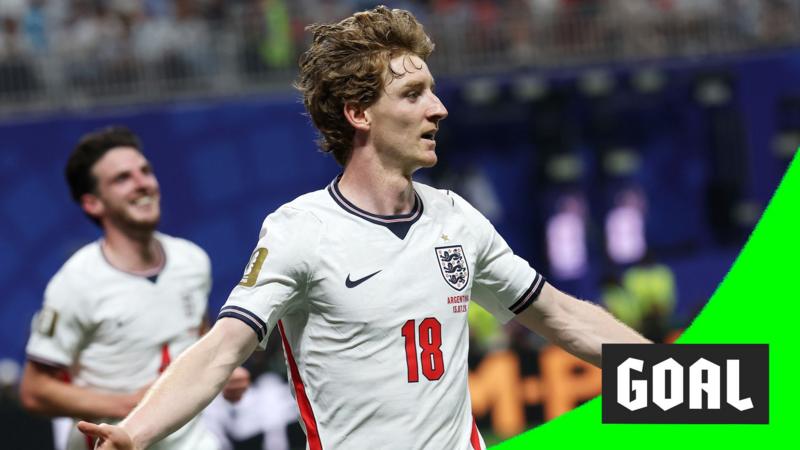
Barcelona have completed the signing of Anthony Gordon from Newcastle.He was presented to the press on Friday night, after signing a five-year contract.A new force joins our rhythm. Anthony Gordon is culer 💙❤️ pic.twitter.com/v5UefCfUme"As soon as I knew Barca was a serious option, there was never any question. I always wanted Barca. Barca is the biggest club on the planet," said Gordon."It's the stuff I dreamed of as a child. It really is a dream come true to be here."I know it comes with a lot of responsibility, but I'm ready for this kind of challenge."I know the players in the past who've worn the shirt... it holds a lot of weight, but I'm excited for the challenge."He added: "To play with Lamine [Yamal] and the rest of the players is very exciting for me."I think the more players with quality around you, the better you are going to be."These players are at the very top level for a reason. They are the best players in the world."They have so much quality; when we [Newcastle] played them at St James' Park, we could not touch the ball."Gordon also answered several questions in Spanish - and explained why he is able to speak the language."I wanted to speak Spanish because, as I kid, I believed I would play for Barca, believe it or not," he said."I have a physio in Newcastle and we spoke every day and I told him that one day I would play for Barca, so I wanted to learn Spanish."Gordon, who finished this season as Newcastle's top goalscorer with 17 goals, signed a long-term contract extension at St James' Park in October 2024 and had four years remaining on that deal.But the former Everton winger was an unused sub in Newcastle's last four games, as the club sought to protect him ahead of an expected summer move.Newcastle chief executive David Hopkinson told reporters earlier this year that the club may have to sell to buy big this summer.But Barcelona have now sealed the transfer before the World Cup.

Sky SportsFri, 29 May 2026
Source: Sky Sports
Read story
Anthony Gordon signs for Barcelona from Newcastle in £69.3m, five-year deal

Football News

Anthony Gordon signs for Barcelona from Newcastle in £69.3m, five-year deal

England winger commits to Spanish giants to 2031Of Newcastle: ‘I’ll be a fan for the rest of my life’Anthony Gordon has signed for Barcelona from Newcastle in a five-year deal believed to be worth £69.3m.Both clubs announced the move on Friday night, with the Spanish giants saying in a statement that the 25-year-old winger will sign for “the next five seasons, until June 30, 2031”.“FC Barcelona and Newcastle United have reached an agreement for Anthony Gordon to become a blaugrana for the next five seasons,” Barcelona added.“Newcastle United can confirm that Anthony Gordon has signed for La Liga champions Barcelona for a significant undisclosed fee,” the Premier League club said. He had swapped Everton for the north-east of England in a £40m January 2023 move.Gordon told Newcastle’s official website: “I owe this club a lot because, when I arrived, I was quite lost both in life and and in football. The club has given me a sense of belonging and a sense of identity. It’s allowed me to do what I always thought I could do. It’s put me on the biggest stage and allowed me to perform for the shirt.“Since coming to the club, I feel I’ve improved a lot on the pitch but this club has played a big part in the person I’ve become over the last three-and-a-half years.“It was really important for me to leave this place in a good way because I’ve loved every single minute of being a part of Newcastle United. This is an incredible club and one that I’ll never forget. I’ll be a fan for the rest of my life.”Newcastle’s head coach Eddie Howe said the club are “disappointed to lose Anthony” but that “we understand that this is a big opportunity for him”.“He has been a big part of our success in recent years … He leaves with our best wishes, and I am confident that he will go onto be a success, both with Barcelona and the national team at this year’s World Cup.”Following the announcement, Gordon participated in an unveiling event in Spain. Despite the announcements, the transfer window does not open until 15 June, when formalities relating to the transfer are expected to be processed, but the Spanish club were keen to get the move over the line before Gordon travels for England World Cup duty on Monday.

Guardian sportFri, 29 May 2026
Source: The Guardian
Read story
Barcelona sign Gordon in £69m-plus deal from Newcastle

Football News

Barcelona sign Gordon in £69m-plus deal from Newcastle

225 CommentsAnthony Gordon has been unveiled as a Barcelona player after leaving Newcastle United in a deal worth more than 80m euros (£69.3m). The England forward, 25, has signed a contract with the La Liga champions until 2031.A fee was agreed between the two clubs for Gordon following advanced talks earlier this week.He underwent a medical with the club on Thursday and was due to be unveiled at 12:30 BST on Friday.But delays with paperwork meant Gordon had to face a wait of close to eight hours before being officially introduced as a Barca player at the Spotify Camp Nou.He said: "Very, very excited, though it was kind of hard to wait."I knew it would happen. I have been very calm at the hotel with my family and agents. It's stuff I don't understand. All my part was done, I was ready. It was stuff above me - legal things and very small details."Gordon spoke in Spanish during his presentation and said he learned the language because he "believed he would play for Barca as a kid".He spent three and-a-half years with the Magpies after joining from Everton in January 2023, making 152 appearances, and was their top scorer this season with 17 goals in all competitions.Gordon will fly out with the England squad to the United States on Monday for a training camp before the World Cup, which starts on 11 June.He will join compatriot Marcus Rashford at Barca, but the Spanish club are yet to trigger an option to make the 28-year-old forward's loan move from Manchester United permanent for £26m.Why Gordon for Barcelona & what does it mean for Rashford?

BBC SportFri, 29 May 2026
Source: BBC Sport
Read story