AccaMate logo

Football News

Latest Sports Stories

From Southgate to Tuchel - has anything changed?

Football News

From Southgate to Tuchel - has anything changed?

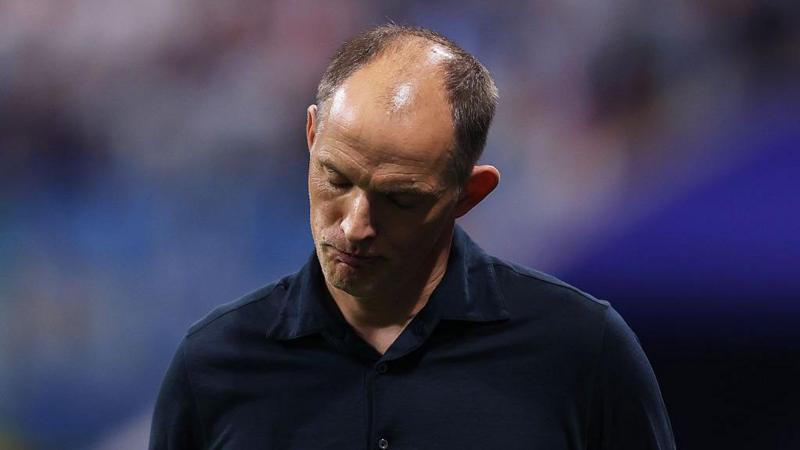
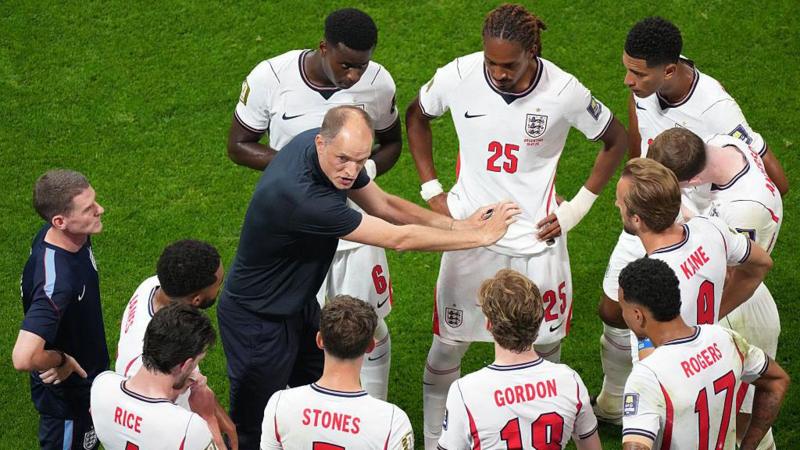
Too pragmatic, poor use of substitutes, sitting back too deep and when faced with their first real big opponent of the tournament, a crushing defeat.All well-known - if at times perhaps unfair - criticisms of Sir Gareth Southgate's England teams.But this was under the management of Thomas Tuchel, the German brought in to signal a change of approach for England - one that was supposed to bring a first World Cup in 60 years.So with comparisons being drawn between Tuchel and his predecessor, what has really changed for England?In March 2025, Tuchel was asked about England's Euro 2024 campaign under Southgate.Tuchel felt that England did not have "a clear playing style". When asked what was missing, he reeled off a long list: "The identity, the clarity, the rhythms, the repetition of patterns, the freedom of players, the expression of players, the hunger."[England] were more afraid to drop out of the tournament, in my observation, than having the excitement and hunger to win it."Fast forward 16 months and Tuchel's analysis of his predecessor's side could indeed be applied to his team's 2-1 loss to Argentina.It's been no secret what Tuchel has been working towards with England.The German has taken a system-first approach to international management. His World Cup squad left out a wealth of technical talent including Phil Foden, Cole Palmer and Trent Alexander-Arnold.Before raw quality or star names are considered, Tuchel had in mind the type of team he wanted to see, leaning on specific tactics and the aforementioned "repetition of patterns".And so the players he selected were the ones that he felt could best carry out the roles he wanted in his England system.This is why before the World Cup began, debates were had about whether Jude Bellingham or Morgan Rogers would play as the number 10, or whether Anthony Gordon or Marcus Rashford would play on the left wing.Tuchel selected similar profiles to maintain the squad's style, banking on nothing but plan A working – something which ultimately did not happen.By the end of the tournament, partly driven by injuries, we saw Rogers and Bellingham share the pitch – one on the right wing.The "identity" of his side was supposed to come in the form of a few key principles.Tuchel and his assistant coach, Anthony Barry, have spoken about borrowing ideas from the current version of the Premier League.Building up short, enticing pressure, playing quickly across the middle of the pitch – whether through powerful carrying or long balls – to find runners in attack against fewer defenders were all ideas England were seen trying to do every game, to varying levels of success.The second half of the 4-2 win against Croatia, in their opening match, was perhaps the closest example of what Tuchel's ideal version of England was meant to be.The other part of Tuchel's system that was continually emphasised was use of wide triangles to create chances, with the 52-year-old reluctant to see his side build through the centre.Rotations and runs off the ball between the full-back, central midfielder and winger before arriving at the byline was supposed to be the main method of chance creation for Tuchel's England, but as much as they tried to make it click, it again did not come to fruition.Tuchel's top-down approach differed greatly from Southgate's bottom-up approach, which partly explains Tuchel feeling Southgate's side lacked identity, clarity, rhythm or repeated patterns.Southgate likely did not rely on a predetermined attacking strategy so it is fair to say his attack was less clear or repetitive than Tuchel's - but this was because he took a player-first approach.He aimed to get the best talent in the country in one functioning and balanced starting 11. This was, at times, to his detriment – think Alexander-Arnold's struggles playing in midfield.Southgate was still able to go far in tournaments because ultimately he looked to give England's impressive attackers – such as Bellingham, Raheem Sterling and Cole Palmer – the licence to play in zones that suited them.When paired with a stronger defensive foundation, his man-management, and game-breaking set-piece threat, England usually had the edge over teams with less talent in their ranks.What jumps out is that although both managers have started from opposite tactical viewpoints, there are clear similarities in both their tournament runs – much to Tuchel's frustration.After England's victory against Norway, Tuchel said: "The result is fantastic but I'm not happy with the performance," before adding, "[we were] sloppy, tactical mistakes, not fast enough, not repetitive enough."These all speak to fact that the principles he wanted to see in his side were not on show.Both goals against Norway came from moments of individual brilliance against disorganised defences.A goal-kick that fell short and landed at Elliot Anderson's feet gave England possession against a Norway side not in their rigid 4-5-1 shape and through direct running and quick passing, Bellingham was then able to score.The winner came from the second phase of a corner, before Rogers had a long shot parried into Bellingham's path.Those goals feel more Southgate than Tuchel – player-led, intuitive and slightly chaotic rather than repetitive, drilled and choreographed.Southgate was happy to use a back five from the start of games if it allowed England to match opponents who lined up with five attacking players.There is a feeling that this does, however, communicate to both the players and fans a level of inferiority.Tuchel – with his system-first approach – hadn't shown any signs of doing that from the start of games but it's interesting that when under pressure, he brought on an extra defender to match up numerically with Argentina's forwards too.Argentina's substitutions by comparison were risky, brave and front-footed.Tuchel suggested afterwards that dropping into a low defence immediately after scoring was not instructed but rather a reaction from his players. However, his substitutions looked to control damage rather than wrestle back control.Watching Southgate's big-game losses back, there wasn't an obvious instruction to play defensively. Instead England struggled to build out from the back and defend their lead through possession football.And without players able to get on the ball and keep it, England are left defending while their opponents launch wave after wave of attack.This was also the case for Tuchel's England against Argentina, who had just 12% possession between Anthony Gordon's 55th-minute opening goal and Enzo Fernandez's 85th-minute equaliser.Irrespective of how good England can look or what approach they take, this appears to be an ongoing issue.If England are to overcome their weakness and start winning those big games, something has to change.And perhaps a combination of Southgate's technical approach and Tuchel's tactical methods may be a step in the right direction.How coach-on-pitch Messi undid England's tactics on the flyArgentina face action over Falklands banner

BBC SportThu, 16 Jul 2026
Source: BBC Sport
Read story
Tuchel ‘100%’ invested in leading England at Euro 2028 despite semi-final failure

Football News

Tuchel ‘100%’ invested in leading England at Euro 2028 despite semi-final failure

Manager under fire for manner of 2-1 defeat by Argentina‘There is enough to improve and I am happy to do that’Thomas Tuchel says he is “100%” committed to leading England at Euro 2028 and finding the “extra level” for glory that eluded his team at the World Cup.The manager is under fire for the manner of Wednesday’s 2-1 semi-final defeat in Atlanta. His switch to a back five for the final quarter at 1-0 up did not work, Argentina scoring two late goals to advance into Sunday’s final against Spain.Tuchel maintains the system was not the problem, rather it was the passivity of the players after Anthony Gordon opened the scoring in the 55th minute. He lamented England’s inability to get on the ball and control the game, suggesting it was not in their DNA to do so. The Football Association hired him to solve this issue, among others, and the pain of familiar failings continues to pound.But Tuchel, who signed a contract extension in February to carry him through the Euro 2028 campaign, remains determined and retains the FA’s backing. Asked whether he wanted to take the team forward in the next two years, he replied: “Yes, 100%. There is still enough to improve and I am more than happy to do that. I’ve loved every day of the World Cup.“I said after the quarter-final win against Norway that I see a disconnect from what I see in training on a football level and within the games. We can impose ourselves more on the ball. We can show what good football players we are. That is still in us as I see it in training and in every camp. And here also at the World Cup. I still feel there is an extra level that we need to conquer. We need to step up to the next level to get the big prize.”At the FA, there is a measure of satisfaction at how the team made it to the semi-finals, and realism, too. When the draw was made, it was considered to be tougher than at previous tournaments under Sir Gareth Southgate, starting with a group that contained Croatia and Ghana.The FA acknowledged the peril of a potential run from the last 16 to the final that took in Mexico in the altitude of Mexico City, Brazil, Argentina and Spain or France. In the event, it was Norway not Brazil in the quarter-final.The governing body was also acutely conscious of the situational and logistical challenges – especially the heat and travel. When England arrived in Atlanta for the Argentina game, it was after their 13th flight since the beginning of the tournament. All this after a gruelling Premier League season for most of the squad. There is the hope that a European Championship – which England will co-host – can be more straightforward.The FA’s chief executive, Mark Bullingham, was quick to show his appreciation after the full-time whistle against Argentina. “It is heartbreaking to be so close,” he said. “The players and Thomas gave it everything and the squad, coaches and staff could not have worked harder during the tournament. I would like to thank them all.”Tuchel was damned by the optics of his retreat into the back five when he sacrificed the pacy outlet of Gordon for the extra centre-half in Ezri Konsa on 72 minutes. But he argued that the rot had set in before then – specifically after Gordon’s goal – when the team were in their usual 4-2-3-1 formation.One of the turning points came in the 64th minute when the Argentina manager, Lionel Scaloni, replaced the defensive midfielder Leandro Paredes with the left winger Nico González and moved to 4-2-4. Scaloni went all-out in the 81st minute as England still led, withdrawing the left-back, Nico Tagliafico, and introducing the striker Lautaro Martínez. It paid off, Martínez scoring the stoppage-time winner. England had only 12% of the possession between the Gordon and Martínez goals.“We got too passive within our structure,” Tuchel said. “I tried to help … for us to actually be more active in a back five, to be quicker out to their wingers. We encouraged everyone to step out, to be more active but we just struggled. We couldn’t find any duels any more, which was why we dropped deeper and deeper. It was never the plan but it happened. We couldn’t stop the runners from the second line, the midfielders through our gaps. And their deliveries were on the highest level.“We needed to get back on the ball otherwise you cannot break the pressure and you cannot get the momentum back. We just couldn’t cope with the momentum swing. Ball possession plays a crucial role. It’s maybe not in our DNA like it is in the Spanish DNA or the Argentinian or Brazilian DNA – to take the ball and control the game.“It’s also not a problem to defend deep. You can stay active. But we struggled. We struggled physically, as well. Through the whole tournament … playing in the heat, playing in the altitude [against Mexico] and with a man down [after Jarell Quansah’s red card]. It cost us a lot in the end. We gave everything but it was not enough.“My feeling is that no structure in the world could have helped us because we were too passive. We were not physical enough, we didn’t stop runs arriving in our box and the deliveries were then too good.”

David Hytner in AtlantaThu, 16 Jul 2026
Source: The Guardian
Read story
The Guardian view on England’s World Cup disappointment: a tale of the not wholly unexpected | Editorial

Football News

The Guardian view on England’s World Cup disappointment: a tale of the not wholly unexpected | Editorial

There was a sense of deja vu as Argentina came from behind to win an intense semi-final. But the players also gave the nation some memorable highsHistorically, English football-supporting culture has had a well-known darker side. But in recent decades, as the England men’s team’s trophy drought has continued, some of its unofficial anthems have acquired an endearingly melancholy quality. “It was nearly complete, it was nearly so sweet”, as the Three Lions song had it in the 1990s, when England exited a World Cup and a European Championship at the semi-final stage.This summer, Oasis’s Wonderwall has been the soundtrack as Harry Kane and co progressed to Wednesday’s climactic semi-final showdown with Argentina. This is a song which, very wisely in an England context, puts a heavy emphasis on the idea of “maybe”. In the end it turned out to be maybe not.A watching audience of more than 24 million began to believe as England scored first to put themselves on the brink of a first World Cup final since 1966. But a familiar sense of resignation then took over, as the team wilted under Argentinian pressure and lost to a stoppage-time winner. The Portuguese sometimes define their national sensibility using the word saudade, conveying a mixture of nostalgia and longing. England’s footballers and followers could do with their own equivalent.The inquest, thankfully, is so far proving less vicious than the one which led to the disgraceful vilification of David Beckham, after his red card was followed by defeat against Argentina in 1998. But England’s German coach, Thomas Tuchel, is coming under fire after presiding over his side’s retreat into a defensive shell in the latter stages of the game. Nervous England teams lost in similar fashion to Croatia in the 2018 semi-final, and to Italy in the Euro 2020 final. Tuchel was supposed to be the foreign change agent, but the inability to take control from a winning position was all too familiar. Football, as we know, is a fickle game. It was only last week that he was being talked up on Mumsnet.As the air slightly goes out of a heatwave-heavy summer, the rest of the world’s attention will shift to a Spain-Argentina final – surely to be the 39-year-old Lionel Messi’s last appearance on football’s greatest stage. The 2026 men’s World Cup has suffered from hyper-commercialisation, visa injustices and an assault on the tournament’s sporting integrity by Donald Trump, facilitated by the egregious Fifa president, Gianni Infantino. But the extraordinary longevity of Messi’s genius, which turned the game against England, has offered a spectacle to delight anyone interested in sport. The provocative and reprehensible brandishing of a Falklands-related banner by his teammates has done him a disservice by generating a row where there should been only acclamation.Tuchel and his deflated players will depart the US after a third-place match against a similarly disappointed France team. Some will leave having enhanced their reputation, others will have regrets. But collectively they confirmed England’s status in the top rank of footballing nations – a position not to be taken for granted after periods of spectacular underachievement – and gave the nation some memorable highs.The intense, passionate victory over Mexico in a cacophonous, stormy Azteca stadium will take its place among the greatest of England triumphs. For the rest, Wonderwall captures the immediate mood nicely: “Today was gonna be the day, but they’ll never throw it back to you.” There’s always tomorrow, though.

EditorialThu, 16 Jul 2026
Source: The Guardian
Read story
Oliver Glasner says Marinakis’ ambition convinced him to take Nottingham Forest job

Football News

Oliver Glasner says Marinakis’ ambition convinced him to take Nottingham Forest job

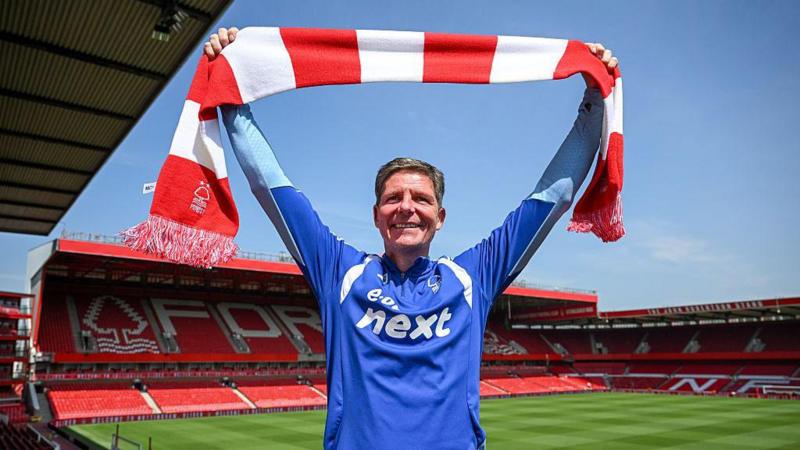
Austrian met Forest owner over seafood platter in Athens‘He’s one of few people who’s more ambitious than I am’Oliver Glasner said he wants to bring back the “sweet honey” of European football to Nottingham Forest and suggested the club’s owner, Evangelos Marinakis, may be one of few people more ambitious than him. Glasner revealed talks with Marinakis over a seafood platter in Athens convinced him to become Forest’s fifth head coach in less than 12 months, the Austrian signing a three-year contract after a fruitful two years at Crystal Palace.Glasner met the Forest squad on Monday, his first day, and said he is enthused by the scope for the club to grow after a season in which they avoided relegation and reached the Europa League semi-finals. Forest are pushing to make the Tottenham midfielder Lucas Bergvall their club-record signing as they seek to replace Elliot Anderson, who is leaving for Manchester City. Glasner is hopeful he will have at least two new signings join them on next week’s Portugal training camp, with the midfielder Xavier Schlager close to joining on a free after leaving RB Leipzig.Forest sacked Vítor Pereira because they felt the opportunity to appoint Glasner, out of work after leaving Selhurst Park, was too good to turn down. Glasner conceded Forest’s hierarchy were “very hard-working” in their efforts to appoint him. The 51-year-old, who won the FA Cup, Conference League and Community Shield at Palace, believes he can also exceed expectations at the City Ground, but underlined success will not happen overnight.“My personal history shows that teams usually, what we are asking them to do – the habits we want them to do – it takes three to six months to see it for the first time,” he said. “I’m no magician … I didn’t find the button that players can press and all of sudden we win the Premier League. Our goal is to come closer and closer to European places. These players felt the sweet honey of playing European football and this year it’s just butter – no honey – on the toast. Hopefully next year it will be sweeter. If I had felt there was no potential any more, I wouldn’t have signed.”Of his discussions with Marinakis in Greece, he said: “When we had talks, I probably found one of the few people who is more ambitious than I am … so I think we will challenge each other with ambition. Every Premier League club, owner, manager and player is ambitious, but that doesn’t automatically mean that you will win silverware. It doesn’t make sense to talk about [winning] silverware after three days. We are not talking about the end product when you don’t know the ingredients. We are now trying to find the ingredients and then hopefully with these ingredients we will get a great meal and then we will be successful.”Glasner’s analogies were not confined to food at his unveiling, at which he spoke to the media for more than an hour. Asked about Forest’s need for stability, he said: “Nobody wants to get divorced … I don’t know how it is here in England but in Austria it [the divorce rate] is 50% … at the wedding, you would say ‘no, not us,’ but it happens. Every club wants the same manager for a decade, the same players for as long as possible, but it’s just not the real world. We want to get stability and consistency because the owner and I are convinced that is the foundation for success. We hope now that this is the starting point.”Glasner said Forest’s rich history as two-time European champions helped entice him, but insisted they must look forward. “I see a lot of potential in this club and a lot of ambition in this club and then I thought: ‘Hey, probably you can do it again.’ But I can’t do it. I’m too weak for this. If I’m alone, I have no chance. But I know if we all stick together and all work in the same direction, then it’s possible – not [necessarily] again to win a trophy, I don’t know – but to succeed, to fulfil expectations, make people happy inside and outside the club. In the end that’s what I’m looking for. After the talks, I had the feeling this is the right place.”He dismissed suggestions joining Forest, who assumed Palace’s place in the Europa League last season after Palace were expelled from the competition by Uefa, could ruin his legacy at his previous club. “What I know is that I’m really pleased and grateful to have been part of a wonderful journey and I think everybody involved would tell you the same,” Glasner said. “There are now [ex-Palace] players at Bayern Munich, Arsenal, Manchester City, Fulham … it is just part of football life.“I gave 100% every single day for Crystal Palace because that is what everybody deserved. We definitely created memories and that is what I’m really proud of. We had a great time together and I’m still in touch with many of my former players; I texted Marc Guéhi on Monday because it was his birthday – and you see how focused he is? … He didn’t even know that I had signed for Forest.”

Ben FisherThu, 16 Jul 2026
Source: The Guardian
Read story
Palace sign England Under-23 striker Lloyd-Smith

Football News

Palace sign England Under-23 striker Lloyd-Smith

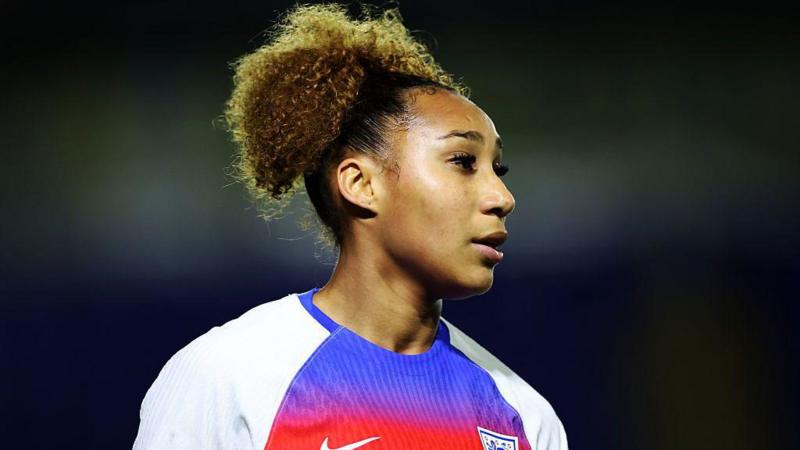
Crystal Palace have signed England Under-23s striker Lexi Lloyd-Smith on a three-year deal.Lloyd-Smith, 23, was WSL2's top scorer last season, netting 23 times in 48 appearances for Bristol City.She will be playing in the top flight for the first time with the Eagles, who finished runners-up in the second tier last year to secure their return to the Women's Super League.Palace manager Jo Potter said Lloyd-Smith is a "real talent" who "showed us all what she could do in the WSL2 last season".Lloyd-Smith said she was happy to return to her south London roots.She added: "I know I'm going to be playing for something more now – my roots, where I'm from. I'll always be proud to be from Peckham. It means everything."Lloyd-Smith's arrival continues a summer of strengthening for Palace on their WSL return, following the signing of Lionesses striker Bethany England earlier this week.Find interviews and extra content from the Women's Super League and beyond on the Women's Football Weekly feed

BBC SportThu, 16 Jul 2026
Source: BBC Sport
Read story
'Nobody wants to get divorced' - Glasner on Forest challenge

Football News

'Nobody wants to get divorced' - Glasner on Forest challenge

The affable Austrian - facing the press for the first time as Forest boss - was a little red in the face after catching the sun during Tuesday's training session.If that is the worst thing to happen to him over the next 12 months, he will have had a successful season.His was Forest's fourth managerial unveiling since September. The new man, who has signed a three-year deal, has been brought to the club to deliver for silverware and stability.After guiding Crystal Palace to the FA Cup and Europa Conference League in the past two seasons before standing down in May, he arrives with the winning pedigree owner Evangelos Marinakis demands.But after the carousel of managers at Nottingham Forest in the last 12 months, is taking the job a risk?Behind the same desk, Nuno Espirito Santo started the merry-go-round when revealing his breakdown in relationship with the club's hierarchy last August.Ange Postecoglou did not even get a chance to host a final post-match press conference before he was sacked after 39 days following a wretched defeat by Chelsea.Sean Dyche lasted 114 days. Replacement Vitor Pereira was told he was being dismissed just two minutes before a clause which allowed Forest to terminate his deal expired in June.So why is it not a gamble for the new man?"Nobody wants to get divorced. I don't know how it's in England but in Austria it's 50% [the divorce rate]," said Glasner, who takes his new side across the Trent to Notts County for Saturday's opening pre-season friendly."So when you ask them at the wedding, they would say 'yeah, not us' but it happens."Every single club wants to have the same manager for a decade, have the same players as long as possible but that's just not the real world - due to different reasons, due to different expectations, different plans in your life."When we had the talks, that's why we were also committed on a three-year contract. We said, 'OK, we want to get stability and consistency' because that's what the owner and I are convinced of. That's the foundation of success."We hope now that this is the starting point."An end-of-season study by the League Managers Association found the average tenure of sacked managers in the Premier League was less than a year - having been more than three years as recently as 2021-22.Across the English leagues, 43 managers were sacked, up by 2% from last season, and there were 65 managerial movements - a rise of 12% - but it is not something Glasner considers."In Cyprus last year they had 14 teams in the top league and all 14 changed manager. I don't really think about that part of the job," said the 51-year-old."I never sign and think about getting sacked. I just think: 'OK, what do we have to do to bring success to the club?'"When Glasner took over at Selhurst Park in February 2024, Palace were 15th, having lost 10 of their previous 17 games under Roy Hodgson.Come the end of the season they finished 10th, winning six of their last seven games - beating Liverpool, Manchester United and Aston Villa.He utilised a back three, something he used with success at Frankfurt, but it is not something Glasner has immediately promised at Forest."We are not here to be Palace 2," he said."The habits and the patterns are important, how to attack and defend, the spirit you create, to create a shared way of playing and understanding of what we want to do."I told the players I don't know if we will play a back four or back three, we will get the players where they feel comfortable and it's important they all play in their best positions."Get to know the players and find the right system but the patterns and the habits will be the same as at previous clubs."It feels, though, Glasner has the right players with Ola Aina and Neco Williams a perfect fit for wing-backs leaving Murillo, Nikola Milenkovic and Morato as the senior central defensive options. Zach Abbott is highly thought of but lacks top-flight experience.Nuno toyed with a back three on occasion but it is not something this squad has regularly played.In attack at Palace, Glasner inherited a forward line of Jean-Philippe Mateta, Eberechi Eze and Michael Olise. This time he has Chris Wood, Igor Jesus, Omari Hutchinson, Dan Nodye and Dilane Bakwa.Add to that Morgan Gibbs-White and James McAtee, and he has the players to suit his style. Expect Glasner's Forest to get up the pitch quicker.His Palace side attacked the fastest (2.00 m/s) of any side in the Premier League last season, with Forest 13th in that table (1.80).Although Forest scored more goals and had more shots than Glasner's Palace, they can still improve under him.Both sides struggled to take chances as Forest created poor ones - only Burnley and Tottenham created worse on average. Palace created good chances under Glasner but could not take them, ending the season with -17 xG.Under four managers, Forest played the highest ratio of backwards passes in the Premier League last season, with 17.1% of their total, while Palace had the lowest score on that front, with just 14% of their 14,920 passes.There will be a clear change in style and the way Forest attack. They put in 628 crosses - the second highest - with Palace managing only 417, the third-lowest in the division, only above Manchester City and Burnley.Palace did not do much passing in the final third of the pitch - more than 500 passes fewer than Forest last season - but Glasner's philosophy is not to waste time when his teams get close to goal.The Eagles created 29 more big chances (98) than Forest (69). Forest still scored more, though, netting 32 to Palace's 30. Their conversion rate was 43.5%, better than Palace's 32.7%.There will not be another 13-player £180m spree like last summer with Forest looking to add quality over quantity.Nicolas Dominguez has taken the number eight shirt vacated by Elliot Anderson's record-breaking move to Manchester City but Tottenham's Lucas Bergvall remains a priority target in midfield.Forest ideally want another midfielder, while a goalkeeper - following the exits of Stefan Ortega and Angus Gunn - is needed to support Matz Sels and John Victor.A striker is also wanted to aid Wood, who turns 35 in December, and Igor Jesus - who performed admirably in his debut season as cover from the injured New Zealander.With the World Cup ending, Glasner now expects the market to pick up before next week's training camp in Portugal.He said: "I have one strength and weakness - it's impatience. Sometimes it's a strength, sometimes it's a weakness. Of course, I would have hoped they had already trained with us."It's impossible because the players we're now talking to played at the World Cup so are still on vacation. I'm pretty convinced we will have a few players joining us in Portugal."

BBC SportThu, 16 Jul 2026
Source: BBC Sport
Read story
England had Lionel Messi under control … until one decisive and subtle shift

Football News

England had Lionel Messi under control … until one decisive and subtle shift

It was a statistically weird game for Argentina’s talisman against England, full of outliers. It didn’t matterThomas Tuchel will have prepared for every eventuality before England’s match with Argentina. He will have considered how his team could prosper in attack while remaining solid in defence. What to change if they scored first or if the opening goal went against them and, like so many managers before him, he will have put plenty of thought into how best to deal with Lionel Messi.For the first hour he was largely peripheral, with the data showing how England were limiting his involvement in dangerous areas. Messi’s only possession in the centre of the penalty area was snuffed out by an Elliot Anderson tackle shortly after Anthony Gordon had scored. The proportion of the distance he covered that was defined by Fifa as sprinting speed (at least 20km/h) was 4.3%, lower than against Switzerland (4.6%) or Egypt (5.4%) in the previous two rounds.The 39-year-old’s relative lack of shots will have heartened Tuchel. The only effort Messi had was from long range and blocked before it had reached the England box. In only one of his other 19 World Cup matches in which he played the full 90 minutes did he have so few shots in normal time, though he also played 120 with one effort (on target) against the Netherlands in 2014. Against Croatia four years later his only shot came from very close range. He has arguably never been so blunt from this perspective in this competition. So far, so good for England.Messi’s heat map also burned brightest where it usually does: in the right half-space in front of the opposition’s penalty area. It would be foolish to claim England had him where they wanted him, but at least Argentina’s captain was operating where they would have expected him to be. That can be planned for, which helps.A heat map for a whole match obscures subtle shifts that occur. Picture the flank between the edge of the penalty box and the touchline, running up to the halfway line. Messi’s only touch in this zone in the opening 45 minutes occurred close to the centre circle, when he passed forward to Giuliano Simeone, who was offside.But it was from this flank that the talisman took the game away from England. Messi attempted six open-play crosses in this region in the second half. It’s a ridiculously high number for a player who has averaged 2.3 crosses (including set plays) per 90 minutes across league football since 2015. In only two World Cup games has he attempted more, though interestingly both occurred in the preceding two rounds.One of Messi’s deliveries from wide led to the Nico González header which Jordan Pickford did well to save shortly before the second hydration break. Perhaps it was this moment that firmed up Tuchel’s plan to bring on Ezri Konsa immediately after, the head coach later supplementing him with Dan Burn after switching to a back five. The strategy worked against Mexico so why not here too?Because Messi is rather better at crossing than Roberto Alvarado and Jesús Gallardo. Those two Mexico players attempted 25 open-play crosses between them at the Azteca for the reward of once chance valued at 0.05xG. Messi, with his cross for Lautaro Martínez’s winner, generated 0.53xG, more than England mustered all night. It was only his second World Cup assist with his right foot and far harder to pull off than the cutback from the byline he provided to Julián Álvarez in the semi-finals in Qatar.It was a statistically weird game for Messi, full of outliers. It didn’t matter. Wherever the space happens to be, the greatest of all time will be there to torch your best-laid plans.

Andrew BeasleyThu, 16 Jul 2026
Source: The Guardian
Read story
What next for England? How does Tuchel fix key problems for Euro 2028?

Football News

What next for England? How does Tuchel fix key problems for Euro 2028?

But by taking the lead and then inviting on a hungry Argentina that is exactly what they got.A tactical misstep which led to England snatching a 2-1 defeat from the jaws of victory in the final minutes, and miss out on a place in the World Cup final.Tuchel should have been able to look ahead to the next international cycle with optimism.But merely reaching a World Cup semi-final does not feel like something worth celebrating right now.Up next, a meeting with Spain at Wembley on 26 September in the Nations League. It could, maybe should, have been an instant replay of Sunday's World Cup final.England will also face Czechia and old foes Croatia in the Nations League.Then next year comes the qualifying programme for Euro 2028, which the Three Lions will take part in despite being co-hosts.Tuchel, his England contract already extended, must now find a way to rebuild his squad and his ethos.There are key questions for the 52-year-old to answer.Harry Kane was in the form of his life in the Bundesliga last season, scoring 61 goals in all competitions.But time is against the Bayern Munich striker, who turns 33 on 28 July.The captain, who scored six goals at the World Cup, said after the loss to Argentina that it was "too early" to talk about playing at the finals in 2030.Kane will, though, surely be around for Euro 2028. Lifting a trophy on home soil could yet be the end of his international career.So who starts up front should not be a problem, barring injury.Tuchel's key task is to work out a Plan B, or find an able understudy should Kane not be available.Phil Foden was given a chance in a false nine role against Uruguay in March, but he underperformed to such an extent that he missed out on the World Cup.Tuchel took two other central strikers, Ollie Watkins and Ivan Toney. Yet they were limited to one minor substitute appearance each.Watkins, the top-scoring English striker in the Premier League last season with 16 goals, played just six minutes when he replaced Kane against Panama.Kane played every other minute save for stoppage time against Mexico, when Morgan Rogers replaced him.Toney, who like Watkins is 30, was only granted the final throes of stoppage time against Argentina.It suggests an over-reliance on Kane, and alternatives must be found to ease his workload as he approaches the age of 35.Dominic Solanke (28) and Dominic Calvert-Lewin (29) are the only other strikers to be used by England in the last 12 months.Watkins, Leeds' Calvert-Lewin (14) and the 35-year-old Brighton attacker Danny Welbeck (13) were the only English strikers to hit double figures in the Premier League last season.Age is not on the side of any of these players, and it is unclear where the new blood is coming from.It was hoped that Eddie Nketiah, the England Under-21 all-time record goalscorer, would be the next prolific striker to come through the youth levels.But the former Arsenal player has scored just five Premier League goals in two seasons at Crystal Palace.Perhaps Liam Delap, still only 23, who scored 12 Premier League goals for Ipswich Town in 2024-25, will finally find his feet at Chelsea - or at a new club.This may be a problem for another manager beyond Euro 2028, as Tuchel may feel that he has got Kane and that will do him.Tuchel's lack of confidence in Manchester United midfielder Kobbie Mainoo is another key theme out of this tournament.Unlike up front, Tuchel had no option but to make changes to his midfield at times.But rather than bring Mainoo off the bench, he opted to slot either Reece James or Nico O'Reilly in the deep-lying midfield position.So Mainoo returns to Old Trafford as the only outfield player in the original 26-man squad not to play a single minute at the World Cup.If Tuchel did not trust Mainoo to act as a deputy, why was he in the squad at all?England do have plenty of reasons to be confident this might be a short-term issue.Mainoo is only 21 and has plenty of time to develop, as do England's other options in this area.Palace's Adam Wharton, 22, has four caps and was unlucky to miss out on the squad to Mainoo.Bournemouth's Alex Scott, also 22, was invited to be part of the pre-tournament training camp in Florida but awaits his debut.Tuchel needs to find a player he has confidence in to add rotation options at the base of midfield.Otherwise, he will be using defenders as sticking plasters again in two years.Further back on the field, goalkeeper should not be a problem for now as Jordan Pickford will be 34 when the Euros comes around, but what comes after that?England urgently need James Trafford, touted as Pickford's long-term successor, to start playing regularly after a year on the bench at Manchester City.'Passive' and 'crumbled' - did Tuchel's defensive tactics cost England?The FA's logic was simple. It felt it had an elite coach and wanted to secure his services for the home Euros.It would also prevent endless speculation over Tuchel's future before and during the World Cup.Tuchel had qualified England for the World Cup with a perfect record. Eight games, eight wins, no goals conceded.The counter argument was that Tuchel had in fact achieved nothing, that winning a group featuring Andorra, Albania, Latvia and Serbia was a formality.The only time England had faced a country in the top 20 of the Fifa world ranking, they lost to Senegal in a friendly at the City Ground.The FA felt Tuchel had the tactical acumen to avoid the perceived tactical naivety of former boss Gareth Southgate.Yet it happened again, arguably in more destructive fashion against Argentina.Tuchel told the players at half-time of the 4-2 group stage win over Croatia "even if we lose, let's do it our way".What followed was perhaps England's best 45 minutes of the World Cup, dominating attacking football which Croatia could not live with.The second-half performance against Argentina was the antithesis of this. Why did it happen?"We should have carried on pushing," centre-back Marc Guehi told BBC Sport. "It kind of felt like we scored and the mentality was, go back, defend."Maybe there is an element of the players' trust that Tuchel will need to win back?The coach has many other questions to answer, specifically over issues at right-back and the decision not to select Trent Alexander-Arnold - even when Tino Livramento was injured on the eve of England's first game.Tuchel retains the backing of the FA but he may have lost some of the supporters. And he is going to have to swallow the criticism."Mentality? Mentality? This is pure mentality," said an annoyed Tuchel as he faced questions following England's 2-1 quarter-final win over Norway.It meant much of the talk in the lead up to semi-final was that this England team was not be shackled by previous defeats.Except this time it was not really glorious failure, it felt more like a surrender.Tuchel will have to accept all the criticism for his tactical approach. After all, it was he who stripped the team of most of its attacking outlets.But he could do nothing about the performance of those players who were on the pitch.Possession of just 12% after taking the lead shows a debilitating inability to keep hold of the ball.For a period of 18 minutes 37 seconds up until just before Argentina equalised, England completed just three passes - between Jordan Pickford and John Stones.Only five other passes were attempted, all unsuccessfully.Maybe it would have been different had Tuchel opted to use Mainoo, or introduce a player such as Marcus Rashford as an outlet.Not one of the 11 players who were out on the pitch were capable of making an impact as the wave of Argentina attacks increased.And that is something that cannot be solely placed at Tuchel's door.How coach-on-pitch Messi undid England's tactics on the flyWhy you should care about World Cup third-place play-off'Passive' and 'crumbled' - did Tuchel's defensive tactics cost England?How to watch the World Cup on the BBC and ITV

BBC SportThu, 16 Jul 2026
Source: BBC Sport
Read story
Tzolis: Arsenal's new 'warrior mode' winger - and perfect Trossard replacement

Football News

Tzolis: Arsenal's new 'warrior mode' winger - and perfect Trossard replacement

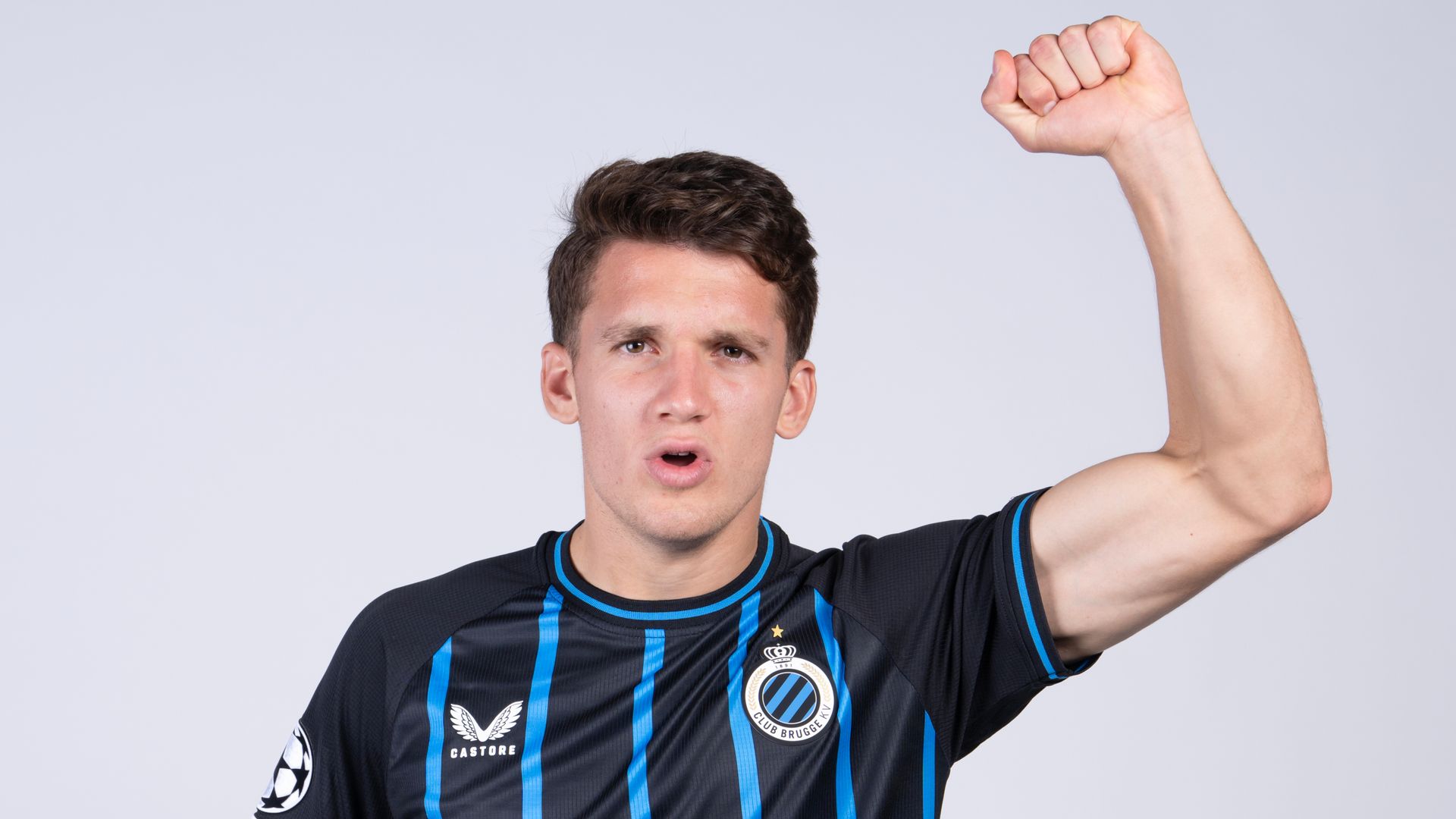
In Christos Tzolis, Arsenal's first outfield signing since becoming Premier League champions is a fairly surprising one. But nobody will be more stunned about this deal than Norwich fans.In 2021, Tzolis became the Canaries' record signing for £10m, played just 30 times in two years in an injury-hit spell, then left without a trace.He even made his Premier League debut for Norwich at the Emirates in that September, when Arsenal were bottom of the table and without a point under Mikel Arteta.Now he's back in England and joining the Premier League champions, having got 51 goal contributions in 52 games last season for Club Brugge.Yet Tzolis is set to arrive at Arsenal as a record-breaker. At £34m, he will be Greece's most expensive player and the Belgian Pro League's biggest export.But he also arrives as Leandro Trossard's direct replacement. And a closer look at Tzolis' profile shows a lot of similarities between the two players.The first is the profile. Through those who know him, the Greek forward is a winger but like Trossard, he is also a No 10. Last summer, Crystal Palace strongly considered Tzolis as a replacement for now-Arsenal star Eberechi Eze."He's able to fulfil different roles," Hayk Milkon tells Sky Sports, who was Club Brugge's assistant manager for Tzolis' entire time in Belgium up until February of this year."Coming from the left side - giving him this space to start wide and then find the moments to get more inside - that's where he's at his strongest."If he's assigned to play really wide to get these one-on-ones, he's able to do it. But he's always strongest the closer he is to the goal. Whenever he's more central, you can expect him at any moment to attack the space."Another similarity between Tzolis and Trossard is their availability. Trossard had an exemplary injury record at Arsenal and was only injured for four matches in three-and-a-half-years. All of those four games came in his final season in north London.Tzolis, meanwhile, had a similar record at Club Brugge. The longest he ever spent on the sidelines he had at the Belgian club was two matches - despite being one of the most energetic and intense players on the team."He's a guy that works a lot," adds Milkon. "He runs a lot of kilometres in the game, but also at high speeds and his sprint distance."Anyone can do that once in a week. He was doing it every three or four days with the Champions League. And his performances stayed stable."He also takes care of his body really well. He's a super professional. He comes in on matchdays quite early to prepare his body for what's coming next, to activate. He eats well, trains well. He has everything you need to be a top professional player."A final comparison between Trossard and Tzolis is a slight temperament - bred from a desire to win. Arteta once called affectionately Trossard "a bit of a moaner" at Arsenal through his constant complaining in training and to referees.And one of Tzolis' big areas of improvement, according to his former coach? "Emotional stability," says Milkon."He doesn't like to get kicked. Nobody likes it, obviously. But he doesn't. He's targeted very often. You need to stop him somehow. And the opposition were not able to stop him."But when he gets those kicks or when referee decisions are poor for him, then it might get a little bit difficult for him to stay in the game."It is called "warrior mode," according to Milkon. And while Tzolis has that slight temperament, it does not translate to toxic or being a bad team-mate.When Club Brugge were crowned Belgian champions in the season just gone, team-mates joined Tzolis in a classic Greek Sirtaki dance on the champions podium - showing how he grabbed the hearts and minds of the dressing room."They did this quite often," adds Milkon. "And you don't do it with a guy that is not so loved in the group."As a person, he's an amazing lad. He makes the team like a family because he's so open, so easy going, always smiling, always making jokes in the dressing room, relaxed outside of the pitch."But when we go on the pitch, he's immediately in warrior mode. And every single training session is to win. It's not to just play around. And if he doesn't succeed in things, he might sometimes try to force it."But, yeah, he's a winner. And outside the pitch, he's just the most amazing guy that you can have in a dressing room."He might seem sometimes a little bit stubborn, but he is open. He is willing to learn. He has his way and his feelings on the pitch, of course, and you need to respect that."But when you give some instructions and you show him why he should do things, he's always open because he wants the best."Obviously, what helped Tzolis win over the Club Brugge dressing room was his goal record, with 22 goals and 29 assists across all competitions last season.But this was not a one-off season, as he has scored at least 20 goals in each of his last three campaigns at Brugge and Fortuna Dusseldorf.His ball-striking ability was perfected in Belgium. "In the training sessions, you see immediately his powerful strike that he has," says Milkon."He always uses this quality to eliminate the goalkeeper because it's so powerful. It's unbelievable. But we managed to add the precision to that."But of course, those goal numbers should be scrutinised due to the league they are being played in. The Belguim Pro League sits as the eighth strongest league in the world, according to Opta's Power Rankings - one place below the EFL Championship.Arsenal discovered last season that Viktor Gyokeres' goals in Portugal were more difficult to translate into the Premier League - his 39 league goals for Sporting CP became 14 top-flight strikes in his debut Arsenal season.Data from the Champions League, which is a fairer way of understanding Tzolis' potential, presents the Greek winger in a better light.The 24-year-old was one of the most shot-friendly players in the Champions League last season, sitting in great company in most shots per 90.What helped Tzolis get into good areas was his ball-carrying ability. Again, Tzolis competed with some of Europe's best in terms of carrying the ball towards a shooting chance last season.The numbers are even more impressive given Tzolis played for a 'lesser' side in the Champions League last term. Club Brugge averaged around 46 per cent possession last season - towards the bottom of the list of clubs that took part from the league phase onwards - before being knocked out of the play-offs.Alongside Tzolis in both lists is Khvicha Kvaratskhelia of Paris Saint-Germain, who Arsenal explored a deal for earlier in the summer. Coincidentally, the Georgian winger was scouted by Maurizio Micheli at Napoli, who now works as part of Andrea Berta's talent-spotting team at Arsenal.Tzolis may not be the most outstanding name Arsenal sign in the transfer market and despite struggling at Norwich, a move for the Greek winger makes a fair bit of sense.

Sky SportsThu, 16 Jul 2026
Source: Sky Sports
Read story
Bournemouth's Jimenez joins Fiorentina on loan

Football News

Bournemouth's Jimenez joins Fiorentina on loan

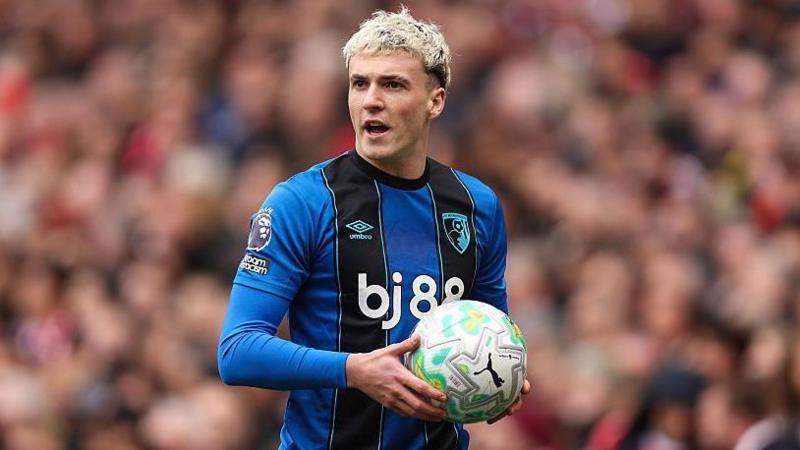
Bournemouth's' Spanish defender Alex Jimenez has joined Serie A side Fiorentina on a season-long loan.The deal includes a 20m euros (£17m) option to make the move permanent, and means he can continue to play after being suspended by his club pending the outcome of an investigation into social media allegations.The 21-year-old was dropped from Bournemouth's first team in May following what the club said was a "serious matter" relating to "posts circulating on social media"."The club wishes Alex well for the season ahead as he links up with Fiorentina," the Cherries said.Jimenez initially joined the south coast side on loan from AC Milan before signing permanently in February on a deal running until 2031.The Spain Under-21s international made 32 appearances for Bournemouth last season, scoring once.Pre-match, post-match and topical Cherries contentSubscribe and listen for everything you love about the CherriesLatest Bournemouth news, analysis and fan viewsAsk about Bournemouth - what do you want to know?

BBC SportThu, 16 Jul 2026
Source: BBC Sport
Read story
Wales striker Cain rejoins Everton after Leicester exit

Football News

Wales striker Cain rejoins Everton after Leicester exit

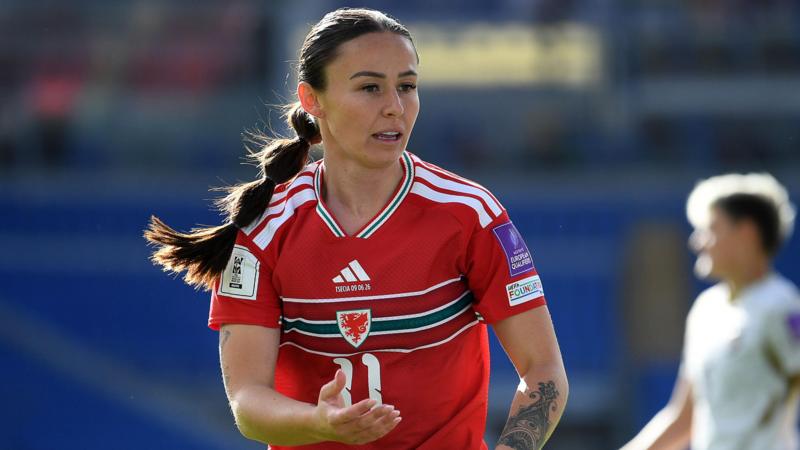
Wales forward Hannah Cain has re-signed for Everton following the expiry of her contract with Leicester City.The 27-year-old signed her first professional contract with the Toffees in July 2018, going on to spend two years on Merseyside before moving to the Foxes.Capped 26 times by Wales, Cain scored the crucial goal against the Republic of Ireland to send the Red Dragons women's team to their first major tournament – going on to score against England at the 2025 European Championships."I am over the moon to be back," Cain told evertontv. "Goodison is such an amazing place and it is nice to finally be in it as a home team player. I am really excited to be a part of it."I signed my first professional contract at Everton, so it is a full-circle moment for me, which is really nice. Coming back here, It feels like it is home for me."Having Goodison as our home shows how far the game has come. When I first signed my first deal, we played out of the city but now we have got this amazing place with so much history."When I played here at the end of last season, there was a lot of fans and the atmosphere was incredible. So I am really excited to be a part of it."Cain left Leicester in June after their relegation from the Women's Super League.

BBC SportThu, 16 Jul 2026
Source: BBC Sport
Read story
Move over Soccerey Bally: how Striker the dog became a 1994 World Cup hero

Football News

Move over Soccerey Bally: how Striker the dog became a 1994 World Cup hero

The tournament’s mascot came to herald the ubiquitous, commercial aims of a growing international spectacleDeep within a dark warehouse in Hillsborough, North Carolina, there sits a severed head. Encased in plastic, perfectly preserved and seemingly begging to be reanimated, it belongs to an American soccer legend.For a seismic summer 32 years ago, Striker the dog was more ubiquitous than any of World Cup 94’s players, plastered all over billboards, Coke cans, key chains, caps and hundreds of other items. Kids carried around Striker dolls. Grown men played Striker-themed pinball machines and Super Nintendo games and posed for photos with the pup in stadiums.As Striker’s remains – the foam and felt head, torso and limbs – lie in darkness at the US Soccer Hall of Fame archives, this summer’s World Cup has had its own trio of mascots. Canada’s Maple the Moose, America’s Clutch the Bald Eagle and Mexico’s Zayu the Jaguar seem caught in some bizarre liminal space between realism and cartoon fantasy, residents of a mascot version of the uncanny valley.That trio feel like AI slop, though. Striker? US Soccer chose a much simpler path with him, whipping together a cartoon dog. Years later, that choice has made him the one of the most memorable mascots in World Cup history.John Over and Joey Banaszkiewicz are responsible for some of the most well-known pieces of American animation of the late 20th century. They were young artists at Warner Brothers in the mid-90s, right around the time Steven Spielberg was leading that studio through an animation renaissance.The two had a hand in crafting the storylines and artwork for Animaniacs and Tiny Toon Adventures, drawing characters that would become familiar to an entire generation of American children. Their work wasn’t always for kids – the first episode of Animaniacs that Over ever worked on was quickly pulled after Buster Bunny and Plucky Duck got drunk and stole a police car.The culture at Warner Brothers back then, Over and Banaszkiewicz will tell you, was something akin to the island of misfit toys.“I feel like some people got there right out of prison,” says Banaszkiewicz, who landed at the studio after graduating from Cal Arts. Over arrived after working for John Kricfalusi, the creator of another iconic piece of 90s animation: the Ren and Stimpy Show.“The currency there was ‘how hard could we make each other laugh,’” Over says. “We were just a bunch of 20-year-olds that were let loose. People were just doing foul drawings of each other and seeing how far you could milk a joke or an embarrassing situation. But it was fantastic, because that’s really how you get your creativity built up.”In the summer of 1992, in between seasons of Tiny Toons and Animaniacs, animators found themselves with nothing to work on. For a few weeks, they’d pass the time by taking hours-long lunch breaks or “playing several rounds of miniature golf across the street”, Over remembers, but eventually, higher-ups within Warner Brothers suggested laying employees off or furloughing them.Spielberg wanted nothing to do with that idea. At his insistence, staff were kept on, and Spielberg told executives to find them other work.Right around that time, the organizing committee for the 1994 World Cup was searching for a mascot. Alan Rothenberg, the US Soccer Federation president, picked up the phone and set a meeting with Jean MacCurdy, the president of Warner Brothers Animation.Thirty years earlier, Reginald Hoye and Richard Culley, employees at a London-area marketing agency, were handed their own brief. The 1966 World Cup was rapidly approaching and the two were tasked with doing something entirely new: creating a mascot.It’s hard to imagine, but World Cups to that point were largely bereft of the consumerism that so thoroughly permeates them today. There were barely any advertisements at all, really, or merchandise. And certainly no mascots.In 10 minutes, Culley and Hoye whipped up World Cup Willie, the first-ever World Cup mascot. There are layers to Willie. He sports the union jack and his shaggy, charming appearance was in line with England’s broader moment, as the country’s perception moved away from its staid past and migrated towards that of a cultural tastemaker. This was the era of the Beatles, the Stones and James Bond.Willie fit right in; he was an instant smash, and others followed. In 1970, Juanito – a small Mexican child decked out in a sombrero – was the first human mascot, a trend that continued into the 1974 and 1978 World Cups.Then came the produce. Spain rolled out Naranjito, an anthropomorphic orange, in 1982 and Mexico came back with Pique, a mustachioed jalapeno pepper, in 1986.Then things got weird. In 1990, organizers in Italy hosted a design competition and received 50,000 entries, portraying everything from dogs to eggplants to an anthropomorphic piece of ziti. A panel of judges, including such luminaries as famed Ferrari designer Sergio Pininfarina, settled on an entry from Lucio Boscardin, an unheralded painter and sculptor.Boscardin came up with his idea at a traffic light. He took the word “Italia”, broke apart the lettering and assembled it into a stick figure of sorts, employing a soccer ball as the figure’s head. The end result was Ciao, a modern art fever dream.Tournament organizers quickly realized that Boscardin’s cubist vision was impossible to represent in costume, so they just threw together a dozen or so sculptures of Ciao, toting him around from stadium to stadium.The designers of Striker weren’t going to make that same mistake, though their early concepts were just as terrifying.“There were a bunch of people trying to do a soccer ball thing,” Over says. “People didn’t know what to call it really. I think Joey’s version was called Soccerey Bally or something like that. It was like a humanoid soccer ball with arms and legs. Joey’s storyboards are always funny and outrageous, so he had like soccer players taking the thing out to romantic candlelit dinners, and there’s just balls sitting everywhere. The player is in bed with a ball, he’s having sex with a ball, he’s everywhere with a ball.”US Soccer was not in any rush to peddle soccer-based cartoon pornography, and thankfully animators at Warner Brothers began to explore about a dozen other possibilities, “both animal and humanoid”, said MacCurdy. There were space creatures. Cats. Cougars. Bears.“In the end we just ended up looking at a lot of the old World Cup mascots,” Over says. “A lot of them were just awful. One was just a giant orange? And a lot of them had historical significance or whatever. Soccer was sort of not super popular here, so we thought let’s do this ‘underdog’ kind of idea. That’s when we started doing versions of, you know, ‘soccer dog’.”With that, the two embarked on a design process that left them bruised and battered. Hearing Over prattle on about what happened will feel familiar to any artist or creative who has ever applied their craft to a commercial endeavor.“We ran into problems with these dorks at [US Soccer],” says Over, laughing. “They’d look at your drawings. As an animator you’re always exaggerating things. Somebody kicks a ball and you have the leg go way up. They would say – well, ‘a child could never kick a ball that hard.’ Like, it’s a freaking soccer dog, dude. It is a cartoon dog!”“It ended up being sort of a design by committee thing,” Banaszkiewicz says. “And in the world of animation, that’s always death. Pretty soon it’s ‘I don’t like these fingers’ or ‘I think his ears are too sharp’ or ‘can you give him a bigger smile?’ Pretty soon you don’t even recognize him any more.”The pup we now know as Striker was at that point still being called Soccer Dog over at Warner Brothers and the slightly more clever World Cup Pup in the halls at US Soccer, not exactly the kind of names that move merchandise. So the World Cup organizing committee, headed up by Rothenberg, decided to let the public name the mascot. They bought advertising space in hundreds of local and national newspapers, encouraging fans to call their vote via a 1-900 number ($0.95 per call, in case you were wondering) or mail-in ballot. To keep things simple, the organizing committee narrowed the list down to four names: Striker, Sweeper, Champ and Sidekick.About 25,000 people cast their vote over the six-week campaign, with Striker the clear favorite. At a cost of $2,500 each, the organizing committee ordered a dozen Striker costumes, thrown together by Scollon Productions, a mom-and-pop costume shop based in White Rock, South Carolina. They made a few refinements to his look, swapping out a rugby-inspired jersey for a soccer kit and positioning the ball at the dog’s feet instead of forcing him to carry it around in his hands.The pup needed a backstory, so the organizing committee put their best wordsmiths on the assignment, and they did not disappoint. Striker was birthed by Mr and Mrs Mutt, they wrote, graduating with honors from obedience school. His favorite song? Hound Dog, by Elvis Presley. As for whether Striker has a significant other – he’s officially listed as single. “Playing the field,” as they say.“He best represents sports and this country,” Rothenberg said at the time. “And, being crass and commercial, we want to sell as much merchandise as possible.” Tournament organizers estimated that they’d make more than a billion – yes, a billion – dollars off of merchandise bearing Striker’s likeness.One curious detail about Striker’s origin story is that promoters suggested the dog was neither male nor female. That idea didn’t seem to stick, though: the pup got male pronouns nearly every time he was mentioned.Striker’s boots are a size-24 wide, if you’re wondering. Huge shoes to fill. But somebody had to. That task fell to Carlos Parada.Back in 1986, Parada was a wide-eyed teenager with a dream to go to the World Cup in Mexico. So he did what any irresponsible college student would: he got a high-interest credit card and bought the next flight out, hoping to crash with a few friends he had south of the border.Parada ended up scoring free tickets to nearly every match at the Azteca. He watched Diego Maradona score with his “Hand of God” and then watched him score arguably the greatest goal in the history of the tournament moments later. He was there for the final, among the best ever played. He returned home to Los Angeles, determined to involve himself in soccer.“When the [organizing committee] moved from Chicago to Los Angeles before the World Cup,” Parada says, “I knew I had to get involved. You know. To get free tickets.”Parada signed up as a volunteer, then took a part-time post at the organizing committee’s headquarters, one that put him in the office at 6am, around the time Rothenberg arrived – “to get a jump on the east coast folks,” Parada remembers. The two became chummy, and when a full-time marketing position became available, Parada got the job.He was tasked with safekeeping two of the tournament’s icons. One was the World Cup trophy. The 27-year-old went continent hopping with it for months, always flying in first class. “One seat for me,” he remembers, “and one for the trophy, right next to me.”The other was Striker. Parada, assisted by Joann Klonowski, the tournament’s head of marketing, put together guidelines for those inhabiting the costumes –mostly volunteers, as Parada once was.“He never speaks,” Klonowski told a reporter at the time. “He is not allowed to remove any part of his costume in public; for instance, he can’t remove his head. That takes away the aura for the kids who see him. He – the character, actually – is neither male nor female. The character never acknowledges that there is a person inside. The character communicates through mime movements, or through a personal escort, who always accompanies the character.”Parada also contributed a training film which, like the guidelines, is a little surreal, with Parada cheering his volunteers along as they run through the motions in and out of costume.Striker was unveiled in front of Mann’s Chinese Theatre in Hollywood in October 1993, where he sank his paws into the wet pavement beneath him, as is the tradition with any big star. He was at pre-tournament friendlies, hobnobbing and posing with fans, even crossing the Atlantic for promotional events. He was at the World Cup draw, and everywhere else, plastered all over billboards, TV ads, airplanes and a boatload of other merch.One place he wasn’t: the opening ceremony. Folks at US Soccer had visions of throwing Striker alongside Oprah Winfrey, Bill Clinton, Diana Ross and the rest of the crew but Striker was banished, collateral damage after a war between Disney (the original organizers of the ceremony) and Opryland USA (the company that ended up putting it on). Striker, said one Opryland employee, “is not here because we think he’s stupid.”Many others did not find this soccer dog stupid. Mexico goalkeeper Jorge Campos, Parada remembers, developed a strange fascination with the mascot and was insistent on standing next to him before matches. The Argentina squad also took a liking to Striker. In one of the tournament’s more remarkable off-field scenes, they tracked Striker down after crushing Greece 4-0 in their group-stage opener, throwing him in the air in celebration. After their next game against Nigeria, Maradona was led off the field for a drug test, one that ended his international career.Kids and adults alike were equally obsessed, in part owing to the fact that the dog could actually play soccer.“I learned pretty quickly that if you got a kid who played soccer in the costume and put him in Sambas, you could have pretty good control of his feet,” Parada says. “People would go insane when they saw Striker juggling a ball, which he could do pretty easily.”After the World Cup ended, after the banners came down and the collectible pin sets, hats and sweatshirts were shoved into drawers or sent to thrift shops, Striker drifted back into the ether. Others followed in his footsteps: a rooster (Footix, France 98), a lion (Goleo VI, Germany 06), a leopard (Zakumi, South Africa 10), a wolf (Zabivaka, Russia 18), a trio of aliens (Ato, Kaz and Nik, South Korea/Japan 02). By the time Qatar rolled around in 2022, we got La’eeb, a floating garment, albeit an adorable one.As the tournament has become more and more bloated and more and more commercialized, Striker evolved into a symbol for a simpler time, when the teams were fewer and the tickets were cheaper.Rothenberg, though, more or less forgot about him – when reached for this piece, he conceded that he didn’t remember anything about the mascot’s development. Neither did MacCurdy – the animation head at Warner Brothers – or Klonowski, the marketing head who ran the project for the organizing committee.Over and Banaszkiewicz had no idea whatsoever that Striker had had any sort of impact on a particular generation of soccer fans in America, not until they were contacted at least. Banaszkiewicz put it bluntly: “I had no idea anybody cared, honestly.”Over remembered the short-term effects, yes – seeing his co-creation on the side of an American Airlines 747, at games and on light-pole banners – but that was more or less the end of it for him. When Over and Banaszkiewicz hopped on a call together and chatted for the first time in years, though, the memories came flooding back.Neither artist feels a terribly strong sense of attachment to Striker. There were talks of an animated series at some point, but in the end the dog was just a drawing to them, or an intern in a costume.“I remember Jean MacCurdy and I went down to watch them unveil Striker, when he put his feet in the cement at Mann’s Chinese Theater, right next to Humphrey Bogart’s [hand prints.] It all felt so … forced. This love for this character was sort of forced. So it doesn’t rank that high as far as the stuff I’ve done, because you’re not infusing it with any personality as a film-maker. There’s no story to it, it’s sort of a graphic placeholder.”For an entire generation of American kids, though, Striker was part of that magical summer, one where they fell in love with the sport of soccer and never turned back.

Pablo Iglesias MaurerThu, 16 Jul 2026
Source: The Guardian

Read story