AccaMate logo

Football News

Latest Sports Stories

‘Beyond reproach’: Argentinian media praises Scaloni’s team despite World Cup final defeat

Football News

‘Beyond reproach’: Argentinian media praises Scaloni’s team despite World Cup final defeat

Clarín says team ‘gave it their all’ in losing effortLa Nación: ‘They are the pride of the nation’After Argentina lost 1-0 to Spain in the World Cup final on Sunday, in what is likely to be Lionel Messi’s last World Cup, the nation’s media celebrated the team while admitting that the Europeans had been the better side.The cover of Clarín, the country’s best-selling newspaper, showed a photo of Messi crying under the headline: “They gave it their all: [there is] nothing to blame them for.” In its editorial, the outlet said that “beyond the final result, and setting aside the strictly sporting aspects, there was, as never before, a special bond between the people and their national team”.La Nación ran a similar headline: “Argentina gave their all, and they are the pride of the nation.” Página|12’s front page read “From here to eternity,” and its cover article said Scaloni’s Selección had lost “against a Spanish side that controlled the entire final but only managed to score in the second half of extra time”. It added that “once the disappointment has faded, what will remain is the immense significance of a team which, with Lionel Messi as its leader and icon, has etched its name in capital letters into the history of world football.” Sports newspaper Olé struck a similar note with “May they be eternal,” a line from the national anthem referring to “the laurels that we knew how to win”.After the match the Argentina head coach, Lionel Scaloni, left his press conference in tears, casting doubt over his future. “If they give everything the way they did today, it sets a great example for ‌the people and for our country. You have to pick yourself up again. When you leave everything like that, it’s very hard to find fault with anything,” he said. The former Argentina international Marcelo Gallardo said on ESPN that Scaloni had spoken “with great dignity, with great pride and with a presence that is also deeply emotional and human – which is what comes across in these words when everything is crashing down on you and when you’re losing everything.” Gallardo added that the semi-final against England the previous Wednesday had been an “emotional drain” on the team. Referring to the tactical aspect of the game, he added that “Argentina hadn’t faced a team like Spain before – a team that steals the ball from you and you can’t get it back. They didn’t let us recover or play.”Alejandro Wall echoed the sentiment in a column for Tiempo Argentino titled “Spain proved too much for this great journey”. Wall described Luis de la Fuente’s Spain side as “a whirlwind of football and determination that dominated Argentina at will”. He added: “They had possession, the chances, the tempo of the match; they were in complete control. The Argentinian side simply set about holding out, nothing more. Looking at the match statistics, they seemed to be made up of an inert body.” Still, he said, the team’s “overall campaign was beyond reproach – they reached the final and left the pitch facing their fans, looking straight at the stands, in tears, paying tribute to their supporters.”The Argentinian president, Javier Milei, said: “Even though the result isn’t what we would have liked, we need to recognise the historic significance of this group of players’ enormous achievement: in the last four World Cups, they’ve reached three finals and won one,” he said in an interview with Radio Mitre. “And this final was lost in extra time. What’s more, no one can hold anything against them because they gave their all,” he added.The Argentinian Football Association (AFA) said some of the squad would be back in Argentina on Monday. However, it did not mention any specific celebrations.
Facundo Iglesia in Buenos AiresMon, 20 Jul 2026
Source: The Guardian
Read story
Why are Premier League transfer fees soaring?

Football News

Why are Premier League transfer fees soaring?

63 CommentsThirty-four years ago a £13m transfer caused national outrage in Italy.When AC Milan signed Gianluigi Lentini from Torino in 1992 for a then world record fee, newspapers called the deal "obscene", while the Vatican's official newspaper described it as "an offence against the dignity of work".Today that fee would barely register among the Premier League's biggest transfers.This summer alone Chelsea have agreed a club record £117m deal for Aston Villa's Morgan Rogers, Manchester City paid Nottingham Forest £116m for Elliot Anderson, and Tottenham spent a club record £100m on Sandro Tonali.These are not the only major deals. Tottenham also agreed an £85m move for West Ham midfielder Mateus Fernandes, Barcelona paid £69m to sign Anthony Gordon from Newcastle United, and Manchester United spent £50m on Chelsea midfielder Andrey Santos.It is the first transfer window in Premier League history to produce three £100m-plus signings - and there are still weeks to go before deadline day on 1 September.During the 2025 summer window English top-flight clubs spent a record £3bn.So why are transfer fees continuing to climb? Why are clubs paying record sums for players already playing in England? And why are more clubs willing to sell some of their biggest stars?Rogers' move perhaps best encapsulates how today's market worksChelsea are buying a player from Villa, who have finished above them in three of the past four seasons. Traditionally, clubs might have been reluctant to strengthen a direct rival in those circumstances.Instead, Chelsea simply met Villa's valuation."It sets a benchmark," he says. "Forest wanted to be close to the record level because they felt Elliot Anderson was a critical player, a player very much in demand."We've then seen that surpassed by the Morgan Rogers fee - only slightly - but it allows the club to say, 'This is the record English signing'. So there's an element of bragging rights involved."After City's £116m move for Anderson established a new market rate, Villa made it clear any club wanting Rogers would need to exceed that figure. Chelsea did exactly that, agreeing a guaranteed £117m fee.Arsenal, who had identified Rogers as one of their leading targets, explored a deal but refused to meet Villa's asking price.The episode shows how quickly the market can move. Once a new benchmark is established, comparable players inevitably see their valuations rise.Part of the answer lies in supply and demand.Buying domestically also removes many of the uncertainties associated with overseas recruitment.Maguire describes Premier League players as "oven-ready"."Because the Premier League is so wealthy, it's relatively rare that a club is in financial straits where it has to sell," he says."In the case of English players, you've then got the homegrown rule, which gives clubs more flexibility."You put all of those factors together and it means the Premier League is a big driver."Clubs know how these players perform against top opposition, and understand they can cope with the physical demands of the Premier League and avoid many of the adaptation risks attached to recruiting from abroad.That certainty carries a premium. So too does the Premier League's financial strength. Lucrative broadcasting revenues give English clubs spending power unmatched elsewhere in world football, allowing selling clubs to demand higher fees from domestic rivals than they might receive from overseas buyers.Perhaps the more surprising trend has been clubs allowing key players to leave.Villa have sold Rogers despite his importance under Unai Emery, while Forest accepted City's offer for Anderson. Newcastle sanctioned Gordon's move despite the England winger becoming one of Eddie Howe's most influential attacking players.Such decisions reflect commercial strategy as much as football.Major transfer fees create opportunities to strengthen several areas of a squad rather than relying on one star player, while major sales also provide greater flexibility.Why are Man City breaking the bank for Anderson?Some argue that the rules favour clubs with the greatest financial resources, which are better placed to absorb record transfer fees.The latest changes are also shaping how clubs approach the transfer market.Maguire says financial regulations can influence transfer decisions, although he cautions that they are not always the decisive factor."Financial regulations might be a driving force, but not necessarily," he says."Because clubs don't have to sell from a financial point of view, it means they can extract maximum value from their players."Villa's sale of Rogers and Forest's decision to cash in on Anderson have become part of that wider discussion, highlighting how regulation now shapes recruitment and squad building across the Premier League.Rather than viewing these deals simply as losing important players, clubs now see them as opportunities to reshape their squads.Whether those replacements prove as successful is another matter.This summer has also brought a significant regulatory change.The Premier League is transitioning away from profitability and sustainability rules (PSR) towards a new financial framework centred on squad-cost ratio (SCR) and sustainability and systemic resilience (SSR).Rather than focusing primarily on rolling three-year losses, the new framework places greater emphasis on the relationship between football-related spending and revenue.Player wages, transfer amortisation – spreading a transfer fee across the length of a player's contract for accounting purposes – and agent fees now become even more central to clubs' financial planning.For clubs competing in Europe, Uefa's own SCR rules also continue to apply, placing further restrictions on spending.Why SCR will allow Spurs to keep spending - analysis"If you're signing a player for £115m, spread over five years that's about £23m a year before wages," he says."Getting into the Champions League is worth a fortune and that's the lens through which clubs do those calculations."Maguire estimates reaching Europe's premier club competition can be worth 180m-200m euros (£153m-£170m) once prize money, matchday revenue and commercial bonuses are taken into account, reinforcing the incentive for clubs to invest heavily in recruitment.Clubs are already beginning to adapt their transfer strategies. Generating transfer income, reducing wage commitments and carefully balancing spending throughout the year have become key considerations alongside purely footballing decisions.The Premier League's financial landscape has changed dramatically over the past decade. Since 2016 total summer transfer spending has risen from £1.16bn to a record £3.19bn in 2025 – an increase of almost 175%.On the surface, that suggests transfer figures are continuing to accelerate. Headline fees, though, tell only part of the story.Research by Maguire and colleagues at the University of Liverpool suggests some of the Premier League's earlier record signings represented even greater investments when measured against clubs' buying power at the time.Using Premier League broadcasting revenues as an index, Alan Shearer's £15m move from Blackburn Rovers to Newcastle United in 1996 remains the league's biggest transfer relative to clubs' spending power. Rio Ferdinand's £29.1m move to Manchester United in 2002 and Juan Sebastian Veron's £28.1m arrival at Old Trafford in 2001 also rank above any of this summer's blockbuster deals.The same model suggests Trevor Francis' £1m move from Birmingham City to Forest in 1979 – English football's first £1m transfer – would equate to about £173m in today's market.That does not mean the fees paid for Rogers, Anderson and Tonali were modest. Rather, it reflects how dramatically Premier League revenues have grown, allowing clubs to spend sums that would once have been unimaginable.When Jack Grealish became Britain's first £100m footballer when joining City from Villa in 2021, the transfer marked another turning point in the evolution of the market.Only five years later, nine-figure deals are no longer viewed as extraordinary. They have become a familiar feature of Premier League transfer windows.While no Premier League club has yet paid £200m for a player, football's financial ceiling continues to rise and the first transfer of that magnitude no longer feels beyond the realms of possibility.Will the World Cup affect Arsenal's transfer plans?

BBC SportMon, 20 Jul 2026
Source: BBC Sport
Read story
Guardiola holds talks over Italy head coach role

Football News

Guardiola holds talks over Italy head coach role

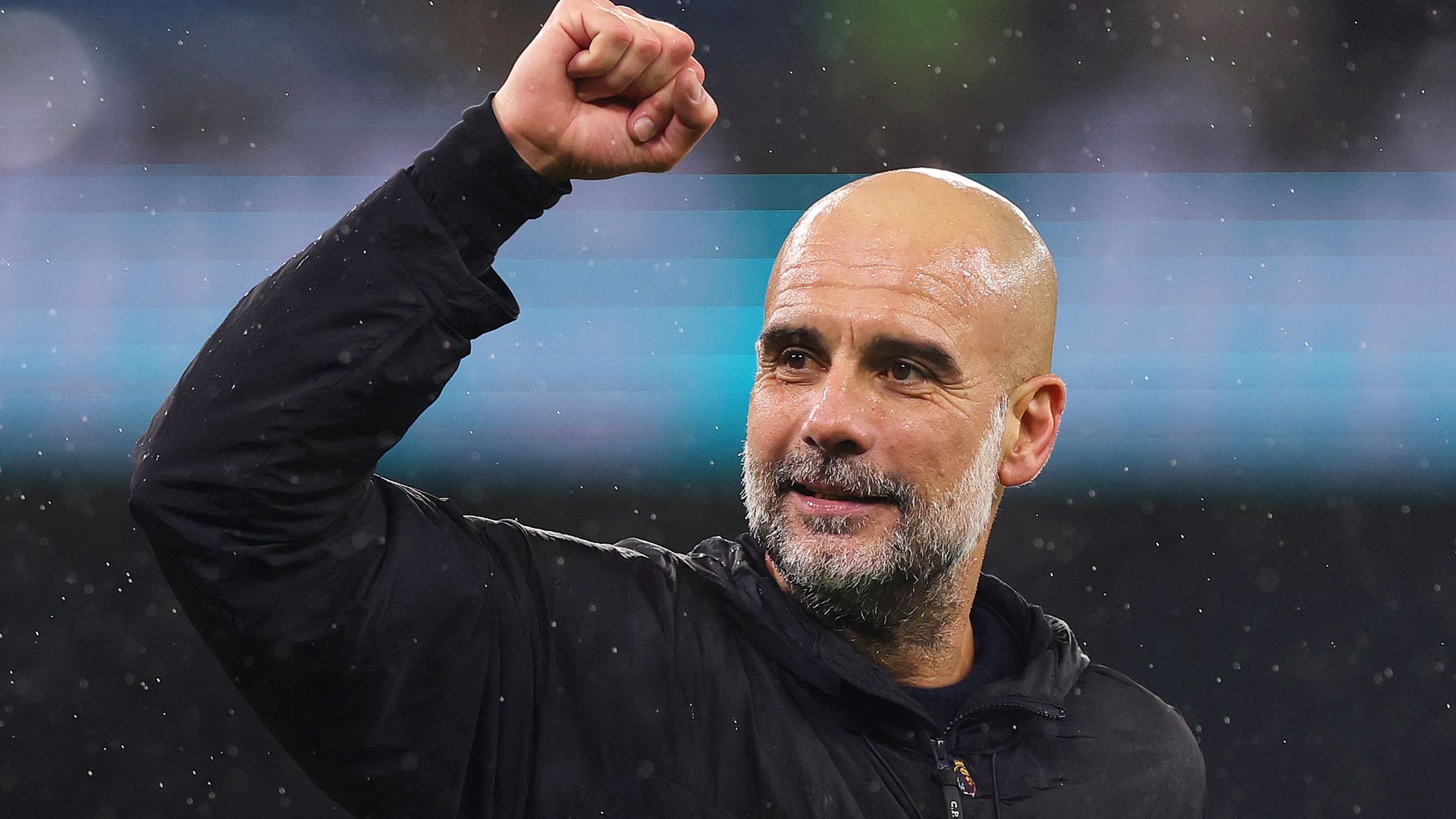
The Italian Football Federation (FIGC) has met with Pep Guardiola to convince him to take over as national team head coach, according to Sky in Italy.Paolo Maldini, the new technical director of the FIGC, and Leonardo, his advisor, travelled to Barcelona to speak with the former Man City boss.It remains to be seen if Guardiola wants the job, but the FIGC is making concrete attempts to bring him in as the national boss.Other candidates for the role are Roberto Mancini and Andrea Pirlo.Maldini and Leonardo spoke with Guardiola over three days, explaining their project for the Italian national team.The FIGC brought in Maldini and Leonardo as part of a huge shake-up in Italian football following their failure to qualify for a third consecutive World Cup.Their task was to find a successor to Gennaro Gattuso, who left his role after missing out on qualification for this summer's tournament in North America.Guardiola is a free agent for the first time in a decade after ending his 10-year association with Manchester City. He won 20 trophies during his time at the club and finished with a win ratio of 70.8 per cent.Italy have failed to qualify for the last three major tournaments since winning the European Championships in 2021 under Mancini.Speaking to Sky Sports a year before leaving the Etihad, Guardiola revealed he would be taking a break from football when the time came for his tenure at City to end.Following the official announcement of his departure, Guardiola doubled down on this suggestion by saying that a desire to spend more time with his family was the catalyst for his decision."No plans for [coaching] for a while. Otherwise I would be here. I need to step back. I will not [coach] for a while," he said during his final Manchester City press conference."I feel I will not have the energy every day, with expectations to fight for the title. I know myself, I have that energy, but I feel like I will not have it [in the future]."Speaking exclusively with Sky Sports, he added: "There are things that I have not done that I want to do. I still have my father alive. I want to spend more time with him. My kids... And a lot of things as a human being I can do. I'm fortunate I can decide, that's why I took this decision."It was widely reported in 2024 that Guardiola had reached a verbal agreement with the FA to replace Gareth Southgate as the new England boss. However, he had a change of heart and opted to stay in Manchester, as Thomas Tuchel was eventually appointed, guiding England to their best World Cup finish on foreign soil.Tuchel is contracted until the end of Euro 2028 and has vowed to see out his new deal, which was extended in February.What is known is that Guardiola would be interested in the challenge of moving into international management. In an interview with chef Dani Garcia in 2024, he said: "What I'm not going to do is leave Manchester City and go to another country to do the same thing as I am now."I wouldn't have the energy to do so. I'm still here doing what I am today. But the thought of starting somewhere else, with all the process of the training and so on... no, no, no! Maybe a national team, but that's different."Pep Guardiola is the biggest commodity in football management. That's the case now, and that was the case when he took a break after managing Barcelona. That was followed by a move to Bayern Munich, but, as Guardiola is quick to say, he is older, lacks the energy and has too much love for Manchester City to jump into a similar job.He has expressed an interest in spending more time with his family and resting. But we know what football obsessives are like. It doesn't take long for them to get the itch back, and Guardiola is certainly a football obsessive.A role in international management could be enough to scratch both itches. On one hand, Guardiola wouldn't be on the training pitch day in, day out, allowing him to have the time with loved ones he desires.However, every couple of months he could work with a group of players and teach them the Guardiola way across a Euros or World Cup cycle. Not to mention that he would be entering uncharted territory.Having already achieved everything in club football, the switch to the international game may be incredibly appealing as it is, let alone with the improved work-life balance it offers.Imagine if he could become the first foreign manager to guide a team to World Cup glory? It sounds far-fetched considering where Italy are right now, but if anyone can do it, it's Pep.

Sky SportsMon, 20 Jul 2026
Source: Sky Sports
Read story
Watch the BBC's closing World Cup montage

Football News

Watch the BBC's closing World Cup montage

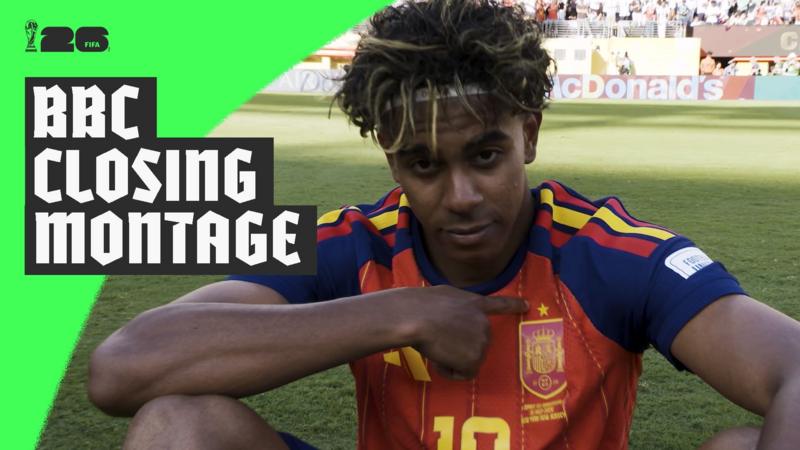
Close30Watch the closing montage of the BBC's coverage of the 2026 Fifa World Cup featuring all the highs, lows and colour from the biggest World Cup ever.Shareclose panelShare pageCopy linkAbout sharingRelated topicsFIFA World Cup 2026Follow FIFA World Cup 2026close panelYou are now following FIFA World Cup 2026Updates from your Sport topics will appear in My Sport and in a collection on the Sport homepage.FootballFollow Football

BBC SportMon, 20 Jul 2026
Source: BBC Sport
Read story
‘A unique collective experience’: Spain media hail team’s World Cup triumph

Football News

‘A unique collective experience’: Spain media hail team’s World Cup triumph

El Mundo marks country’s ‘unique collective experience’El Pais highlights the side’s ‘conviction of hard work’Sometimes football is about more than just football. As Spain’s still-breathless media pointed out on Monday, the national side’s victory against Argentina the previous night was an epochal event that had transcended talk of tactics, grumbles over hydration breaks and displays of distinctly ungentlemanly conduct.“It is the triumph of Luis de la Fuente and of an extraordinary group of footballers who – in a sport of stars and social media divas – have prioritised team values, joint intelligence, and the conviction of hard work,” said an editorial in El País.But, the paper added, it had also yielded a moment of much-needed “collective emotion” for Spain and given it so much to be proud of at a turbulent political time: “It’s easy to see in this team, in its diversity of origins and regions, in the character of its stars, in its style of play, and in its ability to connect with fans and citizens alike, a reflection of what this country is, and what it can be, in the 21st century.”El Mundo couldn’t have agreed more. “Our country has lived a unique collective experience,” it said in a leader. “Thanks to a group of young people who are as dazzling as they are relatable, we have seen the finest values of a Spain that is modern, exciting and capable of looking to the future with huge confidence.”ABC, which opted for the succinct and undeniably true headline of “España Invencible”, was also in celebratory mood. But it couldn’t help contrasting Spain’s behaviour with that of its graceless opponents, describing Argentina’s conduct as “thuggish”.Rubén Cañizares wrote: “Unlike Argentina, De la Fuente’s team had the courtesy to give Argentina a guard of honour as the ‘worthy’ runner-up … and even Sergio Ramos, who was in charge of carrying the World Cup trophy to the stage where Infantino and Trump presented it, embraced Messi in a warm, consoling hug, as Messi began to dissolve in a sea of tears.”In the sports daily Marca, José I Pérez set about the not particularly difficult task of explaining how Spain had come to lift the trophy for a second time. “Spain had more possession, created more chances, had more shots than Argentina, and looked more dangerous,” he said.“The team was the better side in the final … Argentina, like all the other teams in the tournament except Belgium, couldn’t score against Spain, who have only conceded one goal in their eight World Cup matches. It’s a spectacular record. It’s unprecedented in the World Cup for a winning team.”Writing in La Vanguardia, Jordi Basté said that Spain’s persistence and purity had somehow managed to cut through the whole ridiculous, vulgar circus of the 2026 World Cup.“If a Martian had landed on Earth yesterday and turned on the television, he would scarcely have guessed that the World Cup final was about to begin,” Basté wrote. “He would have thought he was watching the opening of a casino or billionaires’ convention.”Despite the distractions of Donald Trump, assorted celebrities and hydration breaks, he wrote, “the Spanish national team was the only one that understood what this was all about”, adding: “Because when the noise dies down, when the drones are withdrawn, when the VIP boxes empty, all that’s left is the game. And in that respect, the Spanish team was the best in the World Cup.”

Sam Jones in MadridMon, 20 Jul 2026
Source: The Guardian
Read story
Hearts, Rangers, Motherwell and Hibs find out Euro qualifying opponents

Football News

Hearts, Rangers, Motherwell and Hibs find out Euro qualifying opponents

Hearts and Rangers have found out their next qualifying opponents in the Champions League and Europa League.The Jambos will meet Fenerbahce or Gornik Zabrze if they get past Sturm Graz in Champions League qualifying, with the first leg of that round being played on Tuesday night with the return at Tynecastle Park on July 25.Third round ties are scheduled for 4/5 and 11/12 August.If Hearts lose to the Austrians, they will drop into the Europa League to face the winners of the tie between St Gallen and Benfica.They last featured in Champions League qualifying in 2006-07, losing in the third qualifying round to AEK Athens.Rangers, who finished third in the Scottish Premiership last season, will kick off their Europa League campaign against Jagiellonia Bialystok of Poland.Victory would see Derek McInnes' side progress to the play-off round, while defeat would see them compete in the Conference League for the first time.Motherwell and Hibernian will discover their potential Conference League opponents when the third qualifying round draw is made on Monday afternoon.If the Steelmen get past Faroese side Havnar Boltfelag, they will meet LNZ Cherkasy/Gent, Besiktas/FC Midtjylland, HJK Helsinki/Coleraine, Twente/Ferencvaros or RFS/Vestri.Hibs are up against Kosovan side KF Malisheva with their potential next round opponents coming from NK Bravo/KF Shkendija, FC Santa Coloma/SK Rapid, Rakow/Valetta, NK Rijeka/Derry City or FC Polissya/FC Copenhagen.

Sky SportsMon, 20 Jul 2026
Source: Sky Sports
Read story
World Cup 2030 dates, venues and schedule

Football News

World Cup 2030 dates, venues and schedule

The 2030 World Cup is set to be one of the biggest in history as FIFA celebrates 100 years of the competition.From six host nations to a possible 64 team tournament, 2030 could be a spectacle to trump the records broken in 2026.From key dates to the early favourites, here's all you need to know about football's next global showpiece.According to FIFA, the beginning of the 2030 World Cup is set to look a little different.On Saturday June 8 and Sunday June 9, there will be a centenary ceremony, celebrating 100 years since the first World Cup. This will be followed by the first matches of Uruguay, Argentina and Paraguay.The official opening ceremony will take place on Thursday June 13, with the opening games taking place between June 13 and June 14. The opening matches for those in the same groups as Uruguay, Argentina and Paraguay will take place the weekend of June 15 and 16.The final is set to take place on Sunday July 21.There are officially six host nations for the 2030 World Cup. The combined bid of Morocco, Portugal and Spain was put forward CAF and UEFA and was successful. However, there will also be games taking place in Uruguay, Argentina and Paraguay as part of the centenary celebrations.Uruguay's place comes as a celebration of the first ever hosts and winners of the World Cup. Argentina's come as recognition of being the first ever runner's-up, while Paraguay are recognised as the home of CONMEBOL - the governing body of football in South America - and the fact it was the only confederation in existence at the time of the first World Cup.Spotify Camp Nou - Barcelona (capacity 105,000)RCDE Stadium - Barcelona (capacity 40,500)San Mames Stadium - Bilbao (capacity 53,331)Estadio Gran Canaria - Las Palmas (capacity 32,400)Santiago Bernabeu - Madrid (capacity 83,186)Estadio Metropolitano - Madrid (capacity 70,692)Estadio de Anoeta - San Sebastian (capacity 42,300)Estadio de La Cartuja - Seville (capacity 70,000)Nou Mestalla - Valencia - (capacity 70,044)Estadio de Balaidos - Vigo (capacity 44,000)Estadio Nueva Romareda - Zaragoza (capacity 43,110)Estadio da Luz - Lisbon (capacity 68,100)Estadio Jose Alvalade - Lisbon (capacity 52,095)Estadio do Dragao - Porto (capacity 50,333)Adrar Stadium - Agadir (capacity 46,000)Hassan II Stadium - Casablanca (capacity 115,000)*Fez Stadium - Fez (capacity 55,800)Marrakesh Stadium - Marrakesh (capacity 45,860)Prince Moulay Abdellah Stadium - Rabat (capacity 69,500)Ibn Batouta Stadium - Tangier (capacity 75,500)Estadio Monumental - Buenos Aires (capacity 100,000)*Estadio Centenario - Montevideo (capacity 62,782)*Estadio Osvaldo Dominguez Dibb - Asuncion (capacity 46,000)**Projected capacity ahead of the 2030 World CupAll six of the host nations automatically qualify for the tournament. The rest of the nations will have to qualify through their regional qualification stages.The 2026 World Cup was the first 48-team tournament and allocated 16 guaranteed places to European nations, nine to Africa, eight to Asia, six each to North and South America and a single one to Oceania. There will also two places handed to teams who won an intercontinental play-off. Those were DR Congo and Iraq this time around.However, there may be slight tweaks to this as FIFA President Gianni Infantino has already admitted to being open to expanding the World Cup further to 64 teams.With world and European dominance secured, 2026 winners Spain are the current favourites to win the 2030 World Cup. Several key young players such as Lamine Yamal and Pau Cubarsi will only be in their early twenties in four years time and are expected to play a major role in the defence of their title.France are seen as the best placed team to unseat them, while England are widely regarded as the third-favourites.2026 runners-up Argentina have tumbled down the order with most bookmakers, with the expected absence of Lionel Messi set to have a major impact on the team's success.The 2034 World Cup will be held for the first time in Saudi Arabia, who emerged as the only bidder to host the tournament. The president Saudi Arabian FA refused to rule out the possibility of another winter World Cup when speaking with Sky Sports in 2024, potentially following in the footsteps of Qatar in 2022.

Sky SportsMon, 20 Jul 2026
Source: Sky Sports
Read story
Could Infantino really push through a 64-team World Cup?

World Cup News

Could Infantino really push through a 64-team World Cup?

The new-look Club World Cup, the expanded World Cup, the inflated ticket prices.And, of course, the Super Bowl-style show that meant the half-time break at the World Cup final lasted 27 minutes and 22 seconds.Infantino appears to have thrown the door wide open to a 64-team World Cup."If you don't give smaller countries a chance to participate, they'll lack the incentive to keep improving," he said.Except, of course, smaller countries are not denied the chance. If they are good enough, they qualify. See Cape Verde, Curacao, Jordan and Uzbekistan.Purely in terms of the competition format, it does make sense.The top two teams in the 16 groups would go through to the knockout stage. No longer would there be a need to send a few third-placed teams through.But is there really any other logical reason to expand to 64 teams?The 2030 World Cup will mark 100 years since the first World Cup, which was held in Uruguay.The tournament will primarily be hosted by Morocco, Portugal and Spain - but the opening three matches will be played in Uruguay, Argentina and Paraguay as centenary hosts.Conmebol - the South American confederation - wants more games.In April 2025, it requested a one-off tournament of 64 teams so it could take on the full programme of the additional four groups.Its president, Alejandro Dominguez, said it would ensure "nobody on the planet is left out of the party".There has been little support from elsewhere.Victor Montagliani - president of the governing body of North and Central America and the Caribbean (Concacaf) - said last year it would damage "the broader football ecosystem".Asian Football Confederation (AFC) president Sheikh Salman bin Ibrahim Al Khalifa agreed, saying further expansion could bring "chaos".None of which means it will not happen, with the decision taken by the 37 members of the Fifa Council.A 64-team tournament has two main plus points: a more natural format, and more opportunities for emerging nations.It is the latter which Infantino is championing, especially after the heroics of Cape Verde.Then Cape Verde drew with Spain and Uruguay to finish second in their group. And the Blue Sharks gave Argentina an almighty scare by taking them to extra time in the last 16, before losing 3-2.But the fairytale stories must be balanced with the competitive edge of the tournament.Haiti, Iraq, Jordan, Panama, Tunisia and Uzbekistan failed to pick up a point - and this summer's group stage had minimal jeopardy for the top nations.Add more teams and it would be difficult to see a repeat of top-four seeds like Belgium (2022), Germany (2018), Spain (2014), Italy (2010) and France (2002) failing to make to knockout stage.Then there is the question of where the extra places would go.Based on this year's qualifying, these are the additional countries who would have made it into a 64-team World Cup 2026 (with their Fifa ranking at the start of the tournament in brackets):AFC: Indonesia (118), Oman (79), United Arab Emirates (68).Uefa: Denmark (21), Italy (12), Poland (36).Concacaf: Honduras (65), Jamaica (71), Suriname (125).Africa: Burkina Faso (62), Cameroon (44), Gabon (86), Nigeria (26).Six of those teams are from the top 50 of Fifa's world rankings - three from Europe, two from Africa and one from South America.And therein lies the problem. Asia and Concacaf are weaker confederations, as was proven by performances this year.Nine of Africa's 10 countries got out of the group stage. But only two of nine Asian countries advanced, and just three of the six Concacaf countries - the co-hosts - made it through.New Zealand, who got one point and finished bottom of their group, are the only country from Oceania in the world's top 150.There is an argument that if you extend again, you should give a greater weight of places to Europe just for competitive balance.But, on the other hand, there are those who would argue that bringing more teams into the World Cup ultimately allows the game to develop further in those countries.Infantino will sell the expansion as being good for the global game, but there have to be doubts that it is good for the competition.Almost a third of Fifa's 211 nations would be present.Would the group stage not simply become a glorified pan-confederation qualifying competition for what is, essentially, a knockout tournament?Expanding the World Cup to 64 teams is really just a case of bolting on four additional four-team groups.This year's tournament lasted 39 days. An additional 24 matches would require 20 schedule slots. Or another five days.But this summer's event was unique for two reasons: multiple time zones and indoor stadiums.That will not be so straightforward in the future, even with 48 teams.Climate change is making playing in the daytime more challenging - see the record heatwaves in Europe in recent weeks.Other countries are far less likely to have the covered venues of Atlanta, Dallas Houston and Vancouver to mitigate it.The Saudi Arabia World Cup is likely to move to January 2035 but it is not clear how other countries will get around this growing problem.Until this year, only once had there been dual hosts of the World Cup - Japan and South Korea in 2002.It is hard to imagine any one country ever being capable of hosting again. Even Saudi Arabia.Could we be looking at World Cups hosted by, for instance, the UK and Scandinavia? Or Eastern Europe?How would an Asian or African country be able to fund hosting the World Cup?Let's look a just a few issues that would need to be resolved.This summer there were 16 host cities with stadiums having capacities ranging from 43,000 to 81,000. More would be required.There would need to be 64 individual, elite-level training facilities for the qualifying nations.Then there is the provision of hotels for the fans, and the infrastructure and support network to move them around.Expanding the World Cup is not as simple as giving more opportunities to more countries.One of Infantino's key promises when he was elected was to bring more money into the game.Every football association now has access to $8m (£5.9m) in funding over a four-year period, with a further $1.2m (£890,000) on top for the smaller nations.Confederations get $60m (£44.5m) to develop, promote and organise football.It is why Infantino is likely to be re-elected unopposed next year.This money has to come from somewhere, primarily the World Cup.In 2017, Fifa projected a 48-team World Cup would bring in $6.5bn (£4.8bn).In 2022, it revised the format again and added 24 games. Now, it expects to rake in $9bn (£6.7bn) this year.A 64-team event is likely to raise more from television, sponsorship and ticket sales.But critics would argue there has to be a point where expansion is no longer good for the game.Why European backlash over Trump intervention won't worry InfantinoWhen the World Cup finishes, the football continues on BBC Sport

BBC Sport WCMon, 20 Jul 2026
Source: BBC Sport WC
Read story
João Gomes seals £38m Aston Villa move, Hall and Robinson on Manchester United list

Football News

João Gomes seals £38m Aston Villa move, Hall and Robinson on Manchester United list

Brazil midfielder Gomes joins from WolvesUnited sign young winger Thompson from SpursThe Brazil international João Gomes has joined Aston Villa in a £38m deal. The 25-year-old midfielder Gomes, who has 10 caps, ends a three-and-a-half-year spell at Wolves, for whom he made 130 appearances after signing from Flamengo.Gomes’s arrival at Villa follows the departure of Youri Tielemans to Manchester United and comes with Morgan Rogers on the verge of a £117m move to Chelsea.The Wolves technical director, Matt Jackson, said: “João deserves everything he gets from the game. He’s the type of professional that coaches love and players love, so he will go on to be the outstanding player that we know he is.”Manchester United are monitoring Newcastle’s Lewis Hall and Fulham’s Antonee Robinson to potentially strengthen Michael Carrick’s options at left-back.The manager is intent on signing a third midfielder after the arrivals of Andrey Santos and Tielemans, and is also considering a move for a left-back to compete with Luke Shaw.Hall has impressed at Newcastle since being loaned from Chelsea for the 2023-24 season before signing for £28m plus £7m in add-ons. The 21-year-old has four England caps and was considered unfortunate not to be selected in Thomas Tuchel’s squad for the World Cup. He is under contract until June 2029.Robinson, who signed for Fulham from Wigan for £2m in August 2020, was in Maurico Pochettino’s USA squad, making four appearances. Robinson will be 29 next month so is older than United’s preferred profile and his terms expire in June 2028.United have signed Tynan Thompson, an 18-year-old winger, from Tottenham for an initial fee of about £4m plus up to £4m in add-ons related to first-team achievement. Spurs have matching rights and a 15% sell-on clause.Thompson, who has played seven times for England’s under-18s, scored 13 goals and made six assists for Spurs at youth level last term, getting seven goals in seven Uefa Youth League games.Lisandro Martínez was forced out of Argentina’s 1-0 World Cup final loss to Spain on 41 minutes owing to an injury. United are yet to determine its severity.

PA Media and Jamie JacksonMon, 20 Jul 2026
Source: The Guardian
Read story
Argentina boss Scaloni leaves press conference in tears

Football News

Argentina boss Scaloni leaves press conference in tears

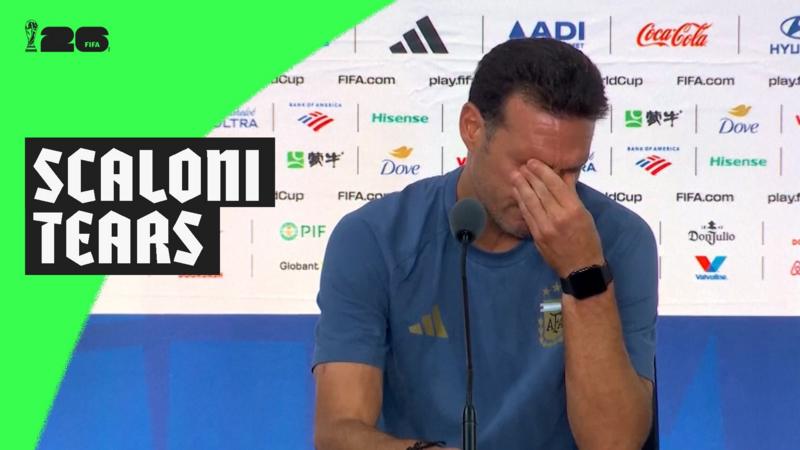
Close31Argentina manager Lionel Scaloni leaves his post-match news conference in tears when talking about his future after Sunday's World Cup final defeat by Spain.Shareclose panelShare pageCopy linkAbout sharingRelated topicsFootballFollow Footballclose panelYou are now following FootballUpdates from your Sport topics will appear in My Sport and in a collection on the Sport homepage.ArgentinaFollow Argentinaclose panelYou are now following ArgentinaUpdates from your Sport topics will appear in My Sport and in a collection on the Sport homepage.FIFA World Cup 2026Follow FIFA World Cup 2026

BBC SportMon, 20 Jul 2026
Source: BBC Sport
Read story
Merse on Rogers move: Crazy money for a player Chelsea don't need!

Football News

Merse on Rogers move: Crazy money for a player Chelsea don't need!

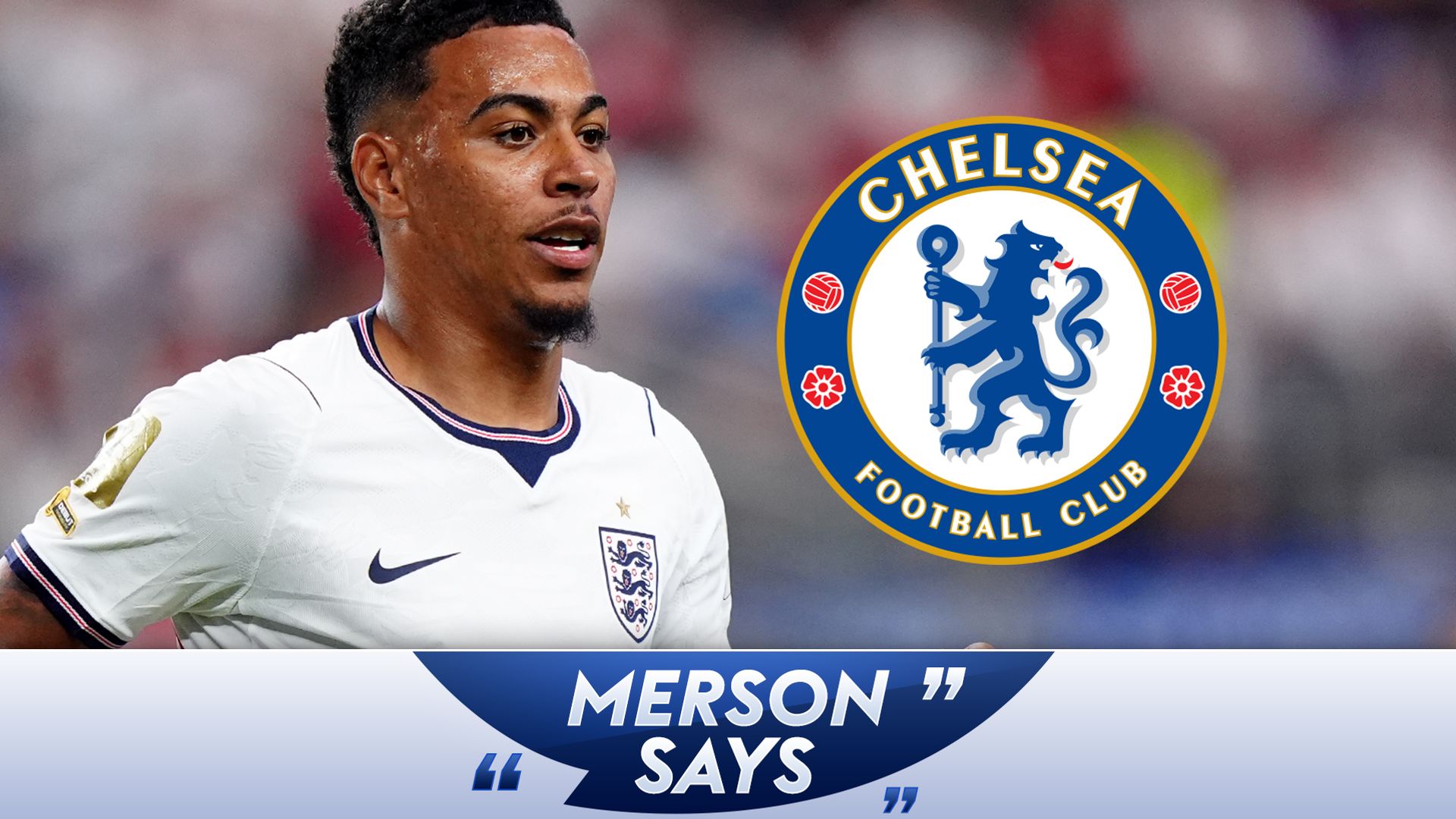
In his latest column, Sky Sports' Paul Merson gives his reaction to Morgan Rogers' stunning £117m move to Chelsea.Rogers is set to become Britain's most-expensive footballer ever by leaving Aston Villa this summer. He is set to sign a six-year deal, with the option of another year, at Stamford Bridge.Read below for the Magic Man's thoughts in full about what this move means for Chelsea, Arsenal and Villa...It's a lot of money. Crazy money. Bringing Morgan Rogers in for £117m isn't what Chelsea needed.They've got Cole Palmer! They play in the same position! Rogers went to the World Cup instead of Palmer, because they play in the same position.Unless Chelsea go for the almighty and sell Enzo Fernandez - and swallow the pill for him, because he's not worth £100m - and then play Moises Caicedo at the base, then Rogers and Palmer both ahead of him.But Joao Pedro is also a No 10. So with Joao Pedro, Rogers and Palmer, Chelsea have bought an attacking midfielder when they already have two very good ones.Where's Palmer going to be? Stuck out on the right again? He's wasted in that position. And if Rogers is played out on the right - no disrespect, but there are a lot better right wingers than him out there.For me, Rogers is a No 10. He's at his absolute best in open play. When the game gets broken up and he's running with the ball, he's very good at that.But he won't get that at Chelsea. At Stamford Bridge, opposition teams kick off and sit 10 behind the ball. There's no space.And Rogers has got to carry that price tag around with him. He will sit there and say: 'there is no pressure on me, I didn't pay that fee'. But it's a load of rubbish. Everybody will look at that when you don't do well.A lot of people were saying it was too much for Declan Rice and Moises Caicedo when they moved for £100m. But the biggest compliment I can give them is nobody ever mentions it. They were good signings. That's what Rogers has got to hope for.But he's got to make things happen, which is a harder position to be in than Rice and Caicedo were. In midfield, you can do this and that - but Rogers will be judged on scoring and creating goals. That's the hardest job in the world.I'm also sure that at the start of last season, he was atrocious for Aston Villa. I'm sure he was. Then he came good and then had a good second part of the season.He can't play like that at Chelsea. That is an absolute no-go, it's a different ball game when you go for that kind of money.This move tells me that Arsenal were telling Rogers that he would play left wing, and Chelsea have told him that he will play where he wants to play, which is the No 10 role.Because I have no idea how he goes to Chelsea instead of Arsenal if they're going to play in the same position.One team looks like they're going to win the Premier League again this year and have a good chance for the Champions League, and one team isn't even in Europe. Unless the money in the seven-year contract is mind-blowing.Arsenal will have to now go and get another left winger. They'll have to try and get Desire Doue or Bradley Barcola from PSG. There are not a lot of wingers around, but if you want to go top, top drawer and improve what you've got, then that's what they have to get.I cannot believe they sold Leandro Trossard by the way, I'm flabbergasted by it. They sold him for the price of a cup of tea!Trossard played in all the big games at the end of the season. Against the big teams, he played and he played for a reason. He's a very good footballer.He also doesn't come across as someone who stinks the place out or kicks up a fuss when he doesn't' play. He gets on with it, comes on and does his job. I just can't believe what I've seen in that transfer, I don't get it at all.You have to go out and buy again and buy again if you want to stay at the top. Arsenal need a few players - but they definitely need a left winger if they want to go up another level.I just cannot believe what has happened to Aston Villa in all this.They've just got into the Champions League, they've pulled up trees and won a European trophy. That's phenomenal for a club like Villa to do that in the same season.But all of a sudden, they've lost their two best players in Youri Tielemans and Rogers. They're Villa's two best players by a country mile. Their two most creative players have left.Tielemans was the midfielder who passed the ball, got them up the pitch, got a great range of vision and passing ability. Then Rogers took the ball up the pitch in broken-up play and made things happen.But those two have gone. If you were Unai Emery and asking who would you sell, Tielemans and Rogers would have been the last two.And if I was a Villa fan applying for a season ticket, I'd make sure those two players were there first. Because you want to be entertained. And they are entertaining.And I think Ezri Konsa could go as well. Arsenal might go for him, and Chelsea might buy him too. They need a centre-back.Johan Manzambi looks alright. But he's just alright. When you look at these players when they come in, you have to ask: who else is after them?It's the same with Arsenal signing Christos Tzolis. He might be a wonderkid, but they weren't batting elite clubs away to get him. Were Real Madrid, Barcelona, Man City, Man Utd and Liverpool after the likes of Tzolis and Manzambi?

Sky SportsMon, 20 Jul 2026
Source: Sky Sports
Read story
Ugly scenes as Argentina lose World Cup final – video

Football News

Ugly scenes as Argentina lose World Cup final – video

There were ugly scenes at the end of the World Cup final as Argentina’s Leandro Paredes and Nahuel Molina were seen throwing punches at Spain players after their 1-0 defeat.Paredes was then sent off after shoving Spain's Eric García by the throat and wrestling Gavi to the ground. He had already been booked during the match. The antics after the final whistle were quickly condemned by UK broadcasters, with the former England goalkeeper Joe Hart labelling Argentina’s behaviour 'disgusting' on the BBC and ITV's Gary Neville calling it 'a disgrace'

The GuardianMon, 20 Jul 2026
Source: The Guardian
Read story