AccaMate logo

Football News

Latest Sports Stories

'Gridlock alert days' and a race for tickets as US prepares to host World Cup

Football News

'Gridlock alert days' and a race for tickets as US prepares to host World Cup

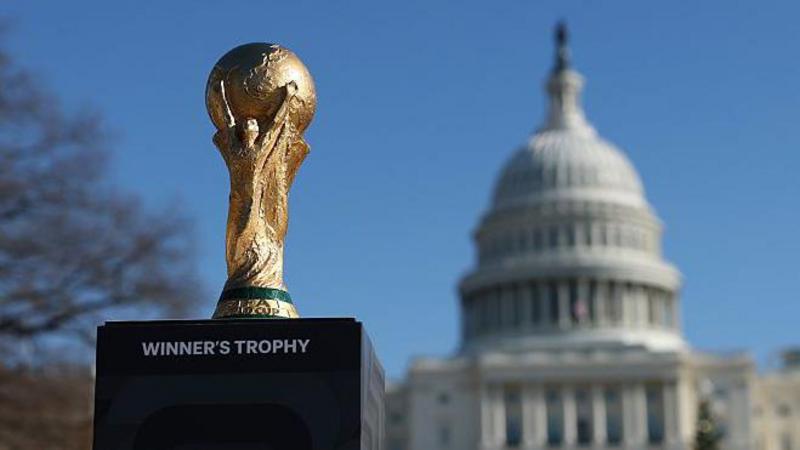
It's been more than 30 years since the United States hosted a World Cup. This summer, it will do so as part of a joint effort with Canada and Mexico.In the lead-up to the tournament, there have been several issues to contend with including geopolitical tensions, anger over visa restrictions, and expensive tickets.But there is also the matter of whether the US is prepared and able to handle the pressure of co-hosting what many see as the biggest global sporting event.Brazil's national team have set up camp at the Red Bull training facility in Morristown, New Jersey.As they run through drills, excited fans catch a rare glimpse of their favourite players in the flesh, and some are rewarded with autographs and photos.Manchester United forward Matheus Cunha tells the BBC the fans have been amazing and, so far, it's off to a good start. He compliments the facility, the pitch and everything else, including the weather, which reminds him of Brazil."The only thing... it's called football, not soccer," he jokingly tells the BBC.But for local fans, the excitement is tempered by fears that traffic - already congested in this region - will wreak havoc.Brazilian-American Vivi de Castro says ticket holders could arrive late or miss matches if they don't plan correctly, as she found out during a March friendly between Brazil and France in Boston."We had pitchside access and we missed it, which sucks, because of how much traffic there was," she told the BBC. "People walking were getting there quicker than our bus that we had."Across New York and New Jersey's motorways and tunnels, signs warn that traffic will be more congested than usual, and to check for advisories. At transit hubs, posters warn that streets and trains will be much busier this summer and to "know before you go".The city is designating each matchday a 'gridlock alert day' to discourage unnecessary driving and will have dedicated travel corridors. New York is also deploying more than 100 staff throughout midtown to manage traffic operations, and public transport has also been modified to handle extra commuters.At Brooklyn's Prospect Park, several young players from the SC Gjøa Soccer club told the BBC they were lucky enough to secure tickets to the tournament.Goalkeeper Baxter Rowland is attending two matches - one with his family and the other with a group of friends who have chartered a bus.But it turns out getting tickets was only the first battle. His mother, Alice Baxter, has decided to drive to the first game. She says she's been researching and is worried about the traffic getting to the stadium, parking and then leaving."I think it's going to be a little bit stressful, and I think it might be difficult for the first few games, at least," she says. "Hopefully it'll get better and they'll work out the kinks, especially with the final here in New Jersey and New York."Similarly, Dennis Wyrwoll is excited he is able to take his 10-year-old son Nicholas to four matches, but has already accepted that getting there is going to be more painful than it was the last time the US hosted."I was here in 1994, when we had the last World Cup, and at that point, nobody knew anything about football," he told the BBC. "It was easy to get tickets. I think this time around, there's lot of excitement in New York but I'm curious to see how it builds outside of the big cities where there aren't as many soccer fans."The beautiful game may have a smaller footprint in the United States, but the public interest has been growing over the years.Coach Kaha Tavadze says that in the past year, the club has had triple the amount of players joining and trying out, and believes that's directly due to the World Cup being hosted here. He says children now follow the sport more closely, know every player and wear their favourite team's jersey.This World Cup could even inspire some to dream of going professional, he suggested. "Watching live games, especially at that level, will change their mindset," he said.Other families are hoping they'll be able to find last-minute tickets. Shantay Armstrong's seven-year-old son has been playing football with the club for five years and really wants to go. She recently tried the raffle for affordable tickets offered by New York, but says within minutes the website said the raffle was closed for any more submissions."It's almost heartbreaking that there's like a lack of accessibility for people who can't afford to go," she told the BBC. "I wanted to give him that opportunity, but that lack of opportunity makes me feel locked out, and almost like... we're here but we're not here."Officials are hosting free fan zones where those without tickets can join in on the experience.But there's also a push to get residents and visitors into local businesses in the hope they too will benefit from Fifa's financial windfall.Enda Keenan owns Legends Bar - across from the Empire State Building and the home bar to many overseas clubs. He believes New York businesses will see a massive boost and has had to turn down business, including from Fifa."My son Evan had a meeting with one of the officials from New York, New Jersey Fifa," he said. "A lady came in to see in what way we could help. I said we can't help ourselves it's going to be so crazy. We'd love to help, but there's nothing we can do."For the Champions League final, Legends had 1,300 people inside the bar and another 700 outside, where they had set up an 85in television and sold beers right on the sidewalk. They sent the overflow of customers to five other nearby bars.With approximately 1.2 million visitors expected to travel to the New York, New Jersey region during the World Cup, Keenan anticipates it being even busier, saying it's a "different level altogether".Whether the US is ready, or not, will be quickly apparent.Play BBC Sport's new World Cup predictor gameEverything you need to know about the World Cup
BBC SportTue, 09 Jun 2026
Source: BBC Sport
Read story
Wolves re-sign striker Jimenez from Fulham

Football News

Wolves re-sign striker Jimenez from Fulham

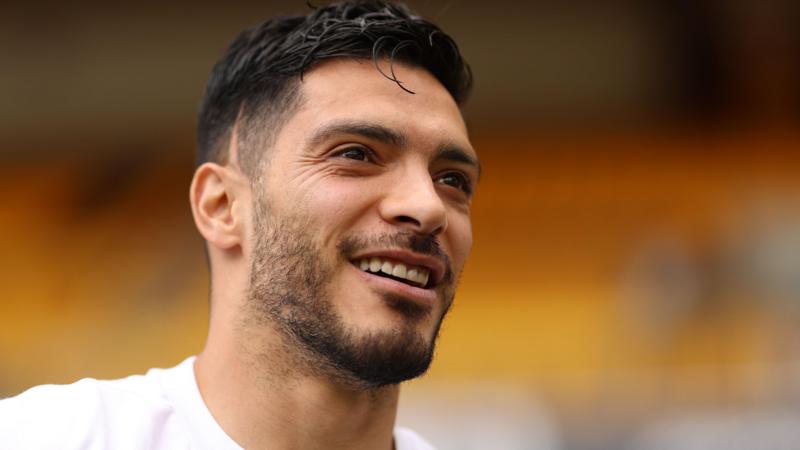
The 35-year-old has completed a medical and has an option for a further year at Molineux as relegated Wolves prepare for a Championship campaign next season.He will team up with former England full-back Kieran Trippier, also 35, and becomes the club's second free signing of the summer.Trippier has also committed to a two-year deal after leaving Newcastle.Jimenez was listed by Fulham on Monday among a group of players set to leave the Premier League club when his contract expires at the end of June.His return to Wolves means he can add to his previous 57 goals and 166 games for the club between 2018 and 2023, which followed a move from Benfica.The deal agreement comes while Jimenez is on international duty with World Cup co-hosts Mexico, who will begin the tournament against South Africa on Thursday.Wolves are looking to rebuild after finishing bottom of the Premier League last season, meaning they will compete in the second tier for the first time since 2017-18.SoundsLatest Wolves news, analysis and fan viewsAsk about Wolves - what do you want to know?

BBC SportTue, 09 Jun 2026
Source: BBC Sport
Read story
Player given five-year ban for elbow assault

Football News

Player given five-year ban for elbow assault

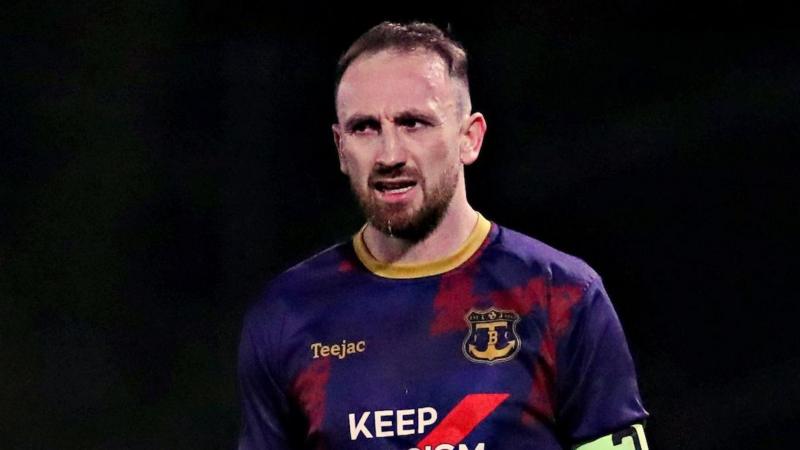
A footballer who knocked out an opponent during a match has been suspended from the sport for a minimum of five years by the Football Association of Wales (FAW).Thomas Taylor struck Daniel Brookwell with his elbow during an Ardal North West league match between Porthmadog FC and Trearddur Bay on 17 January.Taylor, 36, from Llanddona, Anglesey, was handed a five-and-a-half-month suspended jail sentence after pleading guilty to assault occasioning actual bodily harm.His sentence was suspended for 12 months and he was fined £439, including £200 compensation for Brookwell.Following conclusion of the court case, an FAW disciplinary panel met to consider a charge of violent conduct against Taylor.After written evidence was submitted, the panel found the charge was proven and issued a ban, starting from the date of the incident on 22 January 2026, as well as imposing a fine and order to pay costs."Thomas Taylor is subject to a Sine Die suspension from all football-related activity with no review to be considered under a period of five years," the FAW said in a statement., externalTaylor has until Friday, 12 June to appeal against the decision.

BBC SportTue, 09 Jun 2026
Source: BBC Sport
Read story
Meet the philosopher-in-training who will be at the VAR monitor this World Cup

Football News

Meet the philosopher-in-training who will be at the VAR monitor this World Cup

Joe Dickerson is one of North America’s best referees, but he’ll be off the field in a high-pressure position when the World Cup beginsJoe Dickerson never set out to be a referee. As a player, he was told that reffing would be to make money on the side, learn responsibility, and – more pertinent to his team – learn the sport and begin to understand it on a granular level.Those early assignments in the San Jose area have blossomed into a career that saw Dickerson honored as US Soccer’s male referee of the year in 2025. All of it has been driven by his ability to drill into details – something he’ll be doing a lot of as a VAR official in the replay booth for this summer’s World Cup.“There was a time when early in my career – and part of this goes through today: I hate going to the monitor,” Dickerson told the Guardian. “I hate it because it means I’ve probably made a mistake and I want to be perfect on the field.”Over time, Dickerson has learned to stop worrying and, if not love, tolerate the monitor. And that’s a good thing. He’ll be dealing with it plenty in the VAR booth at stadiums around North America this summer.As one of many officials worldwide observed by Fifa throughout the World Cup cycle, Dickerson was in contention for either center officiating or video work for the tournament. He’ll be a voice in the ear of the referee to notify them of contentious plays being checked. He’ll call up those replays to help the official. He said the same initial reluctance to use the monitor will help him get the tone right as he asks a game’s official to take a second look.“The vast majority of mistakes made at a World Cup by the best referees in the world are minor,” Dickerson said. “Well, minor’s the wrong word; they’re really difficult. They’re subtle, specific, or they were really hard to see. These are the ones that nobody ever faults referees for missing.”Outside his day job, Dickerson is working on his master’s degree at the University of Chicago. His thesis will be on Machiavelli’s political philosophy, and he expects to do a case study on how it relates to refereeing. The link may seem odd to some, but it is evident from his vantage point.“The short version is, I think Machiavelli makes a case for empathy and leadership through some hidden teachings in his otherwise very amoral pragmatism in his writing,” Dickerson said. “I also really like Nietzsche and Confucius. The reason I bring that up is because I think that a lot of these things that we learn in refereeing are very philosophical, and they can apply to many aspects of life.”Indeed, VAR has been at the center of a philosophical debate within soccer circles almost since its introduction. But that criticism has become more common in the last year, with a series of contentious moments becoming subplots of title races and battles of promotion and relegation. In February, Uefa’s director of refereeing warned that the process was getting “too microscopic”. By the end of the European club season, the Premier League had voted against extending VAR’s power to include potential corner kicks, which will be part of this World Cup’s checks at Fifa’s request.Dickerson sees the inherent differences between international and club football as working in the referees’ favor for this World Cup. In a league season, there are so many games over a series of months that any outliers will remain lightning rods.“All Fifa events, and specifically the World Cups, are unique in that they are tournaments,” Dickerson said, “and they are highly visible, very short tournaments.”A decade into the sport’s VAR era, the most contentious calls without obvious determination are handballs, times when one player wins the ball before making contact with an opponent and moments when attackers initiate contact to try drawing a whistle. These are closely examined by every World Cup referee in a montage at refereeing seminars, the most recent one of which took place in Brazil.“We do a 10-day seminar to make sure that we are as consistent as can possibly be on all the decisions,” Dickerson said. “We know that 90-something percent of the decisions we will see at the World Cup, we will consider almost black and white, even if the footballing public doesn’t. We have spent so much time looking at all of these clips so we know ‘that’s a handball’, ‘that’s a penalty’, ‘that’s a red card’, ‘that’s a yellow card’.”These days, VAR booth operations involve three officials: the video assistant referee, who is in the referee’s ear communicating throughout the match; a support VAR to continue monitoring while the VAR is reviewing a potential contentious call; and an assistant VAR who keeps notes that the VAR is unable to jot down while monitoring. Each member has undergone identical training, allowing the trio to assess a possible review with the benefit of a second and third opinion in the room.You may not like video review. A center official may not either. But regardless of that, it’s safe to expect that VAR will be a subplot of this World Cup.“You can’t eliminate the public’s bias from any analysis of VAR,” Dickerson said, “and that’s not a bad thing. I love going to stadiums that I would consider are hostile, because it tells me that the fans are incredibly passionate about the game. I think that’s one of the beautiful things about the sport.“The other beautiful thing about the sport is the subjectivity. When you combine subjectivity with inherent bias and high emotions, you get a lot of strong opinions about things like VAR decisions.”

Jeff RueterTue, 09 Jun 2026
Source: The Guardian
Read story
England third favourites? Their real World Cup chances assessed

Football News

England third favourites? Their real World Cup chances assessed

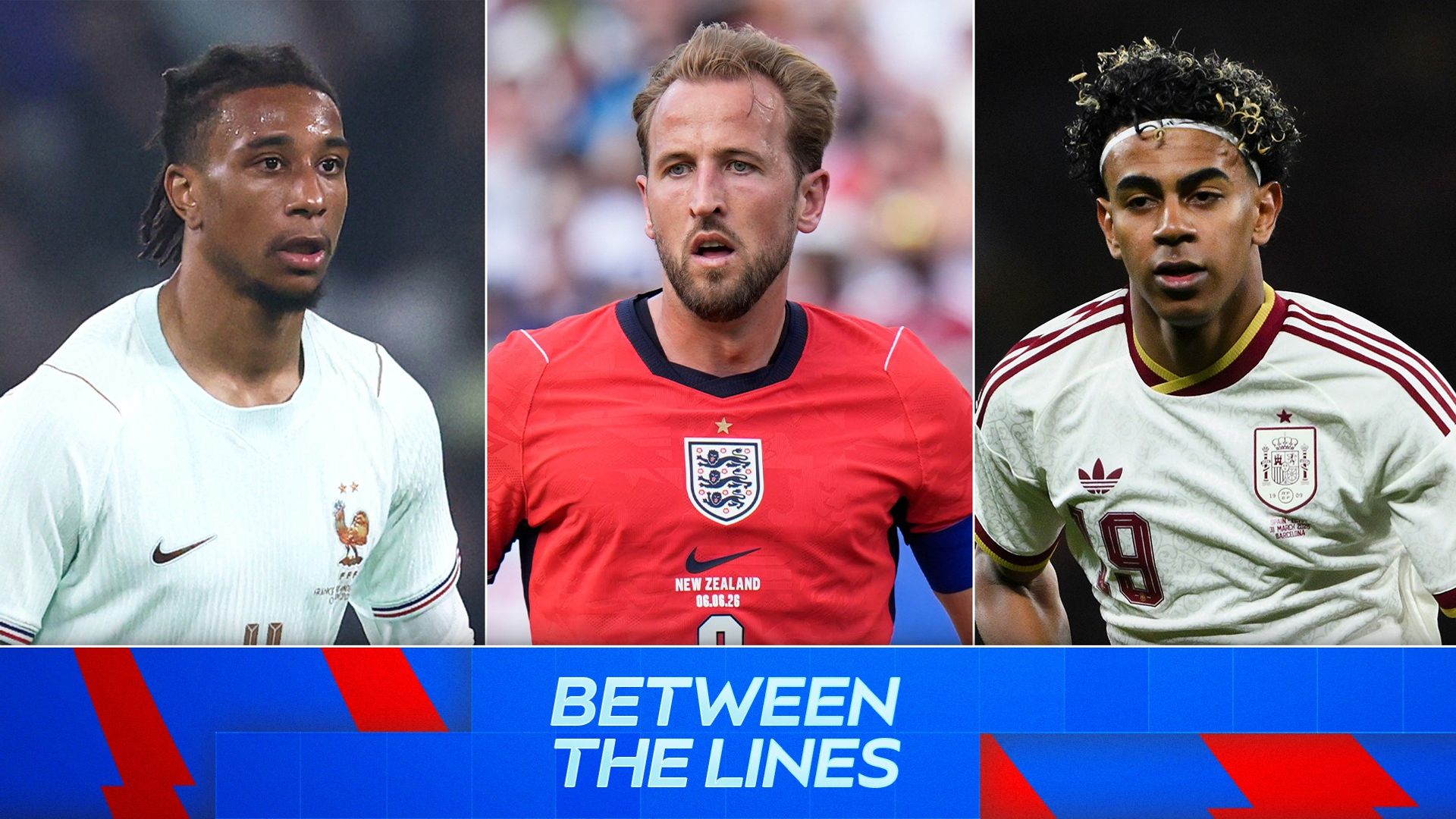
The World Cup is finally upon us. Could it be England's year?Opta's supercomputer, which is based on 10,000 simulations and factors a wide range of data points, has Thomas Tuchel's side as third favourites, with a 10.9 per cent chance of lifting the trophy.European champions Spain are rated as favourites, with a 15.9 per cent chance of success, while France are second on 13.2 per cent. Holders Argentina, Portugal, Brazil and Germany complete the top seven. Scotland, meanwhile, are given only a 0.3 per cent chance, although they are at least predicted to reach the round of 32.So, is England's 10.9 per cent chance of winning the tournament for the first time since 1966 a fair calculation? And how do their chances really compare to Spain's and France's?One factor to consider is each side's possible route to the final.If the tournament plays out according to the Opta supercomputer's predictions, England will top Group L, ahead of Croatia, Ghana and Panama, then come up against the Ivory Coast in the round of 32, before facing co-hosts Mexico in the round of 16.So far, so good. After that, though, it becomes a lot more difficult for Tuchel's men, with five-time winners Brazil in the quarter-finals, holders Argentina in the semis, then Spain in the final, with Opta predicting defeat against the tournament favourites.World Cup 2026 fixture schedule - your day-by-day guideWorld Cup 2026 dates, venues and expanded formatHow does that route compare to those of the other favourites?On the other side of the draw, Spain are predicted to finish top of Group H, which contains Uruguay, Saudi Arabia and Cabo Verde, then face Austria in the round of 32, Netherlands in the round of 16, Belgium in the quarters and France in the semis before the final against England, which they are predicted to win.Second-favourites France, meanwhile, are predicted to top a tricky-looking Group I ahead of Norway, Senegal and Iraq. Opta's supercomputer says they will then face Paraguay, Colombia and Germany before defeat to Spain in the last four.Of those three knockout routes, Spain's actually ranks as the toughest according to the average FIFA ranking of their opponents, at 8.8, compared to England's 12 and France's 13.One thing the three favourites have in common is a high level of strength in depth. They also benefit from a high concentration of players playing in the most competitive leagues.England actually come out on top in terms of the average Opta Power Rankings of their players' clubs, ahead of France in second. Favourites Spain rank behind Germany in fourth.England's presence at the top of the list is explained by the fact that 20 of their 26 players play in the Premier League, which Opta rates as the strongest league in the world.Transfer value is another big indicator of player quality, and it's France who come out on top in that regard. According to Transfermarkt, their squad is worth a whopping £1.33bn.England's squad is the next-most valuable at the tournament, at £1.14bn, while Spain's is the third-most valuable, at £1.1bn. There is then a big gap to Portugal, whose squad is the fourth-most valuable, according to Transfermarkt, at £889m.France have three of the most valuable players at the tournament in forwards Kylian Mbappe, Michael Olise and Desire Doue. Spain's most valuable asset is Lamine Yamal, although Pedri also features in the top 10. England's only player in the top 10 is Jude Bellingham.England and France have star players in form in Harry Kane, who scored 61 goals for Bayern Munich last season, and his club team-mate Olise, who continued his outstanding domestic form with a hat-trick in his country's warm-up win over Northern Ireland. Spain's main man Yamal, meanwhile, hasn't played since April due to injury.Luis de la Fuente will be banking on him returning to top form but the uncertainty around his condition is a potential issue.England, Spain and France have all selected relatively youthful squads.Spain's average age of 26.2 makes them one of the youngest squads at the tournament, while England and France aren't far behind at 26.6. Brazil and Argentina, by contrast, have selected significantly older squads at 28.8 and 28.7 respectively.England, Spain and France will hope their youthful energy helps them deal with the hot and humid conditions at the tournament. Meanwhile, history shows that World Cup-winning teams are typically on the younger side.As shown in the graphic below, all but four of the competition's 14 winners since the 1970 World Cup have had starting line-ups with average ages of under 28.Of course, experience is also important. Have Spain tipped the balance too far towards youth? Only two sides, France at 2018 and Argentina in 1978, have won the World Cup with a starting line-up average age lower than 26.2 since 1970.The smallest nation ever to reach a World Cup are already up against it in a group containing Germany, Ecuador and Ivory Coast, but they also have to travel a whopping 10,123km for their games.England also have to deal with extensive travel during the group stage with games in Boston, New York and Dallas, all far from their Kansas City base, meaning they will clock a total distance of 8,948km, which ranks as the fourth-highest of all competing nations at the tournament.France, by contrast, will benefit from relatively little travel, covering just 1,518km with their games all taking place on the east coast of the US in New York, Philadelphia and Boston, something which could aid recovery and boost freshness relative to England.Spain also get off lightly compared to England, with the European champions set to travel a middling 5,464km during the group stage.While Opta rates Spain, France and England as its tournament favourites, it is worth noting that European nations do not historically fare well in tournaments staged in the Americas.In fact, of the eight World Cups to be held in the Americas, the only European champions are Germany, who triumphed in Brazil in 2014.The other seven tournaments were won by South American teams, partly because they are better acclimatised to the conditions. So could that factor give Brazil or Argentina an edge? Or could a side like England follow Germany's example and defy history?England undoubtedly have one of the best squads at the tournament but they will have to overcome numerous obstacles if they are to go the distance, including a potentially difficult route through the knockouts, a gruelling travel schedule, and a fight against unfamiliar weather conditions.

Sky SportsTue, 09 Jun 2026
Source: Sky Sports
Read story
Risk of death to oldest man at World Cup - walking miracle Gordon

Football News

Risk of death to oldest man at World Cup - walking miracle Gordon

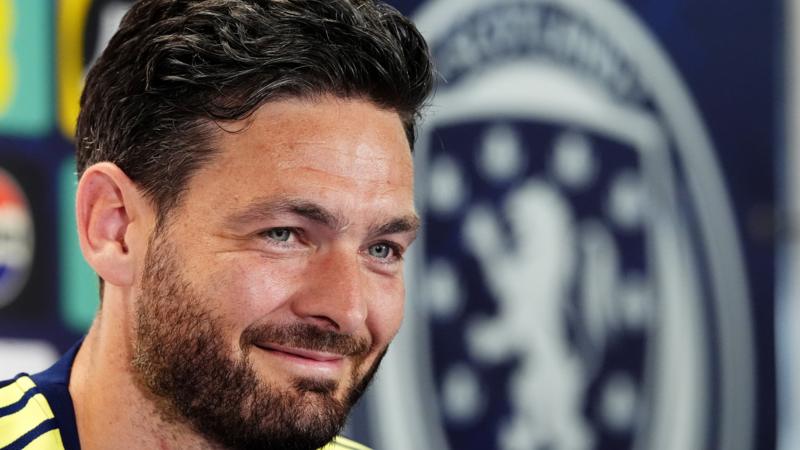
BBC Scotland's chief sports writer in CharlotteIn March this year, Craig Gordon travelled to London to see a man called Usamah Jannoun, a spine doctor who didn't sugarcoat the risks involved in the treatment the 43-year-old needed to fix a neck injury."You've read the information leaflet," Jannoun told the injured Hearts and Scotland goalkeeper."You could get paralysis, you could die…"From there to here - in Charlotte, North Carolina getting ready for a World Cup that must have seemed like an impossible dream only a few short months ago.Behind-the-scenes footage of Gordon talking to Jannoun features in Icons of Football, a BBC Scotland documentary on Gordon's life and times, available on BBC iPlayer from Wednesday at 06:00 BST. It's by turns emotional, harrowing and inspirational.Gordon says his entire career has been a series of comebacks, a litany of fights against the odds.Through a succession of serious injuries - ankle issues, broken arms, broken leg, knee surgeries, neck and shoulder problems - he has missed an estimated 1,975 days of football or around 200 games. Way back in 2012 he suffered patellar tendonitis, a career-threatening condition that kept him out for two years.He visited experts in Sweden and Spain, had three surgeries and visited a psychologist because his club at the time - Sunderland - thought the pain that left him in major difficulty when trying to climb the stairs or walk down the street might have been all in his head. It was not.A surgeon advised Gordon to retire. He decided to carry on. From 2012 to 2014 he played no football. He was the forgotten man, cast into a recurring nightmare of rehab and hope."I suppose I try and hide it," he says of the upset caused by all the physical trauma. "There are definitely times where I've cried because of injury. I just probably don't show it to everybody else."'Diogo will be with you' - Jota's widow writes to Robertson"There was definitely a worry it was something that was going to be longer term, not only in football, but also for the rest of my life," Gordon says about the neck problems that put his World Cup in serious jeopardy.Filmed in real time, he talks about the choice he faced: "Continuing [trying to play] or whether I need to look at the rest of my life and think, 'No, I need to be in a good enough state to play with the kids, to make sure they're getting brought up with a dad that can play with them and be active and do the things that they want to do'."If there was no World Cup, it is likely there would have been a retirement by now. "I think I'd have probably called it quits at the end of last season," Gordon says.Proving people wrong has been his thing - club managers, surgeons, media, fans and Steve Clarke, who readily admits he thought he had ended Gordon's international career when he left him out of the last Euros.Injury and the form of Hearts' Alexander Schwolow means Gordon only played six times - three for his club and three for his country - in the season just ended. One of them stands head and shoulders above all others - the 4-2 victory over Denmark in November that propelled Scotland into their first World Cup in 28 years."I was emotional," he says of that extraordinary night at Hampden. "I definitely cried in my room about that, about how much it meant to everybody."I can still feel it now. I was super focused in that game to the point where Scott McTominay scored one of the best goals I've ever seen in my life and I didn't even react. I just walked back to my six-yard box and got ready for the restart."They equalised, we scored again, they equalised again. It was starting to look like more glorious failure. Kieran [Tierney] puts the ball in the top corner from the edge of the box and, again, I just walked back. Went straight back to my goal, thinking we've got five minutes now. I need to keep the ball out of the net. If I'm celebrating, I'm not clear in what I'm doing."I nearly didn't play this season. I was thinking about going at the end of last season, so to qualify for a World Cup. Wow. That was one last effort. One last goal. And it's come off."He says the World Cup is "almost definitely" the end. It's nip and tuck between Gordon and Angus Gunn for a starting place against Haiti on Saturday. Gunn is the current favourite, but if the past two decades have told us anything about Gordon it's that you write him off at your peril.This is probably the most resilient footballer Scotland has ever produced, a man who has endured a physical and mental buffeting without ever breaking.Gordon is the oldest player at the 2026 tournament and if he gets game time he will become the second-oldest player in World Cup history, a walking miracle to the last.Everything you need to know about the World Cup

BBC SportTue, 09 Jun 2026
Source: BBC Sport
Read story
Ngumoha to leave England squad having made mark

Football News

Ngumoha to leave England squad having made mark

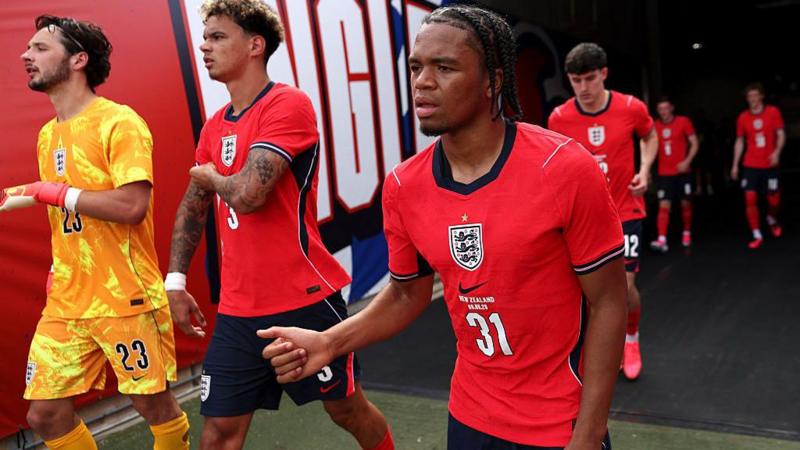
Senior football correspondentPublished4 minutes agoCommentsLiverpool's teenage forward Rio Ngumoha will leave the England camp this week after making a major impression on Thomas Tuchel and his international team-mates.The 17-year-old, who is not in England's 26-man squad, was named man-of-the-match for his debut performance as a second-half substitute in Saturday's 1-0 World Cup warm-up win over New Zealand.England play their final pre-tournament friendly on Wednesday against Costa Rica and it will be interesting to see if Tuchel again selects Ngumoha.The England manager will have a full squad to choose from following the arrivals of Arsenal quartet Declan Rice, Bukayo Saka, Eberechi Eze and Noni Madueke.But while the starting line-up against Costa Rica is expected to be closer to the side that will play the opening World Cup match against Croatia on Wednesday, 17 June, it is unlikely the Arsenal players will start.So, could Ngumoha be given another chance before he and England go their separate ways?The main squad will travel to their World Cup base in Kansas City, Missouri on Saturday, after they have played a behind-closed-doors training game against local team Miami United.Ngumoha will go on holiday before returning to the US next month for Liverpool's pre-season tour.The Liverpool attacker was one of five supplementary England players taken to the pre-tournament camp in Florida, with the Arsenal players among those arriving later having been in the Champions League final.Ngumoha was only meant to participate in training, however, Tuchel has been so impressed he felt compelled to play him during the first warm-up match - a surprise decision that was vindicated.That performance had led to assertions that Ngumoha should have been in Tuchel's thinking before now, either included in the final 26, or first in-line for a call-up should a player be injured before the tournament starts.However, because Ngumoha was not included in Tuchel's initial 55-man squad for the tournament he cannot be drafted in as an injury replacement.Speaking in March, Tuchel refused to rule out selecting the teenager for the tournament – so to then not pick him in the expanded 55-man pool does seem confusing.Ultimately, the German was working with such a small and condensed body of work when it came to Ngumoha.The London-born forward made history as Liverpool's youngest scorer when, aged 16, he scored the decisive goal in the 100th minute to beat Newcastle 3-2 – but made just 10 senior starts last season.It is understood there was some dissatisfaction over his level of game time under former Liverpool manager Arne Slot.So had he played more, could he have forced his way into Tuchel's plans?Slot, and Liverpool, would argue that they were merely protecting him from the physical and psychological rigours of senior football. It was, after all, the teenager's first full season of playing in the Premier League and Champions League.A number of clubs throughout Europe have sensed an opportunity to prize Ngumoha away from Anfield this summer, as reported by BBC Sport last week. Bayern Munich are one of those clubs.Liverpool, though, are adamant they will not sell him this summer and Bayern do have other candidates on their shortlist.If Ngumoha had frustrations over game time last season they may well be placated by the departure of Reds legend Mohamed Salah, plus the arrival of Slot's replacement Andoni Iraola.The former Bournemouth manager has shown a willingness to rely on young players with Eli Junior Kroupi, Rayan and Dean Hujisen, all proof of the Spaniard's faith in youth.Liverpool are determined to ensure he will be making the same impression he has made on his international manager with his new club boss in July.Ngumoha has been long since viewed as one of English football's brightest prospects and he will be confident of linking up with Tuchel again when England begin their Uefa Nations League campaign in September.Latest Liverpool news, analysis and fan viewsAsk about Liverpool - what do you want to know?

BBC SportTue, 09 Jun 2026
Source: BBC Sport
Read story
Mo Touré: Australia’s Ter-Mo-Nator who just wants to be seen as a ‘good person’

Football News

Mo Touré: Australia’s Ter-Mo-Nator who just wants to be seen as a ‘good person’

The rising Socceroos star isn’t interested in celebrity and heads into his first World Cup with a strong connection to his roots and feet firmly on the groundThe 22-year-old was surprised but not unhappy when he saw the image on social media. “Mohamed Touré is … The Ter-Mo-Nator,” the poster mock-up read, crafted in Photoshop or an AI tool, with Touré’s left eye glowing red. “Target acquired.”Touré – whose nickname is Mo – has sparked the most excitement in Australian football fans for a Socceroos striker since Mark Viduka, who emerged at Melbourne Knights close to four decades ago. As one of the faces of the Socceroos’ current World Cup campaign, the hype is something Touré is starting to get used to.The comparison to Arnold Schwarzenegger, however, is new. “Maybe some people have described me with similar traits, of being always serious or playing hard, but no one’s ever called me a Terminator,” Touré says from camp in California ahead of the opening clash against Turkey on Sunday.Is he the ruthless killer of the original film, or the one who saves John Connor in the second? “No, I’m the friendly one,” he says. “I can’t be evil.”It’s a consistent theme in the conversation – Touré being drawn towards good and away from bad. When asked to describe how he would like to be introduced to Australians tuning into football for the first time in four years, it’s the first thing that comes to mind. “Some people love to be superstars,” he says. “I just want to be seen as a good person.”Strikers can have a reputation for being selfish, for enjoying the spotlight, for counting goal tallies more than team victories. Touré runs like one, finishes like one: he is the on-field archetype of a lead forward, with pace and nous and skill. But Touré is no showboater, rather a key cog in Tony Popovic’s cohesive unit designed to frustrate and surprise their Group D opponents.His parents having fled Liberia, Touré was born in a refugee camp in Guinea, before arriving in Australia at seven months. His parents were there in that camp for 14 years. “I have a story before football, the same story after football,” Touré says.The current story started in Adelaide, where the young striker showed promise after debuting in the A-League Men as a 15-year-old in 2020. He remains the youngest scorer in the league’s history. Then, there was a debut in France for Ligue 1 side Reims at 19. In 2024, a double against powerhouse club Brøndby when playing for Randers FC in the Danish Superliga. Two goals for the Socceroos against New Zealand in late 2025. And, after a move in January, nine in 11 league matches for Norwich in the Championship last season.Touré’s football story is not, however, one of linear improvement. There has been regular news of injury, and many transfer windows with him on the move. He has played at five clubs in four years. The injury curse has hung over him since his time at Adelaide United. The balance between his explosive speed, a growth spurt and the demands of professional football proved more difficult to resolve than his moral compass.“When I went to Europe, some of those injuries followed along and I re-injured them and re-injured them,” he says. “I feel like I had to do something, and I had to change something or they would have [kept] occurring, reccurring.”Touré now follows a regimen focused on resilience. “To be stronger in these places where I don’t pick up these little annoying injuries in the season,” he says. “The big muscles: the hamstrings, the groins, and the quads.”Touré’s recovery is a boon for the Socceroos. He was able to play 81 minutes up front in the warm-up defeat to Mexico. Against Switzerland on Sunday, he and most of the other starters were on the bench, but Touré was introduced for the final 20 minutes.Touré is one of six African Australians in the 26-player squad, including Awer Mabil, Lucas Herrington, Tete Yengi and Jason Geria. His closest teammate is Nestory Irankunda; their friendship has bloomed since meeting through football during school in Adelaide. Irankunda is, like Touré, a refugee but his family hails from Burundi via a camp in Tanzania, on the opposite side of the continent.“We are from different parts, but – especially in Adelaide, I can’t talk about other cities – we don’t really see these things, we just see ourselves as a big African community. Now, of course, within the African community, we have different communities, but Nestor is just another African boy, Mabil is just another African guy as well. We all grew up loving the same thing, so we just connected that way.”Liberia are not at this World Cup, yet they will be represented by their diaspora. Haji Wright is a striker for the USA and scored twice against the Socceroos in a friendly last year. Marseille forward Timothy Weah, son of George Weah – the only African Ballon d’Or winner and former president of Liberia – also plays for the World Cup hosts.Touré’s father Amara keeps him updated with news from Liberia, and Touré still feels a close connection to his parents’ homeland. “Oh man, it’s always going to feel like home when I hear the word Liberia,” he says. “It’s where I feel like I belong, it’s my home, no matter how tough it gets or no matter how rough it gets, I will never abandon it, I’ll never stop caring for it.” There is a passion for Guinea, too, and “obviously” Australia.Touré has an appreciation for the Socceroos who have come before him. Australia’s male footballers were, for more than a generation, unlucky losers who could never quite take the final step to reach the World Cup. Touré’s cohort, however, knows nothing but qualification.When John Aloisi scored the penalty to book the team’s place in Germany 2006, Touré was one year old. He was barely walking when Viduka led the Socceroos on to the field for the famous win over Japan in Kaiserslautern 20 years agothis month.“We were literally talking about it at the table because in our dinner room we have photos of all the past teams and the XIs, we were trying to see how many players we knew,” he says. “Where they were playing … it was sick, it was very nice.”The discussion – of Harry Kewell at Liverpool, of Tim Cahill at Everton, of Vince Grella and Mark Bresciano at Serie A clubs – enlivened ambition within the young group. Australia’s best footballers have rarely gone all the way to the world’s biggest clubs.“We were saying it because on our table we have a lot of young boys and we were like, that’s our goal as well for one day. People to look at our squad and be, ‘Oh, that’s Mo from Real Madrid, that’s Nestor from Bayern, that’s Lucas from Liverpool.”Since the days of Aloisi and Viduka, Australia have not produced a complete striker proved in a top European league. Mitch Duke performed remarkably in Qatar, and hybrid winger Mathew Leckie has had his moments, but the likes of Jamie Maclaren, Tomi Juric, Nikita Rukavytsya and Josh Kennedy have been more one-dimensional: finishers, hares or target men. Touré has all the ingredients of an elite, line-leading forward: strength, quickness and skill. Any comparison to Viduka, however, he resists immediately. “That’s crazy, that’s too far, too far.”The recurring theme in the Terminator films is a desire to alter the past to secure the future. There has been much commentary about the relative youth of this Socceroos team, filled with Touré, Irankunda, full-back Jordy Bos and central defenders Herrington and Alessandro Circati. The thinking goes they may be better in 2030 or 2034.Touré is taking nothing for granted. He may be young, but he already knows football’s history cannot be rewritten. “It was a dream of mine to play for the Socceroos,” he says. “Now that I’m here, I don’t have for ever. The boys say that playing for the national team, it comes around quick, so I just want to leave an impact.”

Jack SnapeTue, 09 Jun 2026
Source: The Guardian
Read story
Colombia World Cup 2026 team guide

Football News

Colombia World Cup 2026 team guide

Colombian supporters light up any World Cup in which their country is involved. Photograph: Mauricio Dueñas Castañeda/EPALuis Díaz is the leading light of an extremely well-supported team still built around the 2014 golden boot winner James RodríguezThis article is part of the Guardian’s 2026 World Cup Experts’ Network, a cooperation between some of the best media organisations from the 48 countries who qualified. theguardian.com is running previews from three countries each day in the run-up to the tournament kicking off on 11 June.Today’s Selección Colombia still have a core of players that are remembered fondly from the Brazil and Russia World Cup finals tournaments in 2014 and 2018 respectively. A few of them are taking part in their third tournament, led by James Rodríguez, still a key figure in a side whose 4-2-3-1 formation is built around his No 10 position. There is support out wide, where Luis Díaz has become a source of goals, though not to the extent to which he shines for Bayern Munich.Colombia had a rollercoaster ride to this World Cup. Their qualification campaign included moments of glory, such as the 2-1 victory against Brazil or the revenge over Argentina for their 2024 Copa América final defeat. But then came a 1-0 defeat in Bolivia that started a run of six matches without a win and endangered their place in the finals. In the end two thrashings of Bolivia and Venezuela sealed their spot.Doubts over the team remain after disappointing friendly performances against Croatia and France in March but the coach, the 60-year-old Néstor Lorenzo, is optimistic. “The way Colombia play – trying to play on the front foot, not hiding – gives me satisfaction,” he told La Nación in his native Argentina. “The idea is to play well, not just win at any cost. And the team feel that: they believe in the idea and here we are. Let’s hope we start well and can put together the best World Cup in Colombia’s history.”That would mean going past the quarter-final stage, which José Pekerman’s side reached in 2014. Aside from Díaz and Rodríguez, the goalscoring responsibilities are expected to fall on the shoulders of Luis Suárez – not that one. Before finding the net in the June warm-up friendly against Costa Rica, the 28-year-old striker had scored all four of his international goals in one game against Venezuela last year. Since joining Sporting from Almería last summer, he has hammered in 38 goals in all competitions in Portugal.In the fifth World Cup of his career, Néstor Lorenzo will lead a team as head coach for the first time. He played for Argentina in 1990 and was assistant to José Pekerman with Argentina in 2006, and again with Colombia in 2014 and 2018. “José has been like a father to me,” Lorenzo said. “I’d barely got my coaching badges when he brought me on to the national team staff. He’s known me since I was little, almost always as a fellow coach, but he also coached me in the Argentinos reserves.” Aside from Colombia, the only other team Lorenzo has led was Melgar de Arequipa in Peru. That hasn’t stopped the former defender, who played under Ossie Ardiles at Swindon, from doing a good job.Luis Díaz arrived on the scene after the 2018 World Cup and had to wait to become Colombia’s most important player. He became a household name at the 2021 Copa América in Brazil, firing Colombia to the semi-finals with a tournament-best goal haul of four. Now 29, the former Liverpool winger has grown in maturity and was sensational for Bayern Munich this season, winning a league and cup double. “I know we have a great selección, a great team, great coaches. Qualifying was decent for us because we got some very big results,” Díaz told ESPN.Andrés Gómez has played only a handful of games for Colombia but he has hit the ground running. On his first cap in December 2023 he scored the winning goal against Mexico and subsequently struck a late equaliser away at Uruguay in a game that Colombia ended up losing. The Vasco da Gama forward is a bit of a late bloomer but, at 24, he is now mature enough to be a credible alternative to Jhon Arias or even Luis Díaz. He had a very tough start to life. “As I kid, I grew up watching some of my friends get killed and saw others follow the wrong path. But my whole family has always been into football,” he told Chocó 7 Días.The man who brings balance to Colombia is Jefferson Lerma, who did not come through the system at any of the big domestic clubs. He earned his move to Europe from the modest Atlético Huila and was a surprise pick in José Pekerman’s squad for the 2018 World Cup in Russia, having not played a part in qualifying. Now the Crystal Palace player is a certain starter in midfield alongside Richard Ríos. The Benfica star may be in charge of providing the fireworks, but it is Lerma’s job to cover the spaces and do the dirty work.Colombia’s supporters are among the most loyal in the world. They filled stadiums in Brazil and even Russia. The fact that there are lots of Colombian immigrants in Mexico and the US, although less so in Canada, guarantees a sizable presence of “yellow fever” at this World Cup. The group game against Portugal in Miami is the second-most requested match for tickets at the tournament behind the final. That being said, Colombian fans will have to be careful because they will be watched closely by the authorities after the unrest in the stands at the 2024 Copa América in the US.The national team are yet to get dragged into what is a fairly difficult relationship between Donald Trump’s administration and the Colombian government led by Gustavo Petro. The outgoing president Petro had his American visa revoked – since reinstated – and he and his inner circle were, in October 2025, placed on the US government’s “Clinton List” (the treasury department’s Office of Foreign Assets Control). The US treasury accused Petro of presiding over a “disastrous and ineffective” drug policy. Meetings between the two countries have since calmed the tensions. Petro denied he had threatened to pull Colombia out of the World Cup if Israel qualified after rumours were circling on social media.Written by José Orlando Ascencio for El Tiempo.

José Orlando AscencioTue, 09 Jun 2026
Source: The Guardian
Read story