Football News
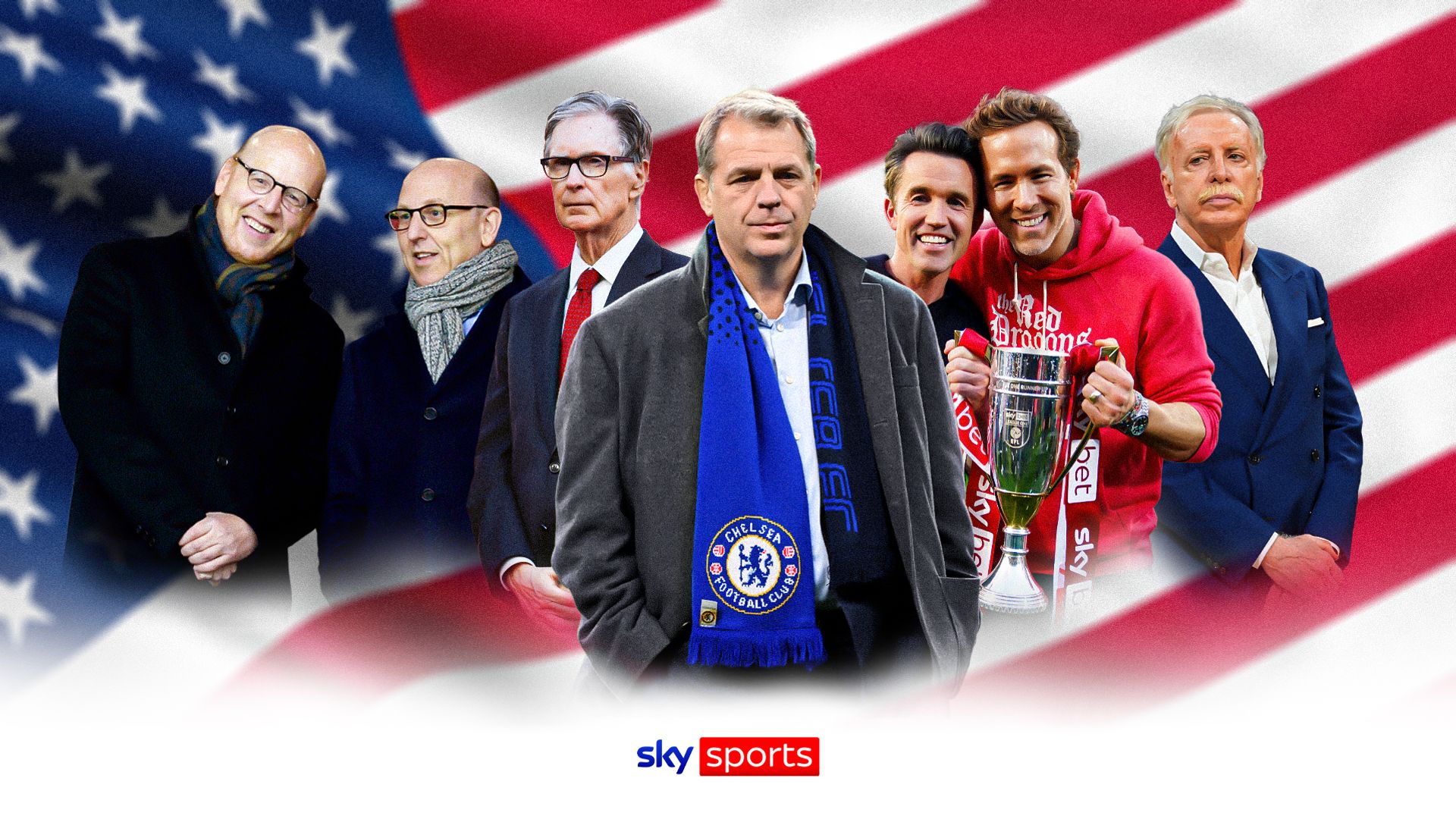
Why are American investors taking over English football?
The World Cup is taking over the United States this summer. But the not-so-secret American takeover of football has been building its foundations for some time now.Some may have turned their noses up at the Hollywood-style theatrics displayed at the Club World Cup, the precursor to what is to come in the next few weeks. But while it may seem like a sudden shift, the fingerprints of American influence on the sport can be traced back decades.As we head into the World Cup, American investment in football on a global scale has never been greater. Thirteen of the 20 Premier League clubs that competed in the 2025/26 season had at least minority American shareholders.That is also the same for 32 per cent of clubs in Europe’s top five leagues, not to mention the growing numbers further down the football pyramid - with Wrexham and Birmingham being prime examples.This is not a coincidence. It is a pattern. But why are Americans so willing to part with their money to invest in a sport that, for years, struggled to break into the mainstream in their country? And are they here to stay?The sport's popularity in the US is growing at an exponential rate. A study from Nielsen has shown that close to 80 billion minutes of football were watched in the USA during 2025 and that 33 per cent of the American population expects their interest in football to grow over the next 18 months.Naturally, when something becomes popular, it causes eyebrows to be raised and opportunities to become apparent. However, to assume this is not a phenomenon that is nearly two decades in the making would be a mistake.When you think of Americans getting involved in English football, the Glazer family or Stan Kroenke may come to mind. Although they may have paved the way, the real opening of the door for the influx of investment from the US can be dated back to 2008.The global financial crisis that year rocked the worldwide economy - the worst since the Great Depression in the 1930s - but in the years since, the American economy recovered at a far quicker rate than those across Europe.As a result, there are more millionaires and billionaires than ever before in the United States. What do you do with that much resource? Invest in a sports team, of course. And the best opportunities for that lie further afield.“If you take a look at the opportunities that are available to them in the United States - NFL, NBA, MLB, NHL - they're all closed franchises. So they're very expensive to get into because there's a limited number of teams. The existing owners are in no hurry to sell,” football financial expert Kieran Maguire told Sky Sports.“It's going to cost you, to buy an NFL team, between $5bn and $10bn. That's going to put off an awful lot of wealthy investors. The alternative to that is to look across the pond.”Look across the pond they have. Of the 13 Premier League clubs with American stakeholders, 11 have emerged post-2008. And the financial appeal is easy to see. The average value of Premier League clubs is lower than the average across the big four American sports leagues.Newcastle, who in 2025 were named the eighth-most valuable team in the Premier League and 19th in world football by Forbes, are worth less than the Columbus Blue Jackets - the lowest-valued NHL team.Given the global reach of football, it may not seem to add up on paper. But there is more than just the scale of the franchises that impacts their value.To hear that a club the size and scope of Newcastle is worth less than a team at the bottom of the financial pile in a league with less reach seems bizarre.Newcastle have more than five times the number of social media followers than the Blue Jackets. St James’ Park has a capacity nearly three times the size of the Nationwide Arena, where the Blue Jackets play. So what is it that holds them back so much?“Investing in American sport is lower risk because you've got guaranteed revenues,” Maguire explained.“You've got the draft system, which helps to redistribute talent and increases competitive balance. So it does give greater opportunities.”Most notably, there is no relegation. Every single owner of an NFL team knows they will be competing in the same competition the following season. It is a key reason why plans for the proposed European Super League gave the founding members that level of security.Furthermore, American sports franchises benefit from being better suited to television. Something that football historically is not.“If you take a look at American sports, they're all designed for television. Talk to people in marketing, football's a really dumb sport,” Maguire said.“Take the Super Bowl. There was a three-hour programme of which there was 11 minutes of sport. There were between 50 and 60 advertising breaks, an average of two-and-a-half adverts per advertising break."You contrast that to football, where you've got 45 minutes with no opportunity to do adverts. The TV companies, therefore, are willing to pay much higher rates for broadcast rights because they can sell those slots to advertisers.”While that might be a problem for owners wanting to maximise their earnings through broadcasting, you cannot just change the format of football from halves to quarters. Or can you?"You have a product which is attractive to the biggest bidders for broadcasting. And where do they get their money from? They get their money from adverts. So we need as many advert breaks as possible. Can American owners tweak that? I anticipate that is the direction of travel," added Maguire.That is not the only way they could seek to make more money off the European game. Chelsea chairman Todd Boehly has previously flirted with the idea of an All-Star game. Sponsored kiss-and-dance cams are prevalent too. It feels very far removed from what most associate with the traditions in Europe but so was Halloween once upon a time.Maguire explained that the perspective of some American investors is that the British do not do enough to 'sweat the asset' they have available to them. They are far too traditionalist and conservative.Fundamentally, it boils down to a clash of ideologies. And over the years it is becoming clear that, more often than not, the fans are having to adjust as opposed to the other way around.The Arsenal Supporters Trust earlier this year described the raising of ticket prices as the "American/FIFA model of squeezing more and more from fans". Manchester United, Liverpool and Everton fans have all protested over the same issue in the past 12 to 24 months - all supporters of clubs with American ownership.The culture Stateside is viewed as being more concerned with entertainment value. Investment expert Adam Sommerfeld, who has worked closely with parties looking to invest in English football, sees the value in such an approach."I've always said they do sports entertainment very well," Sommerfeld told Sky Sports. "They make it about the all-encompassing experience."For pure entertainment, which is really what we're looking for, all fans want to be entertained. You don't want to support your team if it's going to be a 0-0 draw every week."It's bringing a different entertainment product here and I think it's exciting."To say there has not been American investment in other European leagues in recent years would be a lie. Across Europe’s top five leagues, there are 32 clubs with American stakeholders that own at least five per cent. Some of those include big names, such as both Milan clubs, Roma and Atletico Madrid.However, the current climate makes English football a more accessible and profitable arena, as explained by Sommerfeld.“Transacting in Italy has some difficulties. Germany you can’t do it because of the 50-plus-one model, ” Sommerfeld said. “Then you've got France who've obviously struggled with their media deals.”That leaves Spain and England, but while private equity has been allowed in Spanish football since the 1990s, its foundations were built on a socio-model where clubs were founded as member-owned organisations. That remains the case with the likes of Barcelona and Real Madrid.As Sommerfeld puts it, “it's the UK that continues to be the most investable”.History has shown the influx of owners from a certain region tends to eventually drop off before a new dominant force comes into play.Before the American takeover, all the talk was about investment from the Middle East. Roman Abramovich’s acquisition of Chelsea sparked a period of Russian influence even earlier. However, the political and economic climate has a say in what happens next.Sommerfeld went on record in 2024 saying that all EFL clubs will have some form of American investment within the next decade. He believes the current climate only serves to add to that likelihood.“I stand by the comment,” he said. “I think momentum has ever so slightly slowed only because you get that with these cyclical investing trends. And some of the smartest investors come in second. They look to see where the new trend is going.“Chinese investors now can't invest into overseas or European sports assets. It's a government directive. You aren’t going to have the Russian owners buying. Saudi groups won't compete with PIF. Qatari groups won't compete with QSI. It's politically sensitive.“It's hard to see where the next group of investors will come from. It could go full circle and you get a group of English buyers coming back in to buy these teams at massive premiums. I don't see it.“I think it will continue to be American. Private equity, ultra-high-net-worth individuals, family offices, and current team owners out of the big four sports already, cross-leveraging fanbases.”