AccaMate logo

Football News

Latest Sports Stories

Filtered by tag:world-cup-2026Clear filter
Brazilian World Cup legend Jairzinho takes a shot: Michael Donald’s best photograph

World Cup News

Brazilian World Cup legend Jairzinho takes a shot: Michael Donald’s best photograph

‘Nowadays Jairzinho works with kids in the favelas of Rio where the unwritten rule is that you have to be out by 5pm. I asked for 10 more minutes and when I turned round, a guy had pulled a gun on my crew’I’m not a mad football fan. What I most love about the game is its universal appeal – it’s all about a ball crossing a line, and a goal is a goal whether it involves two jerseys in a park or the one that determines the outcome of a World Cup. But when I realised in 2007 that only 58 people had ever scored a goal in a World Cup final and that only 34 of these men were still alive, I thought it would be a great idea to photograph them.It quickly became apparent that book sales alone would never finance the project – there were only two English players, the rest were in Europe or South America. But a successful pitch to a film producer won me the opportunity to travel to 13 countries with a documentary crew. Over the course of four years, we interviewed every member of the exclusive World Cup club, and I made portraits of them all.This is Jair Ventura Filho, better known as Jairzinho, who scored the third goal for Brazil when they took the title in Mexico City in 1970, beating Italy 4-1. Nowadays he works with underprivileged kids in the favelas of Rio de Janeiro. This portrait was taken in a favela in the Manguinhos neighbourhood, where he runs a football school.The favelas are these amazing shantytowns where the police have no jurisdiction. There’s an unwritten rule that anyone who doesn’t live in the favela has to be out by 5pm. We had to hire security from the local drug lords – they were basically just kids, and by mid-afternoon they’d got bored and left. We did the shoot with Jairzinho at a public football ground and it was only as we were leaving that I spotted this beautiful old football table outside a bar. It felt like a gift, and Jairzinho really liked it. I said: “We’ve got to do this, can I have 10 more minutes?”When I’m doing documentary photography, I don’t like things to look artificially lit, but I had my assistant Stevie holding a small light. I shoot on a Hasselblad with a digital back and always use a tripod. I learned quite early on that if the camera stays in the same place and I’m looking down into the viewfinder and talking to the person I’m photographing, they don’t change their behaviour, which is not the case if you’re moving around and lift the camera to point directly into their face.As I set up the shot, I became aware of a guy approaching down the street on a bicycle – not the kid you can see in the photograph. He came sneaking through the image and disappeared behind me, where Dan the director, Gretha the producer and a few other members of the crew were standing with our local fixer, waiting for us to finish. I was concentrating on Jairzinho, but could hear an increasingly heated conversation going on. Eventually, Dan said, “Michael, I think we ought to go.”When you’re photographing someone famous, they never give you enough time – you just keep going until they’ve had enough. Jairzinho seemed fine, so I carried on for a few more minutes, until I was sure I had the frame. Then I turned to see the man on the bike had pulled a gun on Dan and Gretha. Dan said: “Do you get it now?”It seems this guy had taken exception to our presence in the favela. The rest of the crew and the fixer had cleared off, but Stevie, Jairzinho and I had been too focused on what we were doing to notice. Dan and Gretha could easily have insisted we leave immediately, but I really appreciate them giving me the time to get the shot I wanted. We didn’t hang about.Apart from the composition and the fact we managed to shoot in a favela, which is so characteristic of Rio, what I love about this picture is the fact that the chaos going on behind the camera isn’t at all apparent in the portrait. That’s often the case with photography.Born: Wakefield. 1966 – although I was born there by mistake, I’m actually from Belfast.High point: Winning stuff is great and seeing work published internationally is great, but the high points are when you really feel you’re completely immersed in what you’re doing.Top tip: If you’re going to make a living you are going to have to do what you’re told, but always make sure you’re also doing your own stuff. Work that really excites you, not what you think you should be doing. That’s where you’ll produce your best work and it will make you better at everything else.See more images from “I scored a goal in the World Cup final” here

Interview by Chris BroughtonWed, 15 Jul 2026
Source: The Guardian WC
Read story
Of all England’s great Black footballers, none has been the defining national figure. Until Jude Bellingham | Calum Jacobs

World Cup News

Of all England’s great Black footballers, none has been the defining national figure. Until Jude Bellingham | Calum Jacobs

Bellingham has transcended the hostility he has faced from press and pundits to become the emotional and symbolic focal point of the teamMonths before the World Cup, the familiar chorus of antipathy that had followed Jude Bellingham almost since his emergence on the international stage grew louder. A number of writers, pundits and former professionals questioned whether one of England’s most gifted footballers might prove detrimental to the squad’s harmony. The clearest expression of these arguments appeared in a Daily Mail article in November 2025 beneath one of the most ignominious headlines in English footballing history: “Leave Jude at home.”Amid a wave of criticism directed at Bellingham, Ian Wright felt compelled to defend him on an episode of Stick to Football. Once clipped, his remarks spread rapidly across football’s social media ecosystem and beyond, both because of Wright’s candour, and for placing the hostility directed at Bellingham within a historical tradition of policing Black men’s behaviour. “Someone like Jude, for some reason, frightens these people,” Wright said, before adding: “It’s something you’re taught as a Black man … to keep your head down and be, for want of a better word, a humble fucking slave.”There are, of course, perceived footballing transgressions that have set Bellingham on an unavoidable collision course with English football’s established order. His first “mistake” was to see Birmingham City retire his shirt number before he had turned 18. His second was to reject England’s elite clubs in favour of Borussia Dortmund. Real Madrid then paid an initial €103m (£88m) for him, entrusting him with the No 5 shirt once worn by Zinedine Zidane. Throughout, Bellingham has appeared almost entirely devoid of the insecurity that has consumed so many English footballers abroad. But Bellingham’s success in Madrid has rarely been treated as a source of English pride; rather, it is read as an implicit challenge to the Premier League’s claim to occupy football’s summit. He is beamed back to us already belonging to the wider world.While these factors partly explain the hostility Bellingham provokes, Wright’s account of why he is read this way is ultimately more convincing. There is a cultural specificity to Bellingham’s comportment that, while immediately familiar to many Black Britons, is read elsewhere as an aggravating factor. As a child, my aunt would insist I walk with my shoulders back, and my head held high, so that I might project an image of myself others might else refuse to imagine. As an adult, I learned this advice was a repetition of words she had first spoken to herself after arriving from the Caribbean into a society that told her she did not belong.We don’t know whether Bellingham received similar instruction – perhaps we are simply witnessing the unshakeable self-belief of one of the world’s finest footballers – yet given how common this form of cultural inheritance is among Black families, it is entirely plausible that he did.English football repeatedly searches the emotional terrain of its history for meaning, obsessing over its solitary triumph and the countless moments of “almost”. It returns, too, to the players in whom it has recognised itself: Bryan Robson, David Beckham, Paul Gascoigne. Perhaps none has proved as enduring as the last of those. Jack Grealish was briefly cast as his spiritual successor, and before Euro 2020, Phil Foden dyed his hair the same peroxide hue Gascoigne wore at Euro 96, consciously placing himself within that same lineage.Bellingham exposes the limits of this process of recognition.England has long capped exceptional Black players. Yet whether through outright social refusal – as Paul Gilroy observed in “Race”, Sport and British Society, John Barnes’s exclusion from British sporting greatness became “a matter of national honour” for some England fans and notable pundits – the preference for Alan Shearer that consigned Andrew Cole to his shadow, or the sustained hostility directed at Raheem Sterling, the national side has until now never felt able to declare its defining figure a Black one. But in producing the greatest individual England tournament performances of recent memory, Bellingham has become tactically indispensable and the emotional and symbolic focal point of the national team.The spontaneous chorus of Hey Jude that now greets England victories offers its own evidence of this: a Black footballer whose name, features and heritage are no barrier to instinctive English identification.Each successive generation of Black people born and raised in England is shaped by the country as much as it reshapes England in return. While it would be irresponsible to insist that one footballer can resolve the tensions that so often place Blackness and Englishness in supposed opposition, Bellingham clearly sees no contradiction between the two. Perhaps his greatest significance lies in showing those who come after him that they need see none either.Calum Jacobs is the author of A New Formation: How Black Footballers Shaped the Modern Game and the founder of CARICOM magazineDo you have an opinion on the issues raised in this article? If you would like to submit a response of up to 300 words by email to be considered for publication in our letters section, please click here.

Calum JacobsTue, 14 Jul 2026
Source: The Guardian WC
Read story
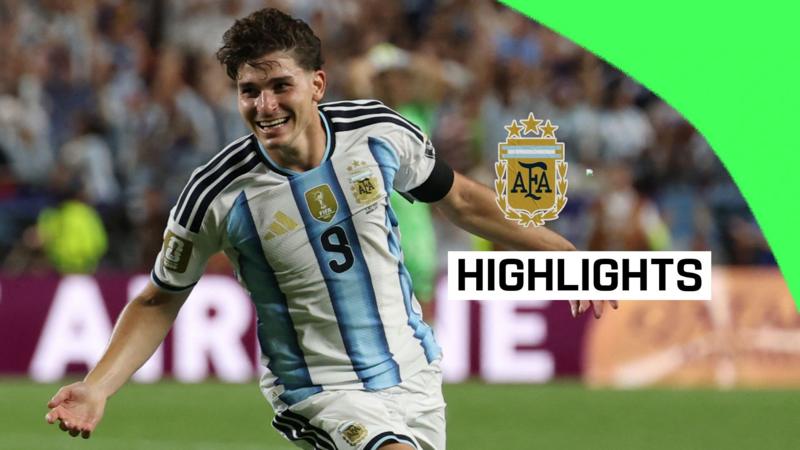
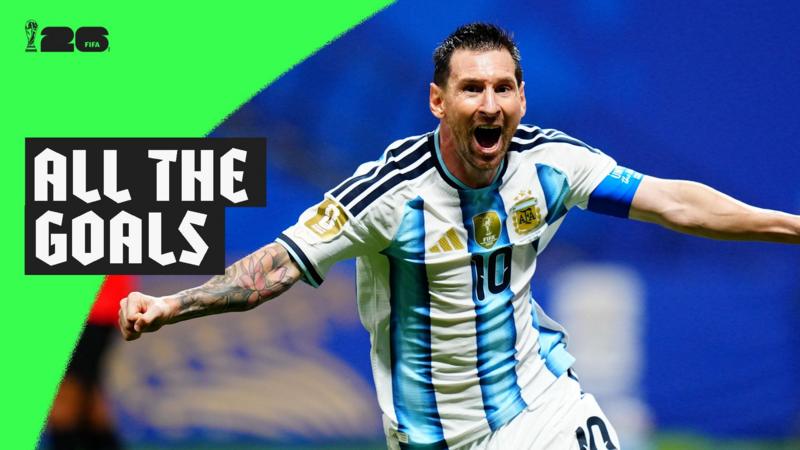
All of Argentina's goals from the World Cup so far

World Cup News

All of Argentina's goals from the World Cup so far

Close00Watch all 17 of Argentina's goals from World Cup 2026 so far, ahead of their semi-final showdown against England.Shareclose panelShare pageCopy linkAbout sharingRelated topicsFIFA World Cup 2026Follow FIFA World Cup 2026close panelYou are now following FIFA World Cup 2026Updates from your Sport topics will appear in My Sport and in a collection on the Sport homepage.FootballFollow Footballclose panelYou are now following FootballUpdates from your Sport topics will appear in My Sport and in a collection on the Sport homepage.ArgentinaFollow Argentina

BBC Sport WCTue, 14 Jul 2026
Source: BBC Sport WC
Read story
Close encounters: England have to crack Argentina’s ability to prevent close-range shots

World Cup News

Close encounters: England have to crack Argentina’s ability to prevent close-range shots

Argentina’s underlying defensive process has been stronger than the outcomes so England must make potent use of their set piecesArgentina’s defence has not always looked befitting of World Cup champions this summer. Cape Verde, Egypt and Jordan have collectively scored five goals against them, with their only clean sheets coming against Algeria and Austria.The ease with which relative minnows have broken the backline of Lionel Scaloni’s side should offer ample encouragement to Jude Bellingham and Harry Kane. Argentina’s underlying defensive process has been stronger than the outcomes, though. Their average of 0.52 expected goals conceded per 90 minutes is only bettered by Spain (0.31) among all 48 teams.As they’ve had the weakest opponents measured by average Fifa ranking of the four semi-finalists, Argentina should have conceded relatively few chances. What they have done particularly well is restrict where on the pitch those chances have occurred. Only Uruguay have allowed a higher proportion of shots faced from outside their penalty area (56%). Colombia are tied for second with Argentina on 52%, with Ecuador (45%) fifth. This has been a South American strength at this World Cup.Ecuador share another positive statistic with Argentina: they are the only teams who have not conceded a shot within their six-yard box. Success in this area is, somewhat arbitrary, defined by a white line on the pitch. Deroy Duarte’s goal for Cape Verde against Argentina was struck from very close to the right edge of the six-yard box, while Dan Ndoye scored for Switzerland from a similar location on the opposite side in the quarter-final. The data shows why the difference matters, though. Shots from within the six-yard box have been converted at a 27.1% rate in this World Cup, almost double the success from goal attempts hit from elsewhere in the penalty area (13.7%).England have not been the best side for attempting to score from close range. Their nine shots from inside the six-yard box is fewer than Canada (12), Ecuador (11) and Norway (10), never mind Spain (14) or Argentina (10). But they can use set pieces to test the defending champions to a greater than normal extent. Argentina have allowed just 0.63 expected goals from set plays, with Cape Verde the only side to have more than three corners against them.England have made potent use of their set pieces, using them to fashion five close-range chances. Their three shots in Croatia’s six-yard box all came following corners, before similar opportunities occurred against Ghana and the Democratic Republic of Congo. Bellingham scored twice in open play from fewer than six yards out against Mexico, too.Argentina may be ready for the different threats they will face in Atlanta but England finding shot locations they’ve not yet allowed could prove decisive.

Andrew BeasleyTue, 14 Jul 2026
Source: The Guardian WC
Read story
What age gives a squad best chance to win World Cup?

World Cup News

What age gives a squad best chance to win World Cup?

Of the 22 teams to have won the World Cup, 19 of them had an average age between 26 and 28 when doing so.That will be welcome news to England, France and Spain, whose average ages of their starting 11s at this World Cup all fit that age bracket.If you listed the average starting ages of the 22 World Cup-winning teams of the past, the median average is 27 years and 57 days old.Should Argentina go on to win the tournament, they would do so as one of the oldest sides to become World Cup champions.The average starting age of their starting 11 against Switzerland was 30.5 years old, with their team consisting of five players aged 32 or older. Lionel Messi, 39, is among them.Across the whole tournament, the age of Argentina's starting 11 has an average of 29 years and 302 days, although the last two sides to take the field have had an average age above 30.Only one team has won the World Cup with an average age of 29 or older. That was Brazil in 1962, whose average age of their starting 11s throughout the tournament was 30 years and 204 days.Just two nations have won a World Cup with a tournament starting 11 average age below 26. Argentina in 1978 (25 years, 195 days) and France in 2018 (25 years, 326 days) are the two youngest average starting 11s to win a World Cup.Contact formContact formHow does England's squad compare to World Cup winning ages?Of England's squad in North America, just two are aged 27 years old.Chelsea defender Trevoh Chalobah is the closest to the median age of being a starting member of a World Cup-winning side. He will be 27 years and 14 days old on the day of the final, should England get there. However, Chalobah is yet to feature at the tournament.Arsenal midfielder Declan Rice, who has started five of England's six matches so far, is 27-and-a-half, meaning he is the closest of England's regular players this summer to being at median World Cup-winning age.Jude Bellingham, Elliot Anderson, Jarell Quansah, Morgan Rogers and James Trafford are all aged 23. At the 2030 World Cup in Spain, Portugal and Morocco, the quintet will have turned 27, meaning they are at prime World Cup-winning age.Of the 26-man squad, seven are aged between 26 and 28. That is the age that has produced 86.4% of World Cup average starting ages.Based on average ages of starting 11s at the 2026 World Cup so far, England have the youngest team of the four semi-finalists. They have averaged 26 years and 255 days old in their starting line-ups.Spain (26 years, 271 days), who play France in Tuesday's first semi-final, also have a median age below 27.France have the second-oldest squad of the remaining four, but are also close to prime age with an average age so far of 27 years and 194 days.This article is the latest from BBC Sport's Ask Me Anything team.

BBC Sport WCTue, 14 Jul 2026
Source: BBC Sport WC
Read story
'Who's that?!' - Pundits play 'guess the player'

World Cup News

'Who's that?!' - Pundits play 'guess the player'

Close1030Theo Walcott, Gael Clichy and Ellen White take on our World Cup stars picture quiz.Shareclose panelShare pageCopy linkAbout sharingRelated topicsFIFA World Cup 2026Follow FIFA World Cup 2026close panelYou are now following FIFA World Cup 2026Updates from your Sport topics will appear in My Sport and in a collection on the Sport homepage.FootballFollow Football

BBC Sport WCTue, 14 Jul 2026
Source: BBC Sport WC
Read story
Spain, France, Argentina and England beware: Demons haunt the World Cup semi-finals

World Cup News

Spain, France, Argentina and England beware: Demons haunt the World Cup semi-finals

The World Cup spotlight causes single games to live longer in the memory than any other. The remaining teams at this tournament face defining momentsWorld Cup games mean more. England have only ever played 79 games in the finals, which is to say, not much more than two Premier League seasons in the 76 years since they first entered. Those games draw huge audiences: more than 17 million in the UK watched Saturday’s win over Norway, even though it was after midnight by the time it finished. In most countries, World Cup matches are more discussed, more analysed, than any other in sport, perhaps any other cultural phenomenon. They are rare moments that bring vast numbers of people together, hoping, agonising, celebrating, commiserating. They become part of the culture.Moments from games become touchstones. Allusions can be made to games from six decades ago in the reasonable expectation of being understood. That has a strange, distorting effect. Far too much is read into individual games, in a way it just wouldn’t be in a league game. Senne Lammens’s error that cost Belgium the quarter-final against Spain was watched by far more people than watch the average Manchester United game. There is not another match in three or four days that would mean Lammens’s mistake would be readily forgotten. It will always be part of his story, even if it subsequently becomes about redemption with a brilliant display in some future World Cup.The scarcity of games is part of the story. Each one matters. Which is why the suggestions, now happily shelved, that the World Cup should be played every two years must be resisted. Less is definitely more. But because the history is so familiar, because it is so present, it means that every country is to some extent playing against ghosts of its own past. Psychology matters far more in World Cup football than in any other form of the game.Spain have only ever played in one World Cup semi-final before, which they won 1-0 against Germany in 2010. It was a classic performance of control, grinding their opponents down before Carles Puyol scored a 73rd-minute header. That in itself is a mark of their long history of underachievement up to Euro 2008. They’ve reached the semi-final of the Euros on six occasions, winning five of them. They won five of the six major finals they’ve been in. They’re good in the latter stages of tournaments. But the final they lost, in 1984, was to France, their opponents in Tuesday’s semi. And they also lost to France in a memorable Euro 2000 quarter-final, when Raúl missed a late penalty that would have levelled it at 2-2.But France have their demons too, especially in semi-finals. The 1982 game in Seville ranks as perhaps the most traumatic night in their footballing history. With the score at 1-1 and an hour played, the France substitute Patrick Battiston was the victim of a horrendous unpunished foul by West Germany goalkeeper Toni Schumacher. He was knocked unconscious, broke his jaw and three ribs and lost two teeth. France went 3-1 up in extra-time, but on a hot night they paid for the fact that they effectively had one sub fewer. West Germany came back, levelled, and won in the World Cup’s first penalty shootout. France then lost to West Germany again in the semi-final four years later. Three successive semi-final successes perhaps have eased anxieties – but the nature of demons is that they rise unbidden.And of course, whatever history France and Spain share is nothing compared with that of England and Argentina. From Bobby Charlton’s goal in 1962 to the sending off of Antonio Rattín in 1966, to the “Hand of God” in 1986, to David Beckham’s red card in 1998 to Michael Owen’s collapse over Mauricio Pochettino’s leg in 2002, there is plenty of history. The two sides haven’t met since Geneva in 2005, a remarkable game in which both sides seemed to forget it was only a friendly, producing a classic in which Juan Román Riquelme looked to have inspired Argentina to victory only for Owen to score two goals in the final five minutes to give England the spoils.Memories of 1998 and 2002 were clearly fresh back then. Two decades later, with Argentinians a prominent feature of the Premier League, and the Falklands conflict and “Hand of God” that much further in the past, it may be that the animosity has lost some of that sting, but the nature of the rivalry goes back much deeper than that. There is always an oedipal frisson when England and Argentina meet. Their first encounter, in 1951, was previewed in the Argentinian press almost entirely in the terms of pupils taking on the master, the quasi-colonial power who had given them the sport. Something of that dynamic – albeit now, obviously, of extremely accomplished former pupils – still lingers.And England, of course, have their traumas from semi-finals past, from Turin and the penalty shootout defeat to West Germany in 1990 and from Moscow and the collapse against Croatia in 2018. In this tournament they have put behind them part of the “Hand of God” pathology by winning at the Azteca. The next step would be to beat Argentina in a knockout game.This is an extract from Soccer Desk: World Cup edition, a newsletter from the Guardian US that will run regularly during the tournament. Subscribe for free here.

Jonathan WilsonMon, 13 Jul 2026
Source: The Guardian WC
Read story
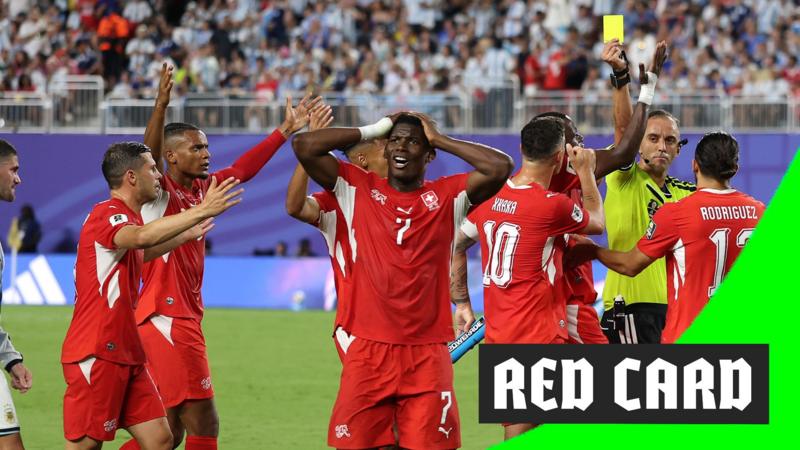
Switzerland hit out at VAR after ‘mistaken identity’ check ends in Breel Embolo red card

World Cup News

Switzerland hit out at VAR after ‘mistaken identity’ check ends in Breel Embolo red card

Attacker shown second yellow card for simulation“It’s completely not understandable,” Switzerland head coach Murat Yakin said afterward. “I know that they will protect their referee but this rule destroyed the game today.”The VAR review and red card capped an extraordinary period that turned a previously-lifeless game on its head, with Switzerland netting an equalizer through Dan Ndoye in the 67th minute and growing into the game, only to be a man down five minutes later thanks to VAR.The key moment came when Argentina midfielder Leandro Paredes dove in to challenge Embolo as the forward darted upfield, seemingly catching his leg on the way. Portuguese referee João Pinheiro initially issued Paredes a yellow card for the offense.“First of all, there was definitely no reason to award that yellow card,” Yakin said. “I don’t understand it, it was a harmless situation.”“It’s just a disaster,” Switzerland midfielder Remo Freuler said. “I don’t know what the referee is doing here. I don’t understand why they call him for a situation like this because there are many fouls [like this] in the first half. Maybe he has to call them for yellow card too.”Guillermo Pacheco Larios, the video assistant referee, recommended a review for mistaken identity after reviewing the footage, which showed Embolo leaving his feet and beginning his fall to the ground before Paredes made contact. The offense was then changed from recklessness by Paredes to simulation on Embolo, both of which are punished with a yellow card. Embolo, though, had already received a yellow card in the first half, and thus he was ejected from the game. In this, Paredes could claim to have gotten a measure of revenge: Embolo’s first yellow card was for a clear foul on Paredes just before the end of the first half.“It was decisive for the entire outcome of the match,” Yakin said.Added Freuler: “I don’t understand how can VAR change a game with this situation. Just let the referee do this thing, you know?”The Switzerland bench erupted when the decision was announced over the PA system at Kansas City Stadium, setting off wild celebrations amongst the majority pro-Argentina crowd. Embolo was among those who surrounded Pinheiro in animated disbelief. Embolo eventually broke down in tears, and had to be escorted by a small phalanx of teammates down the tunnel and back to the Switzerland dressing room.“You can imagine how he’s doing,” Yakin said afterward when asked about Embolo. “He is shattered. He couldn’t help the team today. It hurts us and it hurts him. It was a referee mistake.”Mistaken identity has been a valid reason for VAR review since the technology’s first implementation, but until this World Cup it has almost exclusively been used for situations that obviously apply; for example, a referee issuing a card to a certain player in error when a teammate was the one who committed the foul.This changed for the 2026 World Cup with the adoption of a new form of the rule by the International Football Association Board (Ifab), the body that determines the laws of the game applied around the world. In its latest update issued ahead of the World Cup, Ifab expanded the definition of “mistaken identity” to cover situations where a player is booked but the offense was committed by the other team.Yakin admitted that he was not aware of the rule change before Saturday, but continued to criticize the application of the rule.“This is a rule that in my opinion has nothing to do with football,” he said. “The fact that they introduced such a rule is just unnecessary. It is just extremely hurtful.”This was the second time the mistaken identity rule has been applied in this manner at the World Cup, with the first coming in the United States’ opening game against Paraguay. In that instance, US defender Tim Ream was initially issued a yellow card for a foul against Paraguay’s Miguel Almirón, but the VAR intervened and reviewed the action on the basis of mistaken identity. The referee went to the monitor and found that Almirón had actually dived on the play, and thus rescinded the yellow to Ream and issued it to Almirón.In that case, several commenters raised issues with the way the rule was applied, but Fifa later confirmed it had been applied correctly. Saturday’s call will be more scrutinized due not only to the stage upon which it took place, but also the effectArgentina were given a one-man advantage just when they were seemingly beginning to lose control. Switzerland had to play all of extra time with only 10 men, and their worn-out defense eventually conceded twice in a span of nine minutes to exit the World Cup.

Alexander Abnos at Kansas City StadiumSun, 12 Jul 2026
Source: The Guardian WC
Read story
Argentina set up England semi-final with extra-time victory over Switzerland

World Cup News

Argentina set up England semi-final with extra-time victory over Switzerland

Close01Argentina set up a World Cup semi-final with England after scoring twice in extra-time to beat 10-man Switzerland 3-1 in Kansas City.Shareclose panelShare pageCopy linkAbout sharingRelated topicsFootballFollow Footballclose panelYou are now following FootballUpdates from your Sport topics will appear in My Sport and in a collection on the Sport homepage.FIFA World Cup 2026Follow FIFA World Cup 2026close panelYou are now following FIFA World Cup 2026Updates from your Sport topics will appear in My Sport and in a collection on the Sport homepage.ArgentinaFollow Argentinaclose panelYou are now following ArgentinaUpdates from your Sport topics will appear in My Sport and in a collection on the Sport homepage.SwitzerlandFollow Switzerland

BBC Sport WCSun, 12 Jul 2026
Source: BBC Sport WC
Read story
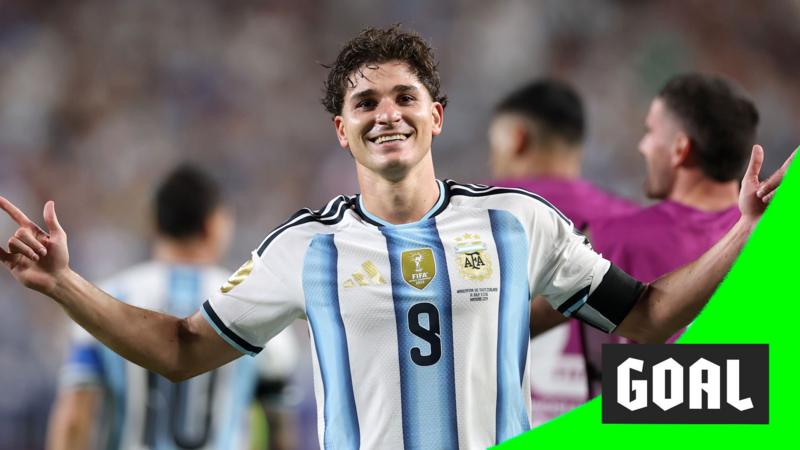
Alvarez's stunning strike gives Argentina lead against 10-man Switzerland

World Cup News

Alvarez's stunning strike gives Argentina lead against 10-man Switzerland

Close10Argentina retake the lead in their quarter-final against Switzerland through a stunning strike from Julian Alvarez during extra-time in Kansas City.Shareclose panelShare pageCopy linkAbout sharingRelated topicsFootballFollow Footballclose panelYou are now following FootballUpdates from your Sport topics will appear in My Sport and in a collection on the Sport homepage.FIFA World Cup 2026Follow FIFA World Cup 2026close panelYou are now following FIFA World Cup 2026Updates from your Sport topics will appear in My Sport and in a collection on the Sport homepage.ArgentinaFollow Argentinaclose panelYou are now following ArgentinaUpdates from your Sport topics will appear in My Sport and in a collection on the Sport homepage.SwitzerlandFollow Switzerland

BBC Sport WCSun, 12 Jul 2026
Source: BBC Sport WC
Read story
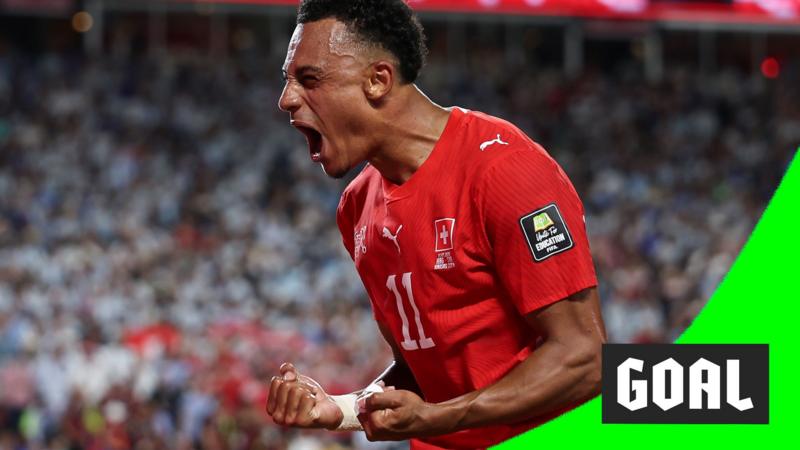
Ndoye scores deserved equaliser for Switzerland

World Cup News

Ndoye scores deserved equaliser for Switzerland

Close00Switzerland score a deserved equliser as Dan Ndoye makes it 1-1 against Argentina during their World Cup quarter-final in Kansas City.Shareclose panelShare pageCopy linkAbout sharingRelated topicsFootballFollow Footballclose panelYou are now following FootballUpdates from your Sport topics will appear in My Sport and in a collection on the Sport homepage.FIFA World Cup 2026Follow FIFA World Cup 2026close panelYou are now following FIFA World Cup 2026Updates from your Sport topics will appear in My Sport and in a collection on the Sport homepage.ArgentinaFollow Argentinaclose panelYou are now following ArgentinaUpdates from your Sport topics will appear in My Sport and in a collection on the Sport homepage.SwitzerlandFollow Switzerland

BBC Sport WCSun, 12 Jul 2026
Source: BBC Sport WC
Read story
'Cheats never prosper' - Embolo sent off after second yellow for diving

World Cup News

'Cheats never prosper' - Embolo sent off after second yellow for diving

Close00A distraught Breel Embolo is sent off after receiving a second yellow card for simulation during Switzerland's quarter-final tie against Argentina in Kansas City.Shareclose panelShare pageCopy linkAbout sharingRelated topicsFootballFollow Footballclose panelYou are now following FootballUpdates from your Sport topics will appear in My Sport and in a collection on the Sport homepage.FIFA World Cup 2026Follow FIFA World Cup 2026close panelYou are now following FIFA World Cup 2026Updates from your Sport topics will appear in My Sport and in a collection on the Sport homepage.ArgentinaFollow Argentinaclose panelYou are now following ArgentinaUpdates from your Sport topics will appear in My Sport and in a collection on the Sport homepage.SwitzerlandFollow Switzerland

BBC Sport WCSun, 12 Jul 2026
Source: BBC Sport WC
Read story