AccaMate logo

News Hub

Latest Sports Stories

677 stories ·Articles
In, or out? The joy and despair of World Cup squad selection

World Cup News

In, or out? The joy and despair of World Cup squad selection

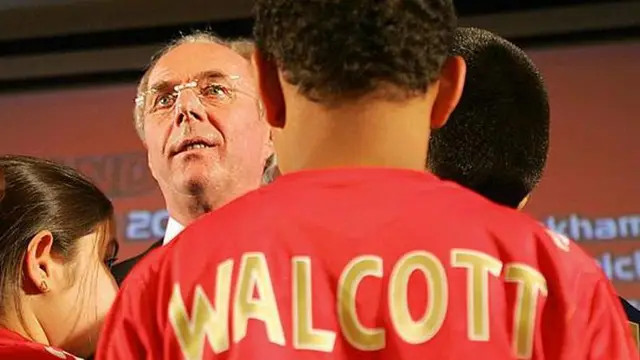
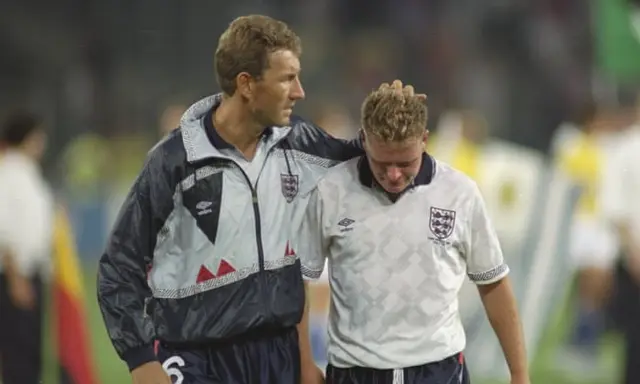
203 Comments It is safe to say none of the 55 England players named in Thomas Tuchel's provisional World Cup squad will let their phones leave their sight for the next few hours. Whether they are in or out, by the time the England manager publicly announces his final 26-man selection on Friday, everyone will have been contacted - and told their fate. For some, the shock will be the fact they will be on the plane to the US, Canada and Mexico - for others, it will be hearing how they are staying at home. From the elation of making the cut to the despair of missing out, BBC pundits Micah Richards, Joe Hart, Theo Walcott and Stephen Warnock share their stories of what it is like to get a call before a major tournament with news that will make or break your summer. And, if you think being told face-to-face is any better, Martin Keown recalls the aftermath of arguably the most famous England squad omission of all. Who is pushing for late England World Cup call-up? City right-back Micah Richards had spent much of the past 48 hours partying after his side's famous 'Aguero moment' and now he was expecting more reason to celebrate. "I'd been recalled for England's previous game, under caretaker manager Stuart Pearce, and played against the Netherlands in February," Richards remembered. "I'd made 23 starts for City that season to help us win the league and one of my rivals for the England right-back slot, Kyle Walker, was definitely out of the tournament injured. "I'd kind of convinced myself I was going to Poland and Ukraine, and I was at home, literally sitting and waiting for the call from Roy... but, when my phone rang, it was Pearce's name that flashed up. "I thought, 'this is weird, why is he calling me?' He was my old City boss but also the England Under-21 coach at the time, and I didn't think it would be anything important, just that he would be wishing me luck at the tournament. "Then he says to me, 'Hodgson's not going to pick you'. I didn't know what to say - I just wanted to cry. I look back now and think Roy should have called me himself. "In the same conversation, Stuart said that Hodgson had asked me to go on standby, but he wanted me himself in his squad for the London Olympics. I couldn't do both. "Pearce was very honest with me, and said there could be injuries that meant I still got the England call, but I decided to go where I would be appreciated, and go to the Olympics with him. "The way it was portrayed in the press, though, I had said no to England. Especially when Gary Cahill got injured in a warm-up match and Liverpool right-back Martin Kelly, who wasn't even on the standby list, got called up for the Euros. "Suddenly I was supposedly the one with the bad attitude, who didn't want to play for England or felt he was too good to be on standby - which was not true at all. "I was at home, almost in tears and feeling so low, and reading reports that I had snubbed my country, when I would never do that. "Roy never picked me again, of course. That was the end of my international career. "When I first got in the England team aged 18, I thought I would end up with 70 or 80 caps. Instead I finished with 13, and my last appearance came when I was 23." World Cup 2026: Every nation's squad as they are announced With Wayne Bridge making himself unavailable following allegations his ex-girlfriend had an affair with Chelsea's John Terry, the choice for boss Fabio Capello came down to either Everton's Leighton Baines or Aston Villa's Stephen Warnock, who both made the provisional squad. When the group returned home from their pre-tournament training camp in Austria, it was still unclear who he would take. "We were told we'd get a phone call one way or another," Warnock recalled. "We knew the call would come on the day the squad came out, from a certain number and before a certain time, because they would be announcing it straight afterwards. So I was at home, literally just waiting by the phone. "To be honest, I wasn't expecting to go because in the two warm-up games we'd just played, against Mexico and Japan, I hadn't kicked a ball. "My England career at that point was the seven minutes I'd played against Trinidad and Tobago two years earlier, in June 2008. "I'd gone to Austria with an ankle injury that I'd picked up in Villa's last game of the season. "I went on holiday but had a scan when I was away and then spoke to the physios when I came back and basically told them I am going to do everything I can to get in the World Cup squad. "I told them to strap me up and I would limp through training for the first week. When I was in Austria I was having physio every hour of the day I could get it, and I worked on my ankle as much as possible. "I don't know if that was being relayed to the management, but when I didn't play in either game, I thought that was me done, that Capello wasn't going to take me now. "I remember exactly where I was when I got the call. "I am divorced now but I was in the house with my now ex-wife and I went upstairs to my bedroom when the phone rang, because I just wanted to be on my own. I just remember walking downstairs saying 'I'm going!' and I was probably in a bit of shock. "It was Franco Baldini [Capello's assistant] who rang and I have no idea if he called everyone else to tell them - I didn't know how it worked, and I didn't care! "Baldini just said, 'listen, you've had a great season, we knew what you were capable of anyway and we love your attitude - we think you will be perfect around the camp for training and things like that. "'You know Ash is going to be difficult to budge, because he doesn't get injured and he doesn't not play, but we think you're the perfect back-up to him, in terms of your professionalism and everything else'. "I was like, "yeah 100%, that will do me". I knew what my role would be anyway, so that was fine." While the good news came as a surprise to Warnock, a clue was already out there. The previous day, England kit manufacturer Umbro had sent muralists to the hometowns of every player in the squad to paint their shirt number in a prominent place as a play on their 'tailored by' slogan. For Warnock, that was a wall on the side of the O'Este restaurant at a busy crossroads in Ormskirk. "When I told people I was in, everyone was like 'I saw that mural last night, and I didn't know what it was - it makes sense now'," Warnock added. "I remember driving down to see it thinking, 'if only I'd gone past here last night, I would have known I was going!' "I didn't get to play in South Africa, but I thoroughly enjoyed the experience. I just looked at it as if I had a front-row seat to the biggest tournament in world football." Giroud, Azpilicueta and McCarthy join BBC World Cup team This article contains content provided by X. We ask for your permission before anything is loaded, as they may be using cookies and other technologies. You may want to read X’s cookie policy, external and privacy policy, external before accepting. To view this content choose ‘accept and continue’ . The BBC is not responsible for the content of external sites.End of X post by BBC 5 Live SportHe'd been having a difficult time of it at club level, but Joe Hart did not think his England future was in doubt as the 2018 World Cup approached. Sure, the inexperienced Jordan Pickford (two caps) and Jack Butland (seven) had started the previous two friendlies, against the Netherlands and Italy in March, but Hart had still been in the squad for those games, just as he had been since his debut in 2008. The 31-year-old had also played in all 10 qualifying games for Russia and with 75 caps was England's most experienced player. Even if he was no longer the outright number one, he was surely in the top three? Hart was looking forward to his fifth major tournament after World Cups in 2010 and 2014 and the 2012 and 2016 European Championships, when boss Gareth Southgate phoned up the day before his squad was announced, to tell him he was taking Nick Pope (zero caps) instead. "I was packed and ready to go, and I got a phone call saying 'stand down'," Hart told BBC Radio 5 Live. "I'd played all the way through to the World Cup and finished the season, but didn't finish it well - I was in and out for West Ham, which was probably my first season of doing that. "I'd been in the squad since 2008, all the way through, and obviously played for a lot of years but then the tournament came and I got a call saying, 'you're not going' and that was it." Hart used some of his summer off to switch sports and play cricket for his boyhood club Shrewsbury,, external but still supported the Three Lions. "I watched the World Cup but I didn't know how I was going to watch it, because there was an awful lot going on in my head and in my chest," he added. "When I get upset, my chest gets tight - that's my tell. "But the tournament started and I saw all my guys that I loved to pieces and I just thought 'it's not about me, get over yourself - support the team as best you can'. "It was harder for everyone else around me because the people I love realised I'd be hurt, I'd be sad. They obviously wanted to get behind the team but they didn't want to be seen doing that in in front of me. "I just made it clear to everyone 'look, I'm over it, I'm over myself. Let's support them'. I didn't think that would be the end for me with England, but it turned out it was." Who are the oldest players to feature at a World Cup? Walcott had not played a single minute in the Premier League and had only taken part in 23 professional matches for previous club Southampton, scoring five goals. Eriksson had never seen him play live, but picked Walcott on reports from his scouts and after watching him train. "I decided to take Theo this morning," Eriksson said when he revealed his squad. He admitted the selection was "a gamble" and on this occasion, Walcott was not given any advance warning. He was taking his driving theory test that day - he passed - so had to turn his phone off. "I finished at 3pm and rang my dad," Walcott said in his first interview after finding out he had been selected. "He said I was in the England squad and I didn't believe it. I was like, 'you're having me on' and my dad told me he didn't think it was true either. "My first thoughts were, 'I can't believe this'. I was so shocked I couldn't say anything. I was so surprised, my eyes were coming out of my head." Walcott did not play a single minute in Germany but four years later he was seen as a key member of the Three Lions squad and widely expected to make Capello's selection for South Africa. This time he was playing golf with a friend and his cousin when he got very different news, and it was Capello, not his dad, who delivered it. "I had the day off so I was on the golf course... and I got the phone call," Walcott told Arsenal's website. "He just said, 'I'm sorry. I'm not going to bring you to South Africa, but I'll see you in Euro 2012 for the Euros'. "I didn't know what to say at all. There are always disappointments in football, but this was my biggest one yet. I wanted the lads to do well because I am an England fan as well, so I said 'good luck' and that was it. "Actually, I did have a tear to be fair, with my cousin and my mate. Then I played the best golf ever." What would it cost England and Scotland fans to go to World Cup? That is what Glenn Hoddle must have thought when he gave his players pre-arranged appointments in his hotel room at their La Manga base in Spain as he trimmed his England squad from 28 to 22 before the 1998 World Cup. But an admirable idea famously backfired when Paul Gascoigne finished a round of golf then discovered he was one of six players at the training camp who would be left out. Phil Neville, who had also just been told he was not going to France, was in tears and being consoled by brother Gary - who did make the squad - in the room next door when they heard Gazza react to his rejection by smashing the furniture up in Hoddle's room. In his own account of what happened, Gascoigne said: "I went mad, berserk. I lost my rag big time. I was shouting and swearing. I could not believe the injustice of it all. I gashed my knee as I kicked the door, I was crying and out of control. "I didn't want to talk to anyone and I didn't want to listen to what Glenn had to say. There is nothing he could say. "I wanted to be part of England's World Cup glory but he has destroyed my biggest dream." When Martin Keown walked into Hoddle's room a few minutes later, to find out he had made the squad, he had no idea what had just happened. "We were all sat around the pool, waiting for our time to go to see the manager," Keown said. "If a player came back and collected their stuff, they were going to France. If they didn't, they were going home. "I went into what was left of Hoddle's room after Gazza. When I was told I was going to my first World Cup, I was looking round wondering what had caused the wreckage. "We didn't know exactly what happened at the time, because Hoddle didn't tell us." Maybe a phone call is the best option after all? Lewandowski misses out on World Cup - who else won't be there? Could England's set-pieces win them the World Cup? Dear England drama: 'A story of real hope' says writer

Source: BBC Sport WC
Thu, 21 May 2026
Read story
Empty rooms and Fifa cancellations - US hotels fear World Cup washout

World Cup News

Empty rooms and Fifa cancellations - US hotels fear World Cup washout

A report, external produced by the American Hotel & Lodging Association (AHLA) has found that bookings are well below expectations in almost every host city. The AHLA said this does not align with Fifa's statement that more than five million tickets have been sold,, external and it creates a risk that "the anticipated economic lift may fall short". The AHLA is the largest hotel association in the US, representing more than 32,000 properties and over 80% of all franchised hotels. Its report partially puts the blame at the door of Fifa, accusing world football's governing body of block-booking far too many rooms for its own use and creating false demand. This, the AHLA said, led to artificially high pricing which, after Fifa cancelled a large number of rooms, has been replaced by a vacuum of availability. Hotels said high match ticket pricing, local transport and tax costs, and the political backdrop have put visitors off. For the hotels, this World Cup could fall flat. 'I wouldn't pay it' - Trump on USA ticket price A study commissioned by Fifa,, external released last year, predicted that in the US the World Cup could create 185,000 jobs, adding $17.2bn (£12.7bn) in gross domestic product. The hotels were planning for an influx of international travellers, who book longer stays with a higher spend. But the AHLA said fewer overseas fans "threatens the broader economic impact" with just over three weeks until the opening game on 11 June. The AHLA said the large-scale bookings made by Fifa in all cities "shaped revenue forecasts, staffing plans and preparations". It said this booking policy "manufactured artificial demand" and masked the fact that tourist flow is going to be lower than predicted. Up to 70% of rooms reserved by Fifa in Boston, Dallas, Los Angeles, Philadelphia and Seattle have been cancelled, the AHLA said. In a statement Fifa rejected the AHLA's claims and said it had followed agreements made with hotel chains. "All room releases were conducted in line with contractually agreed timelines with hotel partners - a standard practice for an event of this scale," a Fifa spokesperson said. "In many cases, room releases were made ahead of established deadlines to further accommodate requests from hotels. "Throughout the planning process, Fifa's accommodations team maintained consistent discussions with hotel stakeholders, including room block adjustments, agreeing to rates, confirming room types and regular reporting, supported by townhall and ongoing communication." Prices spiked after the draw was made, as soon as fans knew which cities their teams would be in. There has been a gradual fall since then, reportedly by a further 20% in recent weeks. But this could be too late to entice fans back. Hotel prices in cities like Boston are still more than $300 (£224) a night, and most fans are working to a lower budget. Chris Hancock, an England fan who has been to four World Cups, told BBC Sport that his group of five are travelling on an accommodation budget of $75 (£56) per person per night. They will hire a car in each city and book a mix of hotels and Airbnb accommodation between 45 minutes to an hour away. "We always tend to stay out of town a little bit and cut the cost that way, so we're not in the middle of Dallas, Boston or New York," Hancock said. "If you're out of the city centres where everything's happening, you can get some cheaper deals. "We're working within that budget. And at the minute we should be well under that." The AHLA told BBC Sport it "expects occupancy to strengthen in June and July". "We know that many fans are still waiting on tickets and schedules to become clearer before finalising plans," a spokesperson said. "We believe bookings will pick up in the weeks ahead. Hotels are ready to welcome guests and ensure that they have the best possible experience." Airbnb says the World Cup is on course to be the "biggest hosting event in Airbnb's history", overtaking the 2024 Olympic and Paralympic Games in Paris. Hotels might need to rely on making gains in the knockout rounds, when fans have to make bookings at short notice. But the World Cup seems unlikely to bring in the revenue that was being predicted. World Cup transport prices cut after fan backlash US drops $15,000 visa deposit for foreign fans with World Cup tickets

Source: BBC Sport WC
Wed, 20 May 2026
Read story
US drops $15,000 visa deposit for foreign fans with World Cup tickets

World Cup News

US drops $15,000 visa deposit for foreign fans with World Cup tickets

ShareSaveAdd as preferred on GoogleAna FaguyThe Trump administration will exempt football fans from 50 countries subject to a $15,000 (£11,000) visa deposit requirement, provided they are travelling to the US for the World Cup with valid match tickets. Five of these countries - Algeria, Cape Verde, Ivory Coast, Senegal, and Tunisia - have qualified for the tournament, to be co-hosted by the US, Canada and Mexico from 11 June. "We are waiving visa bonds for qualified fans who bought World Cup tickets," Assistant Secretary of State for Consular Affairs Mora Namdar said in a statement to the BBC. The bond requirement, introduced last year , was intended to reduce visa overstays, according to a notice published by the state department. Players and coaches for the tournament were already exempt from the bond requirement, but ordinary fans with confirmed tickets for the World Cup had not been included until Wednesday. The 12-month pilot programme, launched last August, was part of the administration's wider immigration crackdown. According to the state department, it was intended to curb visa overstays or cases "where screening and vetting information is considered deficient". The bond would be refunded at the end of the visitor's stay. In a statement, FIFA said the announcement demonstrates the ongoing collaboration with the White House "to deliver a successful, record-breaking and unforgettable global event". "We are grateful to the Administration for the ongoing partnership." While the requirement has now been suspended for football fans from the 50 affected countries, travellers from Iran and Haiti remain barred. But players and coaches from those countries are exempt for World Cup-related travel. Travellers from Ivory Coast and Senegal, both of which have qualified for the tournament, face partial restrictions under an expanded version of that travel ban. Late last year, the US government also announced that tourists from dozens of countries could be required to provide a five-year social media history as a condition of entry - another immigration policy that could affect visitors coming to the US for the World Cup. Rights groups have warned travellers that such policies could lead to denied entry, arrest risks, expanded travel restrictions, social media screening, racial profiling and increased surveillance.

Source: BBC Sport WC
Thu, 14 May 2026
Read story
Might a former Celtic hero help Haiti surprise Scotland?

World Cup News

Might a former Celtic hero help Haiti surprise Scotland?

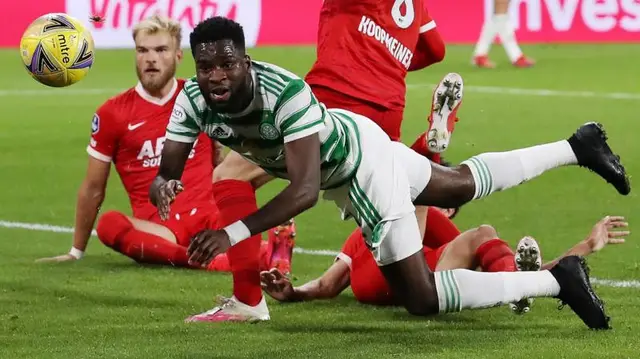
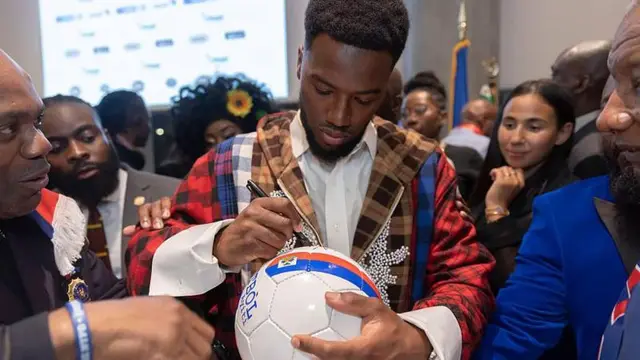
As opening World Cup games go, Scotland will have been quite content to be facing a relative minnow in Haiti. But thanks to some savvy scouts and persuasive agents, the war-torn Caribbean island are putting together a team which hopes to shock Steve Clarke's side when Group C begins on 14 June. Players called up include Premier League stars with Haitian ancestry, including Wolves midfielder Jean-Ricner Bellegarde and Sunderland striker Wilson Isidor – plus potentially former Celtic hero Odsonne Edouard. Edouard scored 57 goals in 94 league matches for Celtic between 2018 and 2021, helping them to successive domestic trebles. Now playing for Lens in Ligue 1, the 28-year-old represented France at youth level but has never played for them at senior international level. His parents are of Haitian heritage, hence they are hoping to recruit him for the World Cup. Nothing is guaranteed, though, as convincing players to represent countries they were not born in – and have maybe never visited – can be tricky. "Edouard is a possibility, but the player is also French - he might be called up for France," Fifa agent Jerome Salbert, who works closely with the Haiti FA in talent ID and recruitment, told BBC Sport. "His father is Haitian but he was raised in France. It is difficult for him to decide if he accepts, as he would prefer to play for France." For Haiti, issues off the field are also a problem. Since the country was devastated by an earthquake in 2010, armed gangs have been in an ongoing battle with government forces and have seized much of the capital city, Port-au-Prince. It has left more than a million people homeless and caused widespread food shortages. From a football perspective, Haiti qualified for the World Cup despite being unable to play any of their qualifiers at home. Their manager, Frenchman Sebastian Migne, has never been to Haiti as it too dangerous for foreigners to travel there. But Salbert and the Haiti FA have still managed to convince some big names to represent the country, with the World Cup a major lure. "The problems in Haiti don't really have anything to do with it - players refusing to represent countries happens a lot when they are based overseas," he said. "It is tough at first glance. "Take the case of Wilson Isidor - he has Haitian roots. We must convince them to play with the heart. That helps with players; the football gives them hope amid the trauma their country faces and helps the team move forwards." Salbert's agency is based in Paris, but he was born on the Caribbean island of Guadeloupe, an overseas region of France. This connection to the region, plus the challenge of working with a beleaguered country like Haiti, drew him in. "I think football belongs to everyone, and their players have a lot of talent, also a lot of resilience," he said. "They have a lot of skills, which I like. There are a lot of Haitian communities in Guadaloupe so I know a lot about the personalities." Salbert began working with the Haitian FA in 2024 and recommended Migne, who has World Cup experience as Cameroon assistant coach at Qatar 2022. He has since been tasked to recruit players from around the world who would be eligible to hold a Haitian passport – something made much more difficult by him being unable to travel to the country itself. "I cannot travel in Haiti, so I use a scout who is in the Caribbean," Salbert says. "And also WyScout - a local scout spots a player in Haiti, I check the system then contact the player to sign with my agency and then suggest them to the coach. "The inability to go there was the first question the coach asked, as he can't go there to scout. A lot of his job was online, but he is in touch with the people there. "They hope to be back in Haiti after World Cup for a short event, I don't know if it is secure, but it may be possible for them to go home." Despite a patchwork squad and playing their home games on nearby Curacao, Haiti have reached the men's World Cup finals for the first time since 1974. On what it meant for Haiti to qualify, Salbert said: "There was a feeling of pride. It showed us how good football is in Haiti and shows that big sense of resilience. "The players look at themselves and look at the World Cup as a chance to advance their careers. They know they will not have a second chance. "No one expects anything from Haiti at the World Cup but I think Scotland, we can give them a surprise."

Source: BBC Sport WC
Wed, 13 May 2026
Read story
World Cup transport prices cut after fan backlash

World Cup News

World Cup transport prices cut after fan backlash

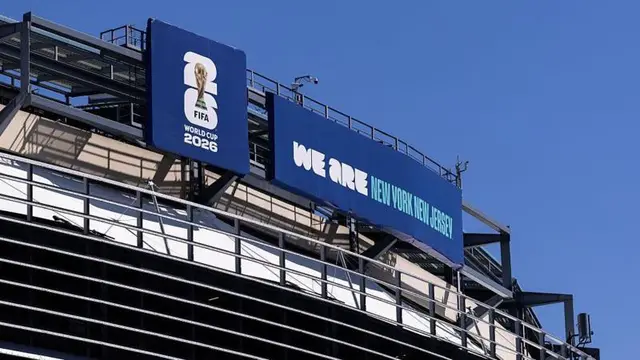
Prices for trains and buses to World Cup matches at MetLife Stadium in New Jersey have been cut following a backlash from fans. The price of a train ticket has been slashed from $150 (£111) to $98 (£73) while shuttle bus fares are down to $20 (£15) from $80 (£59). Thomas Concannon, leader of the Football Supporters' Association England fan group, previously criticised "astronomical" event pricing - which he described as "completely out of the norm". MetLife Stadium - which will be known as New York/New Jersey Stadium during the World Cup as part of Fifa's policy on corporate sponsored names - will host eight matches including the final and one of England's Group L games. Rail journeys from Penn Station in Manhattan to the venue, which is about 18 miles, are normally $12.90 (£9.50) for a return fare. £111 trains will have 'chilling effect' on World Cup Travel at the World Cups in Russia and Qatar was free, and the USA had committed to offer the same perk in its 2018 host agreement. In a tweak to the agreement made in 2023, it was decided that supporters would be able to travel at cost. Responding to criticism, Fifa also claimed there was no precedent for transport price rises for a major event at MetLife Stadium. In a social media post on Tuesday, Sherril said commercial sponsorship meant the price for the 30-minute train journey could be cut. "Good news: Ahead of NJ Transit World Cup train tickets going on sale, NJ Transit is lowering ticket prices to $98 without New Jersey taxpayer money," Sherill wrote. "Thank you to our partners for helping make this possible." New York governor Kathy Hochul said "getting to the World Cup should be as accessible as possible" after announcing the 75% reduction in round-trip bus fares on social media. She added that 20% of tickets would be reserved for New Yorkers in recognition that they are "helping host the world". Elsewhere, fans travelling to Foxborough, Boston are facing transport price hikes of more than 300%. Round-trip tickets from central Boston (South Station) to Boston Stadium at Foxborough usually cost $20 (£15) but fans will be charged $80 (£60) at the World Cup. The prices in New Jersey and Foxborough will hit England and Scotland fans. The Three Lions take on Ghana in Foxborough on 23 June, and then face Panama at MetLife Stadium on 27 June. Steve Clarke's Scotland have two games in Foxborough - against Haiti on 13 June and Morocco on 19 June. Kansas City is offering return bus tickets to the stadium for $15, while Philadelphia has confirmed their usual price of $2.90 will remain the same for the tournament. Listen to the latest Football Daily podcast SoundsGet football news sent straight to your phone

Source: BBC Sport WC
Wed, 13 May 2026
Read story
'I wouldn't pay it' - Trump on USA ticket price

World Cup News

'I wouldn't pay it' - Trump on USA ticket price

United States President Donald Trump says he "wouldn't pay it either" when asked about the potential $1,000 (£736) ticket price to watch his country play Paraguay in their 2026 World Cup opener. The competition starts on 11 June and the US, who are co-hosting the tournament with Canada and Mexico, will open their campaign in Los Angeles on 12 June. "I did not know that number," Trump told The New York Post, external when asked about fans having to pay $1,000 (£736) to watch the USA's first Group D match. "I would certainly like to be there, but I wouldn't pay it either, to be honest with you." Fans also face having to pay vastly inflated prices for most games through Fifa's official resale platform, while world football's governing body is taking a 30% fee - 15% each from both the buyer and seller - of each ticket which is sold. "If people from Queens and Brooklyn and all of the people that love Donald Trump can't go, I would be disappointed, but, you know, at the same time, it's an amazing success," added Trump. "I would like to be able to have the people that voted for me to be able to go." Infantino's 'hot dog & Coke' pledge over $2m ticket "In the US, it is permitted to resell tickets as well, so if you were to sell tickets at the price which is too low, these tickets will be resold at a much higher price," Infantino said on Tuesday at the Milken Institute Global Conference in Beverly Hills. World Cup matches in Toronto can also only be sold for their original price because of the Ontario government's recent ban on reselling event tickets above face value. Fans are also facing increased transport costs in the US for the tournament, although recently announced controversial prices have been reduced in New Jersey. A 30-minute train journey to a World Cup game at MetLife Stadium had risen to $150 (£111) from the usual $12.90 (£9.50) for a return fare, but that has now come down by 30%. The price of a journey of about 18 miles from Penn Station in Manhattan to the venue in New Jersey will instead cost fans $105 (£77). New Jersey Transit chief executive Kris Kolluri, external said Governor Mikie Sherrill had asked for private sponsorships and other finance sources to be found to ensure the ticket price could come down. "I am pleased we are able to reduce the price by at least 30% and bring the cost down to $105 per ticket." Listen to the latest Football Daily podcast SoundsGet football news sent straight to your phone

Source: BBC Sport WC
Thu, 07 May 2026
Read story
How the FA helped US Soccer build its new home

World Cup News

How the FA helped US Soccer build its new home

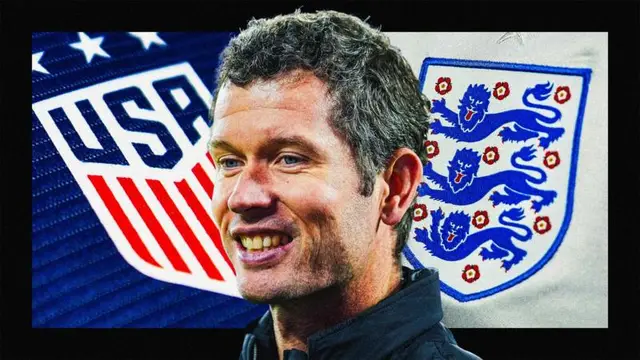
Britain's so-called 'special relationship' with the United States may be under renewed scrutiny, but when it comes to football, it appears to be in good health. The chief executive of US Soccer has hailed the Football Association's role in the establishment of a "transformative" new 200-acre national training centre outside Atlanta. JT Batson said officials from the governing body had been "incredible partners in helping us learn from what works well in England". "That certainly factored into our thinking around the building of a national centre, as well as the designing of what we've called the 'US Way', which is our strategy for sporting success," he said. Speaking exclusively to BBC Sport from the $228m Arthur M Blank training complex, which opens this week, Batson said "think of it as St George's Park, but slightly bigger and obviously newer". The FA's Staffordshire base opened in 2012 and has been credited with playing a key role in the subsequent revival of England men's and women's teams. US Soccer officials visited the site as part of a fact-finding mission when designing their own version, which will host the national team's pre-World Cup camp. FA officials are said to have been happy to share knowledge with their US counterparts, who also visited the training grounds of Tottenham Hotspur and Manchester City. "There's lots to learn from around the world, but the US is different," added Batson. "We're really big, both geographically and in numbers of people. We think that really having a home for the first time for soccer in America is going to be transformative for us." Batson also paid tribute to US Soccer's former sporting director Matt Crocker, who was previously the FA's former head of teams, based at St George's Park. Welshman Crocker was responsible for appointing Mauricio Pochettino and Emma Hayes as head coaches of the US men's and women's senior national teams respectively, but left last month to take up a similar role at the Saudi Arabia football federation. "Matt and team have done an incredible job of taking us from where we were to where we are now from a strategy standpoint… and that gives us the foundation to be able to carry forward... around how do we support the entire soccer ecosystem in the United States to be successful," said Batson. The World Cup line-up is complete - here's what you need to know Our World Cup host 'is Fifa, not Trump or America' - Iran US Soccer hopes the consistency provided by a central training hub and development strategy helps it to capitalise on co-hosting of this summer's expanded World Cup, alongside Mexico and Canada, even if much of the build-up has been overshadowed by concerns over the unprecedented costs to fans, and various security issues. Describing it as "an incredible opportunity for us to transform what soccer looks like in America", Batson claims it will show that the US "is now a soccer nation. What makes soccer in America unique is that we are the challenger sport in our country and we are the challenger country in our sport." The Football Supporters' Association has said that fans are being "fleeced" as a result of Fifa's ticketing strategy. BBC Sport has plotted a route through the group stage and found that England supporters would need about £6,500 each or £13,000 for two. There has also been controversy over the cost of transport, with Fifa being criticised by some US politicians for not doing more to help host cities. Fifa has adopted a new organisational model for the 2026 World Cup that means it is responsible for ticket sales. Fifa president Gianni Infantino has defended prices, insisting that they reflect demand. BBC Sport asked Batson if he feared the cost of attending the event will make it a harder task to grow the game, and whether the tournament risks becoming an event largely for the wealthy. "We're focused on making sure that everyone who wants to be a part of this World Cup can be a part of it, no matter where you live, whether you're going to be able to watch on television at home, [or] watching at a bar…" said Batson. "In our [warm-up] game in Charlotte against Senegal, we have $26 tickets… you're also going to see US soccer gear and merchandise at all different price points. We want everyone who cares about our sport to feel connected… and I think this summer is an important opportunity for us to be able to do that." Asked how confident he was that all World Cup matches would be sold out, Batson said: "My expectation is that we want a very vibrant stadium for every game. And given the passion for our game in America, and the passion from the fans who are coming in from around the world, I would expect that Fifa is focused on ensuring that's the case too." Last month Pochettino said that American youngsters tend to develop an "emotional relationship" with football later than other countries because of competition from more established sports, describing it as "a problem", but Batson is more positive. "One of the things that excites me in terms of where we are relative to when I was growing up is there's an opportunity to build that emotional relationship with soccer at such a young age that did not exist historically," he said. "You now have the first generation of kids growing up whose parents played at scale. And so the moment historically of a father or mother taking their kid to a baseball or basketball game is a momentous family occasion. "Now that's soccer, and so there's been such a generational shift here that this World Cup will be a nice tidal wave of carrying those emotions forward." The MLS was formed in 1995, one year after the US hosted the World Cup for the first time, and has grown significantly since then, with Lionel Messi's arrival in 2023 evidence of a changed landscape. Batson said that in 1994, "the soccer market was very nascent in the US, and if you fast forward to today, we have thriving professional leagues, some of the world's great stadiums… the opportunity for this summer is how do we take that next big step forward and how do we use it to build the system of what soccer looks like in a way where every kid can play?" The US are in a group with Paraguay, Australia and Turkey, and are aiming to reach the quarter-finals for the first time since 2002. When asked if Pochettino's team had to do well for the tournament to have the desired impact domestically, Batson said: "This is a team that is excited about the opportunity. "Their ambition is high… they've got an opportunity to really earn that excitement, earn that passion and energy from the tens of millions of Americans who love them." Pochettino has had a mixed record since taking up the job in 2024, with his team losing both of their most recent friendlies against Belgium and Portugal, but has said he believes the team could pull off a shock win. "This is a team that can compete with the world's best," insists Batson. "It's going to have home support. And why not give it a go? I mean, that's the whole point of playing in a tournament. Any team stepping in should have a plan to go as far as possible, which ultimately means having a plan to ultimately win." Derby's Agyemang to miss World Cup with Achilles injury Against a backdrop of US involvement in the Middle East conflict and domestic political violence, there have also been mounting concerns over security at the tournament. Last month, rights groups issued a travel advisory urging visitors to "exercise caution" as a result of what it called the government's "violent and abusive immigration crackdown". Tournament organisers have also said they are worried about a long-running partial shutdown of the Department of Homeland Security due to a funding dispute in Congress. Asked what his message was to overseas fans who may be reconsidering whether to attend, Batson said: "Fifa and the US government at all levels have been in co-ordination for years around ensuring a successful delivery of the World Cup, first and foremost starting with safety. "The US has lots of history of organising major events all over the country and very often in the very specific stadiums where the games are going to be played. I know that at all levels from local, county, state and federal government, there is a clear focus on ensuring there's a safe and fun World Cup for everyone here." When it was put to Batson that US officials have said Immigration and Customs Enforcement (ICE) agents will be part of World Cup security plans, and that fans from a number of participating countries are subject to travel bans. He said: "I know that FIFA and the White House are very focused on delivering a safe, secure and positive event for everyone who attends, whether you live in this country or whether you're coming in from around the world." White House wants DHS to reopen for World Cup Listen to the latest Football Daily podcast

Source: BBC Sport WC
Wed, 06 May 2026
Read story
Haiti's record scorer on Paisley, stunning Scotland & escaping Iran

World Cup News

Haiti's record scorer on Paisley, stunning Scotland & escaping Iran

Life of late has been a whirlwind of emotions for Duckens Nazon. From the highest of highs - helping Haiti qualify for their first World Cup since 1974 - to fearing for his life while trying to escape the ongoing conflict in Iran, where he plays his club football for Esteghlal, it has been a turbulent time. The 32-year-old, who spent six months of a colourful 13-year career - spanning 13 clubs and eight countries - in Paisley with St Mirren in 2019, now has his sights set on stunning the nation he briefly called home. As Haiti's record scorer with 44 goals in 76 caps, starting in his country's first World Cup match in 52 years against the Scots will cap off a wild spell for the striker, who claims his life was saved by a SIM card during his recent evacuation from Iran. Celtic linked with Leonard and Stewart - gossip 'I watched bombs drop from 100 metres away'Nazon was set to depart Iran on the day the Israeli-US strikes began, but he was ordered off the flight for safety reasons. Meanwhile, his wife from Morocco - a nation Haiti will also face in their World Cup group alongside Scotland and Brazil - and their four children were safe in France, where the former Coventry City striker was born. Nazon is thankful his family were not part of his "crazy" evacuation trip, during which he watched bombs drop from just 100 metres away before finally escaping via Azerbaijan. Speaking on the BBC's Sacked in the Morning podcast, he said: "I was about to take a plane to go to Istanbul or Paris, then the steward told everybody to get off because the war had started. "Imagine you have your wife and your children by your side in that situation. If you're alone, I wouldn't say I don't care about my life, but you are more relaxed and taking decisions is easier and faster." On the complications he experienced at the Iran-Azerbaijan border, he added: "I was stuck at the border for maybe 48 hours. They refused me, sent me back to Iran and I slept at the border. "But I was so lucky because, before the war started I bought an eSIM. After that, they cut the internet in Iran. "So I had no contact and I was praying that when I reached the border I would get some signal - and it worked. This saved my life. "I could talk to the French embassy and they helped me to get my passport. They spoke to the Azerbaijani forces and then I got out." With domestic football in Iran suspended because of the ongoing conflict, Nazon is following an individual training programme to prepare for the World Cup. The Haiti squad have become heroes for leading the nation back to football's grandest stage, where they will make just their second appearance at the finals. Nazon acknowledges that the players are now "part of the country's history" but insists they will play without "extra pressure", starting with their opener against Scotland. "We are ambassadors of our country and we know we have a responsibility," he says. "We know the young people also see us as examples. "But we don't have to put extra pressure on ourselves and, when we play for our country, it's more a mission and we do it with passion and with love." On loan at St Mirren from Belgian club Sint-Truiden for the second half of the 2018-19 season, Nazon "had a story" in Scotland. It was short-lived, though. The forward played 12 games, scoring twice, but said he was "not ready for this kind of aggression and fight" in Scottish football, while the weather also played a part. "I remember one game we had sun, snow and rain," he recalls. "After this, I was like, OK, I'm done." Weather is unlikely to be an issue for Nazon this summer in North America. The striker, a friend of Scotland defender Dominic Hyam - with whom he played at Coventry - did, however, voice concerns about inflated ticket prices for the upcoming World Cup matches. "There is only one thing that starts to go in my brain - it's the ticket prices," he says. "Hopefully this is not going to affect the crowd and people coming to the stadium, because we want this atmosphere. "We want this energy around us. I'm looking forward to seeing Scottish people and Haitian people in the stadiums. This is going to be important."

Source: BBC Sport WC
Wed, 06 May 2026
Read story
What would it cost England and Scotland fans to go to World Cup?

World Cup News

What would it cost England and Scotland fans to go to World Cup?

It has been clear for a while that, on cost alone, this tournament is set to be like no other. What if you decided, today, that you fancied a trip over to the United States to watch England or Scotland? BBC Sport has plotted a route through the group stage and found that England supporters would need about £6,500 each or £13,000 for two. The cost for a single person would be higher as accommodation prices are for twin or double rooms. But for a family of four with two pre-teen children (though you would have to take them out of school), the cost sky-rockets to more than £22,000. England fans get a good deal in Dallas but Scotland have eight nights in Boston - one of the most expensive cities. Two Scots would face spending about £7,500 each, while a family would have to find more than £25,000. BBC Sport picked the best value hotel within four miles of the city centre - though if you were prepared to be based farther out, use Airbnb or go truly budget, it could potentially be done for less. The cheapest available tickets on Fifa's official resale site have been selected too. * Prices correct at the time of writing but subject to change. One of the most difficult expenses to predict is the cost of simply living your life in the United States for 14-15 days. Primarily we are talking meals, drinks, snacks and local transport. And on the days when there is no game, people are going to need to find something to do. Everyone is different, as is every city. Some would be happy with low-cost options, others might look to make the most of the trip. Then there are those who would be content to spend all their days around the bars - and that would require a bigger budget. Also, in the US everything comes at an additional cost because of the tipping culture. For two people working to a low-to-mid-range budget, we have made an estimate of £3,000. That works out on average as a conservative £107 per person per day for England fans. Some days are largely taken up by travelling, which would free up budget for other days. A family would need to spend more, of course, and with excursions to keep the children busy, it has been set at £4,500. As Scotland have an extra day, these costs are adjusted to £3,214 and £4,820. Our two England fans fly out of Heathrow on Monday, 15 June with return flights to JFK in New York costing just over £500 each - which is good value. With the Three Lions' final group game taking place in New Jersey, it is the most cost-effective way to travel to the US and back, with the first stop being Dallas. After landing in the States, they pick up a flight to Dallas the same night - this costs £283 per person. Four nights at the Hampton Inn & Suites Dallas Market Center cost £624 (£156 a night) for a twin. Double rooms, which are more available in all cities, come in cheaper at the Hilton Dallas Medical District at £560 (£140 a night). Both properties have breakfast included, meaning Dallas - which also has free shuttle buses from stations to the stadium in Arlington - is an affordable start to the trip. The England supporters fly to Boston on Friday, 19 June with the fare £378 each. Boston is at the other end of the scale as one of the more expensive host cities for accommodation. Our couple stay at the Hampton Inn & Suites Boston Crosstown Center, costing £1,650 (£330 a night), including breakfast, for five nights. The cheapest twin-bed option in the city itself is £2,041 (£408 a night) without breakfast at the Courtyard Boston Downtown/North Station. It is possible to book a hotel near the airport £500 cheaper but with five days in the city, it may not be worth the saving. With England's third game being in New Jersey, there is no need to take a flight. The supporters can hop on the Amtrak train to New York on Wednesday, 24 June with tickets £42 each. Unlike in Boston, there are still lots of hotel options in New York with a five-night stay before the flight home on 29 June. A double at the Truss Hotel Times Square costs £1,184 (£237 a night) while a twin at the AMTD Idea Tribeca Hotel is £1,275 (£255 a night). This time, however, you will need to head out for breakfast. But the last two games come with a sting - train tickets to the stadiums cost £59 per person from Boston and £114 from New York. Just to get to the States and travel around, the estimated costs for two friends are £6,273 and for a couple £5,855. And what of the family? It is going to cost £9,008 to get to the States, get around and put your heads down. Costs are helped by some hotels offering free stays for children. In Dallas, the Comfort Inn Dallas Medical-Market Center costs £627 (£156 a night). The same Hampton Inn is used in Boston with a higher cost of £1,763 (£353 a night). Over in New York, the Holiday Inn in Times Square costs £1,589 (£318 a night). While Fifa has been drip-feeding some additional match tickets at face value, the chances of snagging any to England's games appear slim. This means turning to Fifa's official resale site, which sees ever-more expensive tickets - plus you will need to pay Fifa a 15% transaction fee on top. For each game, upper-tier category-two tickets were the cheapest available. For the opener against Croatia, the two tickets cost £1,406 - the face value being £517. Then it was £1,222 to get two tickets for the Ghana match, from a face value of £745. The last match against Panama was available for £1,396, original price £494. Total cost for two people to go to the games including fees? £4,370 (£2,185 per person), which is two and a half times the face of £1,756. It is more expensive for a family because there is less availability for a group of four tickets together, and there is no concession pricing. The face of the 12 tickets comes in at £4,132 but with the resale price and the Fifa fees, the final total is more than double that at £8,720. You've budgeted for the time in the United States. You've sorted out transport to the matches and the expensive resale tickets. How much would you be looking at spending for 14 nights? Tartan Army 'taking back control' from Fifa with fan ticket exchange AttributionNewsPublished25 AprilEngland & Scotland World Cup tickets on resale at inflated prices Scotland play their first two matches in Boston, one of the most expensive host cities. On top of that, it costs £59 per person for a return train ticket to the stadium in Foxborough for the two fixtures. The plan requires a 15-night stay too rather than the 14 nights for the England supporters. There is just one direct flight per day from Glasgow to New York and with so few seats left, the cost is more than double travelling via a layover in Amsterdam. It's £1,887 for two tickets or £3,390 for the family, heading out on 11 June - nearly twice what England fans would pay to fly to New York. It is more cost-effective to spend the first night in New York rather than get to Boston very late and pay a higher hotel cost. One night at the Truss Hotel Times Square is £191 for a couple. A twin at the Courtyard New York Manhattan/Midtown East is £240. On 12 June, the evening train to Boston costs £122 for two tickets. Then it is the extended, eight-night stay. The enVision Hotel costs £2,290 - or £286 a night. There is no breakfast but it is by far the best value on offer. The same hotel provides the best price for a twin at £2,552 - £319 a night. On Saturday, 20 June the fans leave Boston and fly to Miami. Single flights are far more costly than returns but this is the nature of a World Cup. Two tickets would set you back £765. The Scotland fans would then get to spend six nights in Miami. The MetroPark Hotel is suitable for a twin or a double, priced at £1,228 - £205 a night. The good news is a transfer to the Miami stadium is expected to be free from four separate train station hubs. The flight back to New York on 26 June, connecting directly for the return to Glasgow via Amsterdam, costs £205 for two tickets. Total cost for a couple is £6,924 or £3,462 each. Two friends would be spending £7,205 or £3,603 per person. The family, however, would need to find £10,491 to book the first part of this trip. That's booking the Holiday Inn Lower East Side in New York for £243, no breakfast. In Boston, the enVision Hotel is again used at a cost of £2,552 or £319 a night. Six nights at the Hampton Inn Miami-Coconut Grove/Coral Gables costs £1,559 with breakfast - £260 a night. The price of resale tickets for Scotland's first two group games are cheaper than England's. Unfortunately, the final match is against Brazil and prices are extremely high. Most pairs of tickets are in category two and in the upper tiers. For the Haiti match, it would cost £1,151 for two tickets, with a face value of £477. It's a similar price for the Morocco game, coming in at £1,222. The face of those tickets is £471. To get into the game it would currently cost £2,557 for two tickets, which would have been priced at £772 when they went on sale. In total, the cost for two people would be £4,930 (£2,465 per person), almost three times the face-value price of £1,720. As with England, it is more costly to get four tickets together. For the family, the best value is lower tier, category one for the Haiti game. The rest are upper tier, category two. The total spend would be £10,488 for 12 tickets, with no concession pricing, over three times the original £3,304. Scotland fans really do pay the price of being in Boston for such a length of time, as well as the prices for the Brazil game. It is £15,068 for a couple to book the trip now or £7,534 per person. That goes up to £15,349 for two friends, or £7,675 each. The Scots do have an extra night in the States but they would face paying 15% more for the trip than their England counterparts. Most of that is taken up by the price of the resale tickets, with the three Scotland games more than 20% higher than the England matches. Listen to the latest Football Daily podcast SoundsGet football news sent straight to your phone

Source: BBC Sport WC
Sun, 03 May 2026
Read story
The World Cup line-up is complete - here's what you need to know

World Cup News

The World Cup line-up is complete - here's what you need to know

The 2026 World Cup is almost upon us - with a record 48 teams taking part. DR Congo and Iraq were the last two teams to book their places in the 23rd edition of the World Cup to be held in the United States, Canada and Mexico from 11 June to 19 July. It rounded off a marathon qualification process that began in September 2023 and spanned six confederations before culminating in the high‑stakes Uefa and intercontinental play‑offs. Of the 48 teams participating, the three hosts qualified automatically while 43 places were earned via direct qualification from the confederations and two spots were determined by intercontinental play-offs. With the full cast confirmed, attention now shifts towards the biggest World Cup staged. A record 48 nations - up from the 32 that featured in Qatar four years ago - will take part in the 2026 edition, making it the largest World Cup field, with 104 matches to be played across three countries for the first time. It will take place in 16 cities - 11 in the US, three in Mexico and two in Canada - between 11 June and 19 July. The tournament will also last a record 39 days - an increase from 29 days in Qatar and 32 in 2014 and 2018 - and a new format features 12 groups of four. Mexico will face South Africa in Mexico City's Estadio Azteca to open the tournament on Thursday, 11 June - 18 days after the conclusion of the Premier League season. The top two teams from the 12 groups and the eight best third‑placed nations will advance into an expanded knockout phase that will begin with a round of 32. The new world champion will be crowned at New Jersey's MetLife Stadium on 19 July. BBC Sport experts choose England World Cup XIs - who would you pick? That means for viewers in Europe, some games will be played from midnight onwards. For example, all five of the group-stage matches in Kansas City will take place in the middle of the night UK time, with the earliest kick-off being 00:00 BST on Friday, 26 June for Tunisia against the Netherlands while the latest is a 03:00 BST start for Algeria versus Austria on Sunday, 28 June. The San Francisco Bay Area hosts two games that will kick off at 05:00 BST - Austria versus Jordan on Tuesday, 16 June and Turkey versus Paraguay on Friday, 19 June. There are also 05:00 BST games in Vancouver - Australia versus Turkey on Saturday, 13 June - and in Guadalupe, Mexico, when Tunisia take on Japan on Saturday, 20 June. In total there will be 35 group-stage games that kick-off between 00:00 BST and 05:00 BST, which is almost half of the 72 fixtures for that stage. However, the most common kick-off time is 20:00 BST, with 12 group-stage games taking place then. Iran, the US, and a World Cup that starts in three months Wed, 17 June v Croatia - Dallas at 21:00 (15:00 local) Tue, 23 June v Ghana - Boston at 21:00 (16:00 local) Sat, 27 June v Panama - New Jersey at 22:00 (17:00 local) Sun, 14 June v Haiti - Boston at 02:00 (21:00 local) Fri, 19 June v Morocco - Boston at 23:00 (18:00 local) Wed, 24 June v Brazil - Miami at 23:00 (18:00 local) European champions Spain are the favourites, having enjoyed an almost flawless route through qualification. Their squad is packed with talent such as Pedri, Fabian Ruiz, Martin Zubimendi, 2024 Ballon d'Or winner Rodri and Lamine Yamal, who is one of the best young players in the world. Just behind Spain, this generation of England players is tipped to land some silverware, having finished runners-up at the past two Euros. Thomas Tuchel's team qualified for the World Cup with a perfect record, winning all of their matches without conceding a goal. They have a squad brimming with big names including Jude Bellingham and Harry Kane. France are also strong contenders. Didier Deschamps' squad have a fearsome front line, including Bradley Barcola, Michael Olise, Kylian Mbappe and Hugo Ekitike, and the 2022 runners-up were unbeaten in European qualifying. Defending World Cup champions Argentina won the South American qualifying group by a big margin, finishing nine points ahead of second-placed Ecuador. With two Copa Americas and one World Cup win in just four years, the Albiceleste are looking strong. Finally, despite an underwhelming qualification campaign - in which they finished fifth in the Conmebol table after losing six of their 18 matches - and winning the last of their record five World Cups 22 years ago, who would confidently rule out Brazil ? What information do we collect from this quiz?Who are the outside contenders?ByMichael EmonsBBC Sport journalist Norway have not played in the World Cup since 1998 and have never got past the last 16, but with Manchester City's Erling Haaland scoring 16 goals in qualifying, they could be a surprise in the summer. They were flawless in qualifying, winning all eight of their matches, including home and away victories over four-time winners Italy. Morocco were another side to win all of their qualifying games and they sit eighth in the world rankings. They reached the final of this year's Africa Cup of Nations and, despite being beaten 1-0 by Senegal, they have been controversially awarded the title. They will likely be confident of advancing from a group that contains Brazil, Scotland and Haiti. Egypt , featuring Mohamed Salah, will also expect to make it beyond a group that includes Belgium, New Zealand and Iran. Japan are the strongest of the Asian sides and cruised through qualifying, conceding only three goals in 16 matches. And they recorded their first victory over England with a 1-0 friendly win at Wembley at the end of March. They will be up against the Netherlands, Tunisia and Sweden. Colombia will be confident of a strongshowing after a good South American qualifying campaign in which they beat both Brazil and Argentina as they finished third overall. What about the host nations? Well, Canada , in their third finals, could be a surprise. They have lost all six of their previous World Cup finals matches, but a kind draw has them in with Qatar, Switzerland and Bosnia-Herzegovina. Four nations are set to make their World Cup debut this summer. The tiny Caribbean island of Curacao will become the smallest nation to participate in a World Cup when they take on Germany, Ivory Coast and Ecuador in Group E. Curacao, 37 miles off the Venezuela coast, has a population of a little more than 150,000 (similar to Cambridge or Huddersfield) and a land area of 171 square miles, smaller than the Isle of Man. They only became a country within the Kingdom of the Netherlands in 2010. Cape Verde, meanwhile, are the third-smallest nation after Curacao and Iceland to reach the World Cup. The Blue Sharks secured top spot in their qualifying group ahead of African heavyweights Cameroon. An archipelago of 10 islands in the Atlantic Ocean with a population of fewer than 525,000, Cape Verde gained independence from Portugal in 1975 and first attempted to reach the World Cup when it was held in Japan and South Korea in 2002. They face Spain, Saudi Arabia and Uruguay in Group H There are two debutants from Asia in Uzbekistan and Jordan . The Uzbeks, who were the Asian Cup semi-finalists in 2011, ended their long wait for qualification under 2006 World Cup-winning Italy captain Fabio Cannavaro. The White Wolves boast players such as Manchester City defender Abdukodir Khusanov and former Roma striker Eldor Shomurodov and will hope to make an impact in a group featuring Portugal, Colombia and DR Congo. Jordan, meanwhile, finished behind South Korea with four wins and four draws from 10 matches in the third round of the qualifiers in Asia. Ranked 64th in the world, their progress has been steady, reaching the final of the 2023 Asian Cup, when they were beaten by hosts Qatar. Argentina, Algeria and Austria await in Group J. Listen to the latest Football Daily podcast SoundsGet football news sent straight to your phone

Source: BBC Sport WC
Wed, 01 Apr 2026
Read story
Lewandowski misses out on World Cup - who else won't be there?

World Cup News

Lewandowski misses out on World Cup - who else won't be there?

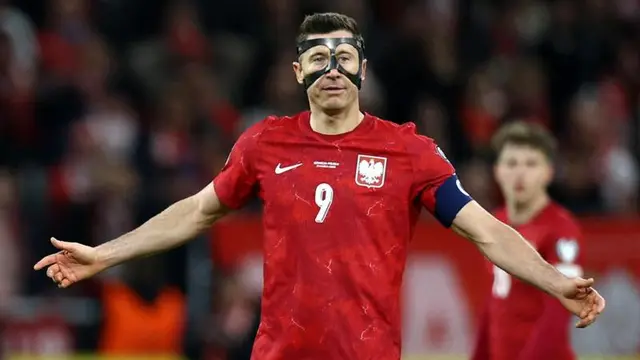
305 Comments One of the greatest strikers of the past 15 years - Poland's Robert Lewandowski - is among the big names who will not be playing at the 2026 World Cup in Canada, the United States and Mexico. The 37-year-old Barcelona striker, who has scored 89 goals for his country, was not able to inspire his side as they lost 3-2 in Stockholm against Sweden in Tuesday's play-off final. Lewandowski, who won the German Bundesliga title on 10 occasions - twice with Borussia Dortmund and then in eight successive seasons with Bayern Munich, before winning La Liga twice with Barca - may have played in his last major international tournament. We have taken a look at six players who have missed out on qualifying for this summer's finals. Gianluigi Donnarumma has been one of the best goalkeepers in the Premier League this season since he moved from Paris St-Germain for £26m in September, after helping the French club win the Champions League last season. Despite being player of the tournament as Italy won the 2020 European Championship, he misses out on a World Cup again after Italy lost 4-1 on penalties to Bosnia-Herzegovina on Tuesday. Italy fail to qualify for third World Cup in a row after Bosnia shootout defeat Turkey beat Kosovo to reach first World Cup in 24 years Who is a certain starter at the World Cup? How England's players rated But he will not be at the World Cup as his country Guinea went out in the first round of African qualifying, finishing fourth in their group, with only four wins and three draws from their 10 matches. Khvicha Kvaratskhelia helped Paris St-Germain become European champions last season, scoring in the 5-0 final win over Inter Milan, and he came 12th in the 2025 Ballon d'Or awards. But Georgia had a miserable campaign in World Cup qualifying as they only picked up three points from a group that contained Spain, Turkey and Bulgaria. Lewandowski captained Poland at the World Cup in 2018, but did not score in Russia as his country came bottom of the group. He had a better tournament four years later in Qatar, scoring twice as Poland reached the last 16 before losing to France. He netted four times in Group G in 2026 qualifying only for Poland to finish three points behind the Netherlands, before losing to Sweden on Tuesday. Victor Osimhen helped Napoli win Serie A in 2023 before moving to Galatasaray, where he grabbed 26 goals in 30 games to take them to the Turkish title last season. Nigeria drew five of their 10 matches in the first group phase as they finished one point behind winners South Africa, but then had a second chance in the following play-off. With Osimhen already substituted, Nigeria lost on penalties to DR Congo to miss out on the World Cup. Liverpool and Hungary midfielder Dominik Szoboszlai has impressed this season and scored some stunning long-range goals. But he will not be at the World Cup after his country let a 2-1 lead slip in their final group game with the Republic of Ireland scoring twice in injury time to clinch a spot in the play-offs and eliminate Hungary. The World Cup in June and July will be a festival of football, but other players not there include goalkeeper Jan Oblak (Atletico Madrid and Slovenia), left-back Milos Kerkez (Liverpool and Hungary), centre-half Nikola Milenkovic (Nottingham Forest and Serbia), defender Willi Orban (RB Leipzig and Hungary), defender Riccardo Calafiori (Arsenal and Italy), full-back Ola Aina (Nottingham Forest and Nigeria), right-back Matty Cash (Aston Villa and Poland), midfielder Sandro Tonali (Newcastle and Italy) and winger Bryan Mbeumo (Manchester United and Cameroon). Listen to the latest Football Daily podcast

Source: BBC Sport WC
Tue, 31 Mar 2026
Read story
How Scotland found their base camp for 'travelling' World Cup

World Cup News

How Scotland found their base camp for 'travelling' World Cup

An Englishman, an Irishman and a Scotsman were waiting at the door of Charlotte FC's training ground for Steve Clarke's arrival. On his search for Scotland's World Cup base camp, the head coach found the one in North Carolina, with a wee hand from a few familiar faces. MLS side Charlotte are coached by Dean Smith, the former Aston Villa manager and pal of Clarke, his assistant is the Scotland boss' former Kilmarnock player, Gary Dicker and the club's technical director is Clarke's ex-St Mirren team-mate, Tommy Wilson. They say it's not what you know, but who you know. A few other nations checked out the Atrium Health Performance Park, while the Scots searched "most of the East Coast", but Charlotte will be their home from home when they compete in their first World Cup since 1998 - against Haiti and Morocco in Boston and Brazil in Miami. With both cities around a two-hour flight away, Clarke said he is hopeful the "top" facilities will provide his side with the "best possible conditions" as they make their long-awaited return to the biggest stage of them all. With the help of Charlotte assistant Dicker and Scotland assistant Steven Naismith, BBC Scotland gets the lowdown on "one of the best facilities in the MLS" and the national team's summer set-up. Scotland choose Charlotte as base for World Cup For Scotland, Naismith admitted getting it right for "travel and humidity" was paramount. "It's a travelling World Cup," the assistant coach and Sportscene pundit said. "We've got two games in Boston, one in Miami, but there's only a limited amount of facilities around Boston. "That was probably the biggest challenge. We've done a lot of work seeing a lot of training bases - there's a lot on offer - but we're delighted with Charlotte." Clarke's former Killie midfielder Dicker agreed it's "a really good central base" with flights to both Scotland's match cities only a couple of hours. "I know it's difficult when at past tournaments it's easier to get around, but you do get used to it here, having an hour, two-hour flight and it not being a big deal. "We're only 20 minutes from the private airport, so I'm sure they'll fly in and out of there too." The travel isn't the only thing the Scots will need to adapt to this summer. The heat and humidity is not something they're used to. Extreme heat during last summer's Club World Cup sparked conversations about this summer's tournament. Benfica's win against Bayern Munich in Charlotte was played at 15:00 local time in sweltering 36C conditions. "I think the humidity ticks the boxes here as well," Dicker added. "It's really hot and humid in the summer, which I think will really help them when they are going to Miami because it's going to be so, so hot down there." In Naismith's words, "world class facilities which are purpose-built for football". That might sound like the bare minimum, but as he scoured around for the ideal spot, the former international found many were tailored for NFL, basketball or baseball teams. "You're actually having to compromise a wee bit on the actual facilities at some places," he explained. "But in Charlotte, they've got the latest technology and recovery. The layout of these are all very much equipped for what we want, what we expect and what the players want day-to-day at their clubs." Dicker, who played and coached at Brighton, said the club's training ground was one of the most impressive aspects when he made the move across the pond in 2024. "We've got four grass pitches, a full-size astro pitch and another nine-aside astro," he told the BBC. "From multiple buildings, meeting rooms, the auditorium, gyms and the canteen, we've got everything pretty close but also in completely separate buildings. "Real Madrid have been, Inter Milan were here for the Club World Cup, I think we've had four or five 'big' clubs come here for pre-season, so it wasn't a surprise we had a lot of national teams come and look here. "But we have a decent Scottish connection and I think that helps a lot. There's a comfort there. "The gaffer here obviously knows Steve well, I think they know they'll be looked after quite well. He worked with John McGinn and a few other Scotland players, so having that connection, understanding what teams need and being flexible with it, really helps." It's also not just about what the squad and staff need. Their families matter too. This is the biggest - and potentially longest - experience and tournament many will partake in. And with it being on the other side of the world, many will want their loved ones close by. But Dicker, who has his wife and children with him, insists there's plenty for families to do. "You're away for so long, I'm sure most of them are going to come with their families," he explained. "But there's loads of stuff to do here with the kids. "It's a fast-growing city, which isn't too busy, while you're close to the mountains and sea too. "Even if they do want to go to Disneyland it's an hour-and-a-half flight to come back and down, it's not far at all." While Clarke might not want to hear of Andy Robertson running around in Mickey Mouse ears, downtime is a priority for the head coach and his staff, who will be "encouraging their freedom". "We're away for a long time, so it was important to get that relaxed element too," the assistant coach added. "It was important that we were not isolated in a training facility that's not in a city, and in Charlotte, there's a lot for the players to do. "We'll be encouraging them and I'm sure we'll try and get them to follow the routine they have back at home, if that's being able to see family time at certain points or if that's going out to do some shopping in an afternoon. "Each player's got their own way of working and the manager's very open to allow that to be the feel around the group."

Source: BBC Sport WC
Tue, 31 Mar 2026
Read story
How to watch the World Cup on the BBC and ITV

World Cup News

How to watch the World Cup on the BBC and ITV

The BBC will broadcast Scotland's first men's World Cup match since 1998, when they take on Haiti on 14 June, as well as their final group match against Brazil. England's second group match - against Ghana on 23 June - will also be shown on BBC, as well as their knockout fixtures in the last 32, last 16, and semi-final provided they reach those stages. England's other Group L matches - against Croatia and Panama - and Scotland's meeting with Morocco will be shown on ITV. The BBC will have three of the top four picks in the round of 16 and three of the top five picks in the round of 32. Defending champions Argentina will have their group meetings with Austria and Jordan shown live on the BBC. The BBC will also show two group matches apiece for 2022 finalists France, five-time champions Brazil, the Netherlands and Portugal. "We can't wait to bring you the Fifa Men's World Cup," said director of BBC Sport Alex Kay-Jelski. "From (hopefully) England knockout games live on BBC1 and iPlayer to Scotland's crunch matches with Haiti and Brazil to glamour games featuring Messi, Mbappe, Ronaldo, Yamal, Salah, Haaland, and more, we will bring you the drama and analysis of the moments that matter. "And the ones you can't stay up for, we will have you covered the next morning too." Niall Sloane, ITV director of sport, said: "We are proud to broadcast the FIFA World Cup here at ITV and ensure it stays free-to-air for the UK audience to enjoy all summer." The 2026 World Cup will be co-hosted by the United States, Canada and Mexico, the first time the tournament will be staged by three different nations. The opening match will take place on 11 June 2026 in Mexico City, with the final on 19 July in New Jersey. England and Scotland find out World Cup kick-off times 11 June: Mexico v South Africa (20:00 BST) - ITV 12 June: South Korea v Czech Republic (03:00) - ITV 12 June: Canada v Bosnia-Herzegovina (20:00) - BBC 13 June: Qatar v Switzerland (20:00) - ITV 14 June: Australia v Turkey (05:00) - ITV 14 June: Netherlands v Japan (21:00) - ITV 15 June: Ivory Coast v Ecuador (00:00) - BBC 15 June: Spain v Cape Verde (17:00) - ITV 15 June: Saudi Arabia v Uruguay (23:00) - ITV 16 June: Iran v New Zealand (02:00) - BBC 17 June: Argentina v Algeria (02:00) - ITV 17 June: Portugal v DR Congo (18:00) - BBC 18 June: Uzbekistan v Colombia (03:00) - BBC 18 June: Czech Republic v South Africa (17:00) - BBC 18 June: Switzerland v Bosnia-Herzegovina (20:00) - ITV 19 June: Mexico v South Korea (02:00) - BBC 19 June: Scotland v Morocco (23:00) - ITV 20 June: Netherlands v Sweden (18:00) - BBC 20 June: Germany v Ivory Coast (21:00) - ITV 21 June: Spain v Saudi Arabia (17:00) - BBC 21 June: Cape Verde v Uruguay (23:00) - BBC 22 June: Egypt v New Zealand (02:00) - ITV 22 June: Argentina v Austria (18:00) - BBC 23 June: Portugal v Uzbekistan (18:00) - ITV 24 June: Colombia v DR Congo (03:00) - ITV 24 June: Canada v Switzerland & Bosnia-Herzegovina v Qatar (20:00) - ITV 24 June: Scotland v Brazil & Morocco v Haiti (23:00) - BBC 25 June: Mexico v Czech Republic & South Africa v South Korea (02:00) - BBC 25 June: Germany v Ecuador & Curacao v Ivory Coast (21:00) - BBC 26 June: Turkey v USA & Paraguay v Australia (03:00) - ITV 26 June: Japan v Sweden & Netherlands v Tunisia (00:00) - BBC 26 June: France v Norway & Senegal v Iraq (20:00) - ITV 27 June: Cape Verde v Saudi Arabia & Uruguay v Spain (01:00) - ITV 27 June: Egypt v Iran & New Zealand v Belgium (04:00) - BBC 27 June: England v Panama & Croatia v Ghana (22:00) - ITV 28 June: Algeria v Austria & Argentina v Jordan (03:00) - BBC 28 June: Colombia v Portugal & DR Congo v Uzbekistan (00:30) - BBC Listen to the latest Football Daily podcast SoundsGet football news sent straight to your phone

Source: BBC Sport WC
Wed, 10 Dec 2025
Read story
World Cup stunning moments: Germany humiliate Brazil 7-1 | Simon Burnton

World Cup News

World Cup stunning moments: Germany humiliate Brazil 7-1 | Simon Burnton

This article is more than 8 years old World Cup stunning moments: Germany humiliate Brazil 7-1This article is more than 8 years oldGermany conjured football of a savagery unwitnessed against significant opposition in the tournament’s history When it comes to the World Cup, hosting is supposed to help. Just ask Uruguay (1930), Italy (1934), England (1966), West Germany (1974), Argentina (1978) and France (1998), or Sweden (1958), Chile (1962) and South Korea (2002), who unexpectedly finished second, third and fourth, respectively. Rival teams should be cowed by the passion and the number of home fans, the hosts buoyed. Not this time. “You looked at the faces of the Brazilian players when they walked on the pitch during the World Cup and it looked like they were about to compete in the Hunger Games,” said Zico, great Brazilian midfielder of the 1970s and 80s. “They weren’t enjoying the moment and that made things harder for them. The moment they met a team of the same pedigree they were caught out.” Brazil and Spain are the only World Cup winners not to have won at home, which is particularly surprising as the former have won pretty much everywhere else, and have hosted twice. On the first attempt in 1950 they unexpectedly lost to Uruguay in the final at the Maracanã, a scar on the nation’s footballing psyche that came to be known as the Maracanazo . In 2014 they created another miserable legend, the Mineirazo . This, though, was more than just an upset, different to mere disappointment. This was humiliation. For seven first-half minutes, Germany conjured football of a savagery unwitnessed against significant opposition in the tournament’s history. This was football as blood sport. Between the eighth second of the 23rd minute and the 49th second of the 29th minute Germany, one goal to the good already, scored four more, piercing Brazil’s defence with such frequency and brutality and engendering such horror among onlookers that footage really should be viewed through an opaque shower curtain and accompanied by a screeching Bernard Herrmann score. It was a nation’s dreams being sluiced down the plughole in a stream of saltwater. “I just wanted to give some happiness to my people. To my people, who suffer so much already,”David Luiz said after the game. “I just wanted to see my people smiling.” In the 23rd minute, when Miroslav Klose became the first man to score 16 World Cup goals and put Germany two up, television cameras picked out a female Brazil fan, face painted green and gold, a single tear rolling down her cheek. A minute later Toni Kroos sent a first-time, left-footed shot screaming into the net from the edge of the area, and cameras focused on another female fan, looking at her companion in utter bemusement. It was already too much for one couple of São Paulo. “I was watching at home with my wife and, after the third goal went in, she started to cry,” said Tite, current Brazil coach. “That started me off. The 7-1 is like a ghost. It’s present. People still talk about it, but the more you talk about it, the less likely it is that the ‘ghost’ disappears.” It wasn’t over. From the resulting kick-off Kroos stole the ball from Fernandinho, played a one-two with Sami Khedira and sidefooted in a third. Three minutes later, when Khedira scored the fifth, directors left the fans alone. Meanwhile, on Germany’s bench, coach Joachim Löw had a question for his assistant, Hansi Flick. “Hansi, tell me,” he asked, “is this actually happening?” Löw describes his feelings at this point as “a mix of absolute joy and disbelief. It was 5-0, in a semi-final against the hosts. It was unbelievable”. A little over 15 minutes later Löw gave a half-time team-talk surely unlike any other, one in which he felt compelled to ask his players not to be too good. “I didn’t want anyone to make a fool of the Brazilians in front of an audience of millions,” he said. “The respect the Brazilians showed to us, across the country, was enormous. And for me, it was completely unthinkable that we should humiliate them, or to show arrogance towards them.” Eight years earlier Löw had been assistant manager to Jürgen Klinsmann when the Germans were beaten on home soil in a World Cup semi, by Italy in Dortmund. “In 2006 we experienced for ourselves how painful it can be to miss out on a World Cup final in front of your own fans,” said Löw. In 2014 they mixed cruelty with sympathy. There were two more German goals in the second half, both scored by the substitute Andre Schürrle, though there could have been more: Oscar’s last-minute consolation for Brazil came seconds after Mesut Özil had been one on one with Júlio César, only to miss the chance. It was Brazil’s first World Cup semi-final defeat for 76 years, and their first defeat at home in any competitive match for 39 years. It was their most emphatic defeat of any kind for nearly a century, since Uruguay beat them 6-0 in 1920. In the history of the World Cup, the only other teams to have found themselves five goals down at half-time are Zaire (to Yugoslavia in 1974) and Haiti (to Poland in the same year); this is not the kind of company Brazil are used to keeping. Two members of the team – Luiz Gustavo and Dante – had to go back to Germany to continue club careers. “If I had been in another country, it would have been easier,” Dante said a few months later. “People quickly forget about respect. They forget everything you’ve done. You are alone. You’re playing against people who, as soon as they can, try to hurt you by reminding you of this event. It was painful and hard, but I learned a lot from it. For me, in football, what’s done is done. Today I’m happy. In life, you need to move forwards.” Neymar, Brazil’s forward and talisman, had been injured in the quarter-final against Colombia and watched the semi-final at home. Midway through the second half, with his mother Dona Nadine weeping, Neymar switched off his television. The dream of leading his team to victory – or, given his injury, simply cheering them on from the sidelines – was over. But not for long. Two years later Rio hosted the Olympics, and a younger Brazilian team with Neymar again its figurehead had a chance to make amends. They drew their first two games, against South Africa and Iraq without scoring, towhistles and jeers of a disappointed home support. Then they clicked: Denmark, Colombia and Honduras were beaten by an aggregate of 12-0 and they swept into a final against … Germany. It went, in the end, to penalties; all five Brazilians scored, Neymar the last to do so, and Nils Petersen’s effort was saved. It was a moment of catharsis and, as the players celebrated in a sold-out Maracanã, the fans struck up a particular song, one also heard when Brazil returned to the Estadio Mineirão for a World Cup qualifier three months later, for the first time since the heartache of the semi-final, and thrashed Argentina 3-0: O Campeao Voltou . The champions are back.

Source: The Guardian WC · Simon Burnton
Wed, 23 May 2018
Read story
World Cup stunning moments: Gazza cries as England lose at Italia 90

World Cup News

World Cup stunning moments: Gazza cries as England lose at Italia 90

This article is more than 8 years old World Cup stunning moments: Gazza cries as England lose at Italia 90This article is more than 8 years oldPaul Gascoigne’s bottom lip wobbled as he was ruled out of a World Cup final England would never reach, and Gazzamania was born “I got the ball in the centre circle and bundled my way forward. Then, as Matthaus tried to nick it off me, I nudged the ball out of his reach, but overran it. I had to stretch as Thomas Berthold came across. I was giving it 110%. It was the World Cup semi-final and I didn’t want to give them anything for free. To this day I honestly don’t think I touched him, but down he went, rolling around as if in agony. I crouched down to make sure he was OK, and at that stage I wasn’t thinking I was in trouble. There was nothing in the challenge. Then everything turned to slow motion.” For all the uplifting moments in England’s march from the foyer of ignominy to the doorstep of greatness in 1990 – David Platt’s goal against Belgium, Gary Lineker’s equaliser against West Germany, Paul Gascoigne’s own phenomenal turn to leave Holland’s Ronald Koeman trailing in the group stages – we have chosen to define it by this one. The swell of unexpected hope experienced by the English coincided with the blossoming of Gascoigne’s rare and fragile talent; they rose together, they fell together – quite a bit sooner than either would have liked – and frankly everyone’s still a bit bitter about it. Gascoigne had started only one international before an effervescent performance in a friendly against Czechoslovakia in April 1990 catapulted him into the first team for good, or at least for as long as his knee was good. And like his team he kept improving. His display against Germany, at least until the 99th minute, had been superlative. “I straightened up and turned to the ref,” Gascoigne continued in his book Glorious: My World, Football and Me. “He’s gone for his pocket. Suddenly I can’t hear anything. The world just stops apart from the bloke in black. My eyes follow his hand, to the pocket, then out with the card. There it is, raised above my head. I looked at the crowd, I looked at Lineker, and I couldn’t hold it back. At that moment I just wanted to be left alone. I didn’t want to talk to anyone or see anyone. My bottom lip was like a helicopter pad. I was devasted.” “My heart sank the moment the referee took out the yellow card,” said Bobby Robson. “My heart hit my shoes. Because I realised instantly, that was the final for Paul Gascoigne, out. And that’s a tragedy – for him, me, the team, the country, the whole of football. Because he was so good, and he was superb in this particular match. The bigger the game, the better he got. “Gascoigne knew as well, the moment the card was produced. Because I saw his face change, from being aggressive, fighting for the ball, to realising he’d committed an error, and he’d been booked, and he knew now the final was not for him. Tears began to well into his eyes. And Gary Lineker was very clever, he saw it immediately and came as close as he could to me and said, watch Gazza. Watch him. He thought now his mind might just go a bit berserk, even more berserk than he had with [giving away] the free kick. And I understood it. He knew the supreme penalty he was going to have to pay for that slight indiscretion.” In all Lineker won 80 caps for England, returned from the 1986 World Cup with the Golden Boot, won the major cup competitions of England and Spain and scored 243 times for a variety of clubs including Everton, Tottenham and Barcelona. But for all the goals and the glory more than anything he is remembered for the time someone else was booked and he made a face at his manager. “Out of everything in my career, the moment people ask me about most often was when Gazza got booked in that semi-final,” he has said. “I could see his bottom lip was going. I think it says a lot about Bobby that it was him I turned to, to ask him to have a word. I didn’t know that the moment would be caught on camera.” Robson believed that the Germans had pressured the referee into showing the card. “He flew in at the boy, upended everything, and the German bench all stood up, which unfortunately I think affected the referee,” he said. “We don’t allow players to do that. We say, ‘Sit down, it’s got nothing to do with you.’ They all jumped up and it made it worse for Paul. It was only half a booking.” The referee whose decision to wave a yellow card was to prove key to England’s World Cup elimination spoke to The Guardian about the incident in 2014 – his first interview with a British newspaper. “Listen, there was no controversy,” insists José Roberto Wright. “The lad tackled an opponent from behind and nowadays he could even have been sent off. It was none of my business if Gascoigne already had a yellow card – my job was to apply the laws of the game. He tried to argue with me and apologise, but I told him in English that it was a bookable offence. Then I got on with the game.” The booking that brought Gascoigne to tears, ended his hopes of playing in a World Cup final and left him so emotionally drained that he withdrew from the decisive penalty shoot-out – Chris Waddle replaced him, fatefully – might be considered somewhat controversial in England, but was not seen in the same light elsewhere. In 1990 Wright was named the best referee in the World Cup by the International Federation of Football History and Statistics, and later that year named the best official on the planet by the World Referees’ Federation. “I didn’t see him crying or all that commotion,” says Wright of Gascoigne. “It wasn’t until later that I saw footage of the game and noticed how upset he was. Years later I read that Gascoigne’s tears were some kind of watershed moment in English football, that it helped people fall in love with the game once again.” In England hearts skipped a beat with every wobble of Gascoigne’s bottom lip. As it turns out he was not to be the last Englishman to shed a tear that night, and player and fans bonded in a display of lachrymose unity. A few months later he was named Sports Personality of the Year. “I don’t know anybody who dislikes Paul Gascoigne,” Robson wrote in his autobiography. “The affection we all felt for him added to the poignancy of his booking. As we went into the second period of extra time, I had said to Paul, ‘Look, I know you can’t play in the final but what you can do is make sure all the other lads can. Just concentrate on that.’ This was in the heat of the battle. Now, I can appreciate how crushed Paul would have felt had we beaten the Germans that night in Turin.” Time has proven that Gascoigne’s behaviour in Turin was not borne of juvenile petulance but the result of one small fissure in a fractured mind. For all their very different characters and wildly diverse levels of experience, it is nevertheless telling to contrast Gascoigne’s reaction to his booking to that of Michael Ballack, the midfield inspiration behind a poor Germany side’s run to the final in 2002. Gascoigne received his second caution of the tournament with 20 minutes of extra time to play in his semi-final and the scores level; Ballack with 20 minutes of normal time to play in his semi-final and the scores level. Both knew they no longer had a chance of appearing in the final, but while the Englishman was of limited use from that moment onwards, Ballack scored his side’s winner within four minutes and celebrated without reservation. In the crucial moments before the shoot-out in Turin, most of the England manager’s time was spent not with the five designated takers but with Gascoigne, coping with the midfielder’s emotional disintegration. “Had Gascoigne been German he would be persona non grata today,” the former Liverpool and Newcastle midfielder Dietmar Hamman wrote in his book The Didi Man. “[After the booking] he went to pieces. The game was still tied, and a job still needed to be done, yet his first thoughts were for himself. When the game went to a penalty shoot-out Gascoigne was earmarked to take [a] penalty for England. He decided that he wasn’t in the right frame of mind to take it. For Gascoigne, in that moment, it was all about him as an individual, and the way he was feeling. It was nothing to do with his duty to the team. If Gascoigne was German his behaviour would have created a national scandal, and the player would be forgotten for ever. If it were possible to erase his name from the team sheet then it would be done.” In England the only player to receive any significant criticism for his role in the defeat in Turin was Peter Shilton, the 40-year-old goalkeeper, who made several decent saves in open play but in the shoot-out decided to delay diving until each kick had been taken, and got nowhere near any of them. “You should have bloody gambled,” Pearce shouted in the dressing-room after the game. Having wept his way to a string of product endorsements and a lucrative column in The Sun, some – including the referee who booked him – would expect that with the passing of time and the accumulation of money Gascoigne’s grief might have subsided. “The tackle was bad, and if I hadn’t booked Gascoigne I would have lost control of the game,” says Wright. “But I must say I was surprised he got so upset about it. I’ve never met him again, but I’m sure now he’d agree with me about the incident.” If the interview Gascoigne gave to the Observer in 2002 is anything to go by, that seems extremely unlikely. In it Gascoigne was asked what he thought, with the benefit of hindsight, about Berthold. “He was a dickhead. He was a tall man with a mouth like a fish. I remember all the details of his face. He was a wanker and a cheat,” Gascoigne said. “When I made that tackle, I missed him and the ball. He dived, as Germans do, to get me booked. When I see that game and I see that guy dive, I wish I had the chance now to play against him and take the piss out of him on the pitch and, if I got the chance, tackle him properly – and this time really properly. Because if I’m going to get a yellow card I would rather be for a proper foul. And it would be if I played against him again.” But Berthold had retired by the time Gascoigne faced Germany for the second and final time, in the Euro 96 semi-final. Again the Englishman was booked, and again his side lost on penalties – though on this occasion he took one, and scored. He would never again play in the finals of an international competition. For Gascoigne and the rest of the England team, and indeed their nation, each passing year makes the memories of this game both more sweet and more bitter. In what is now almost half a century since their one World Cup win they have rarely produced such a convincing performance in a match of such magnitude, and that it failed to bring any reward still bridles, particularly with the knowledge that only an unconvincing Argentina team – who had four players of their own suspended for the final – stood between the winners of this game and the World Cup trophy. “The Germans scored a fluky goal and then nothing,” said Mark Wright. “The only genius Germany showed was from the penalty spot,” said Terry Butcher. “We were the better team. We battered them,” said Gascoigne. “I consider ours to have been one of England’s best performances in the last 25 years,” said Robson. “It’s the one thing I look back on and regret,” said Lineker. “It still rankles. We were within a whisker of a World Cup final. We’d have won it too. Argentina were shot.” To some, the British beatification of the beaten represents a disturbing acceptance of failure and acts as a barrier to success. And this match is hardly unique – it stands on any list of England’s finest all-time World Cup performances alongside the brilliant displays in defeat against both West Germany and Brazil in 1970, and more besides. But what, in the end, is the difference? It’s not as if the team’s display in Turin would have been any better or worse had Pearce and Waddle scored from the spot and Olaf Thon missed. If a team succeeds in entertaining and inspiring us, it hardly matters whether they return home with their chins on the floor or with medals round their necks. Though one day it might be nice if we got to witness the latter.

Source: The Guardian WC · Simon Burnton
Tue, 22 May 2018
Read story