 Football Highlights
 BBC Sport
 The Guardian
 Sky Sports
 Premier League
 Champions League
 Manchester United
 Arsenal
 English League Championship
 Manchester City
 Liverpool
 Scottish Premiership
 La Liga
 Video
World Cup News
Watch the BBC's closing World Cup montage
Watch the closing montage of the BBC's coverage of the 2026 Fifa World Cup featuring all the highs, lows and colour from the biggest World Cup ever.

News Hub
VideoWorld Cup News
Watch the closing montage of the BBC's coverage of the 2026 Fifa World Cup featuring all the highs, lows and colour from the biggest World Cup ever.
World Cup News
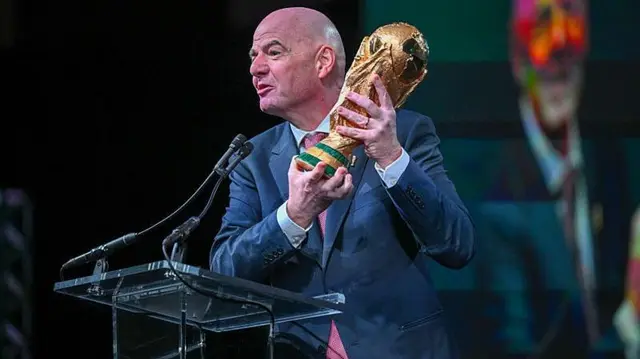
The new-look Club World Cup, the expanded World Cup, the inflated ticket prices. And, of course, the Super Bowl-style show that meant the half-time break at the World Cup final lasted 27 minutes and 22 seconds. Infantino appears to have thrown the door wide open to a 64-team World Cup. "If you don't give smaller countries a chance to participate, they'll lack the incentive to keep improving," he said. Except, of course, smaller countries are not denied the chance. If they are good enough, they qualify. See Cape Verde, Curacao, Jordan and Uzbekistan. Purely in terms of the competition format, it does make sense. The top two teams in the 16 groups would go through to the knockout stage. No longer would there be a need to send a few third-placed teams through. But is there really any other logical reason to expand to 64 teams? The 2030 World Cup will mark 100 years since the first World Cup, which was held in Uruguay. The tournament will primarily be hosted by Morocco, Portugal and Spain - but the opening three matches will be played in Uruguay, Argentina and Paraguay as centenary hosts. Conmebol - the South American confederation - wants more games. In April 2025, it requested a one-off tournament of 64 teams so it could take on the full programme of the additional four groups. Its president, Alejandro Dominguez, said it would ensure "nobody on the planet is left out of the party". There has been little support from elsewhere. Victor Montagliani - president of the governing body of North and Central America and the Caribbean (Concacaf) - said last year it would damage "the broader football ecosystem". Asian Football Confederation (AFC) president Sheikh Salman bin Ibrahim Al Khalifa agreed, saying further expansion could bring "chaos". None of which means it will not happen, with the decision taken by the 37 members of the Fifa Council. A 64-team tournament has two main plus points: a more natural format, and more opportunities for emerging nations. It is the latter which Infantino is championing, especially after the heroics of Cape Verde. Then Cape Verde drew with Spain and Uruguay to finish second in their group. And the Blue Sharks gave Argentina an almighty scare by taking them to extra time in the last 16, before losing 3-2. But the fairytale stories must be balanced with the competitive edge of the tournament. Haiti, Iraq, Jordan, Panama, Tunisia and Uzbekistan failed to pick up a point - and this summer's group stage had minimal jeopardy for the top nations. Add more teams and it would be difficult to see a repeat of top-four seeds like Belgium (2022), Germany (2018), Spain (2014), Italy (2010) and France (2002) failing to make to knockout stage. Then there is the question of where the extra places would go. Based on this year's qualifying, these are the additional countries who would have made it into a 64-team World Cup 2026 (with their Fifa ranking at the start of the tournament in brackets): AFC: Indonesia (118), Oman (79), United Arab Emirates (68). Uefa: Denmark (21), Italy (12), Poland (36). Concacaf: Honduras (65), Jamaica (71), Suriname (125). Africa: Burkina Faso (62), Cameroon (44), Gabon (86), Nigeria (26). Six of those teams are from the top 50 of Fifa's world rankings - three from Europe, two from Africa and one from South America. And therein lies the problem. Asia and Concacaf are weaker confederations, as was proven by performances this year. Nine of Africa's 10 countries got out of the group stage. But only two of nine Asian countries advanced, and just three of the six Concacaf countries - the co-hosts - made it through. New Zealand, who got one point and finished bottom of their group, are the only country from Oceania in the world's top 150. There is an argument that if you extend again, you should give a greater weight of places to Europe just for competitive balance. But, on the other hand, there are those who would argue that bringing more teams into the World Cup ultimately allows the game to develop further in those countries. Infantino will sell the expansion as being good for the global game, but there have to be doubts that it is good for the competition. Almost a third of Fifa's 211 nations would be present. Would the group stage not simply become a glorified pan-confederation qualifying competition for what is, essentially, a knockout tournament? Expanding the World Cup to 64 teams is really just a case of bolting on four additional four-team groups. This year's tournament lasted 39 days. An additional 24 matches would require 20 schedule slots. Or another five days. But this summer's event was unique for two reasons: multiple time zones and indoor stadiums. That will not be so straightforward in the future, even with 48 teams. Climate change is making playing in the daytime more challenging - see the record heatwaves in Europe in recent weeks. Other countries are far less likely to have the covered venues of Atlanta, Dallas Houston and Vancouver to mitigate it. The Saudi Arabia World Cup is likely to move to January 2035 but it is not clear how other countries will get around this growing problem. Until this year, only once had there been dual hosts of the World Cup - Japan and South Korea in 2002. It is hard to imagine any one country ever being capable of hosting again. Even Saudi Arabia. Could we be looking at World Cups hosted by, for instance, the UK and Scandinavia? Or Eastern Europe? How would an Asian or African country be able to fund hosting the World Cup? Let's look a just a few issues that would need to be resolved. This summer there were 16 host cities with stadiums having capacities ranging from 43,000 to 81,000. More would be required. There would need to be 64 individual, elite-level training facilities for the qualifying nations. Then there is the provision of hotels for the fans, and the infrastructure and support network to move them around. Expanding the World Cup is not as simple as giving more opportunities to more countries. One of Infantino's key promises when he was elected was to bring more money into the game. Every football association now has access to $8m (£5.9m) in funding over a four-year period, with a further $1.2m (£890,000) on top for the smaller nations. Confederations get $60m (£44.5m) to develop, promote and organise football. It is why Infantino is likely to be re-elected unopposed next year. This money has to come from somewhere, primarily the World Cup. In 2017, Fifa projected a 48-team World Cup would bring in $6.5bn (£4.8bn). In 2022, it revised the format again and added 24 games. Now, it expects to rake in $9bn (£6.7bn) this year. A 64-team event is likely to raise more from television, sponsorship and ticket sales. But critics would argue there has to be a point where expansion is no longer good for the game. Why European backlash over Trump intervention won't worry Infantino When the World Cup finishes, the football continues on BBC Sport
World Cup News
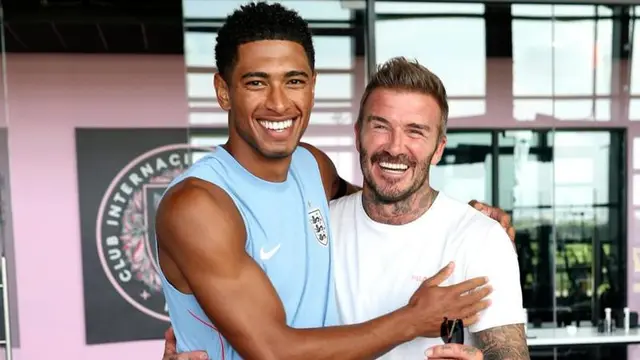
In America, nobody sells football quite like David Beckham. During this World Cup, the former England captain has been impossible to miss. On the pitch, the tournament belongs to stars like Kylian Mbappe, Jude Bellingham, Lamine Yamal and Lionel Messi. Off the pitch, Sir David has become the face of the World Cup, fronting advertising campaigns for 11 brands ranging from McDonald's and Major League Soccer to Stella Artois, Home Depot and Bank of America. And if you haven't seen him during one of the many half-time commercial breaks, you've probably spotted him at the United States' opening match in Los Angeles, watching alongside his friend Tom Cruise. Just hours before that, Beckham had become the first professional footballer to receive a star on the Hollywood Walk of Fame, with actor Cruise once again by his side. "David speaks to so many different people. I think that's what's unique about him," said Stacy Jones, founder and CEO of the marketing agency Hollywood Branded. "He brings in the female demographic because he is so sexy - but he appeals to men. He's an honest, good, authentic, down-to-earth type of individual. So you don't really get affronted by him." She felt Beckham had achieved something few celebrities manage, moving effortlessly between football, fashion, entertainment, business and the cult of celebrity. On Hermosa Beach, south of Los Angeles, hundreds of fans gathered to watch Spain reach the World Cup final at an event organised by LA Galaxy - the club Beckham joined in 2007 from Real Madrid. Ask fans what comes to mind when they hear the name David Beckham and the answers come quickly. "David Beckham was a really good player for England, but he's doing too many commercials now," said one football fan. For Megan Hapeman, it's the recent McDonald's advert in which Beckham hopes to receive a cup featuring his own face. Her six-year-old son Oliver proudly told me he still has one. "When I got it, I was pretty proud," he said. "Because Mommy liked it, I liked it too." That's exactly what brands are buying. Beckham transcends clubs, generations and even football itself. That broad appeal didn't happen by accident. It was built on Beckham's football legacy in America. He remains the player with the trademark free-kicks, part of Manchester United's Treble-winning side in 1999, England captain and one of Real Madrid's original Galácticos. Dan Courtemanche, Major League Soccer's executive vice-president and chief communications officer, admitted Beckham's influence on the game in America cannot be overstated. "I always tell people he changed the fate of American soccer. Not once, but twice," he said. When Beckham signed for LA Galaxy 19 years ago, stadiums across Major League Soccer sold out before he had even played a competitive match. The league needed credibility and he gave it something even broader: mainstream celebrity. Sixteen years later, Beckham helped persuade Argentina icon Messi to choose Inter Miami over rival offers globally - another moment that transformed MLS, according to Courtemanche. "Lionel Messi decided to make Major League Soccer his league of choice and Inter Miami his club of choice," he added. "Again, it took us to a whole other level." Tom Braun, LA Galaxy's president and chief operating officer, said Beckham's influence has stretched way beyond football. "David's an iconic figure in our sport and our culture," he explained. "He's built a business around his brand and continues to resonate with people." The evolution of the 51-year-old, who also played for AC Milan and Paris St-Germain before retiring in 2013, was perhaps best symbolised this summer on Hollywood Boulevard. When Beckham accepted his star on the Walk of Fame, he reflected he had never imagined "a working-class English footballer" would receive such an honour. The recognition celebrated not only the life of Beckham the footballer, but Beckham the cultural figure. "David Beckham, to America, is the World Cup," Jones said. Having arrived in Los Angeles promising to grow the game, Beckham is still helping sell football to America. Only now, he's doing it not with a free-kick, but with a brand. When the World Cup finishes, the football continues on BBC Sport
World Cup News
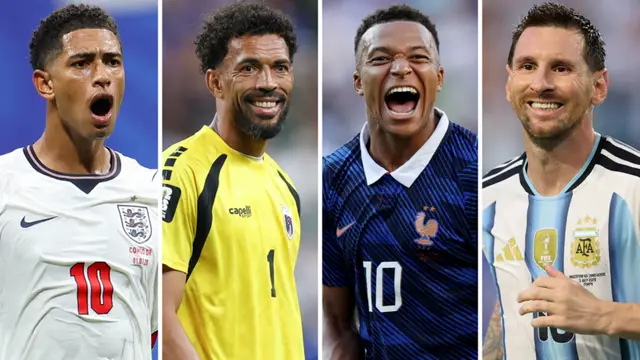
1903 Comments After delivering unforgettable drama and surprises across 104 matches over almost six weeks, the World Cup is over. History has been scripted, records broken and heroes old and new made their mark at football's most coveted tournament. Read our reporters' reflections from the US, Canada and Mexico and then choose from our chief football writer Phil McNulty's selections for best goal and best save. Spain captain Rodri won the official World Cup Golden Ball trophy as the tournament's best player. Messi won the Silver Ball as the second-best player, with Mbappe named Bronze Ball winner. Phil McNulty, BBC Sport chief football writer Surprise, surprise. Lionel Messi. Not simply a swansong for a 39-year-old closing down his career, but the enduring inspiration of a nation and a football team. Look at how he controlled the game and pulled the strings when Argentina chased England down in a dramatic semi-final. I was in a Kylian Mbappe news conference early in the World Cup and I remember thinking that I'd never seen him looking more relaxed, more confident and more determined to make this his tournament. That demeanour off the pitch was reflected in some brilliant performances on the pitch - great goals, leadership, flair, composure under pressure and more work off the ball than I've ever seen from him. Alex Howell, BBC Sport's England reporter The player of the tournament has been Jude Bellingham . The Real Madrid midfielder dragged England through by sheer force of will in some games and took his game to another level during the tournament. Lionel Messi's leadership, football intelligence and ability to decide the biggest matches has proven vital for Argentina. He was the driving force behind their run to the final and that makes him the competition's standout player. With eight goals and four assists in eight games at this World Cup, it has to be Lionel Messi . England did their best to keep him quiet in the semi-final and succeeded in the first half, but Messi often finds a way and his two assists proved decisive. Michael Olise. Marked out of the semi-final against Spain but the former Crystal Palace forward, who started his journey aged six at Hayes & Yeading United, has left his mark on this tournament with his seven assists. At just 24, Olise has another World Cup or two up his sleeve. I'm still playing replays in my mind of that spectacular scissor-kick against Sweden in the last 32. The whole press box erupted thinking it was going in, only for the ball to crash against a post. Rodri . He has proved to be irreplaceable for his country as he is for Manchester City. Exceptional and so effective at the heart of the best team in the tournament Easy choice but it has to be Lionel Messi . Doing this at the age of 39 is almost defying the law of physics. He is cementing his place as the greatest. What information do we collect from this quiz?Breakout star of the tournamentSpain's 19-year-old centre-back Pau Cubarsi received the Fifa award for the tournament's best young player after playing every minute of their World Cup campaign. He was a key figure in the Spain defence that conceded only one goal all tournament. Phil McNulty, BBC Sport chief football writer I am going for Spain's 19-year-old central defender Pau Cubarsi . The Barcelona youngster was magnificent against France in the semi-final and is a star of the future. Lille fans, regular viewers of Ligue 1 and recruitment teams from the top clubs knew all about his potential but Morocco's Ayyoub Bouaddi burst on to the world stage in style with an exceptional performance in their opening match against Brazil. At the New York New Jersey Stadium that day, I found myself not watching the ball but watching his incredibly intelligent movement around the pitch, which reminded me of a cross between Patrick Vieira and Luka Modric. Alex Howell, BBC Sport's England reporter It sounds strange to call Erling Haaland a breakout star but it is hard to explain the impact he has had here in the US. He has become a household name and even more of a global superstar. Cape Verde's 40-year-old goalkeeper Vozinha. He began his unforgettable World Cup with seven sensational saves in a 0–0 draw against Spain in their debut World Cup match and ended it with eight more remarkable saves as Cape Verde pushed Lionel Messi and Argentina to the brink of elimination. Vozinha's heroics sparked a global following, with his Instagram audience skyrocketing from about 50,000 before the tournament to more than 29 million. It seemed like the USA would go far at this tournament, particularly with the wave of support behind them, but it wasn't to be as they exited at the last-16 stage. Despite that, many of their players did their own reputations no harm and one of those was full-back Alex Freeman , with his performances leading to USA boss Mauricio Pochettino saying he could be one of the best in the world in his position. Step forward Switzerland's Johan Manzambi . Some 20-year-olds might be overwhelmed playing on the biggest stage of all. Not Manzambi. This huge talent plays with a smile on his face and is a natural entertainer who departed the tournament with three goals in four games. Johan Manzambi . I highlighted him before the World Cup and, although he missed the end for Switzerland through injury, the fact he is moving to the Premier League with Aston Villa for a fee in the region of £50m underlines his quality. The 17-year-old Mexico midfielder Gilberto Mora, who ended up in their starting line-up. Had the air of Luka Modric and seems destined for the top of the game. Phil McNulty, BBC Sport chief football writer The Azteca for Mexico v England. Might just be the best atmosphere I have ever experienced in seven World Cups. It was an assault on the senses and the singing of the Mexican national anthem was a spine-tingling experience. A simply unforgettable night. Speaking to the Paraguay fans outside the Boston stadium, moments after one of the most dramatic penalty shootouts I have ever seen, as the South American side stunned Germany. One father and son, draped in Paraguay flags, were in tears as they told me that this was the best day of their lives, and it summed up what special moments at a World Cup can mean to people. I will never forget the emotion of those fans streaming out of the ground in disbelief. Alex Howell, BBC Sport's England reporter Lionel Messi scoring a hat-trick in his first game at this World Cup showed that he was not done and was going to try to push Argentina to another tournament win. Sidny Cabral's stunning 103rd-minute equaliser against Argentina. His strike from the edge of the penalty area that flew beyond Emiliano Martinez sent the stadium into disbelief and brought Cape Verde level at 2-2 in extra time. Although Argentina eventually edged the tie 3-2, Cabral's wonder goal became an instant classic and will always be talked about. For me it was Argentina being pushed by Cape Verde all the way before the debutants were knocked out. They showed the sort of guts and desire we want to see from these teams that gained the opportunity to play at a World Cup because of the expanded format. On my travels around the US, where I have covered 13 games in six different cities, I have spoken to dozens of fans. I was offered a beer and sausages cooked from the back of a pick-up truck before France-Paraguay in Philadelphia, and been stopped for selfies. "You're from the BBC? I have to have a selfie with the guy from the BBC." I have lost count of the number of times I have stopped a fan and introduced myself, only to be asked: "Is it coming home?" For the moment I actually witnessed, it would have to be Sidny Cabral and his sensational equaliser against Argentina as Cape Verde, the smallest nation to ever reach the knockout stages, stunned the defending champions for a second time to make it 2-2 in Miami. Cabral's astonishing goal against Argentina . It was as funny as it was breathtaking. Phil McNulty, BBC Sport chief football writer Brazil . Slow. Uninspired. Un-Brazilian. Trudged through the World Cup under Carlo Ancelotti and every weakness was exposed when they deservedly went out to Norway in the last 16. Senegal came to the tournament with the most talented squad in their history but various problems off the pitch arguably meant the players were not given the right environment to thrive. When they were 2-0 up in the last-32 match against Belgium, it looked as though they would salvage something from this World Cup, but tactical errors and poor game management cost them. It was a massive wasted opportunity for a gifted generation of Senegal players. Alex Howell, BBC Sport's England reporter Scotland missing out on third-placed qualification was a disappointment and having to wait a couple of days before it was confirmed must have been painful. Cristiano Ronaldo and Portugal. As one of the pre-tournament favourites, they fell short after a 1–0 last-16 defeat by Spain. Ronaldo managed three goals in five matches and, despite high expectations, Portugal never reached the level many expected, ending another World Cup campaign in frustrating fashion. The USA. They started this tournament so well and created a real wave of optimism and hope among the home fans, but all that was undone by the controversy surrounding Folarin Balogun and then their limp exit at the hands of Belgium. The final being held at the MetLife Stadium in New Jersey . Yes, it is huge but it is not fan-friendly and it is an expensive pain to get to and get away from. Philadelphia would have been my pick. A stadium on the outskirts of the city in a sports complex. The MetLife is a giant bowl in the middle of nowhere. France in their semi-final defeat by Spain . I tipped Spain to beat France but still did not expect such a flat performance and their star-studded frontline to flounder as badly as they did. I really thought Brazil under Ancelotti would go further. And clearly so did they. Phil McNulty, BBC Sport chief football writer Mexico . The sheer passion and love for their team and football was incredible. Also such friendly, welcoming fans and people. Incredibly warm and gracious in defeat. We were in a restaurant in Mexico City the night before they played England, and an MC went around each table asking which country people were from. When we told them we were from England, it was announced to the rest of the diners, who burst into a spontaneous outbreak of applause. A word for the Curacao fans I was with inside the Philadelphia Stadium - because who knew that supporters from a nation of just 150,000 could make that much noise? Was there anyone left on the island? But the Brazil fans win it for me because they do not just take over stadiums; they take over cities; Philadelphia felt like Rio or Sao Paulo for 48 hours when they were in town. Alex Howell, BBC Sport's England reporter The Colombia fans took over Arrowhead Stadium in Kansas City when they played Ghana, and made it feel like a party. Norway's fans were brilliant, with their legendary Viking row taking over the World Cup. The chant became a global sensation and created an unforgettable atmosphere in every stadium they entered. The most iconic moments came after matches when the players joined the fans to lead the Viking row from the pitch, uniting thousands of supporters in celebration. I was based mainly in Los Angeles for the World Cup. There's a large Mexican population there and from what I experienced, they were undoubtedly the best supporters. They were loud - very loud - for every Mexico game and when they won fireworks could be heard around LA while their distinct green jerseys were seen everywhere. Norway's Viking row was fun to watch, with fans wearing red shirts sitting in lines and rowing in rhythm. The Norway supporters also provided an amusing moment during the quarter-final with England. They sang "You're going home, you're going home, England's going home" as they led 1-0 in Miami. Moments later Jude Bellingham equalised. The Mexicans . I was fortunate to experience two matches in the Azteca. That is where the heart of this World Cup was and the support for their team was a joy to behold. Argentina. On two occasions in Miami and Kansas City, I have been in stadiums where their support has been in excess of 60,000 fans. The sheer scale of numbers is matched by their wild passion. They sing constantly and have generated the best atmospheres I have encountered in the US. Phil McNulty, BBC Sport chief football writer The deadlock was broken by Lionel Messi for Argentina against Cape Verde with a triumph of technique as he showed exquisite touch to take a difficult pass on the run before, with little room to work with, he guided it into the top corner with his second touch. In the same game, Sidny Cabral's extra-time equaliser was a wonderful moment. From the angle just inside the area, his right-foot curling drive into the top corner gave Emiliano Martinez no chance. In the group stages, Kerim Alajbegovic's goal for Bosnia-Herzegovina against Qatar was a superb solo effort - a weaving run before a rising right-foot shot of high class. What looked like a casual swing of Erling Haaland's left boot was in fact a perfectly placed finish with astonishing power to crown a match-winning performance for Norway against Brazil in the last 16. A tight quarter-final between Argentina and Switzerland was broken open by a moment of genius from Julian Alvarez. The vastly under-rated attacker provided with a swerving right-footed drive from long range into the top corner in extra time. Antonio Nusa's opener for Norway against Ivory Coast was perfection. A little shimmy in the area to feint away from a defender, then a precise curling finish into the top corner. What information do we collect from this quiz?Save of the tournament Phil McNulty, BBC Sport chief football writer Johny Placide made a superb double save for Haiti against Morocco. It came first with his legs then he showed swift reactions to save one-handed to his left. At the Azteca Stadium, Jordan Pickford had an outstanding game in England's memorable win over Mexico. His early save, diving low to his left to keep out Raul Jimenez's header, was a crucial moment of brilliance. Orjan Nyland produced a remarkable stop for Norway against Brazil from his own defender Kristoffer Ajer, who inadvertently directed the ball goalwards. Nyland scrambled backwards showing remarkably anticipation and agility to leap and turn the ball against the post. Aymen Dahmen showed stunning reactions for Tunisia against Japan from Takehiro Tomiyasu's close-range effort, somehow keeping the ball out as it did everything but cross the line. There was a brilliant diving save by Patrick Beach for Australia in their group game with Turkey , diving away to his right to touch Abdulkerim Bardakci's rising 30-yard shot on to the post. Iran's Alireza Beiranvand produced a remarkable save from Maxim de Cuyper of Belgium. Beiranvand could not reach Kevin de Bruyne's shot but somehow recovered his position and reacted to keep out a shot from inside the six-yard box. What information do we collect from this quiz?Related topicsFootballFIFA World Cup 2026More on this storyMbappe first to win Golden Boot twice as Rodri named best player Lamine Yamal 'completes football' at 19 as Argentina betray Messi World Cup is over, but the football continues on BBC Sport
 Video
World Cup News
All the goals from the race for the 2026 World Cup golden boot as Kylian Mbappe leads the way from Lionel Messi, Jude Bellingham and Erling Haaland.

World Cup News
The rules are simple. Each day there's a new footballer and the challenge is to guess who they are in as few attempts as possible. After each wrong guess you unlock a new clue. Guess the answer after as few clues as possible to score more points. Three is a good score, four or five points is exceptional. So take part and return for more tomorrow. Today's player and clues set by BBC Sport's Huzaifah Khan. After more quizzes? Go to our dedicated Football Quizzes and Sports Quizzes pages and sign up for notifications to get the latest quizzes sent straight to your device. What information do we collect from this quiz?Related topicsFootballFIFA World Cup 2026Play more quizzesAll our Who Am I? quizzes in one place Quiz: Name every nation at the Fifa World Cup 2026 Can you name the 10 Lionesses with most England caps? World Cup quiz: Name these top nations' leading scorers
World Cup News
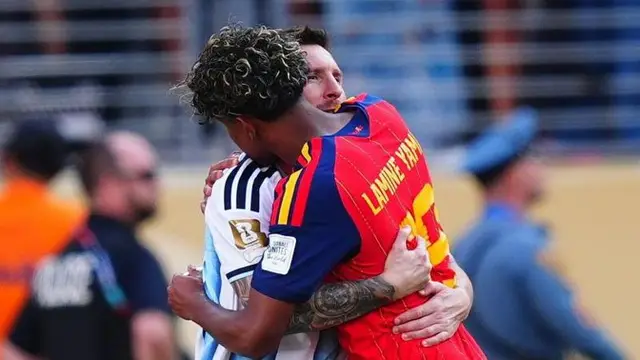
When brilliant Spain teenager Lamine Yamal embraced a tearful Lionel Messi at the end of the World Cup final, it looked and felt symbolic. A passing of the torch. Messi, at 39, gazed long and hard at Argentina's fans packed around the New York New Jersey Stadium as they sang his name after what may be the last time he graces the game's biggest stage. And, with the world watching, it was Lamine Yamal who offered the great Argentina icon consolation before they fell into each other's arms. Barcelona's number 10 embracing their most legendary number 10. A different image to the amazing photo of a 20-year-old Messi bathing a six-month-old Lamine Yamal in September 2007 as part of a charity calendar raffle that went viral once more in the build-up to this game. The baby boy is now a man, and Messi may be at the end of his World Cup journey. Lamine Yamal - two decades younger and still in the infancy of his career - has effectively completed international football by lifting the World Cup two years after he came to wider prominence by winning the Euros when Spain beat England. He, like Messi a product of Barcelona, came into the tournament troubled by a hamstring injury, but ended it as the youngest player - at 19 years and six days - to win both the World Cup and Euros. And one of the key storylines contained within this disappointing World Cup final was how Lamine Yamal's influence was assisted by the purist strategies of his Spain team-mates - while Messi was betrayed by Argentina's provocative approach. It yielded nothing, which was what it deserved. Spain and Lamine Yamal have grown through the tournament to leave him with the world at his feet and football's two greatest prizes in his pocket. As well as having glorious natural gifts, he is also Spain's lucky charm. They completed their domination of the international stage with Ferran Torres' decisive 106th-minute strike in extra time. Lamine Yamal has yet to lose for his country in the 28 competitive matches he has played. He has started 13 games at major tournaments and won all of them - the longest 100% win rate of any European player across major tournaments when starting. He also became - along with 19-year-old Spain team-mate Pau Cubarsi - just the fourth and fifth teenagers to start a World Cup final and win, after Pele for Brazil in 1958, Italy defender Giuseppe Bergomi in 1982 and Kylian Mbappe with France in 2018. Spain coach Luis de la Fuente spoke afterwards of his "sincere gratitude" to Lamine Yamal. "He has played great football that will help him to mature and be even a greater footballer than he already is," he said. "He really sacrificed for the collective good. This is very important in my squad. In my opinion he played a great World Cup." And this is not simply a special talent, it is a special talent with a special temperament. He shrugged off Argentina's obvious attempts to intimidate him as he regularly came into close contact with Nicolas Tagliafico in particular. Former England goalkeeper and BBC Sport pundit Joe Hart summed it up well. "Not only did Lamine Yamal not react," he said. "He stood up to it. He was not rattled and he did not back down. He had the entire team trying to smash him. "He just stayed real cool. It was real standout performance from him. "Lamine Yamal is 19 years old. What a beautiful day for him. He's 19 and has completed football." With virtually his whole career in front of him, and taking in the experience and influence of Spain team-mates such as his captain and player of the tournament Rodri, there is every chance Lamine Yamal will add more successes like this before he is done. Sixteen titles in five years - why Spain are a dominant force Spain's 'victory for football' over 'embarrassing' Argentina Trump, Bieber and Shakira - a World Cup final like never before The joy of Lamine Yamal was the sharpest of contrasts to Messi, who looked heartbroken as he stared into those massed ranks of Argentina supporters, the realisation perhaps dawning that this would be the final time he would take such adoration at the World Cup. Argentina coach Lionel Scaloni, like Messi trying to win a second successive World Cup, became highly emotional when asked whether this was the legendary attacker's final game in the tournament - while also reflecting on his own future with his contract due to expire in December. Scaloni said he had not spoken to Messi, before bursting into tears himself then leaving the news conference. Messi's cause was not helped here by Argentina's confrontational approach from virtually the first whistle, which left their inspiration and leader effectively a passenger for most of the game. Spain's victory was a victory for football because Argentina appeared to be focused on anything but that from early on, when Slovenian referee Slavko Vincic exercised the sort of leniency that has infuriated opponents throughout the World Cup. Alexis Mac Allister's poor challenge on Dani Olmo received nothing more than a brief admonishment, prompting Spain fans to ironically chant the name of Fifa president Gianni Infantino. It was another nod to the conspiracy theorists who claim Argentina's road to the final has been smoothed out by officialdom. It was 40 minutes before Argentina defender Lisandro Martinez received the game's first yellow card for a foul on Mikel Oyarzabal - greeted with heavy sarcasm by many inside this vast bowl of a stadium. To see Argentina's obvious talent, which they displayed by overpowering England in the semi-final, reduced to such spoiling tactics was a dismal sight, hardly designed to aid Messi's genius and influence. Messi even got in the act by suggesting the referee should send off Spain's Marc Cucurella for talking with his hand over his mouth - punishable by a red card if employed in a confrontational manner at this World Cup. It came after the low point of Argentina's performance, Enzo Fernandez's senseless charge at Cubarsi just before the game went into extra time. The Chelsea midfielder was not even looking at the ball when he flattened his opponent. A second yellow card was fully deserved. Argentina were the first team in the tournament's history not to have a shot in 90 minutes of a World Cup final. When it did come, in the 117th minute and with desperation mounting, Messi fired off target. Spain had 12 shots on target, Argentina had none in the entire game. In a shocking first half, Argentina committed more fouls than passes in the final third of the pitch. Nine as opposed to eight. It summed up their approach. Argentina's players joined Messi in shedding tears after the final whistle, though even that ended in an undignified scrum between players and officials from either side. Leandro Paredes - as he was too often after coming on as substitute for the second half - was the aggressor, grabbing Eric Garcia by the throat. He was also involved as Spain's Gavi was thrown to the ground. This outstanding World Cup should not be remembered for such an unsavoury finale. Spain may not have been at their best in the final, but they have developed throughout the World Cup, from the shock of being held to a draw in their opening game by Cape Verde to ultimate glory. The World Cup got the winners it deserved, and in Lamine Yamal it has a star of future tournaments. Messi's unforgettable World Cup era may be over - but the Lamine Yamal years could go on for a long time to come.
World Cup News
The 2026 World Cup is over and it's time to put your knowledge of the tournament's history to the test. We want to see if you remember all eight of the countries who have won the men's World Cup. After more quizzes? Go to our dedicated Football Quizzes and Sports Quizzes pages and sign up for notifications to get the latest quizzes sent straight to your device. What information do we collect from this quiz?Related topicsFootballFIFA World Cup 2026Play more quizzesQuiz: Name every nation at the 2026 World Cup Which World Cup team are you? Take our quiz World Cup quiz: Name every player in England's squad World Cup quiz: Name every player in Scotland's squad
 Video
World Cup News
The frustration of some Argentina players boils over at the end of the 2026 World Cup final, after the 2022 winners are beaten by Spain in extra time.
 Video
World Cup News
Ferran Torres scores the only goal of the game as Spain dominate Argentina 1-0, to win their second FIFA World Cup at the New York New Jersey Stadium.
 Video
World Cup News
Ferran Torres breaks the deadlock, scoring in extra time for Spain in the World Cup final against Argentina at the New York New Jersey Stadium.
 Video
World Cup News
Madonna, BTS, Justin Bieber, and Shakira entertain the crowd at half-time in the World Cup final, with a special appearance from Ronaldo and Ronaldinho at the New York New Jersey Stadium.

World Cup News
The rules are simple. Each day there's a new footballer and the challenge is to guess who they are in as few attempts as possible. After each wrong guess you unlock a new clue. Guess the answer after as few clues as possible to score more points. Three is a good score, four or five points is exceptional. So take part and return for more tomorrow. Today's player and clues set by BBC Sport's Adam Millington. After more quizzes? Go to our dedicated Football Quizzes and Sports Quizzes pages and sign up for notifications to get the latest quizzes sent straight to your device. What information do we collect from this quiz?Related topicsFootballFIFA World Cup 2026Play more quizzesAll our Who Am I? quizzes in one place Quiz: Name every nation at the Fifa World Cup 2026 Can you name the 10 Lionesses with most England caps? World Cup quiz: Name these top nations' leading scorers
 Video
World Cup News
Bukayo Saka scores a hat-trick as England beat France 6-4 in a thriller to record their best men's World Cup finish since 1966.
 Video
World Cup News
England manager praises his players as England beat France 6-4 for third place in the 2026 World Cup.