AccaMate logo

Football News

Latest Sports Stories

Filtered by tag:world-cup-2026Clear filter
Argentina players face bans as Fifa opens investigation into World Cup final brawls

World Cup News

Argentina players face bans as Fifa opens investigation into World Cup final brawls

Leandro Paredes was shown a red card after final whistleNahuel Molina appeared to strike Spain’s captain Rodri in the stomach as he ran on to the pitch following the final whistle, while there was also a large melee on the halfway line, where Leandro Paredes appeared to grab Eric García by the throat before throwing Gavi to the ground.Parades was subsequently shown a red card by the referee, Slavko Vincic, who had also sent off Enzo Fernández towards the end of normal time, as well as booking three other Argentina players and the head coach, Lionel Scaloni.“Following an assessment of the relevant match reports for the Fifa World Cup final between Spain and Argentina, and in line with article 36 of the Fifa Disciplinary Code (FDC), the Fifa Disciplinary Committee has appointed a Disciplinary and Ethics Prosecutor to investigate potential breaches of the FDC with regard to the post-match incidents,” Fifa said in a statement.

Matt Hughes in New YorkMon, 20 Jul 2026
Source: The Guardian WC
Read story
Gangs of New Jersey: how the World Cup final descended into ugly scenes between Argentina and Spain

World Cup News

Gangs of New Jersey: how the World Cup final descended into ugly scenes between Argentina and Spain

A blow-by-blow account of how players from both sides fought in the aftermath of Sunday’s showpieceThe World Cup final took an ugly turn at the end of extra time as Spain were crowned champions. Here’s what happened, frame by frame.As the referee, Slavko Vincic, blows the full-time whistle, Spain’s substitutes run onto the pitch to celebrate World Cup glory with their teammates.Rodri is struck by Nahuel Molina neat the halfway line, the Argentinian right-back aggressively throwing his arm out at Spain’s captain.Rodri turns back and confronts Molina, and the two players square up as the rest of their respective teams remain unaware of what’s unfolding.Garcia sees what is happening and runs over to Rodri and Molina in an attempt to prevent the confrontation from escalating.Now it’s Leandro Paredes’ turn to enter the fray. He sprints across and attacks Garcia, sending him flying. The linesman attempts to get between the two players, but to no avail.Garcia gets up only to be attacked by Paredes once again, the Argentina midfielder grabbing his Spanish counterpart by the throat as the linesman continues to try and break up the pair. Argentina’s coaching staff, including head coach Lionel Scaloni, surround Garcia and protect him from their own player.Paredes turns his attention to Gavi. The 21-year-old midfielder finds himself pushed and pulled in different directions by Paredes, and also Argentinian substitute Thiago Almada, who rip the Spainard’s training bib.Gavi falls to the floor and attempts to get back up before Paredes throws him down again,.Leandro Paredes is sent off after the final whistle, with Argentina facing disciplinary proceedings: Fifa is to investigate the post-match scenes before deciding whether to take action.Spain meanwhile celebrate winning the World Cup for a second time in the country’s history.

Joe PinnerMon, 20 Jul 2026
Source: The Guardian WC
Read story
Could Infantino really push through a 64-team World Cup?

World Cup News

Could Infantino really push through a 64-team World Cup?

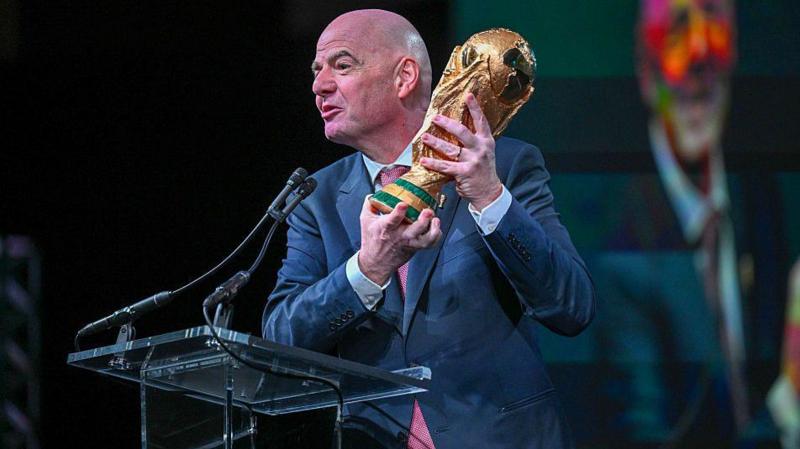
The new-look Club World Cup, the expanded World Cup, the inflated ticket prices.And, of course, the Super Bowl-style show that meant the half-time break at the World Cup final lasted 27 minutes and 22 seconds.Infantino appears to have thrown the door wide open to a 64-team World Cup."If you don't give smaller countries a chance to participate, they'll lack the incentive to keep improving," he said.Except, of course, smaller countries are not denied the chance. If they are good enough, they qualify. See Cape Verde, Curacao, Jordan and Uzbekistan.Purely in terms of the competition format, it does make sense.The top two teams in the 16 groups would go through to the knockout stage. No longer would there be a need to send a few third-placed teams through.But is there really any other logical reason to expand to 64 teams?The 2030 World Cup will mark 100 years since the first World Cup, which was held in Uruguay.The tournament will primarily be hosted by Morocco, Portugal and Spain - but the opening three matches will be played in Uruguay, Argentina and Paraguay as centenary hosts.Conmebol - the South American confederation - wants more games.In April 2025, it requested a one-off tournament of 64 teams so it could take on the full programme of the additional four groups.Its president, Alejandro Dominguez, said it would ensure "nobody on the planet is left out of the party".There has been little support from elsewhere.Victor Montagliani - president of the governing body of North and Central America and the Caribbean (Concacaf) - said last year it would damage "the broader football ecosystem".Asian Football Confederation (AFC) president Sheikh Salman bin Ibrahim Al Khalifa agreed, saying further expansion could bring "chaos".None of which means it will not happen, with the decision taken by the 37 members of the Fifa Council.A 64-team tournament has two main plus points: a more natural format, and more opportunities for emerging nations.It is the latter which Infantino is championing, especially after the heroics of Cape Verde.Then Cape Verde drew with Spain and Uruguay to finish second in their group. And the Blue Sharks gave Argentina an almighty scare by taking them to extra time in the last 16, before losing 3-2.But the fairytale stories must be balanced with the competitive edge of the tournament.Haiti, Iraq, Jordan, Panama, Tunisia and Uzbekistan failed to pick up a point - and this summer's group stage had minimal jeopardy for the top nations.Add more teams and it would be difficult to see a repeat of top-four seeds like Belgium (2022), Germany (2018), Spain (2014), Italy (2010) and France (2002) failing to make to knockout stage.Then there is the question of where the extra places would go.Based on this year's qualifying, these are the additional countries who would have made it into a 64-team World Cup 2026 (with their Fifa ranking at the start of the tournament in brackets):AFC: Indonesia (118), Oman (79), United Arab Emirates (68).Uefa: Denmark (21), Italy (12), Poland (36).Concacaf: Honduras (65), Jamaica (71), Suriname (125).Africa: Burkina Faso (62), Cameroon (44), Gabon (86), Nigeria (26).Six of those teams are from the top 50 of Fifa's world rankings - three from Europe, two from Africa and one from South America.And therein lies the problem. Asia and Concacaf are weaker confederations, as was proven by performances this year.Nine of Africa's 10 countries got out of the group stage. But only two of nine Asian countries advanced, and just three of the six Concacaf countries - the co-hosts - made it through.New Zealand, who got one point and finished bottom of their group, are the only country from Oceania in the world's top 150.There is an argument that if you extend again, you should give a greater weight of places to Europe just for competitive balance.But, on the other hand, there are those who would argue that bringing more teams into the World Cup ultimately allows the game to develop further in those countries.Infantino will sell the expansion as being good for the global game, but there have to be doubts that it is good for the competition.Almost a third of Fifa's 211 nations would be present.Would the group stage not simply become a glorified pan-confederation qualifying competition for what is, essentially, a knockout tournament?Expanding the World Cup to 64 teams is really just a case of bolting on four additional four-team groups.This year's tournament lasted 39 days. An additional 24 matches would require 20 schedule slots. Or another five days.But this summer's event was unique for two reasons: multiple time zones and indoor stadiums.That will not be so straightforward in the future, even with 48 teams.Climate change is making playing in the daytime more challenging - see the record heatwaves in Europe in recent weeks.Other countries are far less likely to have the covered venues of Atlanta, Dallas Houston and Vancouver to mitigate it.The Saudi Arabia World Cup is likely to move to January 2035 but it is not clear how other countries will get around this growing problem.Until this year, only once had there been dual hosts of the World Cup - Japan and South Korea in 2002.It is hard to imagine any one country ever being capable of hosting again. Even Saudi Arabia.Could we be looking at World Cups hosted by, for instance, the UK and Scandinavia? Or Eastern Europe?How would an Asian or African country be able to fund hosting the World Cup?Let's look a just a few issues that would need to be resolved.This summer there were 16 host cities with stadiums having capacities ranging from 43,000 to 81,000. More would be required.There would need to be 64 individual, elite-level training facilities for the qualifying nations.Then there is the provision of hotels for the fans, and the infrastructure and support network to move them around.Expanding the World Cup is not as simple as giving more opportunities to more countries.One of Infantino's key promises when he was elected was to bring more money into the game.Every football association now has access to $8m (£5.9m) in funding over a four-year period, with a further $1.2m (£890,000) on top for the smaller nations.Confederations get $60m (£44.5m) to develop, promote and organise football.It is why Infantino is likely to be re-elected unopposed next year.This money has to come from somewhere, primarily the World Cup.In 2017, Fifa projected a 48-team World Cup would bring in $6.5bn (£4.8bn).In 2022, it revised the format again and added 24 games. Now, it expects to rake in $9bn (£6.7bn) this year.A 64-team event is likely to raise more from television, sponsorship and ticket sales.But critics would argue there has to be a point where expansion is no longer good for the game.Why European backlash over Trump intervention won't worry InfantinoWhen the World Cup finishes, the football continues on BBC Sport

BBC Sport WCMon, 20 Jul 2026
Source: BBC Sport WC
Read story
Why Beckham was face of World Cup in the US

World Cup News

Why Beckham was face of World Cup in the US

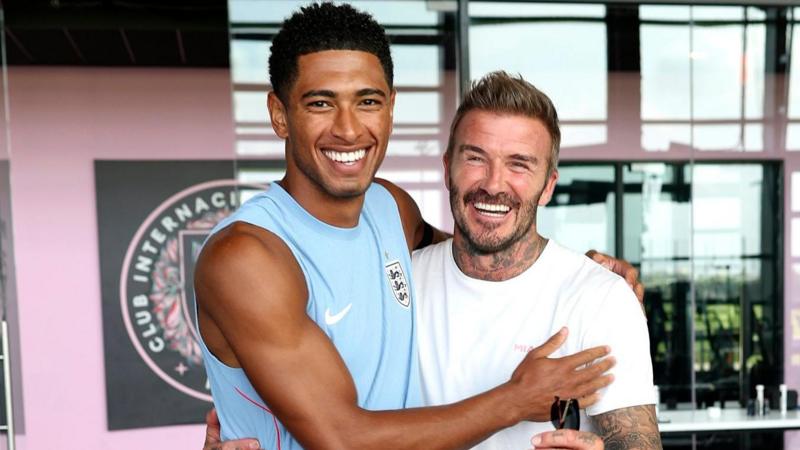
In America, nobody sells football quite like David Beckham.During this World Cup, the former England captain has been impossible to miss.On the pitch, the tournament belongs to stars like Kylian Mbappe, Jude Bellingham, Lamine Yamal and Lionel Messi.Off the pitch, Sir David has become the face of the World Cup, fronting advertising campaigns for 11 brands ranging from McDonald's and Major League Soccer to Stella Artois, Home Depot and Bank of America.And if you haven't seen him during one of the many half-time commercial breaks, you've probably spotted him at the United States' opening match in Los Angeles, watching alongside his friend Tom Cruise.Just hours before that, Beckham had become the first professional footballer to receive a star on the Hollywood Walk of Fame, with actor Cruise once again by his side."David speaks to so many different people. I think that's what's unique about him," said Stacy Jones, founder and CEO of the marketing agency Hollywood Branded."He brings in the female demographic because he is so sexy - but he appeals to men. He's an honest, good, authentic, down-to-earth type of individual. So you don't really get affronted by him."She felt Beckham had achieved something few celebrities manage, moving effortlessly between football, fashion, entertainment, business and the cult of celebrity.On Hermosa Beach, south of Los Angeles, hundreds of fans gathered to watch Spain reach the World Cup final at an event organised by LA Galaxy - the club Beckham joined in 2007 from Real Madrid.Ask fans what comes to mind when they hear the name David Beckham and the answers come quickly."David Beckham was a really good player for England, but he's doing too many commercials now," said one football fan.For Megan Hapeman, it's the recent McDonald's advert in which Beckham hopes to receive a cup featuring his own face.Her six-year-old son Oliver proudly told me he still has one."When I got it, I was pretty proud," he said. "Because Mommy liked it, I liked it too."That's exactly what brands are buying.Beckham transcends clubs, generations and even football itself.That broad appeal didn't happen by accident. It was built on Beckham's football legacy in America.He remains the player with the trademark free-kicks, part of Manchester United's Treble-winning side in 1999, England captain and one of Real Madrid's original Galácticos.Dan Courtemanche, Major League Soccer's executive vice-president and chief communications officer, admitted Beckham's influence on the game in America cannot be overstated."I always tell people he changed the fate of American soccer. Not once, but twice," he said.When Beckham signed for LA Galaxy 19 years ago, stadiums across Major League Soccer sold out before he had even played a competitive match.The league needed credibility and he gave it something even broader: mainstream celebrity.Sixteen years later, Beckham helped persuade Argentina icon Messi to choose Inter Miami over rival offers globally - another moment that transformed MLS, according to Courtemanche."Lionel Messi decided to make Major League Soccer his league of choice and Inter Miami his club of choice," he added. "Again, it took us to a whole other level."Tom Braun, LA Galaxy's president and chief operating officer, said Beckham's influence has stretched way beyond football."David's an iconic figure in our sport and our culture," he explained."He's built a business around his brand and continues to resonate with people."The evolution of the 51-year-old, who also played for AC Milan and Paris St-Germain before retiring in 2013, was perhaps best symbolised this summer on Hollywood Boulevard.When Beckham accepted his star on the Walk of Fame, he reflected he had never imagined "a working-class English footballer" would receive such an honour.The recognition celebrated not only the life of Beckham the footballer, but Beckham the cultural figure."David Beckham, to America, is the World Cup," Jones said.Having arrived in Los Angeles promising to grow the game, Beckham is still helping sell football to America.Only now, he's doing it not with a free-kick, but with a brand.When the World Cup finishes, the football continues on BBC Sport

BBC Sport WCMon, 20 Jul 2026
Source: BBC Sport WC
Read story
Donald Trump has to let it linger as he hangs on for Spain’s World Cup celebrations

World Cup News

Donald Trump has to let it linger as he hangs on for Spain’s World Cup celebrations

For the second time in as many years, the US president made sure he was a part of a moment of triumph he had little to do withHe did it again. There was a world championship trophy, waiting to be held aloft at the same gargantuan stadium in East Rutherford, New Jersey. There was Gianni Infantino, waiting alongside the US president. And there was that same US president, Donald Trump, fresh off a round of stadium-wide booing and jeering, handing off the trophy with Infantino and then staying stubbornly in the frame as another team enjoyed the pinnacle of their professional careers with an octogenarian standing awkwardly in the shot.Should we be surprised? Marc Cucurella probably wasn’t – the defender was on stage for both occasions, first as a member of Chelsea as they lifted the 2025 Club World Cup, and then again on Sunday when Trump once again remained in the shot as Spain celebrated their World Cup victory.The repeated history brought an incongruous end to a night where Trump was – for most of the time – a long way from the center of attention. That would have been a relief to American sports fans, for whom a Drake-like sentiment has grown surrounding Trump’s involvement in their event of choice. Meaning, essentially, that it should be dreaded, and avoided at all costs. The New York Knicks lost their only game of the NBA finals this year with Trump in attendance at Madison Square Garden, where he also drew a lusty round of boos. And, earlier in this World Cup, the US crashed to a 4-1 defeat against Belgium in the last-16 after Trump called Infantino in a successful bid to get striker Folarin Balogun’s red card suspended.If Trump had a similarly ruinous effect on Sunday’s World Cup final, it was in a cosmic sense. Trump watched the game from a glassed-in suite, along with Infantino, Spain’s king, Felipe VI, Canada prime minister, Mark Carney, and Mexico’s president, Claudia Sheinbaum. The US secretary of state Marco Rubio was also in attendance. At one point in the second half, Trump was seen conversing with Carney.What unfolded on the other side of the presumably bulletproof glass was 120 minutes of punishing, physical football – an enervating match that practically cried out for a sideshow.Trump wouldn’t become that sideshow until later. He was briefly shown on the video screens at the stadium after the US national anthem was played, and there were scattered boos from some in the crowd. TV broadcasts showed him touching the trophy from his seat in the early stages of the match, and conversing with Melania Trump in the 85th minute, but he didn’t appear on the screens in the stadium during the match itself.The hostile reception he had received in his appearances at other sporting events wasn’t repeated until he descended from his perch and walked on to the field to present the World Cup trophy along with Infantino and the other heads of state, where the vast majority of the crowd booed and jeered.What followed was routine, up to the key moment. Trump presented medals to the players alongside the other dignitaries, shaking hands and smiling at each player with a minimum of fuss, seemingly telling them “great job” or “congratulations”. Trump and Infantino then held the World Cup trophy together and presented it to Spain’s captain, Rodri, with Infantino ducking away, stage right.If there were lessons to be learned from Trump’s crashing of the Chelsea party last year, Infantino hadn’t learned them. Or perhaps he still felt he was not within his right to grab Trump by the arm and pull him away. Trump was then practically given an invite to leave by Rodri, who motioned Trump to the left of the podium as he prepared to set the Spanish celebrations alight. Trump made as if he would descend the staircase, but instead stood just on the edge of celebrations, seemingly not totally sure where to look, forcing Infantino to jog over and make one last plea for him to leave. It was too late. Rodri lifted the trophy, and there was Trump, in the frame. By the time the confetti fell to the grass, Trump had gone, lingering just long enough to be visible.Just as Lionel Messi lifted his first World Cup in 2022 wearing a traditional Arab cloak, Spain hoisted their country’s second title with a reminder of the host nation lingering awkwardly in the frame.

Alexander Abnos at New York New Jersey StadiumMon, 20 Jul 2026
Source: The Guardian WC
Read story
Spain’s system subdues a team built on the irrational magic of Messi’s lone genius | Barney Ronay

World Cup News

Spain’s system subdues a team built on the irrational magic of Messi’s lone genius | Barney Ronay

The route to this World Cup victory involved beating the other 2022 finalist and then suffocating Argentina as they dried out in the sunTime to break the staff, bury the book and call time on that rough magic. There was, by the end, an undertone of sadness about Lionel Messi, New Jersey and a World Cup final that brought Spain the glory of an entirely deserved second trophy, and which saw Argentina offer almost nothing beyond a gnarled and gristly sense of resistance.This is an Argentina team built on faith, devotional energy and a belief in the frankly irrational magic of your lone scurrying 39-year-old genius. Well, sometimes that magic will forsake you. The deus ex machina will refuse to appear. And he is perhaps gone from this stage now for good, a Prospero giving his final address to the crowd from a clanky metal bowl outside New York.Messi’s third World Cup final has always been likely to end up his last, whatever happened in New Jersey. For the greatest player of this or any other age there was something else here, the sound of exit music just below the ambient noise, the realisation across 120 minutes that what you’re watching are the routines, the shapes, the movements, but without its own vital essence. England in Atlanta, that half hour when Thomas Tuchel’s team simply shrank, devoured by an aura, might just turn out to have been Messi’s last stand.He was always going to rage against it. The far corner of the New York New Jersey Stadium pitch was in evening shadow as the game entered the third minute of added time at the end of extra time, the grass a deep autumnal green, the countdown inside the countdown almost done. A goal down and a man down at the end of eight tournament matches. Six World Cups deep, 39 years old, and playing here against opponents who had spent the last two hours enacting a very crisp, orderly suffocation. How much do you have left? How thin is that thread?Messi was there all the same, scooting towards the corner flag, head bobbing, legs whirring in that familiar rodent-superhero style. He took Argentina’s final corners of the match, wringing out the last little drops, the last dusting of dip and veer and ping.Fifteen minutes earlier Messi had been close to the halfway line, watching with a familiar expression of mild interest when the moment arrived to decide this bruising World Cup final. As Ferran Torres measured his stride and spanked the ball high into the net for the only goal, as the red shirts leapt and bounced by the corner flag, the stands writhing and falling over themselves, Messi bent at the waist and stared down at the turf.The goal came from Spain’s 20th shot, to Argentina’s zero. The cut-back to Torres was Spain’s 715th completed pass. At the end of which Spain are not just champions, but clearly the best team at this World Cup, the embodiment of a system, a coherent sporting culture made flesh. The route to this point has involved beating both finalists from Qatar, as well as flushing out a ghost here, neutralising the hammer of England, subduing the magic that had dragged Argentina to this stage.All morning New York had been hot and wild, jammed and breathless, basically a sustained assault on the senses. Or in other words, not really different to any other Sunday. But the stadium felt a little bit like the end of the road in more ways than one, the mild organisation sub-chaos of this World Cup finding full expression in the vast sun-frazzled queues waiting to get in.This has been an unloved venue at this World Cup, rising up out of and rolling New Jersey asphalt like a giant discarded alien hubcap. But inside it’s a classic, stark gladiatorial bowl, the stands a rolling wall of noise an hour before the start. And this really should have been more of a match-up. Most obviously in terms of tactics and method. Spain are the ultimate systems team. Spain are process and craft, the football of some hyper-advanced Star Trek society on a planet where people in robes talk wisely about collective effort and shared rewards.Whereas Argentina, well, what is this exactly? Sport as emotional nationalism. But European-coded too. Nothing expresses Argentina like Argentina’s football. And yet Argentina’s football is hugely cross-fertilised by Europe. Messi, its godhead, could have played for Spain, learned his method in Spain, and has become the apex point of modern European club football.From the start Argentina were playing cold here, as they had against England in the first half. Take time out of the game, compact it down, kill some of the space between you and the finish line. Give Messi something manageable.Spain had 35 passes here before Messi moved beyond a walk. He basically spent most of the early exchanges getting out of the way, edging back out of the crush like a minor uncle at a wedding. Famously Messi likes to process and watch in these moments, to measure the currents and the angles. He certainly had a very good view of Spain passing the ball around, another VIP looking on from the best seat in the house, mildly more interested, all things considered, than Sarah Jessica Parker and Matthew Broderick.By half-time Argentina had already begun to dry out in the sun, a desiccated thing, footballing biltong. At which point the World Cup got a front row view of another version of the world. On the one hand, a muddled, hard, ragged scoreless game of football with a sense of unyielding forces, of waiting while some difficult piece of algebra is resolved.On the other, Madonna gyrating furiously on a screen, followed by the great revolving Korean pop-godhead BTS. The Ted Lasso actor, as Ted Lasso, did a skit with Justin Bieber, who then strummed a guitar and sang a song of almost total anti-energy, walking along a little bent and constipated, long shorts, white shoes, basically doing Messi.Shakira was successfully Shakira. Hundreds of humans in brightly coloured clothes appeared and waggled tarpaulins. It was a show. Not a good show. But then, we already had a show, didn’t we?“YuRRR score at HAFF time. SpAAAiinnnn Zero, Aggrrnetina ZrSerro,” the owner of the world’s most annoying voice announced as the players reappeared. At which point the day and the game continued to drain towards its end point. In their non-Messi periods Argentina are a team that will make you lose yourself, play badly, forget what football is for.But Spain are too good for this. They will take the ball away before you can do it. From the 70th minute on, Argentina were simply laying themselves down in front of the traffic, stopping the day, a team with no hope of winning this final beyond taking it to penalties. Two minutes into stoppage time at the end of the 90 they lost Enzo Fernández, sent off for a second yellow card in 10 minutes. And that was always going to be that.Messi will continue to play for Inter Miami, and perhaps even for Argentina for a while. But this is his stage, this is the space he has defined. Let’s face it, he probably won’t be back again. It felt appropriate that he was walking as the final whistle was blown, and from there just kept on walking, didn’t break stride as Spain’s players and staff ran on and the stadium began to explode around them.Messi’s super-skill, even in his ferretty, fast-twitch prime, has been all about creating his own moments of calm and stillness, a quality that has become ever more alluring as the space has congested on the pitch and the noise and light become ever more intense off it.Even at his dotage at this World Cup Messi has been a delight, still able to dredge up those surge moments where he makes the universe around him symmetrical, soft, open to his touch. Spain may have finessed him, but they haven’t been able to make a player quite like him. Then again, we may never see another again.

Barney Ronay at New York New Jersey StadiumMon, 20 Jul 2026
Source: The Guardian WC

Read story
‘We had a date with destiny’: De la Fuente lauds Spain players after World Cup victory

World Cup News

‘We had a date with destiny’: De la Fuente lauds Spain players after World Cup victory

Manager says team and and fans ‘deserve everything’‘It hurts my soul’: Scaloni to consider Argentina futureSpain’s manager, Luis de la Fuente, hailed his players for fulfilling what he described as “their destiny” by winning a second World Cup final against 10-man Argentina.The reigning champions were second best throughout but it took until the second period of extra time for Spain to find the breakthrough from the substitute, Ferran Torres. Nico Williams saw his goal disallowed in the first half of extra time, while Enzo Fernández became the sixth player – and third from Argentina – to be sent off in a World Cup final after the Chelsea midfielder was shown a second yellow card in the 93rd minute.Argentina had chances to equalise after Torres put Spain ahead but having come to their rescue so many times at this tournament Lionel Messi could not inspire them to become the first team to retain their title since Brazil in 1962. His failure to add to his tally of eight goals in what is expected to be the 39-year-old’s last World Cup means that Kylian Mbappé won a second Golden Boot of his career having finished with 10 goals.But it was Spain’s miserly defence that proved decisive in the end, with De la Fuente’s side only conceding one goal in their eight matches as Unai Simón won the best goalkeeper award and teenage defender Pau Cubarsí was named as young player of the tournament. The Manchester City midfielder, Rodri, was awarded the Golden Ball.“It was written, and we deserve it,” said a delighted De la Fuente, who has led Spain to European titles at under-19, under-21 and senior level before this triumph. “This team and this wonderful fanbase deserve everything. We had a date with destiny and we wanted to make it count.“The players have asked me what we have left to win. Together we’ve figured out that it’s the next match in September [against England in the Nations League] because this team is tireless.”But while Álex Baena and Marc Cucurella are set to follow through on their promise to have tattoos to celebrate Spain’s triumph, the 65-year-old De la Fuente, who became the oldest manager to win the World Cup, insisted he had no such plans. “I’m too old for tattoos,” he said.Torres, who emulated Andrés Iniesta’s winner in extra time of the 2010 World Cup final in South Africa against the Netherlands when Spain won their first title under Vicente del Bosque, found it hard to come to terms with what he had just done.“This isn’t just my goal,” the Barcelona forward said. “It’s for 47 million people. I want to grab the cup and squeeze it. In the end, when you’ve got Messi on the opposing team, you do get a bit nervous, but we always try to play our own game.”There were ugly scenes after the full-time whistle when Leandro Paredes pushed Eric García and then appeared to aim punches at Gavi while he was on the floor, with the Slovenian referee showing him a red card. Argentina’s players then kept their backs turned when Rodri was presented with the trophy by US president Donald Trump.The Argentina manager, Lionel Scaloni, who was in charge when they beat France in the 2022 final, broke down in tears in his post-match press conference and would not confirm if he will continue after his contract expires at the end of this year.“It hurts my soul. I’m sorry,” he said. “I have to be honest and say that I have to take time and think about the future, because I’m not sure this kind of group can be assembled again.”Asked whether Messi is planning on retiring soon, he added: “At 39 years old, it’s an incredible thing. He is going to play as long as he wants. He’s the best player to ever set foot on a field. What he did in this World Cup is incredible.”

Ed Aarons at New York New Jersey StadiumMon, 20 Jul 2026
Source: The Guardian WC
Read story
Emotional Barry praises 'heartbroken' England players

World Cup News

Emotional Barry praises 'heartbroken' England players

Close1657England assistant coach Anthony Berry tells BBC Sport how proud he is of his squad as they lead France 4-0 at half-time in the 2026 World Cup third-place play-off at the Miami Stadium.Shareclose panelShare pageCopy linkAbout sharingRelated topicsFootballFollow Footballclose panelYou are now following FootballUpdates from your Sport topics will appear in My Sport and in a collection on the Sport homepage.England Men's Football TeamFollow England Men's Football Teamclose panelYou are now following England Men's Football TeamUpdates from your Sport topics will appear in My Sport and in a collection on the Sport homepage.FranceFollow France

BBC Sport WCSat, 18 Jul 2026
Source: BBC Sport WC
Read story
Rice fires England into early lead against France

World Cup News

Rice fires England into early lead against France

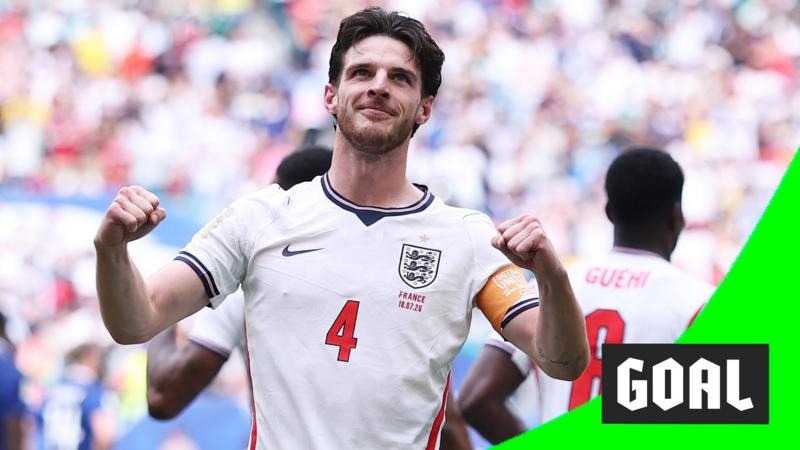
Close152Captain Declan Rice gives England an early lead, scoring in the third minute against France in the World Cup third-place play-off at Miami Stadium.Shareclose panelShare pageCopy linkAbout sharingRelated topicsFranceFollow Franceclose panelYou are now following FranceUpdates from your Sport topics will appear in My Sport and in a collection on the Sport homepage.England Men's Football TeamFollow England Men's Football Teamclose panelYou are now following England Men's Football TeamUpdates from your Sport topics will appear in My Sport and in a collection on the Sport homepage.FootballFollow Football

BBC Sport WCSat, 18 Jul 2026
Source: BBC Sport WC
Read story
Infantino’s Faustian bargain with Trump has stained football’s biggest stage

World Cup News

Infantino’s Faustian bargain with Trump has stained football’s biggest stage

The Fifa president sought influence with the US leader. Instead, Fifa’s president has entangled football in politics and wounded the game’s credibilityEver since the United States won the rights to co-host the 2026 World Cup, Fifa president Gianni Infantino has worked to ingratiate himself with Donald Trump at all costs, supposedly to secure preferential treatment for Fifa from the American government. Predictably, he suffered the same fate as everyone who has made a Faustian bargain with the US president: he learned that cozying up to Trump always backfires, tarnishing the entire sport along the way.I love soccer because, at its best, it is inclusive, democratic and accessible to everyone. So do billions of other people; the sport’s universal cultural impact truly lends it the potential to be a force for good that “unites the world”, as Fifa loves to say. We saw this force in action at the start of the World Cup when, despite Trump’s hardline anti-immigrant and anti-foreigner policies, the prevailing sentiment showed that visiting teams and fans found most Americans really are warm and welcoming people.But for years now, Infantino has betrayed those values by aligning Fifa, the organization that represents the people’s game, with Trump, whose political project is openly rooted in division, selfishness and violence. Because Infantino’s actions harm soccer in a way I cannot condone, and especially because he’s doing so by inserting himself in my own country’s domestic politics, I feel compelled to denounce them publicly.For nearly as long as the World Cup has existed, politicians have co-opted it to legitimize their nationalistic projects on the world stage at Fifa’s expense; in 1934 it was Italy’s Mussolini, and in 1978 it was Argentina’s military junta. But this time, it’s the Fifa president himself who is willingly damaging the sport’s reputation. Last week, it was allowing his personal relationship with Trump to muddle the outcome of USMNT striker Folarin Balogun’s red card suspension; last year, it was single-handedly creating and conferring a “peace prize” to a man who brazenly revels in military intimidation.Within only a few months of receiving the award conceived specifically for him, Trump set about effectuating a regime change in Venezuela, threatening armed conflict against Nato allies, and launching an unlawful war with Iran, leading to months of uncertainty about their team’s World Cup participation and the compulsory relocation of their base camp to Mexico. With the prize, Infantino put Fifa’s already threadbare reputation on the line by tying himself to Trump’s erratic and belligerent foreign policy. And while the World Cup will go down as a massive commercial success, no amount of revenue will ever erase the moral stain of blessing Trump’s wars in the name of soccer.Yes, it’s important for Fifa to foster a good working relationship with any host country’s government, but Infantino has repeatedly crossed the line between professionalism and groveling. Beyond frequent White House appearances, Infantino allowed his proximity to Trump to overshadow Chelsea’s championship moment at the Club World Cup, interfere with the agenda at last year’s Fifa Congress, and politicize Fifa in a way that undermines its mission statement through recurring, implicit endorsements of Trump, as detailed in the FairSquare ethics complaint against him. Infantino is even channeling some of Fifa’s wealth, meant to spur development of the sport globally, to Trump’s pocket by renting office space in Trump Tower despite already operating a permanent Fifa office in Miami.Even those who would defend “all that Trump bootlicking” as a matter of pragmatism need to contend with what Infantino actually got in return: boasts of intervening in Fifa’s disciplinary review process during the World Cup and threats of annexing Canada and launching strikes on Mexico, our co-hosts, in the lead-up. Looking ahead to the 2031 Women’s World Cup, Trump is reportedly holding hostage the governmental guarantees required to confirm the US hosting bid in an attempt to strongarm Fifa into adopting the policies he demands.And when it comes to Trump’s meddling in the Balogun case, the biggest casualty was soccer’s integrity. Sure, in a narrow sense, US Soccer benefitted from having a star player back from suspension. But in a more meaningful sense, US Soccer was also a victim: our players were swept up in a political firestorm before the most important game of their lives, and our biggest chance to showcase American soccer to the world will now for ever be tainted by accusations of favoritism at best and corruption at worst, unfairly clouding US Soccer’s credibility and reputation around the world. To boot, in return for debasing our sport again and again, Infantino plans to reward Trump with the honor of handing out the World Cup trophy on Sunday.The fact that Infantino has faced little accountability for dragging soccer through the mud reflects a battle for the soul of the sport – about whether its future will be autocratic and hyper-commercialized, rather than a force for good. I say no: soccer leaders must reject Infantino’s egotistical and transactional view of the beautiful game.I find growing comfort in the fact that others have started to speak out, and not only as a reaction to Fifa’s Disciplinary Committee decisions. Uefa, the European continental subdivision of Fifa, had already called Infantino’s behavior a pursuit of “private political interests” that “does the game no service,” and the former chair of Fifa’s governance committee called it a “clear violation” of Fifa’s code of ethics. Senior staff at Fifa have pushed back on Infantino’s attempts to pander to Trump; one of Fifa’s vice-presidents did rebuke Trump’s politically motivated threats against certain host cities; and the president of the Norwegian Football Federation called for the abolition of the “peace prize” while supporting an ethics investigation against Infantino. Despite the sizable public backing from Fifa members for Infantino’s reelection, many of them privately vent their frustration about his “level of vanity” to reporters; Uefa may even be looking for a candidate to challenge him.All of Fifa’s members have a duty to protect the integrity of the sport and save Fifa from itself, even at the risk of retaliation. In the short term, I hope federations around the world find the courage to oppose Infantino’s vision for the sport; in the long term, I urge them to pursue structural governance reforms that take power away from the role of the Fifa president and shift it toward the Council, the Congress, and the Secretary General, so that no single individual can ever act unilaterally to soccer’s detriment again. Perhaps then the greatest legacy of this World Cup will be that it spurred us to speak up for and defend the values that make soccer the people’s game.Nathán Goldberg Crenier serves as the elected vice-president of the US Soccer Federation. This editorial represents his personal opinions and does not necessarily reflect the positions or views of US Soccer.

Nathán Goldberg CrenierSat, 18 Jul 2026
Source: The Guardian WC
Read story
America’s World Cup report card: some As for atmosphere, but F for affordability

World Cup News

America’s World Cup report card: some As for atmosphere, but F for affordability

How did the United States do in its second swing at hosting the men’s showpiece event? The stadiums were mostly received well. The accessibility, less soCome rain or smokescreen, Sunday will bring the 2026 World Cup to its bombastic end. The load-bearer of the co-hosting North American trio, the United States held 78 of the tournament’s matches across its 11 host cities. Only two contests remain: the third-place game in Miami, and the big one in East Rutherford, New Jersey.Before the dust truly settles and focus shifts to the six-nation, three-continent centennial in 2030, how did the United States fare in its second swing at hosting a men’s World Cup?Depending on what you’re looking for, best in class. Few venues have “charm” in the traditional sense, but these sprawling NFL venues packed in plenty of fans, with many designed to retain sound to harness atmosphere. That said, none seem to have figured out how to adequately keep a concourse congregation flowing, with those corridors hardly expanded to account for so many people in one building. B+This was an anticipated drawback of holding this tournament in the US, as the nation rebuilt itself throughout the 20th century with clear priorities for the automobile. Some cities stepped up their public transportation options with ad-hoc buses; others used those initiatives to further eat into riders’ spending budgets. Hours spent slowly progressing to venues, and even more slowly when leaving, were equally costly. D+Do we even need to explain this one? The expectations for ticket pricing made public in United 26’s bid book were in line with what we’ve come to expect for World Cups, with inflation largely justifying modest increases from tournament to tournament. Instead, the 2026 World Cup became an outlier for event pricing of nearly any kind – the first that most of the world could never afford to attend.On the one hand, the displays of community were incredibly touching. No matter how overpriced the lager was, it was common to see traveling fans from all over the world clinking cups before and after the match. Fifa’s legion of volunteers were smiling faces in neon tracksuits, awfully helpful and welcoming at every turn.On the other hand, not all fans were quite so well accommodated. Referees and team staffers among those turned away by Trump administration decisions. That precedent also left the general fan from a Trump-banned nation without a chance of getting around policies. The rationale for those rejections was incredibly flimsy, yet Fifa stood beside the man in the White House.It will be impossible not to wonder how different the support of Côte d’Ivoire, Haiti, Iran and Senegal could have been had the tourist accessibility of the 1994 World Cup been replicated. A for the spirit fostered by those who could make it, but an F for the unprecedented barriers set before qualifiers and customers alikeThe category with the biggest discrepancies between the best-in-class and the rest. Some – Seattle, Philadelphia and Kansas City – cemented an identity of being organic and sustainable soccer cities. The “World Cup village” atmosphere so many fans covet was alive and well, with accessible public watch parties, signage and flags lining streets, and a constant buzz of excitement that the world’s eyes found their neck of the woods. Others, like Boston – the second capital of Scotland – and the Bay Area either embraced their temporary occupants or had plenty of space and opportunities for locals to keep the party going between matchdays.Others, especially those whose stadiums weren’t in or adjacent to the city center, really struggled to harness the tournament’s potential. It turns out being an hour or two away from the action feels just as invigorating to some as watching a game from their sofa. Texas seemed especially agnostic to the tournament despite being one of two states with multiple host cities, with dispatches from Dallas and Houston reading equally blase. The roadshow has already packed up, and many in some of these cities will hardly recognize what came through. B-

Jeff RueterSat, 18 Jul 2026
Source: The Guardian WC
Read story
VAR ‘fixes’, AI slop and perpetual outrage: the World Cup in the age of conspiracy | Karim Zidan

World Cup News

VAR ‘fixes’, AI slop and perpetual outrage: the World Cup in the age of conspiracy | Karim Zidan

With cries of malfeasance and injustice over referee decisions, Fifa actions and even Argentina’s run, the tournament is a mirror of a theory-pilled societyThis was the first thing that Hossam Hassan, Egypt’s fiery coach, told the media after his country’s devastating 3-2 loss to Argentina in the last 16. The legendary striker turned manager had been minutes away from orchestrating one of the greatest upsets in World Cup history. The Pharaohs were up 2-0 against the defending world champions. Then, late in the second half, Argentina staged an extraordinary comeback, scoring three goals in 13 minutes, bringing Egypt’s storybook run to a sudden end.For Egyptians, the match was an emotional rollercoaster, soaring with the promise of victory before plummeting into heartbreak and finally crashing into outrage over what many regarded as refereeing decisions that favored Argentina. During the match, Hassan raised his arms in a crossed ‘X’ gesture, Fifa’s official anti-discrimination symbol, and after the loss, accused the governing body of wanting Argentina to win. Hassan claimed his team was wrongly denied a second goal at 1-0, following a video assistant referee (VAR) check for a foul that had occurred more than 100 yards away, and that Egypt ought to have been awarded a penalty before Enzo Fernández scored Argentina’s third and final goal.“Perhaps they wanted to keep the world champions in the competition?” Hassan told Qatari broadcaster beIN Sports after the game. “Perhaps they wanted Messi to stay in the running?”Fueled by Hassan’s remarks, Egypt’s defeat sparked a firestorm of conspiracy theories and allegations of corruption. French referee François Letexier became the focus of intense global scrutiny. Restaurants and cafes posted about barring him because of his role in the match outcome. His Wikipedia page was vandalized to falsely identify him as Jewish, sparking outrage among fans who believed Egypt’s loss was part of a Zionist conspiracy tied to Hassan’s outspoken support for Palestine during the tournament.As Argentina progressed, the conspiracy theories followed. There was the news that the Argentinian federation and its president were being investigated by the FBI for alleged money laundering. Then there was the controversial VAR decision that led to Switzerland’s top striker being sent off in the quarter-final. With each win, accusations of corruption and match-fixing continued to plague Argentina.“The World Cup was promised to Messi 3000 years ago,” read the caption of an Instagram post that included a montage of Argentina’s star during visits to Israel with Barcelona and Paris Saint-Germain. The post was liked nearly 15,000 times. “It’s rigged for Messi,” read another post with more than 275,000 likes. More than 12 million people have signed a fan-led petition demanding that Fifa disqualify Argentina.VAR technology has been at the centre of nearly every major controversy at this World Cup. Critics argue that VAR is applied inconsistently and is being used in cases outside its original intent. This has led to scenarios such as Egypt’s disallowed goal against Argentina and Croatia’s disallowed goal at the end of regulation time against Portugal, called offside because the sensor in the ball detected a touch that was absent to the human eye.Perhaps the tournament’s most controversial episode came when United States striker Folarin Balogun received a red card after a VAR review for a foul the referee had missed in real time. The controversy deepened when Fifa overturned Balogun’s one-match suspension following an intervention from Donald Trump. The US president later boasted about his role in securing Balogun’s return. Given Fifa had previously stated that a red card suspension could not be appealed, the sudden change of heart shattered the illusion of integrity and fair play in its showpiece event.The Balogun affair is not without precedent. In November 2025, Fifa suspended part of Cristiano Ronaldo’s ban for a red card he received during Portugal’s World Cup qualifier against the Republic of Ireland, clearing him to play in their opening group-stage matches. This rare act of clemency underscored Fifa’s willingness to indulge one of the World Cup’s biggest attractions, especially one with a near-unrivalled ability to drive ticket demand. And given that Fifa introduced dynamic pricing schemes for this World Cup, effectively adjusting prices based on real-time demand, is it really a surprise that people are questioning the tournament’s integrity?To make matters worse, there has been a deluge of AI-generated images and videos spreading across social media that have led to the spread of disinformation about the tournament. One manipulated image showed a man resembling Adolf Hitler holding a German flag and celebrating a goal against Curaçao; another showed outgoing British prime minister Keir Starmer wearing a Croatia jersey. There was also an image of an Iranian footballer holding up a pink backpack during a World Cup game, paying tribute to the 168 school girls killed by a US airstrike on Iran. Another manipulated video showed the Netherlands manager Ronald Koeman launching into a racist rant after Morocco knocked his team out on penalties.These augmented images and videos prey on people’s emotions, blurring the line between reality and fiction while trapping viewers in a perpetual cycle of outrage through a deluge of racism, xenophobia and disinformation. In some cases, the fake posts may exploit genuine concerns by feeding into our politically polarized climate and the sense of injustice many people experience in their everyday lives.Ahead of the World Cup, Infantino fawned over Trump despite the US president’s handling of the Iran war, strained geopolitical ties with fellow World Cup co-hosts and supercharged immigration crackdown. Infantino even invented his own peace prize to appease Trump after he was passed over for the Nobel peace prize. For Infantino, the US is the crown jewel of his new era of football, a market that can deliver unprecedented revenues and spectacle. The fact that he was ignoring Fifa’s own code of ethics did not matter.Because of US visa restrictions, Iran’s team had to shuttle between their training base in Mexico and the US, where their World Cup matches were played. Players described their tournament experience as a “disaster”. So when Iran failed to reach the knockout stage at the same time one of the tournament’s host nations was bombing the country, many saw it as a profound injustice. These sentiments were further compounded by the Balogun fiasco. It is unsurprising that such a turn of events bred conspiracy theories.Take the Egypt-Argentina game: it is impossible to consider that match without considering the context of what Egypt stood for at the event. The national team became a source of collective joy, not just for Egyptians but for millions of others across the Arab world and the African continent. Hassan raised a Palestinian flag after their last-32 win and later said that anyone lacking empathy for the Palestinian people had lost their humanity. The Egyptian Committee for the Reconstruction of Gaza organized public watch parties for displaced Palestinian families to watch Egypt’s games. The committee’s director, Mohammed Fawaz al-Wahidi, was then killed in an Israeli strike hours before Egypt played Argentina.For a few short weeks, Egypt’s run was about more than football – it carried the hopes and dreams of some of the world’s most oppressed people. So when Egypt squandered their lead against Argentina in a match marred by controversial decisions, the pain and anger many felt ran far deeper than the result itself. For those long accustomed to living with injustice, it felt like yet another reminder that even on football’s biggest stage, the rules were not the same for everyone.After the match, the Egyptian Football Association released a statement that it “cannot remain silent” following a series of refereeing decisions that “left profound questions about the consistency and fairness of decisions that directly influenced the course of the game”. Meanwhile, the accusations of corruption reached a crescendo. The Argentinian federation was targeted by a cyber-attack that saw hackers send emails from official accounts admitting to “corrupt refereeing decisions”. Conspiracy theories spread across social media asserting that the fix was in. And Argentina emerged as a villain.The World Cup does not exist in a vacuum. The truth is that football is a reflection of society, for better or worse. The conspiracy theories surrounding the World Cup are not unique to the tournament. They are symptoms of broader forces, including social media, economic insecurity and political division. Look no further than the QAnon movement, anti-vaccine conspiracies, and rising antisemitism and Islamophobia.The World Cup amplifies these tensions, showcasing them on the world’s biggest stages. In doing so, football becomes a mirror of the world that watches it.Karim Zidan writes a regular newsletter on the intersection of sports and politics.

Karim ZidanFri, 17 Jul 2026
Source: The Guardian WC
Read story