Football News
Flawed but relentless Scotland show themselves as men of substance
BBC Scotland's chief sports writer at Boston StadiumPublished9 minutes agoIn his time as Scotland head coach, Steve Clarke has been pelted with flak for his risk-averse management, his innate caution, his reluctance to roll the dice.
Whatever happened to that guy? Where did he go?
In the closing stages of this thriller in Boston, Clarke was a footballing Amarillo Slim, a fearless gambler throwing on attacking players in pursuit of a point in a game that lurched from total Moroccan dominance to total Moroccan panic.
Scotland lost, but in the grand scheme of things - where goal difference will be vital in determining the best third-placed teams - a 1-0 loss was no great letdown, not that it would have felt that way to the Scotland players at the end.
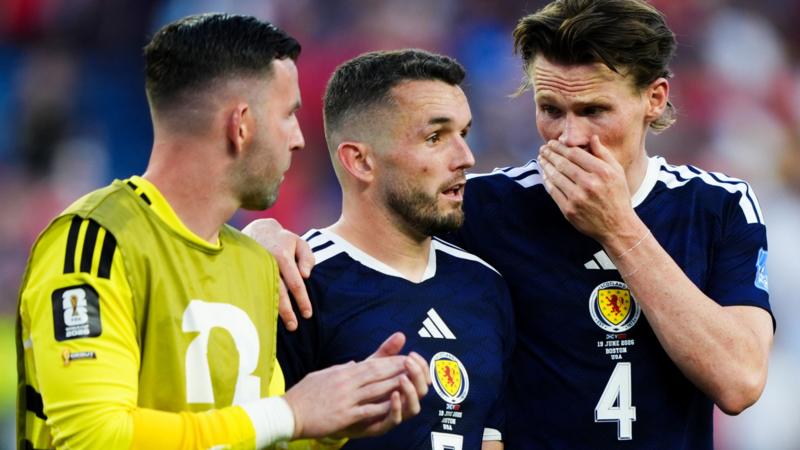
In doing a television interview in the aftermath, Lewis Ferguson looked pained and upset. Others were just like him. Andy Robertson rubbed his hands over his face in frustration. Lyndon Dykes looked, for a second, as if he was going to throw up.
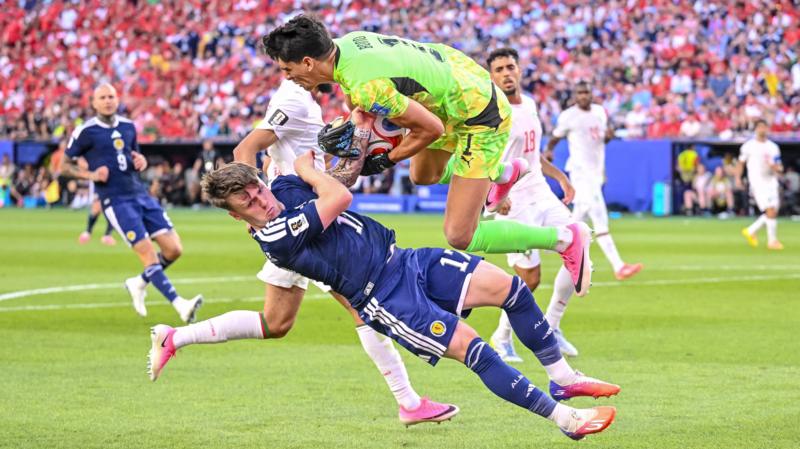
Scotland had two penalty claims, one for Scott McTominay and another for John McGinn. Borderline, both. You've seen them given, as the mantra goes. A sense of injustice, justified or not, would only have darkened their mood.
Scotland's World Cup knockout hopes remain alive despite defeat
Should Scotland have had two penalties & been playing against 10 men?
For a long spell in the first half they looked like they were going to cut Scotland to smithereens with their movement and their class. At full-time they looked overjoyed at falling over the line.
The Scots didn't manage a shot on target but, boy, did they show some bottle.
Those closing minutes were frenetic. Clarke, as if playing poker in Vegas, sent on Ben Gannon-Doak, Dykes and Ross Stewart. By the end, Scott McTominay was virtually playing centre-forward.
They left themselves hugely exposed at the back but the attitude was to hell with it. McTominay hit the side-netting, Dykes headed over, McTominay had a shot smothered. They pushed and pushed.
At one point, seconds from the end, Chadi Riad, the Morocco centre-back, hoofed one out for a corner and screamed blue murder at his midfielders.
This denouement was not what we were expecting. This gathering dream of a Scotland equaliser was so far our thoughts early on as to be non-existent.
Just short of the hour-mark, two doughty Scots walked up the steep steps at the Boston Stadium in search of their seats in the gods. Can in hand, traffic cone hat on their head - the lads were full of the joys, laughing heartily, feeling no pain.
To say they were the outliers in the Scotland support in those moments would be putting it mildly. Did they not know that Morocco had cut their team open to score after 71 seconds?
Were they having a gargle on the concourse as Achraf Hakimi - right-back one minute, left winger the next - was making us wonder how many of him were actually out there?
Morocco were as dangerous as everybody expected them to be. So comfortable with the ball at their feet, so much better than their underdog opponents.
World number six after all. Unbeaten in two-and-a-half years, if you forget about the Africa Cup of Nations debacle. Scotland were chasing shadows.
Clarke's masterplan, so to speak, was playing Kieran Tierney ahead of Robertson on the left, two vastly experienced operators to deal with the threat of Hakimi and Brahim Diaz.
A risk, for sure. And so much for the thinking behind it. Just over a minute gone - Diaz assist, Ismael Saibari goal, the nightmare scenario come true.
The traffic cone guys weren't letting such trifling issues dampen their day.
Everybody else had a haunted look about them, their noise and passion reduced to soft groans, the lusty pride they all displayed with another thumping rendition of Flower of Scotland now replaced with shrieks as Morocco ran amok.
Or threatened to run amok. Seventy seconds it took them to score. For much of the opening half they were like a cultured fighter, boxing the ears off an over-matched rival, bamboozling their punchbag with their movement before what felt like an inevitable knockout.
Scotland were on the ropes, covering up and praying that the punishment would stop. And minute by minute, it did.
Morocco's intensity was wonderful for half an hour and they could have been two or three ahead by then, but they weren't. They're terrific footballers, very easy on the eye, but they're not ruthless, not killers. Scotland's resilience kept them in it.
When Morocco's energy started to dissipate, it became a contest.
Scotland finished the opening half strongly, their confidence rising, those worried stares on the faces of their supporters giving way to blessed hope.
It wasn't that they were making chances and causing problems, but they were working their way back into contention, asking a few questions, reminding Morocco that they weren't soft touches any more.
It was impressive how Scotland dug in, defending brilliantly, bodies being thrown in the way of things. Jack Hendry had two huge moments, Angus Gunn had a major save. Clarke sprung the cavalry from the bench and Scotland pushed on.
The lesson they have learned from Germany two years ago was to fire some shots, don't die wondering.
They were drearily negative in the critical game against Hungary at the Euros and went out with a whimper. For two weeks they've told us that that won't be happening again. Here was the evidence of it.
It was not to be, but in soaking up Moroccan pressure and then fighting back to scare the wits out of them, they showed themselves as men of substance, not in Morocco's league in pure footballing terms but battlers; flawed but relentless.
They don't lack for heart and heart might yet take them through this group and into the promised land of the knockouts.
They have Brazil to play and one point to find, maybe. They might not even need it if their goal difference remains strong, but they'll travel to Miami feeling sore but believing in themselves.
Later, the traffic cone guys reappeared, still smiling, still singing, still carrying on like they were having the time of their lives, which they undoubtedly are.
We could learn something from them. A life lesson. Stick a cone on your head and keep on keeping on.
Everything you need to know about the World Cup
Source: BBC Sport · View original article ↗
This article has been sourced from an external provider and does not represent the views or opinions of AccaMate.