
Football News
Fifa alters how World Cup tables work - it changes everything
For the first time at a World Cup, Fifa is using head-to-head records instead of group goal difference as the primary tiebreaker for teams level on points.
Until 1966, goal ratio was used to separate teams - this involved dividing a team's goals scored by goals conceded. In 1970, Fifa moved to goal difference - until now.
It brings Fifa in line with Uefa, which has always given priority to the results between teams.
The logic is that assessing the direct performance of two teams is fairer, because it removes freak results - such as Germany's 7-1 win over Curacao.
Others say that taking overall goal difference is better as that compares the total record in the group.
Here's how it changes things at this World Cup.
The main knock-on effect is a greater chance of teams not only advancing but winning the group before matchday three.
Under the old format, a team would need to be four points clear of second to lock top spot after two games.
That was rare because it required the other two fixtures of the first two rounds in the group to both be draws.
Now it is possible to be three points clear and get first place in the bag.
It requires either two draws, or first place to have beaten the team(s) on three points.
Mexico won their first two games and sit on six points - three points clear of South Korea, with the Czech Republic and South Africa on one point.
As Mexico have already beaten South Korea they cannot be overtaken if both countries end on six points. So Mexico have won the group.
They know they will play a last-32 tie in Mexico City against a third-placed team.
Mexico effectively have nothing to play for when they meet the Czech Republic next Wednesday, and could opt to rest players.
And that creates an imbalance the Czech Republic could benefit from, though they can only qualify automatically if South Korea lose to South Africa.
But in a tournament where the best third-placed teams go through, it could be important.
The system is also used at the European Championship, where the best third-placed teams advanced.
For top spot to be locked after round two, a few things need to be considered:
The two other fixtures must have draws, OR
First place must have beaten the team or teams on three points
Scotland will qualify as group winners if they beat Morocco and Brazil do not beat Haiti.
The United States take top spot with a win over Australia as long as Turkey do not beat Paraguay.
Australia can do so with a victory if Paraguay do not win against Turkey.
Germany win the group with a victory over Ivory Coast if Ecuador do not win against Curacao.
Ivory Coast will seal top spot with a win if Curacao do not beat Ecuador.
Sweden will qualify as group winners if they beat the Netherlands and Japan do not win against Tunisia.
No team can seal top spot on matchday two.
No team can seal top spot on matchday two.
No team can seal top spot on matchday two.
Argentina take top spot with a win over Austria as long as Jordan do not beat Algeria.
Austria can do so with a victory if Algeria do not win against Jordan.
Colombia will seal first place if they beat DR Congo and Portugal do not win against Uzbekistan.
England win the group with a victory over Ghana if Panama do not win against Croatia.
Ghana will be group winners with a victory if Croatia do not beat Panama.
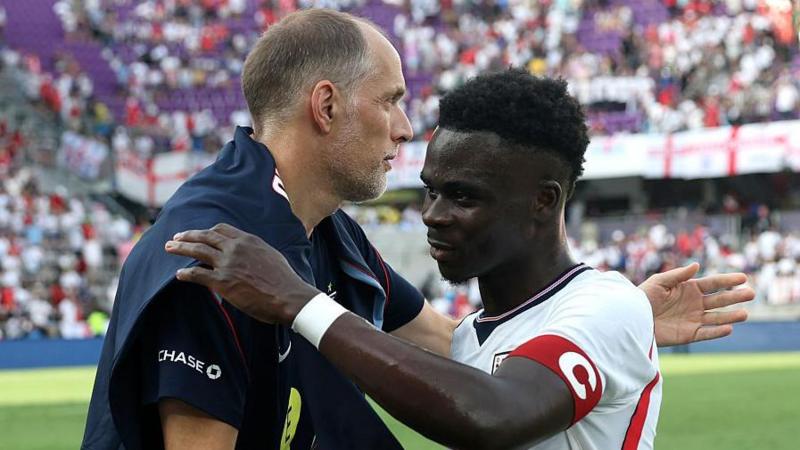
Stick or twist? Rashford and Guehi are Tuchel's big dilemmas
Head-to-head points between the teams in question. If there are three teams involved, a mini-league is created removing the results against the fourth team
Fair play (yellow card -1, red card for two cautions -3, straight red card -4, yellow then straight red -5)
Better position in progressively older Fifa world ranking
Play BBC Sport's new World Cup predictor game
Everything you need to know about the World Cup
Source: BBC Sport · View original article ↗
This article has been sourced from an external provider and does not represent the views or opinions of AccaMate.